Explore our range of wooden greenhouses — from classic cedar span greenhouses to lean-to and Victorian styles. Naturally insulating, beautifully crafted, and built to last. Find your perfect wooden greenhouse today
Wooden Greenhouses – Traditional & Modern Timber Greenhouses for Every Garden
Product List
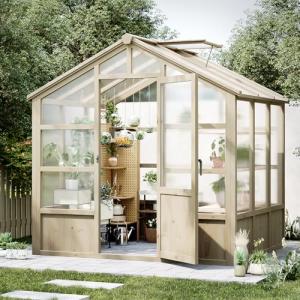
Garvee 8x6 ft Wooden Greenhouse, Greenhouses...
Product Review Score
4.72 out of 5 stars
118 reviews$699.99
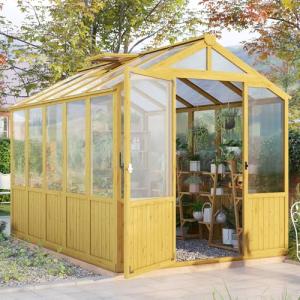
Jocisland 6x8x6.5 Ft Wooden Greenhouse, Pre-A...
Product Review Score
4.78 out of 5 stars
47 reviews$899.99 $799.99
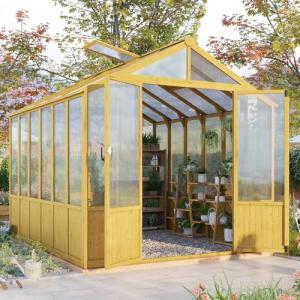
Jocisland 8x9.5x7.5 Ft Wooden Greenhouse, Pre...
Product Review Score
4.59 out of 5 stars
114 reviews$1,169.99
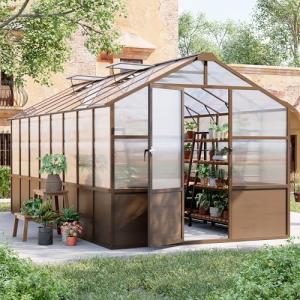
AirWire 8x16 FT Wooden Greenhouse for Outdoor...
Product Review Score
4.71 out of 5 stars
155 reviews$1,059.99
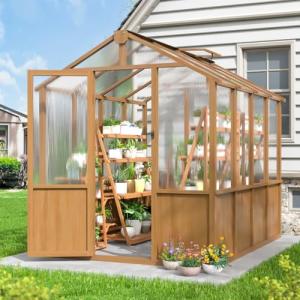
AirWire 6x8 FT Wooden Greenhouse with Cedar F...
Product Review Score
4.87 out of 5 stars
135 reviews$639.99
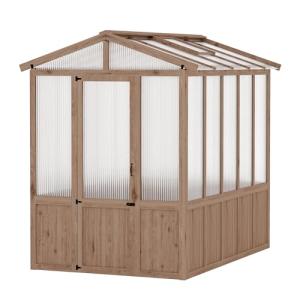
6X8FT Cedar Frame Wooden Greenhouse – Outdoor...
Product Review Score
4.48 out of 5 stars
230 reviews$489.99
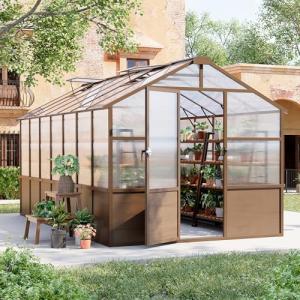
AirWire 8x14 FT Wooden Greenhouse for Outdoor...
Product Review Score
4.55 out of 5 stars
232 reviews$999.99
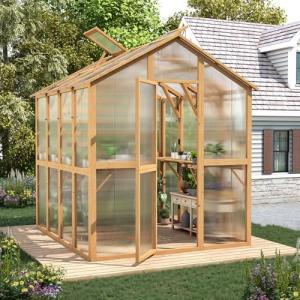
AECOJOY 6x7 FT Wooden Greenhouse for Outdoors...
Product Review Score
4.97 out of 5 stars
163 reviews$549.99
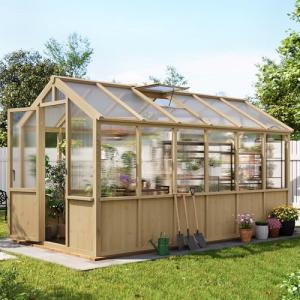
6x12 FT Large Wooden Heavy Duty Spruce Frame...
Product Review Score
4.16 out of 5 stars
122 reviews$999.99
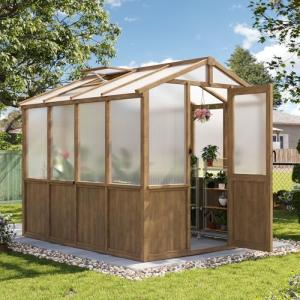
Aoxun 6x8 FT Wood Green House for Outdoors, P...
Product Review Score
4.77 out of 5 stars
192 reviews$699.99
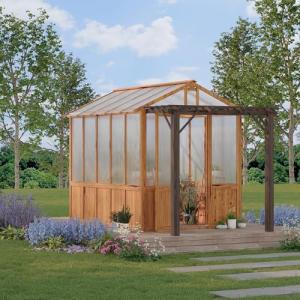
8X13ft Greenhouse Kit with Pergola, Wooden Wa...
Product Review Score
4.54 out of 5 stars
215 reviews$999.99
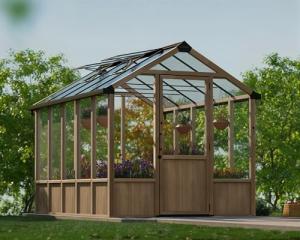
Why Choose a Wooden Greenhouse?
The honest answer is that wooden greenhouses offer a combination of qualities that no other material quite matches. Yes, they require a little more care than an aluminium structure. But in return, you get a greenhouse that genuinely enhances your garden rather than just sitting in it.
Natural Insulation That Actually Makes a Difference
Wood is a naturally poor conductor of heat, which means it does not lose warmth the way metal does. On cold mornings, a wooden greenhouse holds onto the overnight heat far better than an aluminium equivalent. That might not sound dramatic, but for seedlings, overwintering tender plants, or getting tomatoes off to an early start, even a couple of degrees of extra warmth can be the difference between success and failure. If you plan to heat your greenhouse through winter, the improved insulation means lower running costs too.
Strength and Solidity
A well-built wooden greenhouse is an incredibly sturdy structure. Thick timber glazing bars and solid corner posts resist wind loading and hold their shape over years of use. Unlike thinner aluminium profiles, wood does not flex or rattle in a gale, and the glazing sits more securely as a result. You also tend to get thicker, more substantial glazing bars with wooden greenhouses, which means better protection for the glass and a more robust overall feel when you are working inside.
Looks That Complement Any Garden
This matters more than some people admit. A greenhouse is a significant garden feature, and a beautiful wooden one — whether painted, stained, or left to silver naturally — adds genuine character to an outdoor space. Wooden greenhouses suit formal kitchen gardens, cottage-style plots, and contemporary spaces alike. They look right next to a traditional brick wall, nestled into a kitchen garden, or standing alone as a centrepiece. If the appearance of your garden matters to you, wood is almost always the more satisfying choice.
Easy to Customise and Extend
Timber is one of the most DIY-friendly materials there is. Need an extra shelf bracket? Screw one in. Want to hang tools from the roof? Simple. Attaching internal staging, adding hooks for string and labels, running a power cable discreetly — all of this is far easier with a wooden frame than with metal. Many wooden greenhouses can also be extended over time with matching sections, making them a flexible investment as your growing ambitions expand.
Types of Wooden Greenhouse
Wooden greenhouses come in a range of styles to suit different gardens, different growing needs, and different budgets. Understanding the main types will help you choose the right one.
Traditional Span Greenhouses
The classic design: a rectangular footprint with a pitched roof running the length of the structure. Traditional span greenhouses offer the most usable internal space and are the go-to choice for serious growers. They are available in a huge range of sizes, from compact six-by-eight foot models for smaller gardens up to long, full-production structures for those with more space and ambition. The central ridge gives good headroom, and the symmetrical layout makes it easy to arrange staging and growing beds efficiently.
Lean-To Greenhouses
Designed to sit against an existing wall or fence, lean-to greenhouses are an excellent option if space is tight or if you want to make use of a sunny south-facing wall. The wall itself provides insulation and reflected heat, which can create a noticeably warmer growing environment. Lean-tos look particularly good against the wall of a house or outbuilding, and because they share a wall, they often need less heating than a freestanding structure. If your garden is long and narrow, or you have a sheltered wall that gets good sun, a lean-to wooden greenhouse is well worth considering.
Octagonal and Decorative Greenhouses
For those who want a greenhouse that doubles as a genuine garden feature, octagonal and Victorian-style wooden greenhouses are a stunning choice. These structures — with their ornate ridge details, multi-faceted glazing, and elegant proportions — are genuinely beautiful objects. They tend to be smaller than a traditional span greenhouse, so they suit gardens where space is limited but where appearance is a priority. They work brilliantly as a focal point on a lawn or at the end of a garden path.
Cold Frames and Mini Greenhouses
Smaller wooden cold frames and mini greenhouses offer a way into protected growing for gardens where a full-size structure is not practical. A well-made wooden cold frame is a workhorse — ideal for hardening off seedlings in spring, overwintering cuttings, and extending the season for salad crops. They are relatively inexpensive, easy to move, and can be placed anywhere that gets good light.
Choosing the Right Wood
Not all timber is created equal, and the species of wood used in your greenhouse will have a significant effect on how long it lasts and how much maintenance it needs.
Cedar
Western red cedar is widely regarded as the best timber for greenhouse construction, and for very good reason. It is naturally rich in oils that repel moisture and resist rot without the need for chemical treatment. Cedar is also lightweight for its strength, which makes it easier to handle during assembly. Left untreated, it weathers to a beautiful silvery grey; treated with oil or stain, it holds its rich warm colour for years. Cedar greenhouses do cost more than softwood alternatives, but the reduced maintenance and longer lifespan make them excellent value over time.
Treated Softwood
Pressure-treated pine and other softwoods offer a more affordable entry point into wooden greenhouse ownership. Modern preservative treatments are highly effective and mean that treated softwood can last for many years with proper care. Softwood greenhouses benefit from annual painting or staining, which adds to the maintenance commitment but also gives you the freedom to change the colour of your greenhouse to suit the garden. If you are working within a tighter budget, a good quality treated softwood greenhouse is a perfectly sound investment.
Hardwoods
Some premium wooden greenhouses use hardwoods such as oak or iroko. These are exceptionally durable and look magnificent, but they sit at the top of the price range. Hardwood greenhouses are often made to order and represent a long-term investment in both the garden and the home.
What Size Wooden Greenhouse Do You Need?
This is a question that almost every greenhouse owner answers the same way in retrospect: they wish they had gone bigger. It is genuinely surprising how quickly a greenhouse fills up, especially in spring when every available inch of staging seems to be covered in seed trays. As a general rule, if you are choosing between two sizes, go for the larger one.
That said, there are practical considerations. A larger greenhouse costs more to heat, and a very large structure in a small garden can feel overwhelming. Think carefully about what you want to grow and how you plan to use the space. A family wanting to grow tomatoes, cucumbers, and peppers, with some space for overwintering tender plants, will likely want something in the range of 8 by 10 feet as a minimum. A dedicated kitchen gardener or a grower with serious ambitions will want considerably more.
Also consider the height. Good headroom makes a greenhouse much more pleasant to work in, and tall crops like indeterminate tomatoes will need the full ridge height to reach their potential. Check the eaves height as well as the ridge — plenty of models offer good ridge height but surprisingly low eaves, which can make working at the sides of the greenhouse uncomfortable.
Glazing Options for Wooden Greenhouses
The glazing you choose affects light transmission, insulation, safety, and cost. Most wooden greenhouses are available with a choice of glazing materials.
Horticultural Glass
Traditional horticultural glass transmits light exceptionally well — better than most alternatives — and it has been the standard greenhouse glazing material for generations. It is relatively affordable and gives a beautiful, traditional look that suits wooden frames particularly well. The main considerations are weight and the fact that it breaks into sharp pieces. For gardens with young children or in exposed locations, toughened glass or polycarbonate may be a more practical choice.
Toughened Safety Glass
Toughened glass offers all the optical qualities of standard glass with significantly better impact resistance. It is the preferred choice for families with children, for greenhouses in locations where things are likely to be thrown or blown against the glazing, and for roof panels where safety is paramount. When it does break, it shatters into small, relatively harmless pieces rather than dangerous shards.
Polycarbonate Panels
Twin-wall or multi-wall polycarbonate is lighter than glass, highly impact resistant, and offers better insulation due to its layered structure. It is a sensible choice for colder gardens where retaining heat is a priority. The trade-off is that polycarbonate transmits slightly less light than glass and can yellow or become scratched over time. For the right situation, though — particularly for gardeners in colder climates or at altitude — polycarbonate glazing can make a real practical difference.
Setting Up and Caring for Your Wooden Greenhouse
A wooden greenhouse installed on a solid, level base will serve you far better than one sitting on uneven ground. A concrete slab is the most permanent and stable option, but well-laid paving slabs or a timber base can work equally well. Take the time to get the base right before you start assembly — it will make the build easier and the finished structure more solid.
Ventilation is one of the most important factors in successful greenhouse growing. Overheating in summer is a real problem, and without adequate airflow, fungal diseases and pest problems become much more likely. Look for greenhouses with roof ventilators as a minimum; side vents or louvre panels are a valuable addition in warmer regions. Automatic vent openers, which respond to temperature without any input from you, are one of the best investments you can make for your greenhouse.
For wooden greenhouses, an annual treatment with preservative, oil, or paint is the main maintenance task. Cedar greenhouses need the least attention — an occasional oil treatment keeps them looking good and extends their life further. Painted or stained softwood greenhouses benefit from a fresh coat every year or two to keep the wood protected. Check glazing seals and putty periodically, and replace any that have cracked or shrunk to prevent draughts and water ingress.
Making the Most of Your Wooden Greenhouse
Once your wooden greenhouse is up and running, the possibilities are genuinely exciting. In early spring, it becomes a seed-starting powerhouse — a warm, protected space where you can get tomatoes, peppers, aubergines, and basil going weeks before outdoor sowing is possible. Through summer, it is the ideal environment for heat-loving crops that struggle to perform outdoors in cooler climates. In autumn and winter, it provides shelter for tender plants that would not survive a frost in the open garden.
With a little heating — even just a small electric or paraffin heater to keep the temperature above freezing — the season extends further still. Overwintered geraniums, fuchsias, and salvias will reward you with a head start in spring. Citrus plants, succulents, and other tender exotics can live outside in summer and retreat to the greenhouse when temperatures drop.
A wooden greenhouse is not just a growing tool. It is a place to be. On a cold February morning, stepping into a greenhouse that smells of compost and damp timber, tending seedlings under glass while the garden outside is still frozen — that is one of the quieter pleasures of gardening, and wooden greenhouses deliver it beautifully.