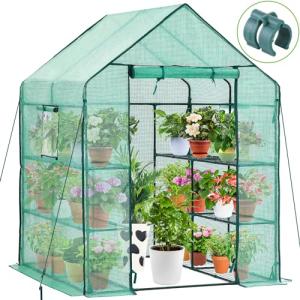
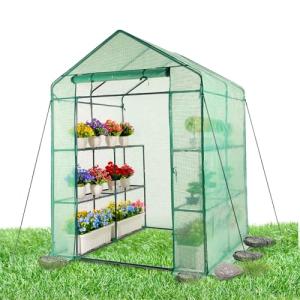
What Is a Walk-in Greenhouse?
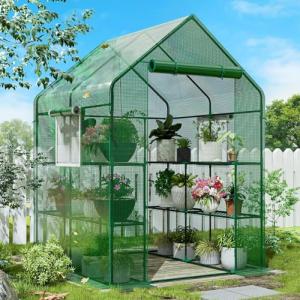
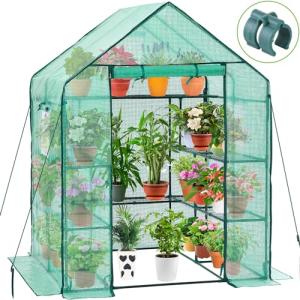
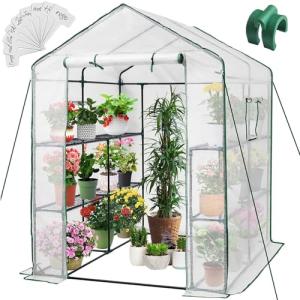
A walk-in greenhouse is exactly what the name promises: a structure large enough to enter, move around in, and work comfortably. Unlike miniature pop-up shelters or tabletop propagators, walk-in greenhouses give you real growing space — room for staging shelves, potting benches, hanging baskets, and beds you can tend without hunching over.
They come in a wide range of sizes, from compact 6×4 ft models that fit snugly against a garden wall, to large freestanding structures 20 feet long or more. Frames are typically made from powder-coated steel, aluminium, or a combination of both. Glazing options include polycarbonate panels (most common), polyethylene film, and glass. Each combination offers a different balance of weight, insulation, light transmission, durability, and price.
Walk-in greenhouses sit somewhere between professional horticultural glasshouses and the humble plastic grow tent. They're built for real use, real weather, and real gardeners who want results.
Why a Walk-in Greenhouse Changes the Way You Garden
Ask any gardener who made the switch from open-bed growing to greenhouse growing and you'll hear a version of the same answer: "I wish I'd done it sooner."
The reasons are practical. A walk-in greenhouse extends your growing season significantly — often by two to three months on either end, depending on where you live. That means you can start seeds in late winter while the ground outside is still frozen, and you can keep harvesting salad leaves, herbs, and even fruiting crops well into autumn. In mild climates, year-round growing becomes genuinely possible.
Beyond season extension, a greenhouse offers protection. Rain, wind, hail, late frosts, slugs, cabbage white butterflies — a greenhouse screens out or dramatically reduces most of the things that cause crop failures in open gardens. Diseases that thrive in wet conditions are also less of a problem when you control the moisture around your plants.
Then there's the pleasure of it. A walk-in greenhouse is a place to slow down. It's somewhere you can go even in miserable weather, put your hands in soil, and tend something living. Many gardeners describe their greenhouse as one of the most used and loved spaces on their entire property.
Frame Materials: What Holds It All Together
Powder-Coated Steel
Steel frames are strong, affordable, and widely available. Powder coating adds corrosion resistance, but the quality of that coating varies enormously between manufacturers. A thick, well-applied powder coat on quality steel will last many years outdoors. Thin coating on low-grade steel will begin to rust at the joints within a season or two, especially if you live somewhere with high rainfall.
When evaluating steel-frame greenhouses, look at the gauge (thickness) of the steel and the quality of the joints. Riveted or bolted connections tend to outlast push-together fittings in the long run.
Aluminium
Aluminium frames are lighter than steel and naturally corrosion-resistant, which makes them an excellent choice for permanent or semi-permanent greenhouse installations. They cost a little more, but the trade-off in longevity is usually worth it. Aluminium greenhouses also tend to have a cleaner, more refined look, and they're easier to handle during assembly.
Combined Frames
Some manufacturers use steel for the main load-bearing uprights and ridge, and aluminium for the internal framing and glazing bars. This can offer a practical middle ground between cost and performance.
Glazing Options: What Lets the Light In
Twin-Wall Polycarbonate
This is the most popular glazing choice for walk-in greenhouses and for good reason. Twin-wall polycarbonate panels consist of two layers of polycarbonate separated by a fluted air channel. That gap provides meaningful thermal insulation — typically an R-value of around 1.5 to 2.0 — which helps retain heat overnight and keeps temperatures more stable during cold days. Polycarbonate is also impact-resistant, lightweight, and transmits around 80–90% of available light.
The downside is that polycarbonate yellows over time with UV exposure. Quality panels have a UV-protective coating on the outer surface; cheaper panels may not, and you'll notice the difference within three to five years as the material becomes brittle and discoloured.
Polyethylene Film
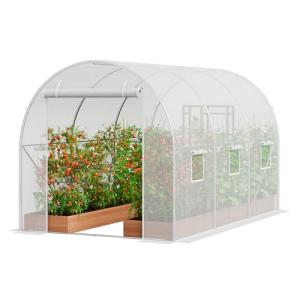
Film greenhouses — often called polytunnels or hoop houses — use UV-stabilised plastic sheeting stretched over a metal frame. They're very affordable, quick to put up, and the film lets in excellent light. The main limitation is lifespan: even quality greenhouse film needs replacing every four to seven years, depending on climate and UV exposure.
For budget-conscious gardeners who need a lot of covered space quickly, film houses offer outstanding value. For anyone wanting a low-maintenance, permanent structure, polycarbonate or glass is the better long-term choice.
Toughened Glass
Glass greenhouses represent the traditional choice — and there are very good reasons the style has persisted for centuries. Glass transmits more light than polycarbonate, doesn't yellow or degrade over time, and looks beautiful. High-end glass greenhouses can last for generations with basic maintenance.
The drawbacks are weight (glass panels are heavy and require a robust frame), cost, and fragility. Toughened (tempered) glass is far safer than ordinary horticultural glass if a panel breaks, but replacement is still more involved than swapping out a polycarbonate sheet.
Sizes and Layouts: Finding What Fits Your Space
Walk-in greenhouses are available in a broad range of footprints. The right size depends on what you plan to grow, how much space you have, and how seriously you take your gardening.
Small (under 8×6 ft): Ideal for propagation, overwintering tender plants, and growing a modest crop of tomatoes or cucumbers. Suits small gardens and patios. Limited room for a potting bench inside.
Medium (8×10 ft to 10×12 ft): The sweet spot for most keen home gardeners. Enough space for staging shelves, a small work area, and a decent growing bed or container setup. This size allows comfortable movement and proper air circulation.
Large (12×16 ft and above): For serious growers, market gardeners, or anyone who wants to grow abundantly through the seasons. A large walk-in greenhouse can accommodate multiple growing zones, a permanent potting bench, and a wide variety of crops simultaneously.
A word on planning: most gardeners, when asked in hindsight, say they wished they'd bought bigger. Greenhouse space fills up faster than you expect. If you're uncertain between two sizes, it's almost always worth going up.
Ventilation, Heating, and Humidity
A greenhouse without proper ventilation isn't a growing space — it's an oven in summer and a disease incubator in spring. Good air circulation is essential.
Look for greenhouses with roof vents that can be propped open at varying angles. The ideal is to have vent area equal to roughly 20% of the floor area, though most hobby greenhouses don't quite reach this benchmark. Supplementing with a small louvre vent or a door that can be propped open at the base helps enormously. Automated vent openers — which use a wax-filled cylinder that expands and contracts with temperature — are a worthwhile addition for anyone who can't check their greenhouse several times a day.
For heating, small electric fan heaters work well in most walk-in greenhouse sizes. Paraffin heaters are an option where electricity isn't available, but require careful monitoring and regular refilling. In many climates, a well-insulated polycarbonate greenhouse will stay frost-free on all but the coldest nights without any supplemental heat at all.
Humidity management matters for plant health. In winter, high humidity combined with cool temperatures is the classic recipe for botrytis (grey mould) and fungal damping off. Water in the morning rather than the evening, maintain airflow, and avoid overcrowding plants.
Assembly and Anchoring
Most walk-in greenhouses are sold as flat-pack kits and can be assembled by two people in a day. The key to a successful installation is starting with a level, solid base. A timber frame on compacted ground, concrete slabs, or a poured concrete base all work well. Getting the base right makes everything that follows significantly easier.
Anchoring is non-negotiable. A greenhouse caught by wind acts like a sail. Even relatively modest gusts can lift a structure that isn't securely fixed. Most kits come with ground anchors or base plates; use them, add additional anchor points if you're in an exposed location, and don't skip this step.
Features Worth Looking For
When comparing models, a few features consistently separate the good from the mediocre:
Door width: A door wide enough to bring in a wheelbarrow (at least 24–26 inches) makes a practical difference to how easy the greenhouse is to use day to day.
Shelf and staging compatibility: Does the manufacturer offer compatible benching? Having shelving that fits the frame properly makes much better use of vertical space.
Panel security: Panels should clip or lock firmly into the frame. Panels that rattle or pop out in wind are not just annoying — they're a structural vulnerability.
Guttering compatibility: Being able to collect rainwater from the roof of your greenhouse is both practical and sustainable. Not all kits support this, but many quality models do.
Spares availability: A greenhouse is a long-term investment. Check that the manufacturer or retailer stocks replacement panels, fittings, and vents. A greenhouse that can't be repaired when something breaks is only as good as its weakest part.
Getting the Most From Your Walk-in Greenhouse
The greenhouse itself is just the structure. What you do with it determines the returns.
Invest in good growing media — either quality compost for containers, or build raised beds inside the greenhouse using a mix of topsoil, compost, and horticultural grit. Inside a greenhouse, soil can become compacted and depleted faster than in open ground, so refreshing it each season makes a noticeable difference to plant health and yield.
Use the vertical space. Hanging baskets, tiered shelving, and trained climbing crops like cucumbers and indeterminate tomatoes all make the most of the air above your staging.
Keep records. What you grew, when you planted, what worked, what failed. A greenhouse intensifies both successes and mistakes. A simple notebook or a notes app is enough. Over two or three seasons, the patterns become invaluable.
Finally, keep it clean. An annual wash-down of the interior with dilute disinfectant, combined with regular clearing of dead plant material and debris, dramatically reduces pest and disease pressure. It takes a few hours once a year and pays dividends across every growing season that follows.
Choosing the Right Walk-in Greenhouse
There is no single perfect greenhouse — only the right one for your garden, your climate, your budget, and your ambitions. A compact polycarbonate structure on a suburban patio can be just as productive, and just as rewarding, as a full-scale timber-and-glass structure in a country garden.
What every good walk-in greenhouse shares is the same basic promise: more growing, more control, and more seasons. For anyone serious about their garden, it's one of the most worthwhile investments you can make.