What Exactly Is a Garden Arbor?
Before we dive into styles, materials, and everything in between, let's clear something up — because "arbor," "pergola," and "trellis" get used interchangeably, and they're actually three different things.
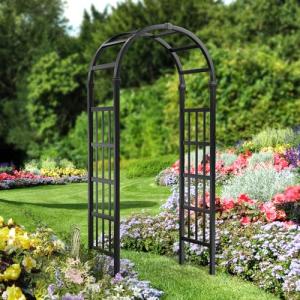
A garden arbor is typically a freestanding arch or open structure designed to frame a pathway, define an entrance, or create a focal point in the garden. It's usually tall enough to walk through, open on the sides, and built to support climbing plants. Arbors are more intimate than pergolas (which are larger, roof-like structures), and more structural than trellises (which are flat panels meant for wall mounting).
Think of an arbor as a garden's front door — one you open not with a key, but by walking through it.
Why Add a Garden Arbor to Your Outdoor Space?
They Create Structure Where There Is None
A sprawling garden without anchor points can feel chaotic — beautiful, maybe, but directionless. An arbor gives your eye somewhere to go. It says, here, this matters. Whether it's positioned at the beginning of a garden path, at the transition between your lawn and a flower bed, or at the back of the yard as a destination point, an arbor adds visual weight and intentional design to an otherwise open space.
They're Built for Plants (and Plants Are Built for Them)
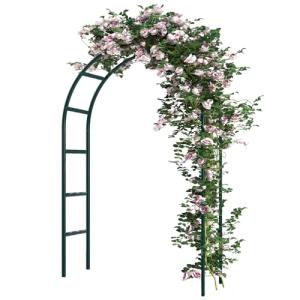
If you've ever watched a climbing rose work its way up a wooden arch over the course of a season — reaching, curling, eventually overwhelming the structure with a cascade of blooms — you understand why arbors and vines are such natural partners. The list of climbing plants that thrive on arbors is long and lovely: wisteria, clematis, honeysuckle, jasmine, trumpet vine, climbing hydrangea, passionflower, and, of course, climbing and rambling roses of every color.
The structure holds the plant. The plant softens the structure. Together, they create something that looks like it grew there on purpose.
They Add Vertical Interest
One of the most common mistakes in garden design is thinking only horizontally — laying everything out in beds, borders, and pathways without considering height. Arbors solve this instantly. A single arch planted with a fast-growing annual vine like morning glory or black-eyed Susan vine can become a dramatic vertical feature in a single growing season.
They Define Outdoor Rooms
Landscape designers talk a lot about "outdoor rooms" — the idea that a garden should have distinct zones with different purposes, just like the rooms of a house. An arbor is one of the simplest and most effective ways to create this sense of division. Position one between your dining area and a kitchen garden. Use one to mark the entrance to a children's play area. Place one at the mouth of a hedged enclosure. Suddenly, you're not just walking through a yard — you're moving between spaces with different moods and purposes.
They're Wedding and Event Ready
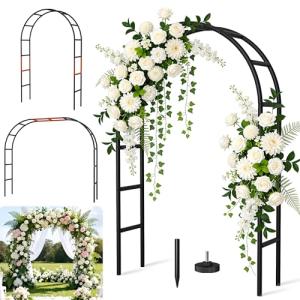
Garden arbors have become a staple of outdoor weddings, ceremonies, and celebrations for a reason. They provide a natural focal point for vows, a frame for photographs, and a backdrop that requires almost no decoration beyond whatever you choose to drape over it. Many of our arbors are specifically designed with this use in mind — easy to assemble, striking in photographs, and sturdy enough to support floral arrangements, fabric swags, and string lights without wobbling.
Choosing Your Arbor: Materials Matter
Cedar and Redwood Arbors
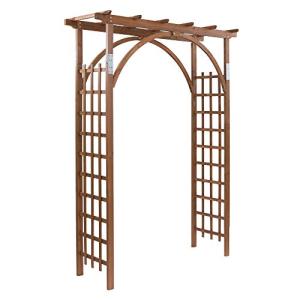
If there's a classic garden material, it's natural wood — and cedar and redwood sit at the top of the pile. Both are naturally resistant to rot and insects, which means they hold up beautifully in outdoor environments without the need for heavy chemical treatments. Cedar in particular is a time-honored arbor material: it's lightweight, easy to work with, weathers to a soft silver-gray if left untreated, or takes stain and paint beautifully if you want to maintain a specific color.
Wooden arbors bring warmth and organic charm that no other material fully replicates. They look at home in cottage gardens, formal English-style landscapes, and relaxed country settings. They're also often the easiest type to customize — add a lattice panel here, extend the posts there, paint them white for a classic look or leave them natural for something more rustic.
Vinyl and PVC Arbors
Low maintenance is a real virtue, and that's exactly what vinyl and PVC arbors deliver. They won't rot, won't splinter, and never need painting or staining. A quick rinse with a garden hose is genuinely all the upkeep they require. If you're planting aggressive climbers like wisteria — which can be heavy and vigorous — vinyl arbors are often more forgiving than wood because they don't absorb moisture and swell.
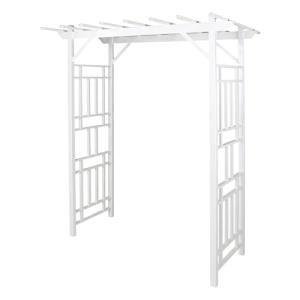
They're also available in a wide range of styles, from simple arches to more ornate Victorian designs with detailed lattice panels and decorative finials. White is the most popular finish, giving that clean, classic garden-party aesthetic, but they're also available in tan and gray to suit more contemporary palettes.
Metal and Wrought Iron Arbors
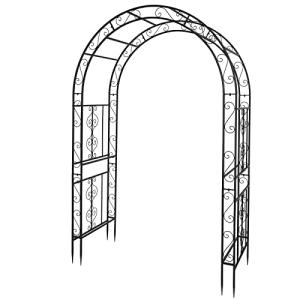
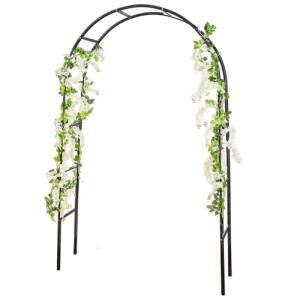
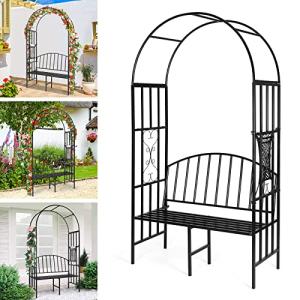
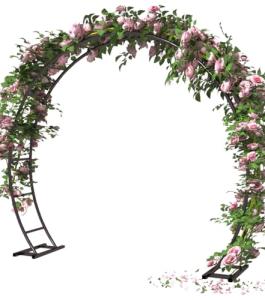
For sheer elegance and longevity, it's hard to beat a well-crafted metal arbor. Wrought iron, powder-coated steel, and aluminum arbors have a visual delicacy that wood and vinyl can't quite achieve — those slender, curving lines, the filigree detail work, the way they look almost lacey against a backdrop of green.
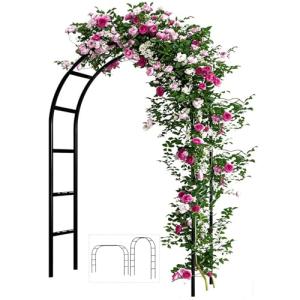
Metal arbors are particularly popular in formal and romantic garden settings. They pair beautifully with climbing roses and clematis, and they're built to last for decades. Many metal arbors are galvanized or powder-coated to resist rust, but if you choose a traditional wrought iron piece, some light maintenance will help it last even longer.
Aluminum arbors offer a middle ground: the look of metal with even less maintenance, since aluminum doesn't rust at all. They're also significantly lighter than iron or steel, which makes them easier to move and reposition as your garden evolves.
Styles and Designs to Know
Classic Arch Arbors
The most elemental arbor form: two posts, an arched top, open sides. Simple, iconic, and endlessly versatile. Classic arch arbors work in almost any garden style and with any climbing plant. They're the default choice for pathway entrances and small garden accents.
Lattice Panel Arbors
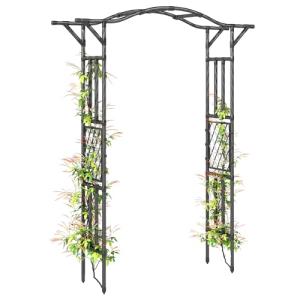
These feature additional lattice panels on the sides, creating more surface area for climbing plants and more visual enclosure. They sit somewhere between an arch and a small gazebo — more intimate than an open arch, but still airy and light. Great for creating a shaded seating nook or a sense of enclosure without full walls.
Double Arbors and Tunnel Arbors
Two arches connected by overhead beams create a short tunnel — walk through it when the roses are in full bloom and you'll understand immediately why these are so beloved. Tunnel arbors are perfect for longer garden paths and create a theatrical sense of arrival that single arches can't match.
Arbors with Built-In Benches
Some arbors include integrated seating — a bench on either side beneath the arch, creating a sheltered garden seat. These are among the most charming pieces in any garden catalog, offering both structure and function. Surrounded by climbing plants on three sides, a bench arbor becomes one of those rare garden features that actually draws people to sit in it.
Contemporary and Minimalist Arbors
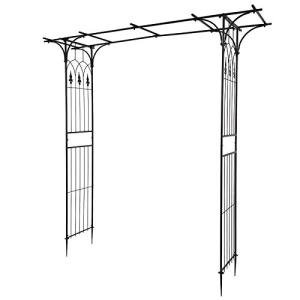
Clean lines, geometric forms, powder-coated metal in matte black or dark bronze — modern arbors have moved a long way from the Victorian curlicues of traditional designs. These work beautifully in contemporary gardens and urban outdoor spaces where the planting palette tends toward grasses, architectural perennials, and bold foliage rather than cottage-garden blooms.
Sizing Your Arbor: Getting It Right
The most common sizing mistake is going too small. An arbor that's too narrow or too low feels cramped and awkward to walk through, especially if you're hauling a wheelbarrow or walking through with a friend. As a general rule:
- Width: Look for a minimum interior width of 4 feet. For paths meant for two people walking abreast, or for any space where you'll be moving equipment, aim for 5–6 feet.
- Height: A 7-foot interior clearance is a comfortable minimum for most adults. If you're choosing a design with climbing plants that will eventually droop downward, go taller — 8 feet gives you much more room.
- Depth: Deeper arbors (sometimes called "pergola arbors") feel more like an outdoor room than a simple threshold. For seating arbors or tunnel designs, depth is where the magic lives.
Installation and Anchoring
Most garden arbors are designed for DIY installation, and many can be assembled in an afternoon with basic tools. That said, the question of anchoring deserves serious attention. A lightweight vinyl arch in a sheltered garden spot may be fine with simple ground stakes. But a larger wooden or metal arbor — especially one that will eventually carry the weight of mature climbing plants — should be properly anchored into the ground.
Ground stakes are the simplest option and work well for lighter arbors on firm ground. Spike anchors (hammered into the soil) provide more stability. For permanent installations, setting the posts in concrete is the gold standard and will give your arbor the kind of solidity that lets you lean against it without a second thought.
Caring for Your Arbor Through the Seasons
Wooden arbors benefit from a seasonal inspection — check for any signs of moisture damage at ground level, tighten any loose hardware, and re-apply stain or sealant every few years to keep the wood protected. Metal arbors should be checked for rust spots and touched up with paint or rust-inhibiting primer as needed. Vinyl arbors genuinely need almost nothing — a wash and an occasional check that all connections are secure.
For climbing plants, annual pruning keeps both the plant and the arbor in good shape. Some climbers, if left unchecked, can become heavy enough to stress the structure — especially after a wet season when the growth is particularly vigorous.
Making It Yours
The joy of a garden arbor is how completely it becomes your own over time. The wood grays and weathers. The plants choose their own paths up and over and through the structure. The whole thing begins to look less like something you installed and more like something the garden produced. That transformation — from purchase to patina — is what makes arbors one of the most rewarding investments you can make in your outdoor space.
Browse our full collection and find the arbor that fits your garden, your style, and the vision you have for the space you're building.