What Makes a Great Garden Bench?
The best garden benches combine durability with character. They need to withstand rain, frost, UV exposure, and the occasional passing pigeon — while still looking beautiful season after season. But beyond practicality, a bench should feel right. The proportions, the material, the finish: these things matter more than you might expect when you're actually sitting in your garden with a cup of tea, taking in the view.
Here's what to consider before you buy.
Garden Bench Materials: Which Is Right for You?
Hardwood and Teak Benches
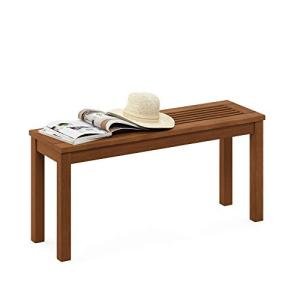
Few materials age as gracefully as hardwood. Teak, in particular, has earned its reputation as the gold standard for outdoor garden furniture. Naturally rich in oils, teak is highly resistant to moisture, insects, and rot — which means it can be left outdoors year-round with minimal fuss.
Fresh teak has a warm honey-gold colour that gradually weathers to a distinguished silvery-grey if left untreated. Both looks are genuinely beautiful, and the choice between them is simply a matter of personal taste. If you want to maintain the original warm tone, an annual application of teak oil will do the job. If you prefer the weathered look, do nothing and let nature take its course.
Other hardwoods like eucalyptus, iroko, and acacia offer similarly excellent durability at a range of price points. Hardwood benches tend to feel substantial and grounded — the kind of furniture that looks like it belongs in a garden, not just placed there temporarily.
Best for: Traditional cottage gardens, formal English gardens, country-style outdoor spaces, or anyone who values longevity and a natural, organic aesthetic.
Cast Iron and Metal Benches
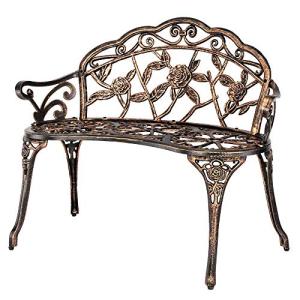
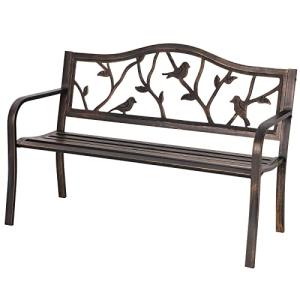
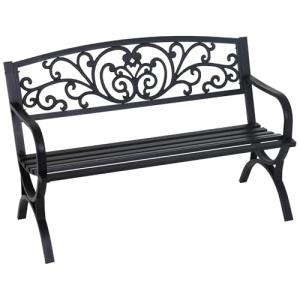
Cast iron and wrought iron benches bring a sense of permanence and classical elegance that's hard to replicate with any other material. Their ornate scrollwork and curlicued detailing are instantly evocative of Victorian parks and walled kitchen gardens — the kind of benches that look like they've been there for a hundred years and will be there for a hundred more.
Metal benches are exceptionally sturdy and heavy, which means they stay put even in windy conditions. Most come powder-coated in black, white, or heritage green, which helps protect against surface rust. It's still worth keeping an eye on chips or scratches in the coating over time, touching them up as needed to prevent oxidisation.
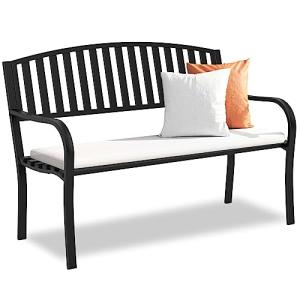
Many metal benches pair iron frames with hardwood or slatted timber seats, combining structural strength with the warmth and comfort of wood.
Best for: Period properties, formal gardens, walled spaces, heritage-inspired designs, or anyone who loves a timeless aesthetic.
Steel and Aluminium Benches
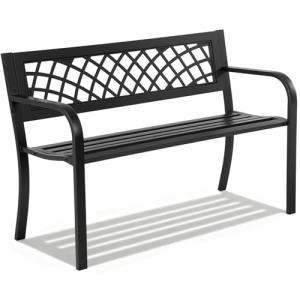
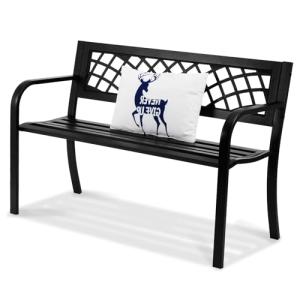
Modern steel and aluminium benches occupy a different aesthetic territory entirely — clean lines, minimal fuss, and a quietly contemporary presence that works beautifully in urban gardens, rooftop terraces, and modern courtyard spaces.
Aluminium is particularly worth noting for its combination of lightweight practicality and impressive durability. It won't rust, it's easy to move around, and it requires almost no maintenance. Powder-coated steel offers similar visual clarity with a slightly more robust feel underfoot.
If you want a bench that doesn't announce itself — that sits quietly alongside architectural planting or modern raised beds without demanding attention — a well-made metal bench with a considered finish is often the answer.
Best for: Contemporary gardens, minimalist spaces, rooftop terraces, small urban gardens, or anyone who prefers clean modern design.
Recycled Plastic and Composite Benches
Recycled plastic lumber has come a very long way from the somewhat uninspiring garden furniture of decades past. Today's composite and recycled plastic benches are well-designed, genuinely durable, and — importantly — entirely weatherproof. They won't rot, warp, splinter, crack, or fade, and they require nothing more than an occasional wipe-down with soapy water.
For anyone who wants beautiful outdoor furniture without any maintenance commitment, recycled plastic benches are increasingly difficult to argue with. Many are made from reclaimed bottles and industrial plastic waste, which adds an environmental dimension that matters to a growing number of buyers.
Available in a range of colours and timber-effect finishes, the best examples are convincingly attractive and hold their appearance year after year.
Best for: Low-maintenance gardens, exposed coastal locations, school or community settings, environmentally conscious buyers, or anyone who simply doesn't want to think about garden furniture maintenance.
Concrete and Stone Benches
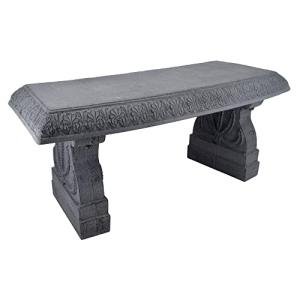
At the far end of the permanence spectrum sit concrete and stone benches. These are statement pieces — heavy, enduring, and architecturally bold. A well-placed stone bench anchors a garden in a way that lighter furniture simply cannot. It becomes part of the landscape rather than a piece of furniture placed within it.
Concrete benches in particular have enjoyed a real design renaissance, with contemporary casting techniques producing genuinely elegant forms. Stone benches — whether in sandstone, granite, or reconstituted stone — bring a sense of history and weight that suits larger, more formal garden designs.
These aren't benches you'll rearrange on a whim. They're benches you choose a location for carefully, place once, and then enjoy for the rest of your life.
Best for: Formal gardens, large landscaped spaces, architectural garden designs, permanent installations, or anyone looking to create a sense of established permanence.
Garden Bench Styles: Finding the Right Look
Classic Park Benches
The park bench is an archetype for a reason. Its proportions are tried and tested: a gently curved back, wide armrests, and slatted seating that's both comfortable and forgiving of outdoor conditions. In hardwood or cast iron, a classic park-style bench suits almost any garden setting without looking out of place.
Backless Benches and Garden Seats
Simpler in form and often more versatile, backless benches have a quiet elegance that works particularly well in modern or Japanese-inspired garden designs. They double easily as extra seating during outdoor entertaining, can be tucked under a table when not in use, and tend to look less imposing in smaller spaces.
Curved and Circular Benches
Designed to wrap around a tree trunk, fire pit, or central garden feature, circular and curved benches are as much a design element as they are functional seating. They create a natural gathering point in a garden, drawing people together and encouraging the kind of relaxed, unhurried conversation that outdoor spaces do so well.
Memorial and Dedication Benches
A garden bench makes a deeply meaningful memorial. Many manufacturers offer personalisation options — engraved plaques, chosen timbers, bespoke sizing — so that a bench can serve as a lasting tribute to someone loved and missed. There's something fitting about a memorial that invites people to sit, breathe, and remember quietly.
Corner and L-Shaped Benches
For those who want to maximise seating in a defined space, corner benches make elegant use of the geometry available. Built into a pergola or placed in the corner of a walled terrace, an L-shaped bench can accommodate far more guests than a collection of individual seats while creating a cosy, contained atmosphere.
Bench Sizes: Getting the Proportions Right
Garden benches typically come in two-seater, three-seater, and four-seater sizes — though these labels vary by manufacturer and the actual dimensions can differ considerably.
As a rough guide:
- Two-seater benches run between 100–120cm wide and suit smaller gardens, patios, or spots where space is limited.
- Three-seater benches are typically 150–160cm wide and represent the most popular size for general garden use.
- Four-seater and larger benches start around 180cm and suit more generous spaces, longer vistas, or applications where you're frequently entertaining.
Always measure your intended location before purchasing — and account for the space needed to sit down comfortably, not just the footprint of the bench itself.
Placement Ideas: Where to Put a Garden Bench
The location of a garden bench can make an enormous difference to how much you actually use it. A bench placed at the end of a garden path invites you to walk the full length and then sit and look back. A bench nestled into a planting border feels discovered rather than positioned. A bench facing west catches the evening sun and becomes the natural place to end the day.
Consider placing a bench:
- At a focal point visible from the house, so you're reminded it's there
- Facing a favourite view — a border in full bloom, a water feature, a borrowed landscape beyond the fence
- Beneath a tree or pergola for shade on warm days
- At the highest point of a sloped garden for the best possible vantage point
- In a secluded spot surrounded by tall planting for a sense of privacy and retreat
Caring for Your Garden Bench
Most garden benches are designed to live outdoors, but a little care goes a long way:
Hardwood benches benefit from an annual clean and, if you want to preserve the original colour, an application of appropriate oil or preservative in spring.
Metal benches should be checked periodically for chips or scratches in the coating, particularly at joints and edges where moisture can get in. Touch up as needed with matching paint.
Composite and recycled plastic benches need only occasional washing — they're genuinely fuss-free.
Stone and concrete benches can develop lichen and moss over time, which many people find adds to their character. If you prefer them clean, a stiff brush and some outdoor surface cleaner will do the trick.
In very exposed locations or during prolonged periods of extreme cold, bench covers offer an additional layer of protection and can extend the life of any material significantly.
Why a Garden Bench Is Worth the Investment
Good outdoor furniture is not an extravagance. It's the difference between a garden you look at and a garden you live in. A well-made bench, positioned thoughtfully, will be used more than almost any other piece of furniture you own — by you, by your family, by friends who come to visit and end up staying longer than they planned.
It will be where someone reads a novel on a slow summer afternoon. Where a difficult conversation finds its way to resolution. Where children eat ice cream and get it everywhere. Where you sit, quietly, and notice the season changing.
Browse our full collection of garden benches and find the one that belongs in your garden.