
What Exactly Is a Chaise Lounge?
The name comes from the French chaise longue — literally "long chair." The concept is simple: a seat extended long enough to support your legs, letting you recline at your leisure without needing a separate ottoman or footstool. Think of it as the halfway point between an armchair and a daybed. You can sit upright, lean back halfway, or stretch out completely — the choice is yours.
What makes a chaise different from a regular recliner or sofa with a chaise section is its standalone character. A chaise lounge is its own piece — independent, self-contained, and often the most visually interesting item in a room. It has a natural sculptural quality. Even an empty chaise lounge looks like it's waiting to tell a story.
A Brief (and Rather Glamorous) History
The chaise lounge didn't start life as a piece of casual outdoor furniture. It began in 16th century France as a symbol of wealth and refinement. Aristocrats would recline on ornately carved frames upholstered in silk and velvet — reading, receiving guests, or simply demonstrating that they had the leisure time to lie about in the middle of the day.
By the 18th and 19th centuries, the chaise had become a fixture in upper-class European homes, immortalized in paintings and literature. Victorian women rested on them during periods of fashionable "delicacy." Intellectuals posed on them in their studies. Artists used them as props in portraits suggesting languid sophistication.
The 20th century democratized the chaise. Le Corbusier and Charlotte Perriand's iconic LC4 chaise, introduced in 1928, turned the form into an architectural object — chrome steel and leather, built for the body's natural resting angle. It became one of the defining pieces of modernist design and is still in production today.
From poolside resort furniture to urban rooftop retreats, the chaise lounge has traveled comfortably through time without losing its essential identity: it's furniture that's unapologetically, luxuriously for resting.
Indoor Chaise Lounges: Bringing Drama Inside
An indoor chaise lounge changes the energy of a room immediately. In a bedroom, it creates a reading nook that's far more inviting than a straight-backed chair. In a living room, it breaks up the predictable sofa-and-armchair arrangement. In a home office, it gives you a place to think that isn't a desk.
Upholstery and Fabric
Indoor chaises live or die by their fabric. Velvet is a perennial favourite — it photographs beautifully, feels extraordinary against skin, and comes in saturated, jewel-toned colours that make a room feel considered and intentional. Linen offers a softer, more relaxed look that suits coastal or Scandinavian interiors. Leather and faux leather are easy to wipe clean and carry a sleek, contemporary edge.
Think about how the fabric interacts with your existing room. A tufted velvet chaise in a rich emerald or deep navy becomes the focal point of a neutral room. A pale, textured linen chaise sits quietly in a room full of pattern and colour, offering a visual resting place.
Frame Styles
The frame determines the personality of the piece. Rolled arms and carved wooden legs suggest classical European influence — they work beautifully in traditional or eclectic interiors. Clean-lined frames with tapered legs feel mid-century and contemporary. Backless or minimally backed chaises lean modern and architectural. Tufted backs and curved silhouettes reference Victorian glamour without being costumey.
One practical note: consider which end the back is on. Most chaises are available in left-hand or right-hand configurations, referring to which side the back rest falls on when you're lying down. This matters particularly if your chaise is going against a wall or in a corner — you want to be facing into the room, not into plaster.
Outdoor Chaise Lounges: The Backbone of Any Good Garden or Terrace
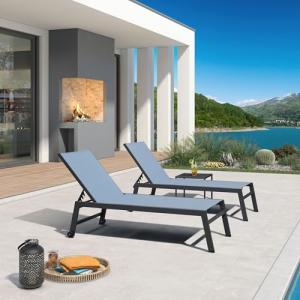
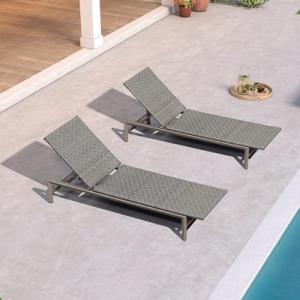
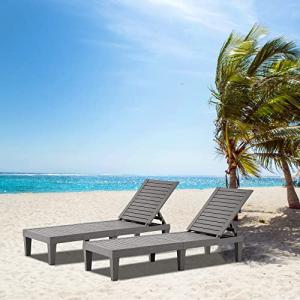
Outdoor chaise lounges are where the category really earns its keep. A well-chosen outdoor chaise turns a patio into a resort, a pool deck into a place worth lingering, and a garden corner into a genuine destination.
Materials That Earn Their Place Outside
Outdoor furniture lives a harder life than indoor pieces, and the materials you choose will determine how long your investment lasts.
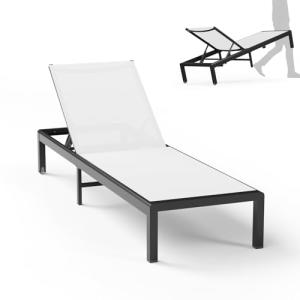
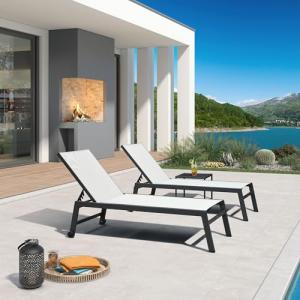
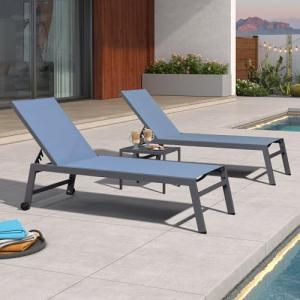
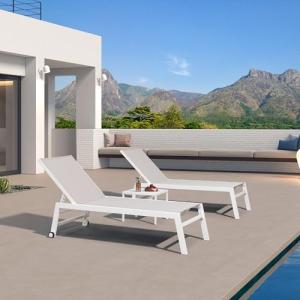
Aluminium is the workhorse of outdoor chaise frames. It's lightweight enough to reposition without effort, naturally rust-resistant, and holds up to rain and sun without complaint. Powder-coated aluminium comes in a wide range of colours — matte black, warm white, bronze, and charcoal are all popular choices that age gracefully.
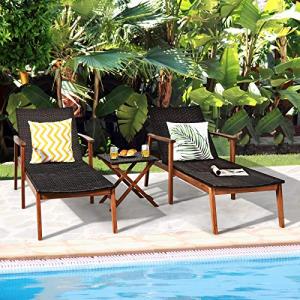
Teak is the gold standard for premium outdoor furniture. Naturally rich in oils, teak resists moisture, warping, and insects without the need for chemical treatment. Left untreated, it weathers to a distinguished silvery grey. With occasional oiling, it keeps its warm honey-brown tone. Teak chaises are heavier and more expensive, but they're genuinely built to last decades.
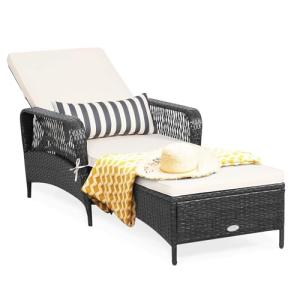
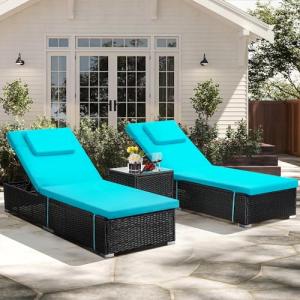
Synthetic resin wicker gives you the casual, woven look of traditional rattan without the vulnerability to moisture and UV damage. High-quality resin wicker is UV-stabilised and won't fade, crack, or fray over several seasons. It's a smart choice for covered patios and poolside settings where aesthetics matter but practicality can't be compromised.
Stainless steel and marine-grade materials are worth considering for coastal properties where salt air accelerates corrosion. Not all metals advertised as rust-resistant actually hold up to coastal conditions — look specifically for marine-grade or 316-grade stainless steel if you're near the sea.
Cushions and Weather Resistance
Most outdoor chaises are sold with cushions, but not all cushions are created equal. Look for cushion covers made with solution-dyed acrylic fabric — brands like Sunbrella are the industry benchmark. Solution-dyed means the colour runs through the entire fibre rather than being applied to the surface, which makes it significantly more fade-resistant. A quality outdoor cushion should handle five or more seasons without losing its colour or developing mildew, provided it's allowed to dry properly after rain.
For pool areas specifically, consider quick-dry foam inserts, which drain water rapidly and dry much faster than standard cushioning.
How to Choose the Right Chaise Lounge
With so many styles, materials, and price points available, it helps to narrow things down with a few clear questions.
Where Will It Live?
This is the first and most important decision. Outdoor chaises need weather-resistant frames and fabrics. Indoor chaises have far more latitude — you can prioritise comfort and visual impact over durability. If a piece might move between indoor and covered outdoor spaces, look for materials that work in both contexts: powder-coated aluminium with performance fabric cushions, for example, can look elegant inside and survive outside.
How Do You Actually Want to Use It?
Are you a flat-out, horizontal napper? Look for chaises with fully reclinable backs, ideally adjustable to multiple positions so you can read upright and sleep flat. Do you prefer a semi-reclined position for reading or watching TV? A fixed-back chaise with a well-angled recline might be more comfortable for long sessions than one that lies flat. Do you want to sit upright sometimes? Choose a chaise with a higher, more upright back option.
What's the Scale of Your Space?
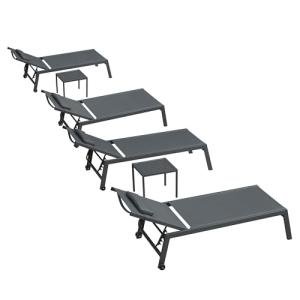
Chaise lounges are not small pieces of furniture. Before you fall for something in a showroom or on a product page, measure your space. A standard chaise is typically between 150cm and 185cm long and 60–80cm wide. In a small bedroom, a full-size chaise can overwhelm the room — look for compact or apartment-scale versions. On a generous terrace, a single chaise might look forlorn — consider a pair flanking a side table, or a larger sectional configuration that incorporates a chaise element.
Consider Longevity Over Trend
It's tempting to chase whatever colour or silhouette is having a moment, but a chaise lounge is a considered purchase. The most satisfying ones are chosen for how they feel and how they'll age. Classic silhouettes — a clean-lined teak sun lounger, a timeless tufted velvet reading chaise — outlast trends. Bold colour choices are rewarding when they feel personal rather than seasonal.
Styling Your Chaise Lounge
A chaise lounge is statement furniture. It tends to anchor a corner or section of a room rather than blending into the background, and that's worth working with rather than against.
Outdoors, keep things simple: a side table or drinks trolley at arm's reach, a folded throw or towel draped over the foot, and good lighting for evening use. Lanterns, wall-mounted outdoor lights, or a simple string overhead can transform a chaise corner into a destination after dark.
Indoors, the chaise benefits from a bit of layering: a soft throw, two or three cushions in complementary textures, a floor lamp positioned for reading, and a small side table for books and glasses. If your chaise is in a bedroom, place it at an angle rather than pushed flat against a wall — it reads as more deliberate, more designed.
A Final Word on Why a Chaise Lounge Is Worth It
There's a case to be made that the chaise lounge is the most honest piece of furniture you can buy. It doesn't pretend to be productive. It doesn't multi-task. It exists for one purpose — to give you somewhere comfortable, beautiful, and specifically designed for the act of resting.
In homes that are increasingly asked to function as offices, gyms, classrooms, and entertainment centres all at once, there's something genuinely valuable about a piece of furniture that pushes back on all of that. A chaise lounge says: this corner is for you, unhurried, doing exactly as little as you like.
That's a surprisingly rare thing to find in a room. And once you have it, you'll wonder how you ever managed without it.