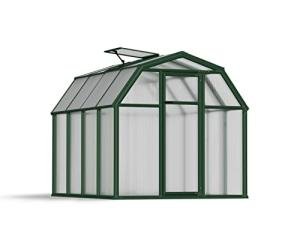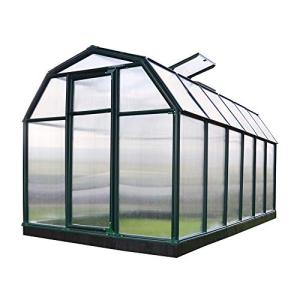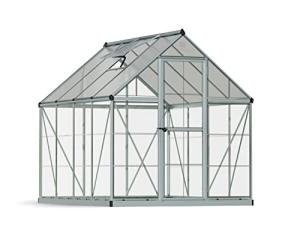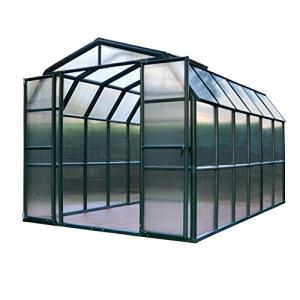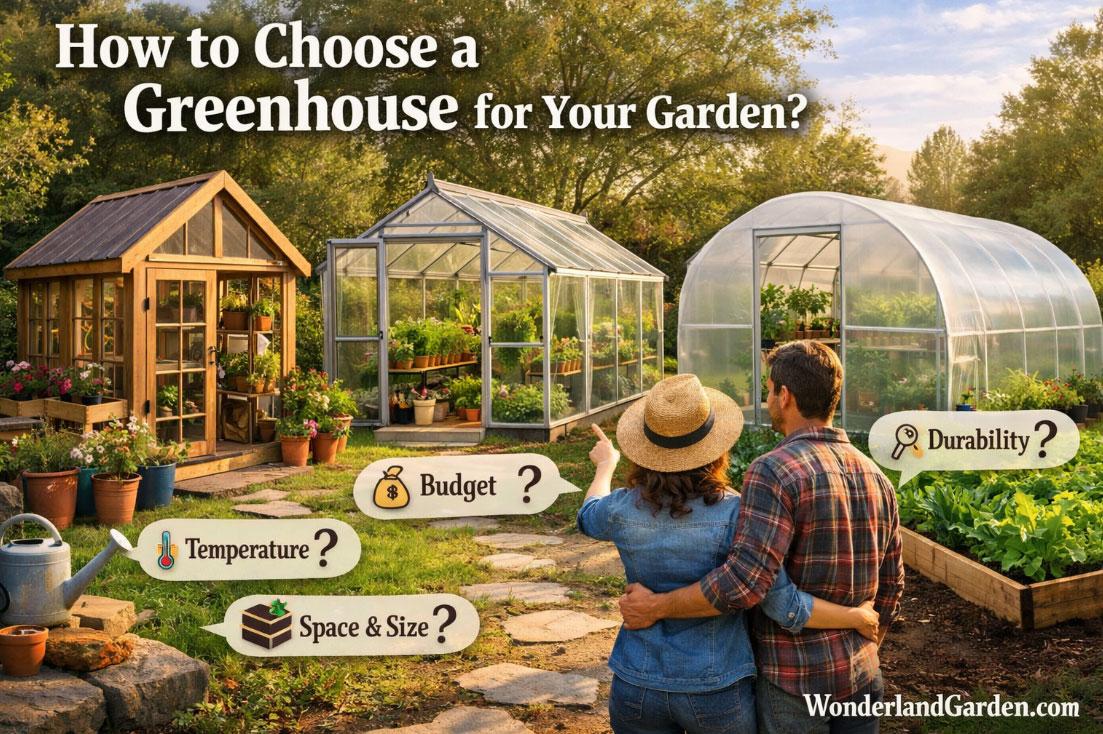
There's a moment every serious gardener eventually faces. You're standing in your garden in late October, looking at your tomato plants wilting under the first frost, and you think: never again. Or maybe you've been nursing seedlings under a grow light in your spare bedroom for three months and your partner is quietly losing patience. Or perhaps you've simply run out of excuses to put off the purchase you've been researching for two years.
Whatever brought you here, you're in the right place. Choosing a greenhouse is one of the most consequential decisions a gardener can make — and one of the most confusing. Walk into any garden centre or spend twenty minutes online and you'll find an overwhelming range of options: polycarbonate versus glass, lean-to versus freestanding, cold house versus heated, timber versus aluminium. Prices range from £150 to £15,000. Claims range from modest to miraculous.
This guide cuts through the noise. By the end, you'll know exactly what you need, what you can skip, and what questions to ask before handing over your money.
Before You Even Think About Glass: Know Why You Want a Greenhouse
Most people skip this step, and most people regret it. The type of greenhouse you need depends almost entirely on what you plan to grow — and when.
The overwintering gardener wants somewhere frost-free to store tender perennials, citrus trees, and dahlia tubers. They don't need heat, they just need protection. A simple, unheated polycarbonate greenhouse will serve them perfectly, and spending more is genuinely wasteful.
The propagator needs a greenhouse for starting seeds early — February through April. They want a warm, humid environment and ideally a heated propagation bench. They use it intensively for three months and then pivot to outdoor growing. They should prioritise ventilation, staging, and a reliable heating system that won't burn the house down if left unattended.
The year-round grower wants tomatoes in June, cucumbers in July, chillies through September, and winter salads through December. They need a properly insulated structure, good ventilation, and enough staging and floor space to manage a rotating crop plan. They're the ones who'll genuinely use every square metre.
The exotic enthusiast — orchids, tropical plants, pitcher plants, coffee trees — needs a glasshouse that can maintain consistent temperatures year-round. For them, glazing quality, thermal efficiency, and heating capacity are non-negotiable.
Identify yourself honestly. Overbuying is just as problematic as underbuying. A massive heated greenhouse that you only use in spring is an expensive, inefficient mistake.
Size: Go Bigger Than You Think You Need
This is the one piece of advice that appears in virtually every greenhouse guide ever written, and it appears there because it's true. Every greenhouse owner who has ever owned a greenhouse will tell you the same thing: whatever size you're considering, buy the next size up.
The reason isn't greed or ambition. It's physics and habit. A greenhouse creates growing potential. That potential fills up. You start with a modest collection of tomatoes and a few herbs, and within two seasons you've added a grow bench, a propagation station, overwintering space for tender plants, and somehow a small collection of succulents. The greenhouse that felt generous suddenly feels cramped.
As a working rule: if you're a casual gardener, start with a 6×8 foot (approximately 1.8×2.4m) greenhouse. If you're a dedicated grower, a 10×8 or 10×12 is the practical minimum. If you're growing vegetables seriously — year-round, multiple crops — consider 12×16 or larger.
Also factor in headroom. Standard greenhouses have an eave height of around 1.5m — fine for staging and potted plants, less comfortable for taller crops or for spending extended time inside. If you're growing indeterminate tomatoes or cucumbers, look for a ridge height of at least 2m. Your back will thank you.
The Frame: Aluminium, Timber, or Steel?
The frame is the skeleton of your greenhouse, and like all skeletons, it determines what the structure can and can't do.
Aluminium
Aluminium is the dominant material in modern greenhouse construction, and for good reason. It's lightweight, strong, rust-proof, and requires essentially no maintenance. Aluminium greenhouses are typically less expensive than timber equivalents, easier to assemble, and available in a wider range of sizes and configurations.
The main criticism of aluminium is aesthetic — it has a functional, slightly industrial look that doesn't suit every garden. Some gardeners also find that aluminium frames create more cold bridges (areas where heat escapes) than timber, though modern designs have largely addressed this.
For most home gardeners, aluminium is the sensible choice. It's durable, low-maintenance, and represents excellent value.
Timber
A timber greenhouse — particularly one in western red cedar — is a beautiful thing. The material has natural insulating properties, ages gracefully, and blends into a garden in a way that aluminium never quite manages. If you have a traditional or cottage-style garden, a timber greenhouse will look like it belongs there.
The trade-off is maintenance. Timber needs treating every few years to prevent rot and deterioration. It's also more expensive — sometimes significantly so — and heavier, which can complicate installation.
That said, a well-maintained timber greenhouse will outlast almost anything else on the market. There are cedar greenhouses in English gardens that have been standing for fifty years.
Galvanised Steel
Steel greenhouses are less common in domestic settings but worth knowing about. They're extremely strong, which makes them suitable for larger structures or sites exposed to high winds. Commercial growers favour steel for its longevity and structural capacity. For most home gardeners, however, steel is overkill — heavier, more expensive to install, and no more functional than aluminium for typical use.
Glazing: Glass vs. Polycarbonate
This is where most people get lost, partly because both materials are genuinely good and the right choice depends on your priorities.
Horticultural Glass
Traditional glass is still the gold standard for light transmission. It allows approximately 90% of light through, creates crisp, clear views, and has a longevity that polycarbonate can't match. A glass greenhouse, well-maintained, will last decades without any degradation in performance.
Glass also has a pleasant aesthetic quality — the glint and sparkle of a glass greenhouse in morning sun is unmistakably beautiful. There's a reason serious gardeners and garden designers often specify glass.
The downsides: glass is heavier, more fragile (especially around children and sports-prone gardens), requires toughened safety glass in panels below 800mm or in roof positions (in the UK, this is a regulatory requirement), and tends to make structures more expensive.
If you have a family with young children or a garden that sees flying footballs, tempered glass is essential — but it adds to the cost.
Polycarbonate
Polycarbonate has come a long way from the yellowing, brittle sheets that gave it a poor reputation in the 1980s and 90s. Modern twin-wall polycarbonate (typically 4mm or 6mm) is lightweight, shatter-resistant, and provides reasonable light transmission — typically 80-85%.
The key advantage of polycarbonate is thermal efficiency. The twin-wall structure traps air and provides insulation that single-pane glass simply can't match. If you're heating your greenhouse through winter, polycarbonate will significantly reduce your energy costs.
The downsides: polycarbonate scratches more easily than glass, can become discoloured over time (quality varies enormously between manufacturers), and the diffused light it creates — while good for even plant growth — lacks the clarity of glass.
For cold-climate growing, year-round use, or any situation where heating costs matter, polycarbonate is frequently the smarter choice. For the premium look and maximum light quality in a mild climate, glass wins.
Style and Configuration: Finding Your Fit
Freestanding Greenhouse
The classic form: a structure that stands alone, typically with a ridge roof and glazing on all sides. Freestanding greenhouses offer the most light from all angles, the most flexibility in terms of placement (orientation can be optimised), and the most interior space for staging and growing.
They're the right choice for most gardeners with sufficient garden space — particularly anyone planning to grow crops in beds on the floor of the greenhouse.
Lean-To Greenhouse
A lean-to is built against an existing wall — usually the house or a garden wall — and uses that structure as one side. This has practical advantages: the wall provides shelter and retains heat, which can reduce heating costs significantly. A lean-to against a south-facing house wall creates a particularly warm microclimate.
Lean-tos are ideal for smaller gardens where space is at a premium, and they can look architecturally elegant when integrated with the main building. The limitation is light — because one wall is solid, light only enters from three sides, and a lean-to against a north-facing wall will be significantly shadier than a freestanding structure.
Cold Frame and Mini Greenhouse
For gardeners with very limited space or budget, cold frames and mini greenhouses offer a starting point. These are not substitutes for a full greenhouse, but they're genuinely useful for hardening off seedlings, protecting early crops, and extending the season on a small scale.
They should be seen as complementary to a greenhouse rather than alternatives.
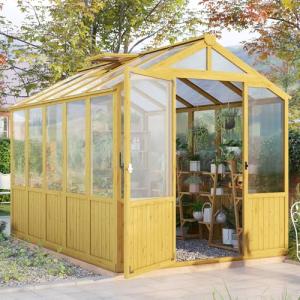
Jocisland 6x8x6.5 Ft Wooden Greenhouse, Pre-Assembled Solid Cedar Frame, Walk-in Design, Lockable Door, Adjustable Roof Vents, Polycarbonate Panels for Outdoor, Garden, Backyard
Product information
$899.99 $799.99
Product Review Score
4.78 out of 5 stars
47 reviewsProduct links
The Comparison Table Every Buyer Needs
| Feature | Aluminium + Glass | Aluminium + Polycarbonate | Timber + Glass | Lean-To | Steel Frame |
|---|---|---|---|---|---|
| Light Transmission | ★★★★★ | ★★★★☆ | ★★★★★ | ★★★☆☆ | ★★★★☆ |
| Thermal Efficiency | ★★★☆☆ | ★★★★★ | ★★★★☆ | ★★★★☆ | ★★★☆☆ |
| Durability | ★★★★☆ | ★★★★☆ | ★★★★★ | ★★★★☆ | ★★★★★ |
| Maintenance Required | Low | Low | Medium–High | Low–Medium | Low |
| Aesthetics | Functional | Functional | Beautiful | Variable | Industrial |
| Cost | Mid | Low–Mid | High | Mid | High |
| Shatter Resistance | Low (toughened: High) | ★★★★★ | Low (toughened: High) | Varies | Varies |
| Best For | Year-round growing | Heating efficiency | Premium look | Small gardens | Large structures |
| Lifespan | 20–30 years | 15–25 years | 30–50 years | 20–30 years | 30+ years |
| Assembly Difficulty | Medium | Easy–Medium | Medium–Hard | Medium | Hard |
Heating: How Cold Does It Actually Get Where You Live?
The heating question is often approached backwards. People decide they want a heated greenhouse and then figure out what to grow. The smarter approach: decide what you want to grow, determine the minimum temperature required, and work out whether your local climate demands active heating at all.
In most of the UK, an unheated greenhouse will stay between 2–5°C warmer than outside temperatures. For frost-free overwintering, that's often sufficient — a greenhouse in southern England will rarely need heating to keep most tender perennials alive through winter.
For propagation (germination temperatures of 18–24°C), you don't need to heat the whole greenhouse — a heated propagation mat or a small electric propagator on your staging will do the job more efficiently and cheaply.
For genuinely year-round tropical growing, you'll need a proper heating system: either electric tubular heaters (clean, easy to thermostat, but can be expensive to run), paraffin heaters (cheap to buy, inexpensive to run, but require monitoring and produce moisture), or gas heaters (efficient, but require ventilation and permanent connection).
Whatever system you choose, invest in a quality thermostat. A greenhouse that maintains 5°C when you need 5°C uses far less energy than one swinging between 2°C and 12°C.
Ventilation: The Feature Nobody Talks About Enough
Ask most people what they want in a greenhouse and they'll talk about size, glazing, and heating. Ask an experienced grower and ventilation will feature prominently.
Overheating kills plants. A poorly ventilated greenhouse on a sunny April day can reach 50°C or more — lethal for most crops and actively harmful to seedlings. The industry standard is that ventilation area should equal 20% of the floor area, but in practice, the more roof vents you can get, the better.
Automatic vent openers — bimetallic devices that open vents when temperatures rise and close them when they fall — are one of the best investments a greenhouse owner can make. They cost around £20–£40 per vent and work without electricity. If you're ever away from home or simply can't check your greenhouse mid-day in summer, these are essential.
When comparing greenhouse models, count the vents. A greenhouse with only one ridge vent will struggle on warm days. Look for models with at least two roof vents and, ideally, louvre vents low down on the sides to create through-flow ventilation.
The Foundation Question: More Important Than You'd Think
Greenhouses need a level, stable base, and getting this wrong is one of the most common (and expensive) mistakes new greenhouse owners make.
A concrete base is the gold standard — permanent, stable, and level. For larger greenhouses, it's generally the right choice. The downside is cost and the fact that it's essentially irreversible.
A slab or paving base is more flexible and perfectly adequate for most sizes. It provides good drainage if gaps are left between slabs, and it can be lifted and adjusted if needed.
A timber frame bolted to screw anchors is a popular option for lightweight structures on soft ground — less permanent than concrete, but stable enough for most aluminium greenhouses under typical conditions.
Whatever base you choose, it must be level — even a few centimetres of variation will create gaps in glazing and make doors and vents operate poorly.
Some greenhouses come with a built-in base frame (essentially a steel or aluminium perimeter that sits directly on the ground). These are adequate for lightweight structures but may not provide sufficient stability in exposed sites or for larger greenhouses.
Planning Permission and Neighbours
In the UK, most domestic greenhouses fall within permitted development rights and don't require planning permission, provided they meet certain conditions: they must not exceed 50% of the total area of land around the original house, must not be forward of the principal elevation, and must not be taller than 4m (or 3m with a flat roof) if within 2m of the boundary.
That said, conditions vary — particularly in conservation areas, Areas of Outstanding Natural Beauty, or on listed buildings, where permitted development rights may be restricted. Always check with your local planning authority before starting construction if you have any doubts.
As for neighbours: a large greenhouse against a shared boundary can cause tension. Think about shading, visual impact, and access for maintenance. A conversation before installation is almost always worth having.
Second-Hand Greenhouses: Genuine Value or False Economy?
The second-hand market for greenhouses is substantial, and it's possible to find excellent structures at a fraction of new prices. But there are pitfalls.
Dismantling and re-erecting a greenhouse is considerably more work than building a new one. Glazing panels rarely survive the process intact — expect to replace 20–40% of panes. Seals and fixings may have deteriorated. And old-style horticultural glass (pre-toughened glass requirements) should be replaced in any panel that poses a safety risk.
That said: a second-hand Victorian-style timber greenhouse in good structural condition, properly re-glazed, can be extraordinary. If you have the skills, the time, and the right opportunity, it's absolutely worth pursuing.
For everyone else — particularly first-time greenhouse owners — a new structure from a reputable manufacturer will give you warranty coverage, installation support, and the peace of mind that comes from knowing exactly what you've got.
Five Questions to Ask Before You Buy
1. What is the minimum temperature I want to maintain? This determines whether you need active heating and what kind.
2. What is my primary use? Propagation, overwintering, year-round cropping, or exotics all have different requirements.
3. Where will it go, and which direction does it face? South-facing is ideal for maximum light. East-west orientation along the ridge maximises sun in the northern hemisphere.
4. Am I buying the right size, or just the size that fits the budget? If the budget doesn't stretch to the size you need, it may be worth waiting rather than buying a structure you'll outgrow in a season.
5. Who will maintain it? Glass greenhouses need cleaning. Timber needs treating. Heating systems need servicing. Be realistic about the time you'll invest.
A Final Word on Patience
The greenhouse market rewards patience. Manufacturers run sales — notably in late summer and autumn when demand drops — and discounts of 20–30% are not uncommon. Waiting a season to get the right greenhouse at the right price is almost always worth more than buying the wrong greenhouse immediately.
The best greenhouse for your garden is the one you'll actually use — sized correctly, glazed appropriately, positioned well, and suited to the crops you genuinely want to grow. Get those fundamentals right and you'll have a structure that transforms your gardening for decades.
Everything else is detail.