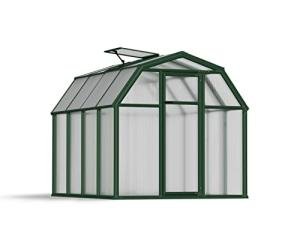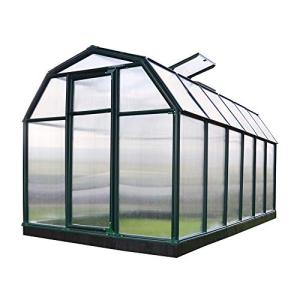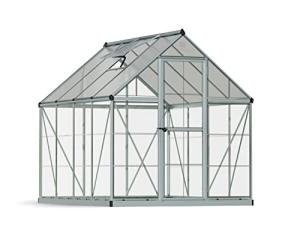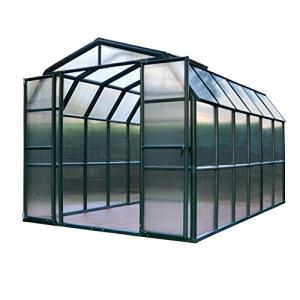
There's something quietly radical about a greenhouse. It bends the rules of climate, geography, and season — letting a gardener in Minnesota grow tomatoes in February, or a grower in coastal Scotland cultivate Mediterranean herbs without apology. But the structure itself is just as important as the plants inside it. The material you choose for your greenhouse walls isn't a detail. It's a decision that shapes light quality, temperature stability, durability, maintenance load, and cost — for years to come.
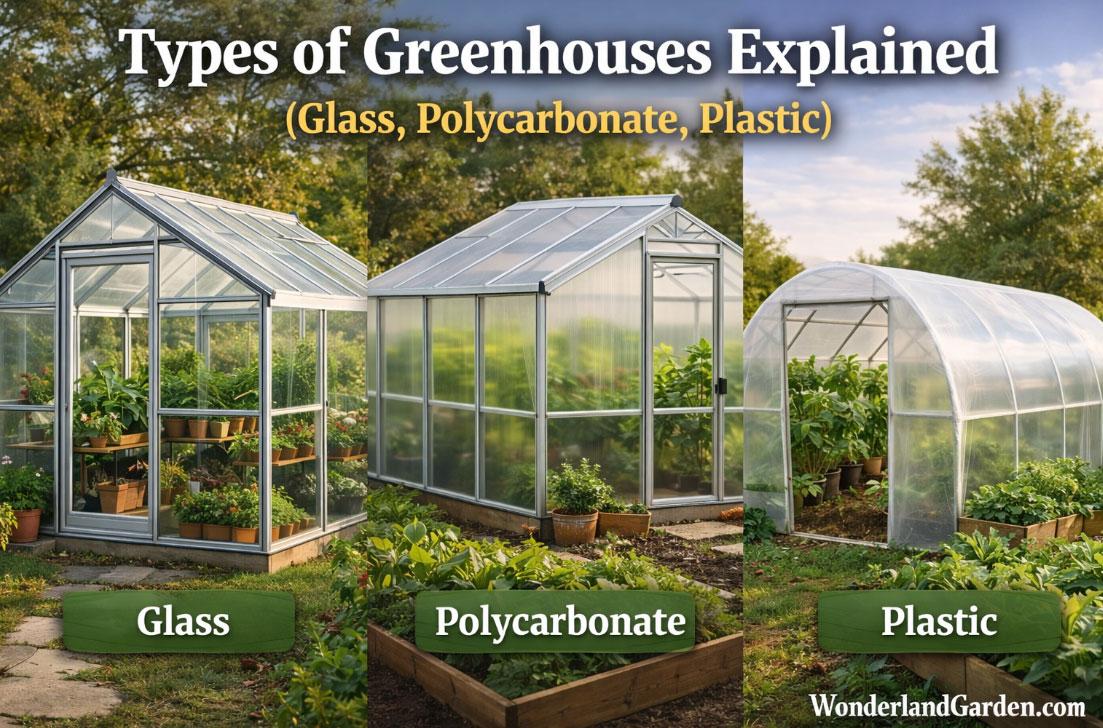
Walk into any garden centre or horticultural supply show and you'll find three dominant materials: glass, polycarbonate, and plastic (usually polyethylene film). Each has its devotees. Each has its trade-offs. And each suits a different grower, a different budget, and a different kind of growing ambition.
This guide cuts through the noise to give you the full picture — with the kind of candour that comes from knowing that the wrong choice can mean a cold snap wiping out your seedlings, or a thousand-dollar structure warping in three years.
Glass Greenhouses — The Classic That Still Delivers
A History Worth Respecting
Glass is where the greenhouse story begins. The earliest structures built for growing plants — the giardini botanici of Renaissance Italy, the orangeries of 17th-century Europe — were glass and stone and ambition. By the Victorian era, glass greenhouses had become architectural showpieces. The Crystal Palace, built in 1851, was essentially the logical extreme of the form: a greenhouse the size of a small city.
That heritage matters because it reflects something real. Glass has been trusted for centuries not out of nostalgia, but because it works. It transmits light at roughly 90% efficiency — the highest of any greenhouse material — with virtually no distortion or filtering. What goes in comes out on the other side, and your plants receive the full spectrum of natural daylight.
What Glass Actually Does for Your Plants
Light is food for plants. More precisely, photosynthetically active radiation — the portion of the light spectrum plants use to grow — determines how vigorously your crops develop. Glass transmits this radiation with exceptional fidelity. It doesn't yellow, doesn't degrade optically, and doesn't scatter light in ways that reduce its effective intensity.
For serious gardeners growing light-hungry crops — tomatoes, cucumbers, peppers, or anything requiring long photoperiods — this matters enormously. A glass greenhouse in mid-winter lets in every lumen that's available. That's not a trivial advantage.
Glass also has superior heat retention at night compared to single-skin alternatives. It holds warmth, reduces condensation issues when properly vented, and creates a stable microclimate that plants respond to positively. The diurnal temperature swing — the gap between daytime highs and nighttime lows — tends to be less dramatic in a glass structure, which reduces plant stress.
The Honest Case Against Glass
Let's not romanticise it. Glass is heavy, brittle, expensive, and unforgiving when it breaks. A hailstorm or a wayward football can shatter a pane, and replacement glass isn't cheap. Installation requires more skill and care than plastic alternatives. The structure supporting glass must be robust — usually aluminium or steel — which adds to the initial cost.
Weight is also a real consideration for foundations. A glass greenhouse typically requires a proper concrete base, which means permitting, planning, and money before you've even started building.
Then there's safety. Horticultural glass is thinner than domestic glazing, and broken panes are sharp. Many modern glass greenhouse buyers opt for toughened safety glass, which costs more but shatters into blunt chunks rather than lethal shards. It's worth every penny if children or pets use the garden.
Energy performance is another sticking point. Single-pane glass is a poor insulator by modern standards. Heat that builds up during the day bleeds out at night. Double-glazed glass greenhouses exist and dramatically improve this — but they're expensive and add significant weight.
Who Should Choose Glass
Glass suits gardeners who plan to stay put, invest properly, and want a structure that looks beautiful and performs without compromise for decades. It's the right choice for a permanent kitchen garden feature, a serious orchid or tropical collection, or anyone who genuinely values maximum light transmission and doesn't want to revisit the decision in ten years.
Polycarbonate Greenhouses — The Modern Workhorse
How Polycarbonate Changed the Game
Polycarbonate panels arrived in the horticultural market in the 1970s and 80s and transformed what an affordable, practical greenhouse could look like. Here was a material that was light, strong, easy to work with, relatively cheap, and — crucially — offered insulation performance that glass couldn't match without expensive double-glazing.
Today, polycarbonate is the most common greenhouse glazing material in the domestic and commercial mid-market. It comes in two main forms: twin-wall (two layers of polycarbonate with an air gap between them) and multi-wall (three or more layers for even better insulation). The twin-wall 6mm thickness is the standard for most home greenhouses. Thicker variants — 10mm, 16mm — are used in colder climates or commercial growing where heating costs are a primary concern.
The Thermal Argument
The defining advantage of polycarbonate over glass is thermal performance. The air-filled channels in twin-wall and multi-wall polycarbonate act as insulation, reducing heat loss significantly compared to single-pane glass. In practical terms, a polycarbonate greenhouse is easier and cheaper to heat — and in mild climates, it may stay warm enough through the night without supplemental heating when a glass structure would not.
This matters most in late autumn and early spring — the shoulders of the growing season when a degree or two of overnight protection can mean the difference between thriving seedlings and frost-damaged casualties. Polycarbonate buys you that margin without the expense of a heated glass house.
Light Transmission — The Trade-Off
Here's where polycarbonate has to make its case honestly. It transmits less light than glass — typically around 70–80% for twin-wall panels. The multi-layer structure diffuses light as it passes through, which has a mixed effect. Diffused light reduces harsh shadows and hot spots, which some plants respond well to. But the reduction in total light intensity is real, and in winter, when every lumen counts, you feel it.
Polycarbonate also degrades optically over time. Most panels are UV-coated on the outer face to slow this process, but even high-quality polycarbonate will yellow and cloud somewhat over a decade or more. This isn't a dealbreaker — most polycarbonate greenhouses perform well for 10–15 years before panels need replacing — but it's worth knowing that the light your plants receive will gradually diminish.
There's also the visual aesthetic to consider. Polycarbonate is opaque in a way that glass isn't. You can see through it, but not clearly. For gardeners who value the look of a traditional glass structure — gleaming, transparent, architecturally crisp — polycarbonate is a compromise.
Durability and Practicality
On pure durability metrics, polycarbonate wins convincingly over glass. It's virtually unbreakable under normal conditions — it flexes under impact rather than shattering, which makes it far safer and far cheaper to maintain. A hailstorm that would crack glass panels will barely leave a mark on polycarbonate.
It's also significantly lighter than glass, which means the supporting framework can be lighter and cheaper. Many polycarbonate greenhouse kits are genuinely DIY-friendly in a way that glass structures aren't. For gardeners who want to build their own structure over a weekend, polycarbonate is almost always the chosen material.
The panels are easy to cut with basic tools, straightforward to replace if damaged, and available in a wide range of standard sizes. There's a reason commercial propagation operations — where practicality and cost-efficiency matter more than aesthetics — overwhelmingly use polycarbonate.
Who Should Choose Polycarbonate
Polycarbonate is the sensible choice for most domestic gardeners. It offers a strong balance of thermal performance, durability, ease of installation, and cost. It's particularly well-suited to gardeners in colder climates where insulation is a priority, to those who want to extend the growing season without paying for a heated glass structure, and to anyone building their first greenhouse and wanting a forgiving, practical material that doesn't demand precision installation.
Plastic (Polyethylene Film) Greenhouses — Low Cost, High Reward
Don't Dismiss the Humble Poly Tunnel
Plastic film greenhouses — typically referred to as poly tunnels or hoop houses — occupy a different niche from glass and polycarbonate structures. They're not pretty in the traditional sense. They don't have the permanence of a glass lean-to or the neat modernity of a polycarbonate kit greenhouse. What they have is extraordinary value for money and a surprising amount of growing performance.
A poly tunnel covering 6 × 12 metres — a serious growing space — costs a fraction of what an equivalent glass or polycarbonate structure would. For market gardeners, smallholders, and serious food growers who need covered growing space by the acre rather than the square metre, polyethylene film is simply the only economically viable option.
What Polyethylene Film Does
Modern horticultural polyethylene film is not the flimsy plastic sheet it might sound like. UV-stabilised poly film — the standard for greenhouses — is designed to last 3–5 years before UV degradation requires replacement. Some specialist films claim 7–10 year lifespans. The film can be treated to control condensation, diffuse light, retain infrared radiation (anti-drip IR film is particularly effective at retaining heat), and in some cases filter specific wavelengths to influence plant growth.
Light transmission through quality poly film is competitive with polycarbonate — around 75–85% for standard grades, and higher for specialist optical films. Because it's a single skin, it doesn't diffuse light as dramatically as multi-wall polycarbonate, giving a closer-to-natural light environment inside.
Thermal performance is where plastic film is weakest. A single-skin poly tunnel loses heat rapidly on cold nights. Double-skin inflation systems — where two layers of film are separated by a continuously inflated air gap — dramatically improve this, and are standard in serious commercial growing operations. But for a basic domestic poly tunnel, expect to lose heat quickly when temperatures drop.
Flexibility as a Feature
One of polyethylene's underrated advantages is its flexibility — both literally and figuratively. A poly tunnel can be set up quickly, moved if needed, and scaled with relative ease. The hooped frame structure can be extended by adding additional bays. If you decide to move house, you take it with you. If a season requires more space, you add it.
This isn't possible with glass or polycarbonate. Those are permanent or semi-permanent investments. A poly tunnel is capital you can reconfigure.
For market gardeners and smallholders who grow seasonally and intensively, this matters. Crop rotation that includes covered and uncovered beds is easier to manage when the covering is moveable. Extending a poly tunnel to cover new beds when expanding production is a weekend job rather than a building project.
The Aesthetic and Longevity Reality
It's worth being direct: poly tunnels are not beautiful structures. They sit in a garden or field like a utilitarian interloper — functional, slightly industrial, not designed to impress. For gardeners who care deeply about how their space looks, this can be a real deterrent.
The replacement cycle is also a genuine ongoing cost. Film that needs replacing every four years means budgeting for that cost from the start. The film replacement itself is a physical task — usually requiring two or three people and a calm, windless day. It's manageable, but it's not the set-and-forget simplicity of a glass or polycarbonate structure.
Who Should Choose Plastic Film
Plastic is the right choice for serious food growers who need maximum growing area per pound spent, for market gardeners and smallholders, for anyone who wants to trial covered growing before committing to a permanent structure, and for growers in regions where the economics of larger covered areas are important. It's not the choice for a kitchen garden ornament. It is absolutely the choice for productive, practical food growing at scale.
Head-to-Head Comparison
Here's the full comparison across the key decision-making criteria:
| Feature | Glass | Polycarbonate (Twin-Wall) | Plastic Film (Poly Tunnel) |
|---|---|---|---|
| Light Transmission | ~90% (highest) | ~70–80% | ~75–85% |
| Light Quality | Natural, full spectrum | Diffused, slightly reduced | Natural, minimal diffusion |
| Insulation (U-Value) | Poor (single pane) / Good (double) | Good | Poor (single skin) / Better (double skin) |
| Durability | Fragile (single pane), brittle | Very durable, flexible | Moderate; UV degrades film |
| Lifespan | 25–50+ years | 10–20 years | 3–10 years (film replacement) |
| Upfront Cost | High | Medium | Low |
| Ongoing Cost | Low (minimal maintenance) | Low | Medium (film replacement) |
| Weight | Heavy | Light | Very light |
| Installation Complexity | High (requires skilled installation) | Medium (DIY-friendly) | Low (quick setup) |
| Aesthetic | Excellent (traditional/architectural) | Good (modern/clean) | Functional/utilitarian |
| Safety | Risk of sharp breakage (mitigated by toughened glass) | Safe (flexes, doesn't shatter) | Safe |
| Scalability | Fixed | Semi-fixed | Highly flexible |
| Best For | Permanent gardens, serious collectors, ornamental use | Most home gardeners, colder climates | Food growing at scale, market gardens |
Key Factors to Decide By
Climate and Heating Budget
If you're in a cold region and heating costs are a concern, polycarbonate's insulation advantage over single-pane glass is meaningful. If you're in a milder climate and prioritise light — for orchids, tropical plants, or winter salads — glass pays dividends year-round. In very cold climates where a poly tunnel needs supplemental heat, the double-skin inflation option for polyethylene is worth the investment.
Budget — Upfront vs. Long-Term
Glass costs more to buy and install, but once it's up, your ongoing costs are close to zero. Polycarbonate is cheaper initially and still low-maintenance. Poly film is cheapest to install but has a recurring film replacement cost that should be factored into any long-term comparison. On a 15-year horizon, the true cost differences between glass and polycarbonate are smaller than the headline prices suggest.
What You're Growing
High light-demand crops — tomatoes, peppers, cucumbers, most fruiting vegetables — benefit from the superior light transmission of glass. Propagation of seedlings, herbs, and leafy greens is excellent in polycarbonate. Large-scale food growing — brassicas, cut flowers, salad leaves, root vegetables — is where poly tunnels come into their own.
How Permanent You Want to Be
This is an underrated question. A glass greenhouse is a garden feature that adds property value and becomes part of the landscape. It's not something you move or change lightly. Polycarbonate kit greenhouses occupy a middle ground — they're permanent enough to invest in, but panels can be replaced and structures can be extended. A poly tunnel is infrastructure, not architecture. That flexibility is an asset if your growing needs are evolving.
The Verdict — There's No Universal Right Answer
Every guide like this eventually has to resist the temptation to declare a winner. The truth is that the best greenhouse material is the one that matches your specific situation — and that will be different for a retired gardener in Somerset growing orchids, a market gardener in Aberdeenshire producing salad leaves year-round, and a suburban grower extending their season for tomatoes and courgettes.
Glass rewards patience and investment. It's the choice of permanence, of seriousness, of wanting the growing environment to be as close to optimal as possible. Polycarbonate is the choice of pragmatism, of wanting a capable structure that's forgiving and cost-effective. Plastic film is the choice of productivity — raw growing area, economically delivered.
What unites all three is the fundamental act they enable: growing food and plants outside the constraints of the seasons you were born into. Whatever you build it from, a greenhouse is a modest form of defiance against the limits of climate and geography — and that's something worth investing in properly.
Frequently Asked Questions
Can I mix materials in one structure?
Yes. Some growers use glass on the south-facing roof panels (where light is most valuable) and polycarbonate on the sides and north-facing roof (where insulation is more important than maximum light). This hybrid approach is particularly popular in cold climates.
How long does polycarbonate last before it yellows?
Quality UV-coated polycarbonate from a reputable manufacturer should maintain good optical clarity for 10–15 years. Cheaper panels without proper UV coating may yellow noticeably within 5 years. Always check the manufacturer's warranty period for optical clarity — it tells you a lot about panel quality.
Is toughened glass worth the extra cost?
For any greenhouse where children or pets have access, yes, unequivocally. Standard horticultural glass shatters into large, sharp fragments. Toughened (tempered) glass breaks into small, blunt pieces. The premium — typically 20–30% over standard glass — is modest insurance against a serious injury.
Can a poly tunnel replace a glass greenhouse?
For food production purposes, yes, absolutely — and it does so at a fraction of the cost. For ornamental growing, light-sensitive collections, or year-round use in cold climates without additional heating, a poly tunnel's thermal limitations are more significant. The two structures serve different ambitions, and the best choice depends on what you're trying to grow.
What's the most energy-efficient option?
Multi-wall polycarbonate — particularly 16mm or 25mm panels with three or more walls — offers the best insulation performance per unit cost. Double-glazed glass is technically superior but significantly more expensive. For very cold climates where heating costs dominate the operating budget, the insulation performance of thick polycarbonate can meaningfully reduce running costs over a season.