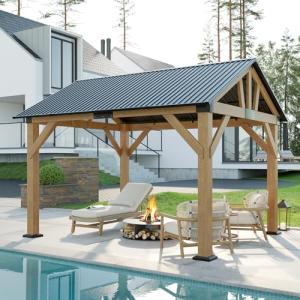
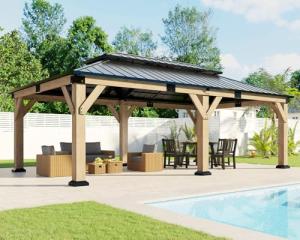
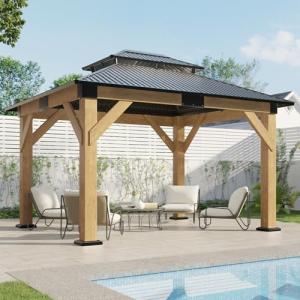
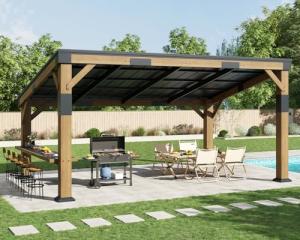
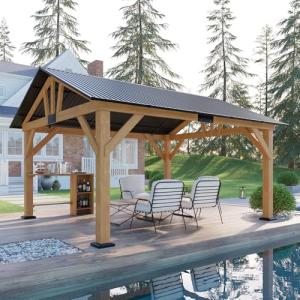
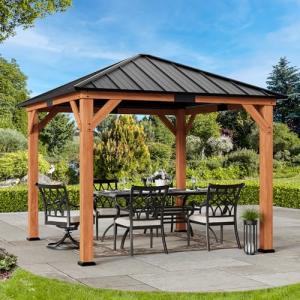
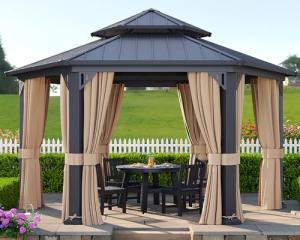
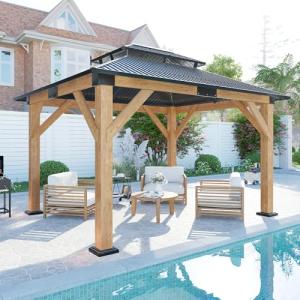
Why Choose a Wooden Gazebo?
Let's be honest — there are cheaper options out there. You can find a pop-up gazebo for a fraction of the price of a solid timber structure. But those lightweight frames and polyester canopies aren't really in the same conversation. They're temporary. A proper wooden gazebo is permanent.
Wood has a natural warmth and character that no manufactured material can replicate. Every grain pattern is unique. Every piece of timber has a story. When you build with wood, you're working with a material that has been used for shelter, craftsmanship, and beauty for thousands of years — and there's a very good reason it hasn't been replaced.
Beyond aesthetics, wooden gazebos offer real structural integrity. A well-built timber frame can handle wind, snow load, and the general wear of outdoor life with ease. They're sturdy enough to hang lights, fans, curtains, and planters from. They can support the weight of a solid roof rather than just a fabric canopy. And because they're made from a natural material, they blend into garden settings in a way that aluminium or plastic simply can't.
Wooden gazebos also add real value to your property. Outdoor living spaces are among the most sought-after features in residential real estate, and a beautifully constructed timber gazebo is a permanent improvement — not a garden accessory.
Wood Species: Which Timber Is Right for You?
Not all wood is created equal, especially when it's going to live outside year-round. The species you choose affects how your gazebo looks, how long it lasts, and how much maintenance it needs.
Cedar
Western red cedar is one of the most popular choices for outdoor structures, and it earns that reputation honestly. It's naturally resistant to moisture, insects, and decay — which means it performs well outdoors without needing to be pressure-treated with chemicals. Cedar is also lightweight relative to its strength, which makes it easier to work with during installation. Its reddish-brown tones are beautiful fresh, and it weathers to an attractive silver-grey if left untreated. If you want something low-maintenance and naturally beautiful, cedar is an excellent starting point.
Pressure-Treated Pine
Pressure-treated pine is the workhorse of outdoor construction. It's chemically treated to resist rot and insect damage, making it highly durable even in wet conditions. It's also one of the more affordable timber options, which makes it a popular choice for larger structures where budget matters. The trade-off is aesthetics — pressure-treated pine has a greener tint when fresh and a more utilitarian look overall. That said, it takes paint and stain well, so with the right finish, it can look excellent.
Spruce
Spruce is a lighter, smoother-grained wood often used in gazebo kits. It's not as naturally rot-resistant as cedar, so it typically requires regular sealing or staining to perform well outdoors. However, spruce has a clean, pale appearance that looks crisp and fresh, especially with a clear or lightly tinted finish. It's a good option if you're going for a bright, airy aesthetic.
Hardwoods: Oak, Teak, and Ipe
For premium gazebos, hardwoods like oak, teak, and ipe offer unmatched durability and beauty. Teak in particular is legendary for outdoor use — its natural oil content makes it extraordinarily resistant to moisture and rot, and it develops a gorgeous patina over time. Ipe (also known as Brazilian walnut) is one of the densest, hardest woods available and can last 40 to 50 years outdoors with minimal maintenance. These options come at a higher price point, but for a gazebo that you want to stand as a permanent garden feature for generations, they're worth serious consideration.
Styles and Designs: Finding the Right Shape for Your Space
Wooden gazebos come in a wide range of shapes and styles. The right choice depends on your garden's size, the architecture of your home, and how you plan to use the space.
Octagonal Gazebos
The classic octagonal gazebo is perhaps the most recognisable style. With its eight sides and peaked roof, it has a traditional, almost Victorian elegance that suits cottage gardens, formal landscaping, and heritage properties beautifully. The symmetrical design allows for excellent views in all directions, making it ideal as a focal point in the centre of a garden.
Rectangular and Square Gazebos
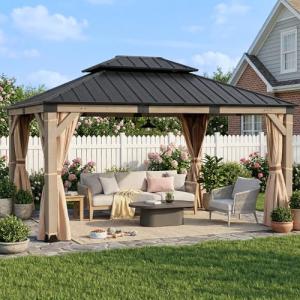
Rectangular and square gazebos offer more versatility than their octagonal counterparts. They fit more naturally into modern garden layouts, can be positioned against fences or walls to maximise usable space, and tend to be easier to furnish with standard outdoor furniture. If you're planning to use your gazebo for dining, entertaining, or as an outdoor room, a rectangular design usually works best.
Pergola-Style Gazebos
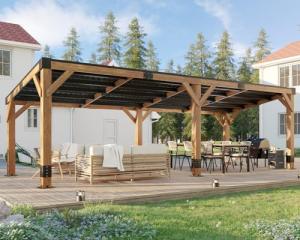
Pergola-style wooden structures blur the line between gazebo and open framework. With their open-beam roofs and climbing plant-friendly design, they create dappled, romantic outdoor spaces. While they don't offer full weather protection, they're perfect for gardens where the goal is atmosphere over function — a backdrop for roses and wisteria, with a table and chairs underneath.
Pavilion Gazebos
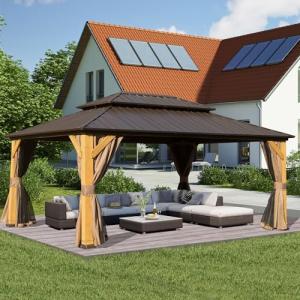
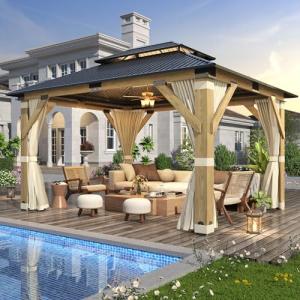
For larger properties or those who want a truly substantial outdoor structure, pavilion-style gazebos offer expansive covered space. These structures often feature solid timber columns, full roofing with shingles or cedar shake, and enough floor space for an outdoor sofa, dining table, bar area, and more. They're essentially outdoor rooms, and they're absolutely spectacular when done well.
Sizing Your Gazebo: How Big Do You Really Need?
Gazebo sizing is one of the most common areas where people get it wrong — usually by going too small. Once your gazebo is built and furnished, the space fills up quickly. A 10-foot octagonal gazebo sounds generous until you put a table and six chairs inside and realise there's no room to move.
As a general rule, think about how you'll primarily use the space and work backwards from there:
For intimate seating for two to four people, a 10 to 12-foot structure is workable. For a dining table that seats six to eight, you'll want at least 12 to 14 feet. For a full outdoor living room setup with a sofa, coffee table, and secondary seating, 16 feet or larger gives you room to breathe.
Also consider the proportions of your garden. A gazebo that's too large can overwhelm a small space, while one that's too small can look underwhelming on a large, open lawn. In general, your gazebo should feel like a natural part of the garden — substantial enough to anchor the space, but not so dominant that it crowds everything else out.
Installation: DIY or Professional Build?
Many wooden gazebos are sold as kit structures, designed for self-assembly. Whether a DIY installation makes sense depends on your skill level, the complexity of the structure, and what's involved in your specific site.
For smaller, simpler kit gazebos, confident DIY builders can absolutely handle the job. Good kits come with pre-cut and pre-drilled components, detailed instructions, and all the hardware you need. You'll typically need basic tools, a level, and at least one helper.
For larger or more complex structures — especially those requiring a concrete foundation, electrical work, or custom modifications — professional installation is money well spent. Getting the foundation right is particularly important. A wooden gazebo that isn't sitting on a level, stable base will develop problems over time, from doors that don't close to structural movement and moisture ingress.
Whatever route you take, pay attention to local planning regulations. In many areas, permanent garden structures above a certain size require planning permission or at minimum need to meet building regulations. Check with your local authority before you build.
Maintaining Your Wooden Gazebo
Wood is a natural material, and it responds to its environment. With the right care, a wooden gazebo will stay beautiful and structurally sound for decades. Neglect it, and you'll start to see problems within a few years.
The most important thing you can do is keep the wood sealed. Whether you're using a clear UV-protective oil, a coloured stain, or an opaque paint, a good surface treatment prevents moisture from penetrating the timber. This is what stops the wood from swelling, cracking, and eventually rotting. Most treatments need to be reapplied every one to three years depending on the product and the conditions.
Keep an eye on areas where water can pool — particularly around the base posts. These are the most vulnerable points on any outdoor timber structure. Good post bases that lift the wood off the ground level make a significant difference here. Check fixings annually for rust and replace any that show signs of corrosion.
Clean your gazebo periodically with a brush and mild wood cleaner to remove mildew, algae, and dirt. In areas with heavy rainfall or humidity, this becomes more important. A little maintenance each season adds years to the life of your structure.
Making It Your Own: Furnishing and Styling Your Gazebo
The structure is just the beginning. The real joy of a wooden gazebo is in making it a space you genuinely love.
Lighting transforms a gazebo from a daytime shelter into an evening retreat. Festoon bulbs strung from the roof beams create an instant warm, inviting atmosphere. Solar lanterns, wall-mounted sconces, or even a simple outdoor chandelier can make the space feel intentional and considered.
Comfortable furniture makes all the difference. Invest in outdoor seating that you'd actually want to sit in for hours — deep cushions, solid frames, and weather-resistant fabrics. A side table or two, a small bar cart, and some outdoor rugs can turn a plain wooden structure into a proper outdoor room.
Climbing plants — roses, wisteria, clematis, jasmine — are one of the most beautiful ways to integrate a wooden gazebo into the garden. Give them time to establish and they'll soften the lines of the structure, add fragrance, and create a sense of the gazebo growing organically from the landscape itself.
Finally, don't underestimate the power of small details. A blanket basket for cool evenings. A herb pot on the railing. A chalkboard with a menu for when you're hosting. These are the touches that make a gazebo feel lived-in and loved — not just a garden feature, but a real part of your home.
Browse Our Full Range of Wooden Gazebos
Whether you're looking for a compact cedar retreat, a grand hardwood pavilion, or something in between, our collection of wooden gazebos covers the full spectrum of styles, sizes, and price points. Every structure in our range is built from quality timber and designed with real outdoor living in mind.
Take your time exploring. A wooden gazebo is a long-term investment in your home and your quality of life — it deserves careful consideration. And when you find the right one, you'll wonder how you ever enjoyed your garden without it.