What Makes a Vinyl Pergola Different?
Walk through any neighborhood and you'll spot pergolas in all kinds of materials — wood, aluminum, wrought iron, composite. Each has its fans. But vinyl has earned its place at the top of the list for one simple reason: it delivers the classic look of painted wood without any of the work that goes along with it.
Traditional wood pergolas are beautiful when they're new. But wood is a living material, and it reacts to the world around it. Sun bleaches it. Rain warps it. Humidity swells it. Insects find it appetizing. Within a few years, most wood pergolas need sanding, staining, sealing, or some combination of all three. Skip a season or two, and the rot starts to win.
Vinyl doesn't play that game. It's manufactured from PVC (polyvinyl chloride), a material that was essentially engineered to ignore the elements. It doesn't absorb moisture. It doesn't provide a hospitable home for termites or carpenter ants. It doesn't peel, chip, or crack under UV exposure when it's made with the right stabilizers. And it never needs to be painted.
That's not a small thing. Over a ten or twenty-year period, the time and money you'd spend maintaining a wood pergola adds up fast. Vinyl eliminates most of that equation entirely.
The Style Options Are Broader Than You'd Think
One of the biggest misconceptions about vinyl pergolas is that they all look the same — white, boxy, a little suburban. That stereotype hasn't been accurate for years. Today's vinyl pergola market spans a genuinely impressive range of styles, profiles, and configurations.
Classic Attached Pergolas
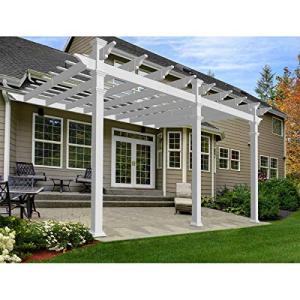
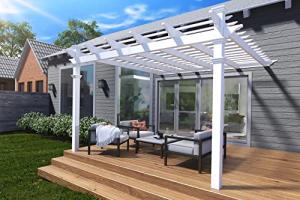
These connect directly to your home, typically anchoring to an exterior wall above a back door, sliding glass door, or patio. An attached vinyl pergola creates a seamless transition between inside and outside living spaces. It feels less like you're "going outside" and more like you're stepping into another room. These are popular for deck-adjacent spaces, kitchen doors that open to a patio, and anywhere you want shade close to the house.
Freestanding Pergolas
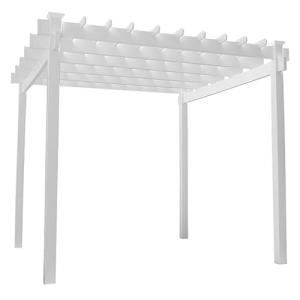
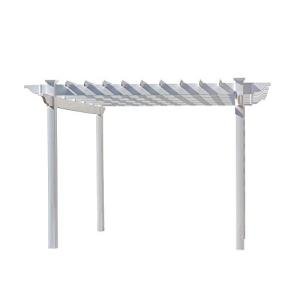
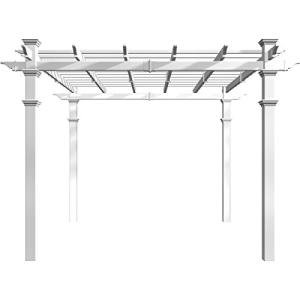
Freestanding designs stand entirely on their own four posts, which means you have total freedom in where you place them. Center one over a dining set in the middle of your yard. Position one at the far end of your property as a destination point. Set one up near a pool, a garden, a fire pit, or a hot tub. Because they're not anchored to your home's structure, freestanding vinyl pergolas are also easier to permit in many municipalities.
Garden Pergolas and Arbors
Smaller-scale vinyl structures fill a different role — they're the archway over a garden gate, the focal point at the end of a garden path, the trellis-style frame that gives climbing plants something to work with. These bring architectural interest to landscaping without requiring the footprint of a full pergola.
Commercial and Large-Scale Structures
Vinyl pergolas aren't just for residential use. HOA common areas, hotel courtyards, restaurant patios, and community parks have all started specifying vinyl for its longevity and low maintenance requirements. Large vinyl pergola systems can cover hundreds of square feet while maintaining clean sightlines and a finished appearance year after year.
Design Details That Elevate the Finished Look
Vinyl pergolas aren't just structural — they're architectural. The details matter, and manufacturers have gotten very good at offering options that make these structures feel custom even when they're working from a catalog.
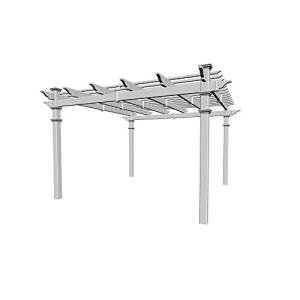
Post profiles range from smooth and contemporary to chamfered, fluted, or tapered styles that reference classical architecture. A simple post change can shift a pergola from modern to traditional.
Rafter and beam shapes follow similar logic. Decorative rafter tails — the ends of beams that extend past the supporting structure — add visual interest and a sense of craftsmanship. Some have simple 45-degree cuts; others feature elaborate scrollwork profiles.
Lattice options let you control how much light and visual privacy you want. Open lattice creates dappled light and a garden-like feel. Tighter lattice options provide more coverage. Some pergola systems include adjustable louver panels that let you actually rotate the roof slats to control sun and rain in real time.
Color selection has expanded considerably. Classic white remains the most popular choice — it's crisp, it goes with everything, and it photographically well in every season. But tan, clay, clay, almond, and woodgrain-finish vinyls have grown in popularity for homeowners who want something warmer or who are matching existing trim, deck railings, or fence colors.
How Vinyl Pergolas Handle the Seasons
One of the most common questions from first-time buyers is how vinyl holds up through harsh weather. It's a fair question — outdoor structures take a beating.
Summer is where vinyl truly shines. High heat that would dry out and crack wood has minimal effect on quality vinyl pergolas designed with proper UV inhibitors. The color holds. The structure doesn't warp. Even extended stretches of intense sun won't cause the kind of surface degradation you'd see in untreated wood or low-grade plastics.
Rain and humidity are also non-events for vinyl. Unlike wood, which can cup, swell, or develop mold in persistently wet climates, vinyl simply sheds water. There are no seams that soak up moisture and invite rot. This makes vinyl pergolas an especially smart choice in coastal areas, rainy climates, or anywhere with high seasonal humidity.
Cold and snow deserve a mention too. Well-made vinyl pergolas are engineered to handle the contraction and expansion cycles that come with temperature swings. That said, snow load is a real engineering consideration for any overhead structure, and buyers in heavy-snow regions should pay attention to load ratings when selecting a pergola system. Removing heavy snow accumulation after storms is always a good practice regardless of material.
Wind is perhaps the most unpredictable variable. Ground-level attachment and post anchoring are important here. Properly installed vinyl pergolas — with footings or mounting hardware appropriate for local wind conditions — perform well even in regions with occasional severe weather.
Installation: What to Expect
Vinyl pergolas typically arrive as modular kits, with pre-cut components that have been factory-finished and engineered to fit together cleanly. For most homeowners with solid DIY skills and a helper or two, a straightforward freestanding pergola can be assembled over a weekend.
That said, there are a few things worth knowing before you start:
Footings matter more than most people expect. Whether you're setting posts in concrete, using surface-mount hardware on a concrete patio, or anchoring to a deck frame, the way the posts are supported determines how stable and long-lasting the structure will be. Skimping here is a common DIY mistake.
Attached pergolas require ledger board installation. This is the connection point to your home, and it needs to be anchored into structural framing — not just siding or sheathing. This is the step where most people benefit from a professional set of hands, even if they handle the rest of the assembly themselves.
Local permits may be required. Anything that qualifies as a permanent structure typically needs a building permit, and requirements vary by municipality. Freestanding pergolas sometimes fly under the radar, but attached structures almost always need review. Check before you build.
For homeowners who prefer to hand the whole project off, professional installation services are widely available. Most pergola retailers have installer networks, and the modular nature of vinyl kits makes the labor side of the job reasonably predictable to price.
Comparing Vinyl Pergolas to Other Materials
When you're making a significant outdoor investment, it pays to understand what you're comparing.
Vinyl vs. Wood: Wood wins on the initial charm factor and has a natural warmth that's hard to replicate. But the ongoing maintenance cost — in time, money, and attention — is substantial. Vinyl eliminates most of that while delivering a finished look that most people find equally attractive once it's in place and growing into the landscape.
Vinyl vs. Aluminum: Aluminum pergolas are lightweight and genuinely maintenance-free, and they come in a wide range of powder-coat colors. They tend toward a more modern or commercial aesthetic. Vinyl reads as warmer and more traditional. In terms of durability, both materials hold up well; aluminum has a slight edge in extreme wind scenarios due to its strength-to-weight ratio, while vinyl tends to be easier to cut and modify on-site during installation.
Vinyl vs. Composite: Composite materials (blends of wood fiber and plastic) offer a convincing wood grain look with better durability than natural wood. They're often used for decking. For pergola applications, composite components exist but are less common and generally more expensive than vinyl systems of comparable scale.
What to Look for When Buying a Vinyl Pergola
Not all vinyl is created equal. As the category has grown, the price range has widened dramatically — and that range reflects real differences in quality.
Wall thickness is a key indicator. Thicker walls mean a stiffer, stronger structure that will hold its shape over time. Thin-wall vinyl may be cheaper upfront but can become flexible and visually sloppy after a few seasons.
UV stabilizers and titanium dioxide content determine how well the color holds and how resistant the surface is to chalking or yellowing. Quality manufacturers are transparent about the composition of their vinyl formulations.
Warranty terms tell you a lot about how confident a manufacturer is in their product. Fifteen to twenty-five year warranties are common from reputable brands. Warranties that exclude labor costs, require professional installation, or have lengthy lists of exclusions deserve scrutiny.
Hardware quality matters too. The brackets, fasteners, and connectors that hold a vinyl pergola together should be stainless steel or hot-dipped galvanized to prevent rust staining on the white vinyl surfaces. Rust streaking is a classic sign of a cheaper kit.
Making the Most of Your Vinyl Pergola
A vinyl pergola is a starting point, not a finished product. The real transformation happens in how you style it.
Climbing plants — wisteria, jasmine, roses, clematis, grapevines — soften the structure beautifully and create that lush, overgrown garden feel that many people are after. Vinyl's smooth surface doesn't provide natural grip for vines, so attaching wire or jute guides along the posts gives plants something to follow upward.
String lights draped across the rafters turn an afternoon shade structure into an evening destination. Outdoor curtains hung from the beams add privacy and a sense of enclosure. A ceiling fan designed for covered outdoor use makes the hottest summer days genuinely comfortable.
Furniture placement transforms the space from "structure in the yard" to "place you actually use." Dining tables, sectional seating, a daybed, a bar cart — the configuration should match how you actually live, not what looks good in a catalog photo.
Vinyl pergolas sit at a genuinely appealing intersection: they look good, they last, and they let you enjoy your outdoor space rather than maintaining it. For most homeowners, that combination justifies every dollar of the investment.
Whether you're adding structure to a blank patio, creating a shaded retreat at the far end of a garden, or building an outdoor entertainment space that will still look sharp in twenty years, vinyl delivers in a way that few other materials can match. Browse the full collection, compare configurations and sizes, and find the structure that turns your outdoor space into the place you'll actually want to spend your time.