A Little History Worth Knowing
The Adirondack chair was born in 1903, designed by Thomas Lee while vacationing in Westport, New York — right on the edge of the Adirondack Mountains. He wanted something that worked on the uneven, sloping terrain of his summer property. What he came up with was almost accidental in its genius: a wide seat, a steeply reclined back, and legs designed to sit perfectly level on a hillside. It was practical before it was beautiful.
Within a few decades, the design had spread across the country. Craftsmen adapted it, simplified it, and eventually mass-produced it — but the basic silhouette never really changed. Wide armrests. Slatted back. Low, reclined profile. It's one of those rare designs that arrived fully formed and has never needed much improvement.
Today, Adirondack chairs are made in dozens of materials, colors, and configurations, but they all trace their DNA back to that original hillside design. And they're still doing exactly what Thomas Lee intended — giving people a comfortable, durable place to sit outside and actually enjoy being outside.
Why Adirondack Chairs Belong in Your Outdoor Space
Let's be direct: there are plenty of outdoor chairs on the market. So what makes the Adirondack worth choosing?
Comfort that actually works. Most outdoor seating is designed to look good in a catalog photo. Adirondack chairs are designed to hold a human body comfortably for hours. The reclined angle takes pressure off your lower back. The wide armrests are high enough to rest a drink or a book without straining. The seat is deep enough that you're not perched on the edge. It's ergonomics that predates the word ergonomics.
Durability that earns its keep. A quality Adirondack chair isn't a seasonal purchase — it's a long-term investment. Depending on the material, a well-maintained chair can last 10, 20, even 30 years. That's a cost-per-use that makes even premium price points look reasonable.
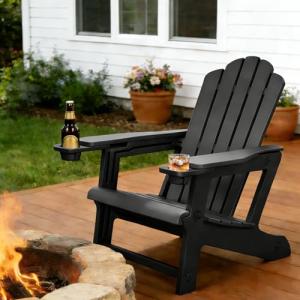
Versatility that fits almost anywhere. Adirondacks work on a back deck, on a wide front porch, beside a fire pit, at the edge of a dock, on a hillside overlooking the garden. They don't require flat, level ground. They don't require cushions (though you can certainly add them). They don't require a table, though they pair beautifully with one.
Aesthetic staying power. Trends in outdoor furniture come and go. Adirondack chairs don't trend — they simply belong. They look as natural in a rustic lakehouse setting as they do on a polished modern patio. Few pieces of furniture can make that claim.
Understanding Your Material Options
This is where the modern Adirondack chair gets interesting. The original was always made from wood — specifically, the kind of rough-cut, locally available lumber you'd find in upstate New York in the early 1900s. Today's buyers have significantly more choices, and each material has a distinct personality.
Classic Wood
For purists, nothing beats real wood. The grain, the weight, the way it ages — there's an authenticity to a wooden Adirondack chair that synthetic materials can approximate but never quite replicate.
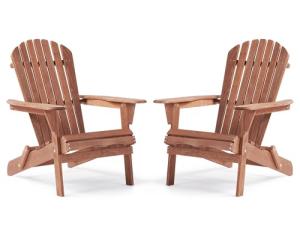
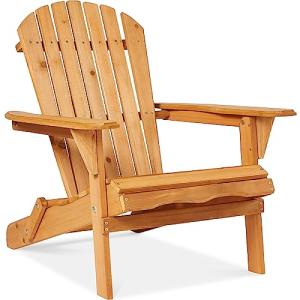
Cedar is the most popular choice for good reason. It's naturally resistant to moisture and insects, it stays relatively lightweight, and it takes paint or stain beautifully. A cedar Adirondack chair left unfinished will weather to a silvery gray over time — some people love this look; others prefer to maintain the original color with regular oiling or staining.
Teak is the premium end of the wooden spectrum. Dense, naturally oily, and exceptionally resistant to the elements, teak requires almost no maintenance and develops a gorgeous patina with age. It's heavier than cedar and more expensive, but teak furniture genuinely lasts generations with minimal effort.
Pine shows up in budget-friendly options. It's affordable and workable, but it needs more protection from the elements than cedar or teak. If you're buying a pine Adirondack, plan to seal or paint it and bring it in during harsh winters.
Poly Lumber (HDPE)
High-density polyethylene, often called poly lumber or POLYWOOD (a well-known brand name in this space), has become the dominant material in the Adirondack category over the past two decades — and for understandable reasons.
Poly lumber is made from recycled plastics and engineered to look and feel remarkably like painted wood. It doesn't rot, splinter, crack, or fade. It can be left outside year-round in virtually any climate without degrading. It doesn't need to be painted, stained, oiled, or sealed. You clean it with soap and water, and that's about it.
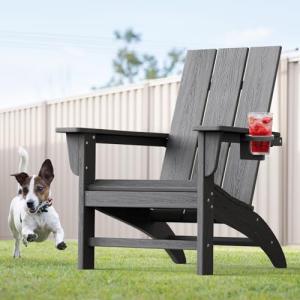
The color palette for poly lumber Adirondacks is vast — classic whites and greens, bold navy and red, earthy browns and grays. Because the color runs through the material rather than sitting on the surface, it holds up under sun and rain in ways that paint simply doesn't.
For homeowners who want the look of a traditional Adirondack without any maintenance commitment, poly lumber is often the obvious answer.
Resin and Plastic
Lower-cost Adirondack chairs made from injection-molded resin or polypropylene occupy the accessible end of the market. These chairs are lightweight, stackable, and easy to move around. They won't last as long as wood or poly lumber, and they can feel a bit hollow underfoot, but for seasonal use or high-traffic situations — a rental property, a summer camp, a large party setup — they get the job done without a significant financial commitment.
Aluminum and Metal
Though less common, aluminum-framed Adirondack chairs offer their own appeal: they're rust-proof, lightweight, and often fold flat for easy storage. They tend to have a more contemporary visual profile than their wooden counterparts. If you're outfitting a modern patio with clean lines and a minimal aesthetic, a powder-coated aluminum Adirondack can bridge the gap between traditional form and modern sensibility.
Choosing the Right Size and Configuration
Adirondack chairs aren't one-size-fits-all, and paying attention to dimensions before you buy can save you some frustration.
Standard adult chairs typically seat one person comfortably at a height suited for most adults. The seat height from the ground tends to run low — around 15 to 17 inches — which is part of what gives the chair its relaxed, reclined feel. Worth noting: that low profile can make getting up a bit of an effort for some users, particularly older adults or those with knee issues.
Oversized or "big and tall" versions exist with wider seats, higher seat heights, and reinforced frames rated for higher weight capacities. If you're on the taller side or prefer a bit more room, these are worth seeking out.
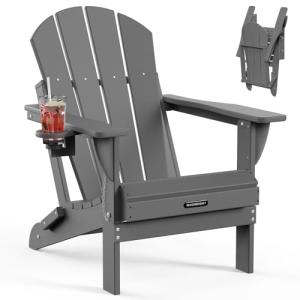
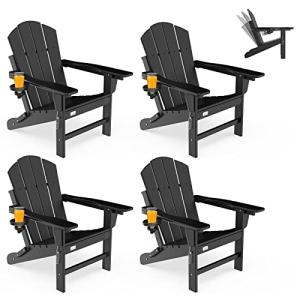
Folding Adirondack chairs sacrifice a little structural solidity for significant convenience. They fold flat for storage or transport, which is a meaningful advantage if you're working with limited storage space or frequently moving your seating around.
Adirondack love seats and settees — two-person versions of the classic design — are a natural pairing for couples or for anyone who wants a larger anchor piece for a seating area.
Rocking Adirondack chairs combine two beloved American furniture traditions. The added motion of a rocker suits a porch or a flat surface better than a hillside, but the combination of rocking comfort and Adirondack ergonomics is genuinely hard to beat.
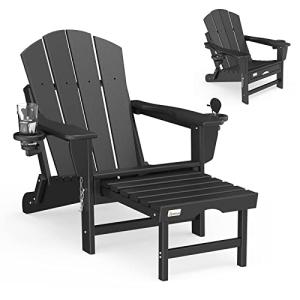
Folding ottomans and footrests designed specifically for Adirondack chairs are widely available and worth considering if you plan to use your chairs for extended lounging. Some brands offer matching side tables with built-in cup holders — small details, but ones that genuinely improve the experience.
Placement and Styling Ideas
Where you put your Adirondack chairs shapes how much you actually use them. A few approaches that consistently work well:
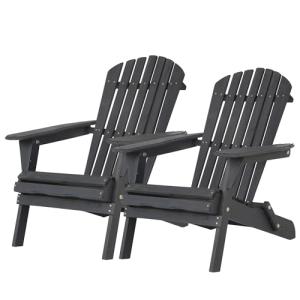
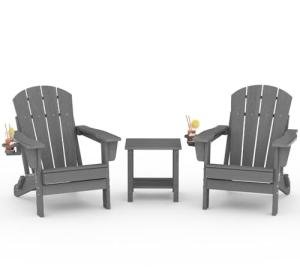
Pair two chairs with a small side table between them. This is the classic configuration — two chairs, one table, facing the view. Whether the view is a lake, a garden, a fire pit, or just the back fence, the arrangement creates an immediate sense of intentional relaxation.
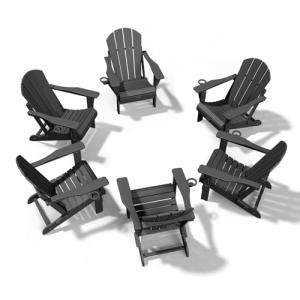
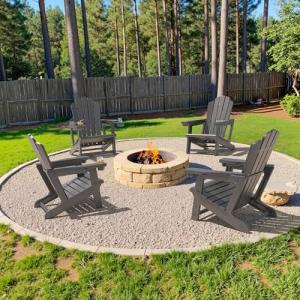
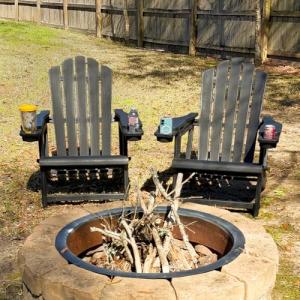
Arrange chairs in a circle around a fire pit. Adirondacks are ideal fire pit chairs. The low seat and reclined angle put you at just the right distance and height. Add four to six chairs around a modest fire ring and you have an outdoor living room that encourages people to stay for hours.
Line a front porch. Nothing signals "come sit for a while" quite like a row of Adirondack chairs on a covered front porch. Even in neighborhoods where people don't often sit on their front porches, the chairs themselves are an invitation.
Place a single chair at the edge of something beautiful. At the end of a dock. At the corner of a garden. On a hillside with a long view. One chair, placed thoughtfully, is as much a design statement as a functional piece of furniture.
Care and Maintenance by Material
How long your chairs last depends largely on how well you care for them — and how much care they actually need varies dramatically by material.
Wood chairs benefit from annual cleaning and resealing or re-oiling, particularly in climates with harsh winters or intense sun. Storing them indoors or under a quality cover during the off-season significantly extends their lifespan. Watch for early signs of cracking or splintering and address them before moisture gets into the wood.
Poly lumber chairs need almost nothing. An occasional scrub with mild soap and a hose-down is typically all that's required. They can stay outside year-round in most climates without degrading.
Resin and plastic chairs benefit from UV-resistant storage covers if left in direct sun for extended periods, as prolonged exposure can cause brittleness over time. Clean with mild soap and avoid abrasive scrubbing pads that can scratch the surface and accelerate fading.
Metal-framed chairs should have their powder coating inspected annually for chips or scratches, which can become rust entry points if left unaddressed. Touch-up paint is inexpensive and effective.
Finding the Right Chair for Your Budget
Adirondack chairs span a wide price range — from under $50 for basic resin models to well over $500 for premium teak or hand-crafted poly lumber options. Here's a rough guide to what different price points typically deliver:
Under $100: Basic resin or lightweight plastic. Good for casual, seasonal use. Expect to replace in 3–5 years with heavy outdoor exposure.
$100–$250: Mid-range poly lumber or cedar. Solid construction, good durability, often more color options. A reliable sweet spot for most buyers.
$250–$500: Premium poly lumber, quality teak, or solid cedar with professional-grade joinery. Chairs in this range are built to last a decade or more with proper care.
$500 and up: Heirloom-quality pieces. Hand-crafted, top-grade materials, precision construction. Buy it once and pass it down.
Bottom Line
An Adirondack chair is one of the few pieces of outdoor furniture that manages to be genuinely comfortable, genuinely durable, and genuinely beautiful without trying too hard at any of those things. It's not a trend. It's not a luxury statement. It's a well-solved problem — a chair designed for real outdoor life, real weather, and real human bodies that want to relax.
Whether you're outfitting a grand lakeside property or just trying to make the most of a small urban backyard, there's an Adirondack chair built for your situation. Find the right material, choose the right size, put it somewhere with a view worth looking at — and then actually sit in it.
That last part is the whole point.