Why a Porch Swing Belongs on Your Property
First, there's the practical value. A porch swing is outdoor seating that works hard. It's comfortable, it's functional, and it turns any underused porch, deck, or garden pergola into a genuine gathering space. It's the kind of furniture that gets used — not just looked at.
Second, there's the emotional value. Porch swings slow people down. They invite conversation. They're the kind of place where a 10-minute break turns into an hour because you were deep in a good talk, and nobody wanted to be the first to stand up. In a world where everyone is constantly rushing, a porch swing is a quiet act of resistance.
And third, there's the value they add to your home. A well-chosen porch swing is a visual anchor for your outdoor space. It says something about the home — that the people who live here like to spend time outside, that they appreciate comfort, that they've thought about the details. That kind of curb appeal matters.
Choosing the Right Material
The material your porch swing is made from will determine how long it lasts, how much maintenance it needs, and how it looks in your space. Here's an honest breakdown of the most common options.
Wood Porch Swings
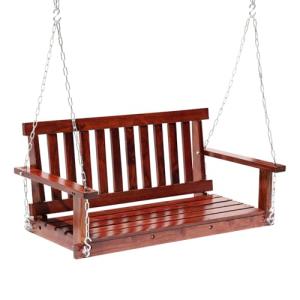
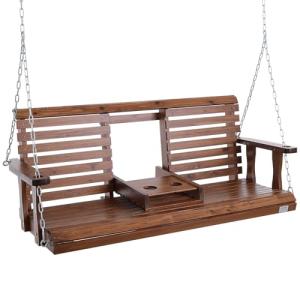
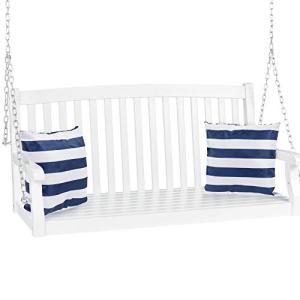
Wood is the classic choice, and for good reason. A well-crafted wooden swing has a warmth and character that synthetic materials simply can't replicate. The grain, the texture, the way it weathers over time — it all adds up to something that feels genuinely alive.
The most popular wood options are cedar, teak, and pine. Cedar is a standout choice for outdoor furniture because it's naturally resistant to rot, insects, and moisture. It doesn't warp easily, it smells wonderful, and it weathers to a beautiful silver-gray if you let it age naturally, or holds a stain well if you prefer to maintain its original color. Teak is the gold standard for durability — it's dense, oily, and practically impervious to the elements. It's also the most expensive option. Pine is more affordable and takes paint and stain easily, but it requires more regular maintenance to stay in good shape outdoors.
If you go with wood, plan on some upkeep. An annual coat of sealant, stain, or outdoor paint will keep your swing looking great and protect the wood from UV damage and moisture. Skip the maintenance for too many seasons, and even the best wood will start to show its age.
Wicker and Rattan Porch Swings
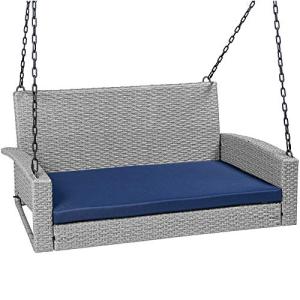
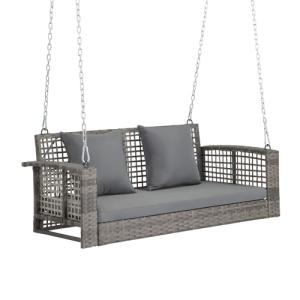
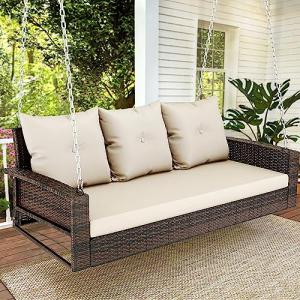
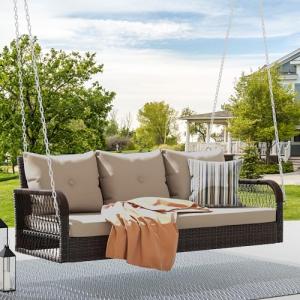
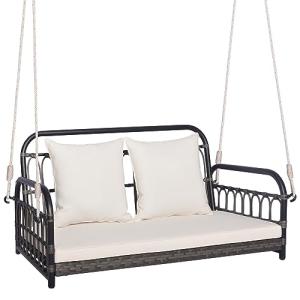
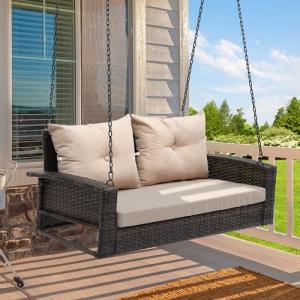
Wicker swings bring a relaxed, vintage charm that's hard to match. They're light, they're beautiful, and they pair perfectly with soft cushions and a lazy Sunday afternoon. The key thing to know is that natural wicker is not ideal for humid or rainy climates — it can absorb moisture, mold, and eventually break down. If you love the look, opt for all-weather wicker, which is made from resin woven over a powder-coated aluminum frame. It mimics the look of natural wicker almost perfectly but holds up in any climate without fading, cracking, or mildewing.
Metal Porch Swings
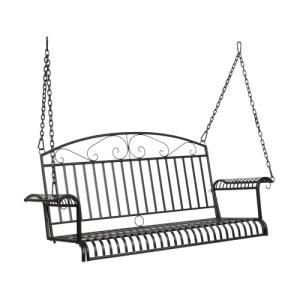
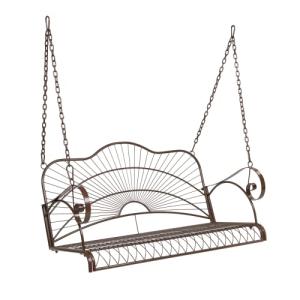
Wrought iron and powder-coated steel swings are built to last. They're heavy, which actually works in their favor — they feel substantial and stay put in a breeze. Wrought iron has a timeless, slightly ornate quality that works beautifully on traditional porches. Modern steel swings tend toward cleaner lines and work well in contemporary outdoor spaces. The main consideration with metal is rust. A quality powder coat finish will protect against rust for years, but chips and scratches should be touched up promptly to prevent corrosion from spreading.
Poly Lumber and Recycled Plastic Swings
Poly lumber — furniture made from recycled plastic, often high-density polyethylene — has become increasingly popular, and it's easy to understand why. It requires virtually zero maintenance. It won't rot, crack, splinter, fade, or absorb moisture. It can be cleaned with soap and water. It looks remarkably like painted wood. And it's often made from recycled materials, which appeals to buyers who care about sustainability. The tradeoff is that it's heavier than wood and lacks the natural warmth of real timber, but for buyers who want maximum durability with minimal upkeep, poly lumber is hard to beat.
Porch Swing Styles
Beyond material, style is what makes a swing feel right for your specific space. Here are the main categories.
Traditional Slat Swings
The classic horizontal-slat design is probably what most people picture when they think of a porch swing. Simple, sturdy, and universally appealing. It works on a farmhouse porch, a craftsman bungalow, a colonial-style home — almost anywhere. Available in every material and an enormous range of sizes, this style is the most versatile option and the safest choice if you're unsure.
Adirondack-Style Swings
Inspired by the iconic Adirondack chair, these swings feature the same wide armrests, angled seatback, and chunky, casual proportions. They're particularly popular on lake houses, cabins, and rustic retreats. Comfortable without any cushions, they're a good low-maintenance option.
Swing Beds and Daybed Swings
For those who want to take relaxation seriously, swing beds are exactly what they sound like — large, platform-style swings sized to accommodate a mattress or large cushion pad. They're typically hung from porch ceiling beams or a freestanding pergola, and they're the ultimate outdoor lounge experience. Perfect for reading, napping, or watching the rain fall on a summer afternoon.
Contoured and Curved-Back Swings
A step up in comfort from basic slat swings, contoured designs follow the natural curve of the human back. The seat and backrest are shaped to provide better lumbar support, making longer sitting sessions much more comfortable. If you plan to actually spend significant time in your swing rather than just having it as a decorative piece, it's worth seeking out a contoured design.
Glider Swings
Technically a separate category, gliders are worth mentioning here because buyers often consider them alongside traditional hanging swings. A glider moves on a smooth, horizontal track rather than hanging from chains, which makes it more stable and easier to get in and out of. They're a great option for covered patios and enclosed porches, or for anyone who finds the pendulum motion of a traditional swing less comfortable.
Sizing Your Porch Swing
Getting the size right matters more than most people realize before they buy. A swing that's too small looks lost on a large porch; one that's too big overwhelms a modest space.
The most common sizes run from 4 feet to 6 feet in width. A 4-foot swing seats two adults comfortably — snugly, but that's often part of the charm. A 5-foot swing is a versatile middle-ground option. A 6-foot swing seats three adults, which is great for families or anyone who wants to sprawl.
Before you buy, measure your porch. As a rule of thumb, you want at least 12 to 14 inches of clearance on either side of the swing, and you'll need a minimum of 3 feet of depth between the swing and the porch railing or wall in front of it so the swing can move freely. Don't forget to account for the chains and the arc of the swing's motion — it'll travel a foot or more forward and backward when in use.
Hardware and Hanging
A porch swing is only as safe as its hardware. This is one area where cutting corners is genuinely dangerous. A swing loaded with two or three adults can exert hundreds of pounds of force on the mounting points, especially mid-swing.
Always use hardware rated for the weight you expect the swing to carry. Heavy-duty eye bolts, rated swivel hooks, and galvanized or stainless steel chain are all essential. The eye bolts need to be anchored into solid structural ceiling joists — not just into the drywall or decking boards. If you're not certain where your joists are or whether your porch ceiling can handle the load, consult a contractor before installing.
Spring links and swivel hooks allow the swing to move and rotate without the chains twisting, which extends the life of the hardware and makes for a smoother ride. Most quality swings come with hanging hardware included, but check the weight ratings carefully.
Hanging height matters too. You want the seat to sit roughly 17 to 19 inches off the ground — similar to a standard chair seat height. The chains should angle outward slightly (rather than hanging perfectly vertical) to create a more stable, comfortable swing arc.
Cushions and Accessories
A porch swing without cushions is a bit like a bed without pillows — technically functional, but missing the point. Outdoor seat cushions transform a wooden or metal swing into something genuinely luxurious.
Look for cushions made with solution-dyed acrylic fabrics — these are colorfast, water-resistant, and resistant to mold and mildew. Sunbrella is the most widely recognized brand in this category and sets a high bar. Foam fill that's designed for outdoor use (often wrapped in polyester fiberfill) will dry quickly after rain and resist mold.
Cushion thickness matters for comfort. A seat cushion of 3 to 4 inches provides meaningful padding without making the swing feel unstable. Back cushions are optional but add considerable coziness, especially for longer lounging sessions.
Other accessories worth considering: a porch swing canopy for sun and rain protection, side tables sized to sit flush with the swing's armrests, and weather-resistant outdoor throw pillows for extra back support and color.
Caring for Your Porch Swing
A little routine care goes a long way toward preserving your swing season after season.
For wood swings, apply a UV-protective sealant or outdoor paint/stain at least once a year, ideally at the start of the season. Sand lightly before applying to help the finish adhere. Store or cover the swing during winter months if you live somewhere with harsh winters — repeated freeze-thaw cycles are hard on wood joints and hardware.
For all-weather wicker and poly lumber swings, maintenance is minimal. A rinse with a garden hose and a scrub with mild soap is typically all they need. Inspect hardware annually for rust or wear, especially at the mounting points and chain links.
For metal swings, touch up any chips or scratches in the powder coat promptly to prevent rust from spreading. An annual wipe-down with a rust-inhibiting product is a good precaution in humid climates.
Regardless of material, it's worth bringing cushions indoors during extended periods of rain and storing or covering the entire swing in winter if it won't be used.
Finding the Right Swing for You
The best porch swing is the one that fits your porch, matches your home's character, suits your climate, and holds up to the way you actually live. Whether you're drawn to the timeless appeal of a cedar slat swing on a craftsman bungalow porch, a sprawling swing bed on a farmhouse back deck, or a sleek poly lumber design on a modern outdoor terrace — there's a swing built for exactly that.
Take your time, measure your space, think about maintenance, and choose quality hardware. Do that, and you'll have a porch swing that becomes one of your favorite spots on the entire property — a place where the best conversations happen, where summer evenings stretch out long, and where slowing down stops feeling like an indulgence and starts feeling like a habit.