Why Aluminum? Understanding the Material That Makes the Difference
Let's be direct: not all pergola materials are created equal. Wood pergolas are beautiful, but they warp, crack, rot, and demand seasonal sealing and staining. Vinyl can fade and crack under UV exposure. Steel is heavy and prone to rust if the coating is ever compromised. Aluminum is different.
Aluminum is corrosion-resistant by nature. It doesn't rust, it doesn't absorb moisture, and it doesn't warp under temperature swings. Whether you live somewhere with hard winters, salt air near the coast, or brutal summer heat in a desert climate, aluminum holds its shape and finish season after season. That's not marketing language — it's material science.
Beyond durability, aluminum is also remarkably lightweight for its strength. This matters during installation (fewer people, less heavy equipment) and also for structural design — aluminum allows for longer spans with fewer support posts, which means cleaner sightlines and more open, airy structures that don't feel like they're boxing you in.
And then there's the finish. Modern aluminum pergolas come powder-coated in a wide range of colors — from classic white and matte black to warm wood-look textures that mimic the appearance of timber without any of the maintenance. The powder coating process creates a hard, bonded finish that resists chipping, fading, and peeling far better than painted alternatives.
Types of Aluminum Pergolas: Finding the Right Fit for Your Space
The aluminum pergola category has evolved considerably. What once meant a simple open-frame structure has expanded into a rich lineup of styles, configurations, and feature sets. Here's how the major types break down:
Freestanding Aluminum Pergolas
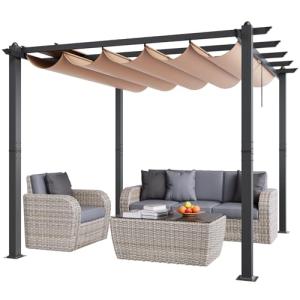
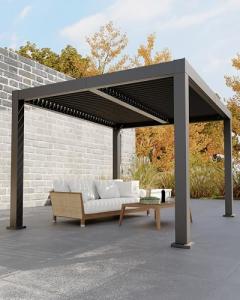
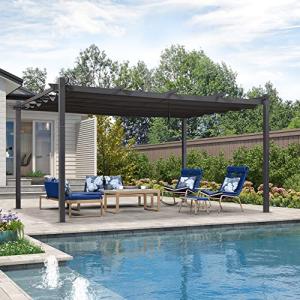
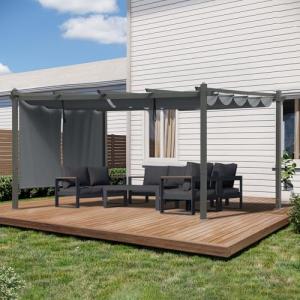
Freestanding pergolas stand on their own four (or more) posts without being attached to your home. This gives you total flexibility in placement — center of the patio, at the edge of a lawn, over a pool deck, or anywhere else that makes sense for your layout. Freestanding models are ideal if you want the structure to serve as a focal point or destination space, separate from the architecture of the house itself.
Most freestanding aluminum pergolas arrive as modular kits that can be expanded over time. Start with a 10x12 canopy and add a side extension the following year. The modular approach makes them accessible for a wider range of budgets, since you're not committed to the entire final vision upfront.
Attached Aluminum Pergolas
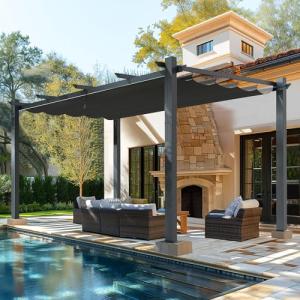
Attached pergolas mount directly to the exterior wall of your home, sharing one or two sides with the structure. This creates a seamless indoor-outdoor transition that feels genuinely connected to the architecture. Walk through your back door and step directly under a covered outdoor room — that's the experience an attached pergola enables.
Attached models are popular for back patios, side yards, and any space where you want the pergola to read as a genuine room addition rather than a standalone accessory. The wall attachment also provides inherent stability and typically requires fewer posts, which opens up the usable space underneath.
Louvered Roof Pergolas
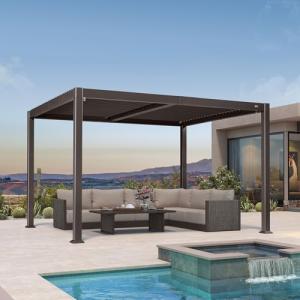
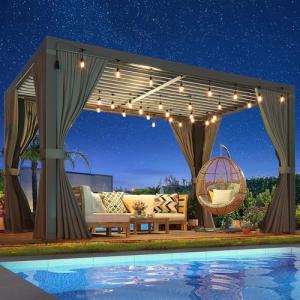
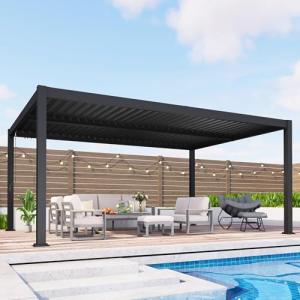
This is where aluminum pergola technology really shines. Louvered roof pergolas feature adjustable horizontal slats — called louvers — that rotate on a motorized or manual axis. When the louvers are open, sunlight filters through in dramatic, architectural strips. Close them fully and the structure becomes a solid, weatherproof roof that sheds rain.
The ability to go from open-air to rain-protected in seconds fundamentally changes how you use the space. You're no longer retreating indoors when a summer shower hits. You're staying put, adjusting the louvers, and continuing dinner. Many louvered systems also allow partial adjustment — open at one angle to let in a breeze, slightly closed to reduce glare, fully closed when rain moves in.
Louvered roof pergolas typically include integrated gutters within the frame itself, so water drains away cleanly through the posts rather than dripping off the edges. It's a genuinely elegant engineering solution that keeps the exterior aesthetic clean.
Solid Roof Aluminum Pergolas
For maximum shade and full weather protection without the motorized complexity, solid roof aluminum pergolas offer a polypropylene or powder-coated aluminum panel roof system. These provide dense, consistent shade throughout the day and are typically the most affordable entry point into the covered-patio category.
Solid roof models are especially popular in climates where intense sun is the primary concern — they reduce surface temperatures under the pergola significantly, making midday outdoor use far more comfortable.
Key Features to Look for When Shopping
When you're comparing aluminum pergolas, the differences in quality become apparent once you know what to look for.
Wall Thickness and Frame Gauge
The sturdiness of an aluminum pergola lives in the wall thickness of its extrusions. A thicker-walled frame — typically 2mm to 3mm or more — handles wind loads, snow accumulation, and the weight of added accessories far better than thin-walled budget alternatives. Ask for the specifications, or look for frames that come with wind speed ratings, which reputable manufacturers provide.
Connection Hardware and Joint Systems
Where the frame meets itself is where quality either holds or fails. Look for pergolas that use heavy-duty cast aluminum corner connectors and stainless steel or galvanized fasteners rather than generic zinc die-cast fittings. A quality joint system maintains structural integrity over decades of thermal expansion and contraction.
Powder Coat Finish Quality
Not all powder coats are equal. A quality powder coat application should be at least 60-80 microns thick and applied over a properly pretreated (typically chromate or anodized) aluminum surface. Thin or poorly bonded coatings chalk, fade, or peel within a few years. Look for manufacturers who specify their coating process and thickness, and who back the finish with a meaningful warranty.
Integrated Water Management
Even non-louvered pergolas benefit from integrated drainage. Gutters built into the beam profile and drainage channels running through hollow posts keep water moving away from the structure efficiently. External gutters bolted onto the frame as an afterthought look clunky and tend to sag over time — integrated drainage is worth paying for.
Compatibility with Accessories and Add-Ons
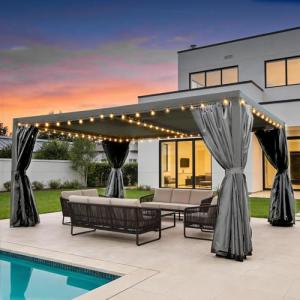
The best aluminum pergola systems are platforms, not just products. Look for frames designed to accept add-on accessories: shade curtains and track systems, retractable screens, LED lighting strips integrated into the beams, ceiling fans, outdoor heaters, and rain sensors that trigger automatic louver closure. A pergola that grows with your needs over time offers dramatically better long-term value.
Installation: What to Expect
Most aluminum pergolas in this category are engineered for DIY-friendly installation, though the complexity varies by size and style.
Small to mid-size freestanding kits (10x10 up to 12x16) can typically be installed by two people over a weekend with basic tools. The modular design means components arrive pre-cut and pre-drilled, with connection hardware included. The instructions for quality kits are thorough, with labeled components and clear diagrams.
Larger configurations — particularly louvered roof systems over 20 feet in span — often benefit from professional installation to ensure proper leveling, secure footing, and correct electrical connection for motorized components. If your pergola will be anchored to a concrete slab, you'll need to plan for core drilling or surface-mount brackets appropriate to the surface.
For attached pergolas, the ledger board connection to your home's exterior wall should always be made into solid framing members, not just siding. This is a structural connection and should be treated as one.
Louvered pergolas with motorized systems require electrical access for the motor controller. Most systems run on low-voltage DC motors that can be wired into a nearby exterior outlet or run on a dedicated circuit — your electrician can advise based on local code requirements.
Real-World Applications: Where Aluminum Pergolas Shine
Backyard entertaining spaces. The classic application, and it works beautifully. A 16x20 attached louvered pergola over a rear patio creates a covered room that effectively extends your entertaining season by months on either end of the year.
Pool and spa surround. Aluminum's corrosion resistance makes it ideal for poolside environments where chlorine-laden air and constant moisture would destroy lesser materials. A freestanding pergola positioned at the pool's edge creates a shaded lounge area that balances the sun exposure of the pool deck.
Outdoor kitchen cover. A pergola over an outdoor kitchen protects the cooking equipment from weather and the cook from direct sun. Make sure the design accounts for ventilation if you're housing a grill — louvered systems are excellent here because you can open the roof for smoke clearance while cooking.
Commercial and hospitality use. Aluminum pergolas are increasingly common in restaurant patios, hotel courtyards, brewery beer gardens, and resort pool decks. The commercial-grade versions of these systems are engineered to tighter specifications with higher wind ratings and heavier frame profiles, and they're designed for the kind of daily heavy use that residential structures might not see.
Carport and vehicle shelter. Aluminum pergola carports have become a design-forward alternative to traditional metal canopy carports. They offer UV protection for vehicles while looking like an intentional architectural feature rather than an industrial afterthought.
Sizing Your Pergola: A Practical Guide
Getting the size right before you buy saves significant frustration. Here's a simple approach:
Start with your intended furniture layout. Place your outdoor furniture where it will live under the pergola, then measure the footprint — including comfortable walkway clearance on all sides (typically 24-30 inches minimum). That gives you your interior usable dimension.
Add the structural frame to get your overall pergola footprint. Most frames add 3-6 inches per side depending on post and beam dimensions. A 12x16 interior layout typically corresponds to a 13x17 or 14x18 pergola — always confirm with the specific product specs.
For height, standard residential pergolas typically range from 8 to 10 feet at the beam. Taller configurations (10-12 feet) feel more grand and work well for large spans or spaces adjacent to two-story homes where a short structure would look proportionally awkward.
Why Aluminum Pergolas Are Worth the Investment
Quality aluminum pergolas aren't the least expensive outdoor shade structures you can buy. They're considerably more than a shade sail or a canvas canopy. But the comparison breaks down when you think in terms of lifespan and true cost over time.
A well-built aluminum pergola with a quality powder-coat finish, installed correctly and maintained minimally (a rinse with a garden hose annually), should last 30 years or more without significant deterioration. No wood pergola touches that timeline without substantial ongoing maintenance investment. The per-year cost of an aluminum pergola, amortized over its actual lifespan, often ends up lower than alternatives that look cheaper on the purchase price.
Beyond economics, there's the experience. Having a genuinely weather-resistant outdoor structure changes how you actually use your outdoor space. You stop avoiding the patio when clouds gather. You stop checking the forecast before planning outdoor dinners. The space becomes reliably usable in a way that transforms your relationship with your own backyard.
That shift — from a space you hope to use to a space you actually use — is the real value proposition of a quality aluminum pergola. And it's one that's hard to put a number on until you're living it.