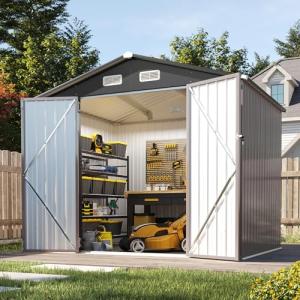
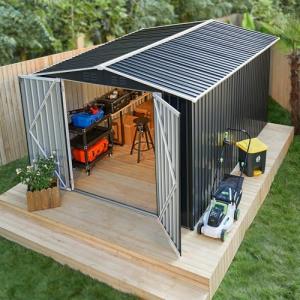
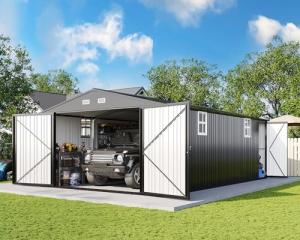
Why Choose a Metal Storage Shed?
Durability is the first reason. A well-built metal shed can handle decades of UV exposure, heavy rain, snow loads, and temperature swings without warping, cracking, or rotting. Wood requires regular sealing, staining, and treatment to hold up. Plastic becomes brittle over time, especially in climates with extreme cold or intense sun. Metal just shrugs it off.
Security is the second. A metal shed with reinforced walls, a solid frame, and a proper locking system is genuinely hard to break into. Plastic panels can be cut or cracked. Wood doors can be kicked in more easily. If you're storing tools, equipment, motorbikes, or anything of real value, metal provides peace of mind that other materials simply can't match.
Fire resistance matters too. Metal doesn't burn. That's a significant advantage if you're storing flammable items like fertilizer, fuel cans, or paint. Many homeowners don't think about this until it's too late.
Low maintenance rounds out the picture. Once a metal shed is up and properly treated, the upkeep is minimal — mostly just the occasional hosing down and checking that fasteners haven't worked loose.
Types of Metal Storage Sheds
Not every metal shed is the same structure or intended for the same use. Understanding the main types helps narrow down what you're actually looking for.
Standard Apex (Gable) Sheds
The classic shape: two sloping roof panels meeting at a central ridge. Apex sheds are the most common style because the pitched roof sheds rain and snow efficiently, and the symmetrical design maximises interior headroom along the centreline. They suit general garden storage, tool storage, and lawnmower housing very well.
Pent (Lean-To) Sheds
A pent shed has a single sloping roof that runs from a higher front edge down to a lower rear edge. These are ideal when you need to tuck a shed against a fence, wall, or outbuilding, because the roofline angles away from the adjoining structure. They tend to be shallower in depth, making them a smart choice for narrow side passages.
Dutch Barn Sheds
Recognised by their curved or barn-style roof profile, Dutch barn sheds offer a generous roof height that suits taller items — quad bikes, ride-on mowers, motorbikes, canoes, or tall shelving units. The rounded roof profile also handles wind loading particularly well, which makes them a popular choice in exposed rural locations.
Corner Sheds
Designed to fit neatly into a garden corner, these five-sided sheds use otherwise wasted space efficiently. They're particularly popular in smaller gardens where every square metre counts.
Large Workshop Sheds
At the upper end of the size range, workshop-grade metal sheds are essentially small buildings. They're tall enough to stand and work inside comfortably, often feature full-height double doors, and can be fitted with windows, shelving, workbenches, and even electricity. If you're serious about a garage-style workspace or need to store a full collection of equipment, this is the category to explore.
Key Features to Look For
Steel Gauge and Panel Thickness
Thicker steel means a stronger, more rigid structure. Steel gauge is measured inversely — the lower the gauge number, the thicker the material. Most entry-level metal sheds use lighter gauge steel, which is fine for storing garden tools and pots. If you're storing heavier equipment, planning to load the walls with shelving, or living somewhere that gets serious snowfall, it's worth moving up to a heavier gauge. Look for manufacturers who list the exact steel thickness in millimetres — it's a sign they stand behind the material.
Hot-Dip Galvanisation
Galvanised steel has been coated in a layer of zinc that bonds at a molecular level, creating a barrier against rust and oxidation that outlasts simple paint finishes by a wide margin. Hot-dip galvanisation — where steel panels are submerged in molten zinc — provides the most thorough and durable coverage. Some budget sheds use electrogalvanisation or painted finishes as an alternative, which look fine initially but tend to show rust at cut edges and fastener points far sooner.
Roof Design and Snow Load Rating
If you're in a region with heavy winter snowfall, the roof is not where you want to cut corners. Look for sheds with reinforced roof panels, a stated snow load rating in kg/m², and optionally a central ridge beam for extra support. Apex roofs generally handle snow better than flat-topped designs. If in doubt, go steeper.
Floor Options
Some metal sheds come with an integrated steel floor, others are designed to be anchored to a concrete slab or treated timber base, and some offer both. An integrated floor keeps moisture and pests out more effectively. If you're placing the shed on an existing concrete base or laying a new foundation yourself, a floor-less option gives you more flexibility. Either way, proper anchoring is non-negotiable — even a well-built shed can shift or tip in strong winds if it isn't secured at the base.
Door Configuration
Sliding doors work well in tight spaces because they don't swing outward into the garden. Double hinged doors are better for moving large items in and out, and they seal more effectively. Roller doors, common on garage-style sheds, combine the space efficiency of sliding doors with a clean look. Whatever configuration you choose, check the door width against the largest thing you intend to bring inside — it's a surprisingly common miscalculation.
Ventilation
Metal heats up. On a summer afternoon, a closed metal shed without ventilation can reach temperatures that damage tools, degrade lubricants, cause paint to blister, and make working inside genuinely miserable. Ridge vents, gable vents, and louvred panels all help manage airflow. If you plan to use the shed as a workspace in warmer months, ventilation should be near the top of your checklist.
Choosing the Right Size
The most common sizing mistake people make is buying a shed that's too small. It feels counterintuitive — the larger shed costs more, takes up more space, and seems like overkill for what you need right now. But storage has a way of expanding to fill available space, and then some. Most experienced shed owners will tell you: size up.
As a rough guide, consider what you're storing and add a buffer:
-
Small sheds (4ft x 6ft to 6ft x 8ft) are suited for basic garden tool storage — spades, forks, a lawnmower, pots, compost bags. They're practical for smaller gardens or situations where space is genuinely tight.
-
Medium sheds (8ft x 10ft to 10ft x 12ft) give you room to move. A ride-on mower, several bicycles, a decent collection of power tools, and a shelving unit or two all fit comfortably. This is the most popular size range for residential use.
-
Large sheds (12ft x 16ft and above) cross into workshop and garage territory. These are for people who need serious storage, a dedicated workspace, or housing for a quad bike, trailer, or small boat.
Measure your intended location carefully — not just width and depth, but also the clearance needed for doors to open, eaves to overhang, and rain to drain away from the structure. A shed sitting flush against a fence line with nowhere for water to run tends to rust faster at the rear.
Installation: What to Expect
Most metal sheds are sold as flat-pack kits and designed to be assembled by two people over the course of a day. The quality of the instructions varies significantly between manufacturers, but the general process follows the same sequence: lay the base frame, build the wall panels from the corner posts outward, attach the roof trusses, and fix the roof panels and ridge cap.
A few practical notes:
- Prepare your base before the shed arrives. Whether you're pouring a concrete slab, laying a gravel pad, or working with an existing surface, having a flat, level, solid foundation in place makes the build dramatically easier.
- Don't overtighten fixings during the build. Metal sheds need a small amount of flex to settle correctly. Bolt everything roughly into position first, check for squareness, then go back and tighten properly once the structure is aligned.
- Caulk the roof seams. Even quality sheds can develop minor leaks at roof joints over time. A bead of clear silicone along the ridge and any overlapping roof panel edges during installation is cheap insurance against drips later.
Maintenance Tips for Long-Term Performance
A metal shed is a low-maintenance structure, but low maintenance isn't zero maintenance.
Inspect it once a year. Walk around the outside and check for rust forming at panel edges, loosened fasteners, debris collecting in gutters or around the base, and any signs of the structure shifting out of square. Catching minor issues early prevents bigger problems down the line.
Deal with rust spots immediately. If you see surface rust forming, sand it back to clean metal, apply a rust-inhibiting primer, and touch up with matching metal paint. Left alone, rust spreads — especially in humid climates or coastal areas.
Keep the gutters and drainage clear. Water pooling against the base of a metal shed is the main accelerator of corrosion. Make sure water runs away from the structure, the base is properly sealed or raised above ground level, and gutters (if fitted) are free of leaves and debris.
Oil the door mechanisms annually. Hinges, rollers, and locking bars all benefit from a light application of oil to keep them operating smoothly and prevent corrosion seizing them up over time.
Finding the Right Metal Storage Shed
The market for metal storage sheds covers a wide range of price points, sizes, and quality levels. At the budget end, you'll find lightweight sheet steel kits that serve basic purposes but won't win any awards for longevity. At the premium end, heavy-gauge galvanised structures built on solid frames will outlast the owners who bought them.
The sweet spot for most homeowners sits in the mid-range: hot-dip galvanised panels, a stated warranty of at least ten years, a sensible door configuration, and a size that gives you genuine room to work. Read the specifications carefully, look for independently reviewed products, and don't be afraid to ask the manufacturer directly about panel thickness and galvanisation method — a company confident in its product will have those answers readily available.
Storage is one of those things that only really bothers you when you don't have enough of it. A well-chosen metal shed solves the problem once, properly, and lets you stop thinking about it for a very long time.