Why Metal? The Case for Going Steel
Wood has been the default for raised beds for decades, and honestly, it makes sense. It's familiar, it's workable, and it looks natural. But wood comes with a clock ticking against it from the moment you fill it with soil. Even treated timber — often pressure-treated with chemicals you'd rather not have near your vegetables — typically lasts five to ten years before it starts to bow, crack, or crumble at the joints.
Metal raised beds change that equation entirely.
A properly galvanised steel raised bed can last 20, 30, even 40 years with minimal maintenance. You're not replacing it every decade. You're not watching the corners give way after the second winter. You're not propping up a sagging wall with a stake and hoping for the best. You build it once, fill it with good compost, and let it get on with the job.
There's also a question of soil contact. Wood, as it decays, can introduce fungal issues and bacteria into your growing medium. Metal doesn't rot. It doesn't harbour pests in the same way. The integrity of the bed stays intact, and so does the environment inside it.
What to Look for in a Metal Raised Bed
Not all metal raised beds are created equal, and it's worth knowing what separates a bed you'll love for decades from one that disappoints in its second season.
Gauge and Thickness
The gauge of the steel matters more than most people realise. Thinner metal (higher gauge numbers) might look fine in the photos, but it flexes and bows under the pressure of dense, water-heavy soil. A good metal raised bed uses steel thick enough to hold its shape without needing internal supports — typically 0.8mm to 1.5mm for smaller beds, with heavier stock used for larger or deeper configurations.
If a product listing doesn't mention steel gauge, that's worth noticing.
Galvanisation and Coating
Raw steel rusts. That's just chemistry. The protection applied to the surface is what determines how long your bed will actually last.
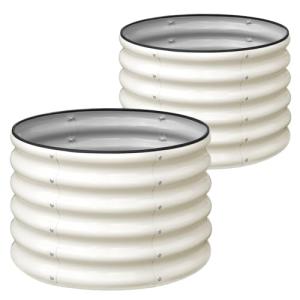
Hot-dip galvanisation — where steel is submerged in molten zinc — provides the most durable and long-lasting protection. The zinc bonds at a molecular level rather than sitting as a surface coating, which means it doesn't peel or flake over time. Many quality beds go a step further with a powder coat finish on top of the galvanisation, adding both an extra barrier and a range of colour options that make the bed look genuinely attractive in a garden setting.
Aluzinc or Zincalume coatings (an aluminium-zinc alloy) are also excellent choices and are commonly used in food-safe agricultural contexts, which makes them well-suited to vegetable growing.
Height and Depth
Height is one of the biggest practical decisions you'll make when choosing a metal raised bed. And the honest answer is: go deeper than you think you need.
Shallow beds (under 20cm) restrict root development and dry out quickly in warm weather. They work for lettuce, radishes, and herbs, but they limit what you can grow and how well it grows.
A bed at 30–45cm is a solid all-purpose depth. It's deep enough for most vegetables, it improves drainage significantly, and it creates a microclimate that warms up faster in spring — which means earlier planting and longer harvests.
Beds at 60cm or more are genuinely transformative for accessibility. Standing at a tall raised bed, you're not bending at all. For gardeners with back problems, mobility issues, or who simply want to garden comfortably as they get older, this depth is less a luxury and more a necessity.
Shape and Configuration
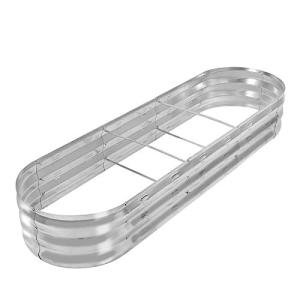
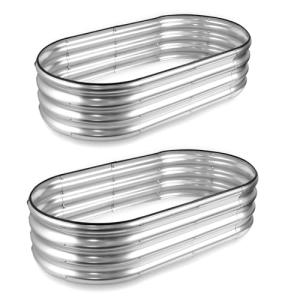
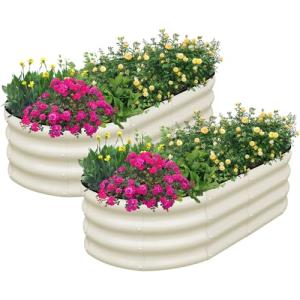
Metal raised beds come in more shapes than the standard rectangle. Circular beds have become popular for their visual appeal and the efficient use of space — you can reach the centre from any side. Corner and L-shaped configurations work beautifully in small urban gardens where you're working around boundaries and awkward angles.
Modular systems, where panels slot or bolt together, give you flexibility that pre-welded beds don't. You can start with a small configuration and expand it as your garden — and your ambitions — grow.
Setting Up Your Metal Raised Bed
Getting the setup right from the beginning saves you effort for years to come.
Choosing the Right Spot
Most vegetables need at least six hours of direct sunlight daily. That's the starting point. But metal beds have a specific consideration that wood beds don't: metal conducts and holds heat. In a south-facing position that gets full afternoon sun, the sides of the bed can get genuinely hot, and in very exposed conditions this can occasionally stress plants growing close to the wall.
This is less of an issue than it might sound — the soil insulates effectively, and the benefit of warm soil far outweighs the occasional edge effect. But it's worth being aware of if you're in a particularly hot, dry climate and planning to grow heat-sensitive crops.
What to Put Underneath
Before filling, think about what's beneath. If you're placing the bed on grass, lay cardboard directly on the ground before adding soil. It smothers the grass without chemicals, breaks down over one to two seasons, and lets roots push through eventually as it decomposes.
If you're on concrete or hard standing, line the base with landscape fabric or a weed membrane to retain fine particles of soil while still allowing water to drain.
The Filling
This is where people either get it right or spend years compensating for getting it wrong. Don't fill your raised bed with garden soil. The compaction, the drainage problems, and the potential for disease and weed seed make it a poor foundation.
The tried-and-tested approach is a mix of around 60% good-quality topsoil, 30% compost (homemade if you have it, bagged if you don't), and 10% horticultural grit or perlite for drainage. This creates a loose, fertile, free-draining medium that vegetables thrive in.
If you're filling a very deep bed and want to reduce cost, you can use the "hugelkultur" approach at the base — burying logs, branches, and woody debris in the bottom third, then topping with your quality growing mix. As the wood decomposes over years, it retains moisture and releases nutrients. It also fills volume inexpensively.
Gardening in Metal Raised Beds: What Changes
Once you've made the switch, a few things about how you garden shift noticeably.
Soil Quality You Actually Control
In the ground, you inherit whatever the history of that plot has left behind — compacted clay, builder's rubble, decades of use, or thin sandy soil that holds nothing. In a raised bed, you start from scratch. You decide what goes in. And because the volume is manageable, you can afford to use genuinely good compost and soil, top it up each year, and maintain it in a way that simply isn't practical across an entire garden.
Fewer Weeds, Less Effort
Raised beds don't eliminate weeds, but they dramatically reduce them. You're not digging and turning soil, which brings dormant weed seeds to the surface. Weed pressure is almost entirely from airborne seeds, which is far more manageable. A few minutes of hand-weeding each week keeps things under control in a way that an in-ground plot never quite achieves.
Better Drainage, Fewer Root Problems
Root rot and waterlogging are among the most common reasons vegetable crops fail. The free-draining nature of a well-filled raised bed means water moves through rather than pooling, roots get the air they need, and plants are more resilient in wet conditions. In heavy-rain climates, this alone can transform your growing success.
Earlier Springs, Later Autumns
The elevated soil mass in a metal raised bed warms up faster than the ground. Even a few degrees makes a real difference to germination rates and early growth. In practice, this often means you can plant two to three weeks earlier in spring. At the other end of the season, the retained warmth extends your growing window. That's a meaningful extension of productive time from the same amount of effort.
Aesthetics: A Garden That Looks as Good as It Grows
Let's be honest about something: the visual aspect of a garden matters to most of us, even if we don't always say so. A raised bed that looks thoughtfully designed adds to the pleasure of being in the garden, not just to the yield of what comes out of it.
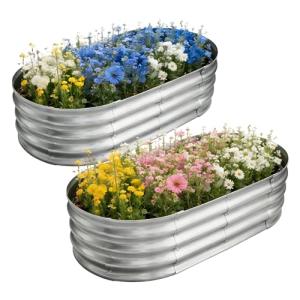
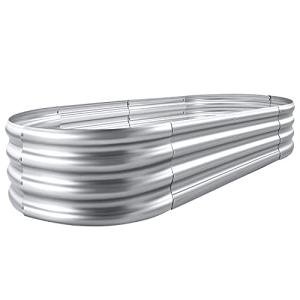
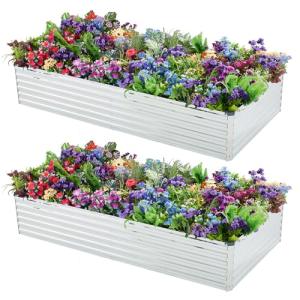
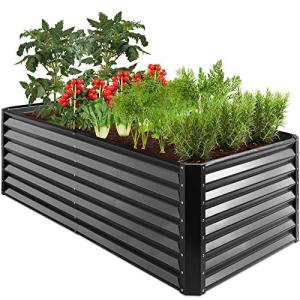
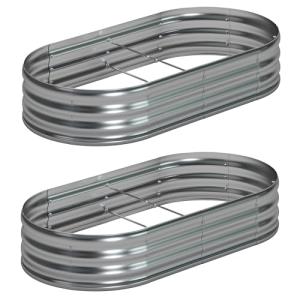
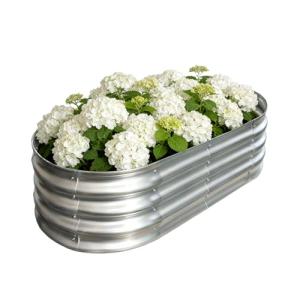
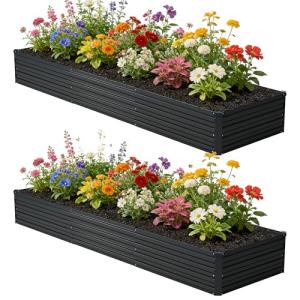
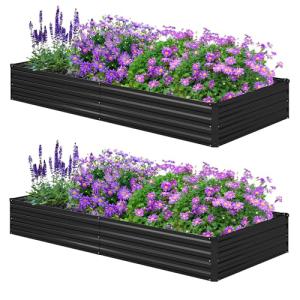
Metal raised beds, particularly in powder-coated finishes, sit beautifully in modern garden schemes. Anthracite grey or matte black beds have a crisp, architectural quality that works well against gravel, decking, or contemporary paving. Sage green and olive tones feel at home in cottage and naturalistic gardens. Even the raw, silvery finish of plain galvanised steel has its own industrial-meets-rustic appeal that suits a certain kind of working kitchen garden.
The uniformity of a set of matching metal beds — lined up, filled, and growing — gives a garden a sense of structure and intention that can be surprisingly transformative. Even a small urban space feels purposeful when it's organised around well-made beds.
Long-Term Value
It's worth doing the maths, even roughly.
A decent set of wooden raised beds might cost you £200–£400 and last eight to twelve years before needing replacement. A comparable set of galvanised steel beds costs more upfront — often £300–£600 or more for quality — but lasts three to four times as long. The cost per year of ownership is typically lower with metal, and that's before you factor in the time and effort of replacing beds.
More than that, there's the value of a bed that keeps looking good. Wood weathers. It stains. It goes mossy and uneven. Well-made metal beds look essentially the same in year fifteen as they did in year one. That consistency is part of what you're paying for.
Finding the Right Metal Raised Bed for Your Garden
Whether you're fitting out a new allotment, redesigning a back garden, or starting small with a single bed on a terrace, the range of metal raised beds available now covers almost every scenario. From shallow herb planters to deep, accessibility-height vegetable beds. From compact rectangles to sweeping curves. From plain galvanised stock to colour-matched powder-coat finishes in dozens of shades.
The right one depends on your space, your soil, what you want to grow, and how you want your garden to feel. But whichever you choose, you'll be building on a foundation that's going to last — and that changes the whole experience of growing things.
Browse our full range of metal raised beds above, with options across size, depth, finish, and configuration to suit every garden and growing style.