What Is a Bird Bath and Why Do Birds Need One?
At its most basic, a bird bath is a shallow basin of water that birds can drink from and bathe in. But understanding why birds need fresh water — and what makes them use certain baths over others — helps you choose the right one and get the most out of it.
Birds need water for two essential reasons: hydration and feather maintenance. Drinking water is obvious enough, but bathing is just as critical. Clean, well-maintained feathers are essential for flight efficiency, insulation, and staying warm during cold snaps. A bird that can't bathe properly is a bird that's struggling. When you provide a reliable water source in your garden, you're genuinely helping local wildlife survive and thrive — not just adding a pretty ornament.
Birds are also creatures of habit. Once they discover a safe, clean water source, they return to it reliably. This means that a well-placed bird bath can bring the same species back to your garden day after day, giving you a front-row seat to behaviour that most people only see on wildlife documentaries.
Types of Bird Baths: Finding the Right Style for Your Garden
The bird bath market has expanded enormously in recent years, and the variety available today means there's genuinely something for every garden, budget, and aesthetic. Here's a breakdown of the main types.
Pedestal Bird Baths
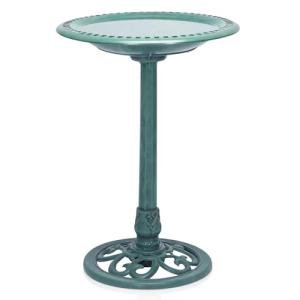
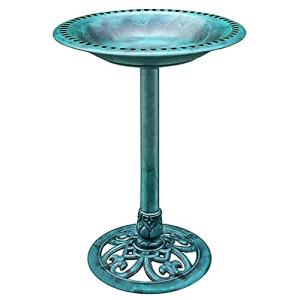
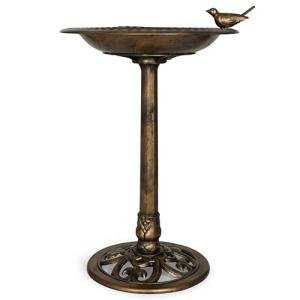
The classic choice. A pedestal bird bath consists of a wide, shallow basin mounted on a central column, typically standing anywhere from 60cm to 1 metre tall. The raised design serves a very practical purpose: it keeps bathing birds away from ground-level predators like cats, giving them a clearer view of their surroundings and more time to react if danger approaches.
Pedestal baths come in an enormous range of materials and styles. Traditional stone or reconstituted stone designs have a timeless quality that blends beautifully into cottage gardens and formal spaces alike. Cast iron models have a heritage feel and develop a lovely patina over time. Glazed ceramic pedestal baths bring colour and a more contemporary edge, while lightweight resin versions give you the look of stone without the back-breaking weight.
Ground-Level and Shallow Dish Bird Baths
Some birds — particularly those that naturally feed on the ground, like blackbirds, thrushes, and starlings — are more comfortable bathing at ground level. A wide, shallow dish placed directly on the ground or on a low surface can attract species that would never approach a tall pedestal bath.
The key with any ground-level option is placement. Position it away from dense shrubs where cats might hide, and ideally within a clear sightline from a nearby tree or fence where birds can perch and assess the area before landing.
Hanging Bird Baths
For smaller gardens, balconies, or anyone who wants to keep water sources off the ground entirely, hanging baths are an excellent solution. These typically consist of a shallow basin suspended from a bracket, pergola beam, or tree branch. They work particularly well for smaller garden birds like blue tits, sparrows, and finches, who seem to enjoy the slightly elevated, sheltered position.
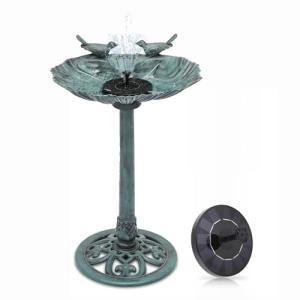
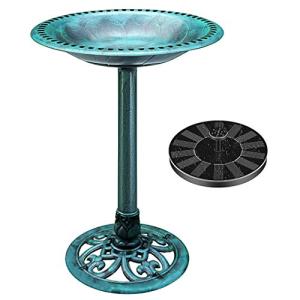
Solar-Powered Fountain Bird Baths
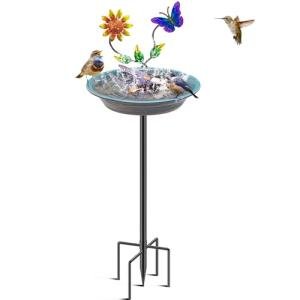
Moving water is irresistible to birds. The sound and shimmer of a fountain draws birds from a much greater distance than still water, and the constant movement also helps keep the water oxygenated and cleaner for longer.
Solar-powered fountain bird baths have become hugely popular for good reason — they require no wiring, no running costs beyond the initial purchase, and they start working the moment sunlight hits the solar panel. Many models allow you to adjust the fountain spray pattern, and the best ones include a small battery to keep the pump running even when clouds pass over.
Heated Bird Baths
If you live somewhere that experiences cold winters, a heated bird bath is one of the kindest things you can provide for garden wildlife. Frozen water is useless to birds, and in harsh conditions, finding liquid water can be genuinely life-threatening. A thermostatically controlled heated bath maintains a safe water temperature just above freezing, ensuring birds have access to water even on the coldest days. These are a favourite among serious bird enthusiasts and make a genuinely meaningful difference to local bird populations during winter.
Materials Guide: What Different Bird Baths Are Made Of
The material your bird bath is made from affects its appearance, durability, weight, and how much maintenance it needs. Here's what to expect from the most common options.
Stone and Reconstituted Stone — Heavy, durable, and naturally weatherproof. Stone baths develop a beautiful aged appearance over time and sit comfortably in most garden styles. The weight can be a drawback if you want to move them around, but it also means they're very stable. They do need occasional scrubbing to prevent algae build-up.
Cast Iron — Traditional in appearance, extremely long-lasting, and pleasingly heavy. Cast iron baths will rust if the coating is damaged, so they benefit from occasional treatment with a rust-resistant product. The weight makes them very stable.
Resin and Fibreglass — The practical choice for anyone who wants the look of stone without the weight. Modern resin baths can be almost indistinguishable from natural stone, they're much easier to move around, and they cope well with frost. They're typically the most affordable option too.
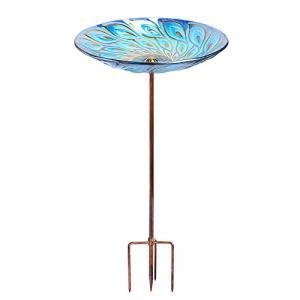
Ceramic and Glazed Pottery — Beautiful, colourful, and unique. Glazed ceramic baths add a real splash of personality to a garden and the smooth interior surface is easy to clean. The downside is fragility — ceramic can crack in hard frosts if water is left to freeze inside, so they may need to be brought in over winter.
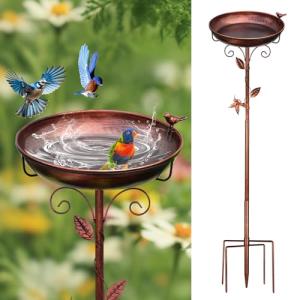
Stainless Steel and Metal — Sleek and contemporary, stainless steel baths suit modern and minimalist garden designs. They're durable, easy to clean, and resist corrosion. On sunny days the water can heat up quickly, so they're better suited to partially shaded positions.
How to Choose the Right Bird Bath
With so many options available, the choice can feel overwhelming. These questions will help you narrow it down.
How big is your garden? A large, ornate pedestal bath can become a real focal point in a spacious garden, but the same piece might overwhelm a small courtyard. Smaller hanging baths or compact ground-level dishes work better in tighter spaces.
Do you have cats or other predators? A raised pedestal bath gives birds much more protection from ground-level threats. If neighbourhood cats are a problem, height is your friend.
What's your climate like? In areas with hard winters, a heated bath or one made from frost-resistant resin is a sensible investment. Ceramic baths need careful management in cold weather.
How much maintenance do you want to do? All bird baths need regular cleaning and refilling — that's non-negotiable if you want birds to use them safely. But a solar fountain helps keep water fresher, and smooth-surfaced materials like ceramic and steel are easier to scrub clean than rough stone.
What's your garden style? There's no point buying a Victorian-style ornate stone bath if your garden is a sleek contemporary space — and vice versa. The best bird bath is one that feels like it belongs.
Placing Your Bird Bath: Getting the Location Right
Even the most beautiful bird bath will go unused if it's positioned badly. Birds are cautious creatures, and they need to feel safe before they'll linger and bathe.
Place your bath within 3–4 metres of trees, shrubs, or a fence. Birds like to have an escape route nearby and a perch from which to assess the area. At the same time, don't tuck it right underneath dense hedging — cats love to hide there.
Partial shade is ideal. Full sun heats the water quickly and encourages algae, while deep shade means birds may not notice the bath as easily. Dappled light, ideally with some morning sun, tends to work well.
Think about your own viewing angle too. Position the bath where you can see it from a kitchen window or a favourite garden seat, and you'll get far more pleasure from it.
Caring for Your Bird Bath: Keeping It Clean and Safe
This is the part that makes the real difference. A dirty bird bath isn't just unattractive — it can actively harm birds by spreading disease. Algae, droppings, and stagnant water create conditions that allow bacteria and parasites to thrive.
Clean your bird bath at least once a week during warm months and every few days in summer heat. Empty the old water, scrub the basin with a stiff brush — a dedicated garden brush or an old washing-up brush works well — and rinse thoroughly before refilling with fresh water. Avoid soap or chemical cleaners that could harm birds; a diluted white vinegar solution is safe and effective for stubborn algae.
Keep the water level shallow — no more than 5–7cm deep. Most small garden birds are not strong swimmers, and deep water can be dangerous. If you have a deeper basin, add a flat stone or two to give birds a safe shallower area to stand.
In winter, check the bath daily and break any ice that forms. Never pour boiling water over a ceramic or stone bath — the sudden temperature change can crack it. Warm water is fine, or simply break the ice carefully with the back of a trowel.
Attracting More Birds: Little Extras That Make a Big Difference
A bird bath works even better when it's part of a broader bird-friendly garden. Pair it with feeders stocked with quality seed mixes, suet balls, or nyjer seed for finches, and you'll create a garden destination that birds visit throughout the day.
Plants matter too. Native shrubs and berry-bearing plants like hawthorn, rowan, and holly provide both food and shelter, making your garden a genuinely attractive habitat rather than just a pit stop. Birds that feed in your garden are far more likely to visit your bath regularly.
Adding a flat stone or a few pebbles inside the bath gives smaller birds the confidence to wade in without worrying about depth. Some gardeners add a slow drip attachment — just a punctured container hung above the bath — which creates a gentle sound that draws birds from across the garden.
Bird Baths as Garden Features: The Aesthetic Case
It would be a mistake to think of bird baths purely as practical wildlife accessories. The best ones are genuinely beautiful garden objects in their own right — sculptures that anchor a planting scheme, create a focal point at the end of a path, or add height and structure to a flat border.
A weathered stone pedestal bath surrounded by cottage garden planting has a romantic, timeless quality. A sleek steel dish on a slim column suits a contemporary urban garden. A brightly glazed ceramic bath adds a jewel-like splash of colour to a shaded corner. These are objects you'll look at every day, and they deserve to be chosen with the same care you'd give to any significant garden purchase.
The Simple Joy of a Well-Used Bird Bath
Here's what nobody tells you when you first buy a bird bath: the anticipation is wonderful, but the reality is better. The first time you watch a blackbird tip its head back and drink, or a sparrow thrash the water enthusiastically while its companions queue on the rim, something shifts. Your garden stops feeling like a space you manage and starts feeling like a place you share.
That's the real value of a bird bath. Not the aesthetics, not the wildlife conservation angle — though both matter — but the daily, reliable reminder that your garden is part of something larger, and that a small act of provision can ripple outward in ways that are genuinely hard to measure.