What Is a Metal Pergola?
A pergola is an open outdoor structure made up of vertical posts supporting a roof framework of beams and rafters. Unlike a gazebo, pergolas are typically open-sided and semi-open overhead, designed to define a space rather than fully enclose it. They create partial shade, frame views, and provide a natural anchor point for climbing plants, outdoor lighting, curtains, and shade sails.
Metal pergolas swap the traditional timber construction for steel, aluminium, or wrought iron — materials that bring a different set of strengths to the table. The result is a structure that tends to be stronger, lower-maintenance, and longer-lasting, while also opening up a wider range of design styles, from sleek and contemporary to ornate and traditional.
Why Choose Metal Over Wood?
This is the question most buyers find themselves asking first, and it's a fair one. Wood pergolas have a warmth and naturalness that's hard to argue with. But metal wins on almost every practical front.
Longevity is the headline benefit. A well-built metal pergola — particularly one made from powder-coated steel or marine-grade aluminium — can last 30, 40, even 50 or more years with minimal intervention. Timber, even when treated and maintained, will eventually crack, warp, rot, or succumb to insect damage. Metal doesn't.
Maintenance requirements are dramatically lower. Wood pergolas need regular sanding, staining, painting, or sealing to stay looking their best and to prevent deterioration. Metal pergolas, especially aluminium ones, need little more than an occasional wash-down with soapy water. That's a big deal over a decade or two of ownership.
Structural strength is another major advantage. Metal pergolas can span wider distances without intermediate posts, giving you more open, unobstructed space underneath. They handle heavy snow loads, strong winds, and the weight of dense climbing plants far better than timber equivalents of the same dimensions.
Design versatility has grown enormously. Modern manufacturing processes — particularly CNC cutting, powder coating, and modular design — mean metal pergolas now come in a huge range of styles, colours, and configurations. The idea that metal pergolas look industrial or cold is very much a thing of the past.
Types of Metal Pergolas
Not all metal pergolas are the same, and understanding the different types will help you find the right match for your space and lifestyle.
Freestanding Metal Pergolas
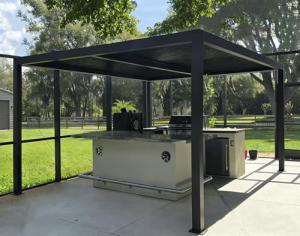
These stand independently from any building, supported by four or more vertical posts anchored into the ground or onto a hard surface. Freestanding pergolas are incredibly flexible — you can position them anywhere in your garden, on a patio, beside a pool, or at the far end of a lawn to create a destination within your outdoor space. They work well as centrepieces and can be oriented in any direction to make the most of views, sun angles, or existing landscaping.
Attached Metal Pergolas
Also known as lean-to pergolas, these structures fix to the exterior wall of your home or an outbuilding on one side, with the opposite end supported by posts. They're ideal for creating a covered transition space between indoors and outdoors — a sheltered outdoor dining room that flows directly off your kitchen, for example, or a covered walkway from the house to a garage or studio. They tend to be more cost-effective than freestanding models of the same footprint and feel naturally integrated into the existing architecture.
Louvred Metal Pergolas
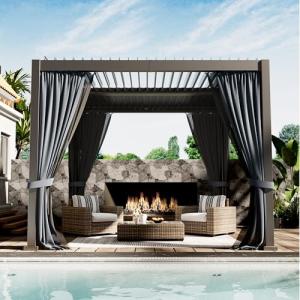
One of the most exciting developments in pergola design in recent years, louvred pergolas feature adjustable roof slats that you can open or close to control the amount of sunlight and ventilation. On a hot, bright day you close the louvres for shade; when the weather cools and you want more light and air movement, you open them up. High-spec versions include motorised louvres, LED lighting channels, retractable side screens, and rain sensors that close automatically when the weather turns. Louvred pergolas are the closest thing to an outdoor room, and in terms of year-round usability, nothing else comes close.
Arch and Tunnel Pergolas
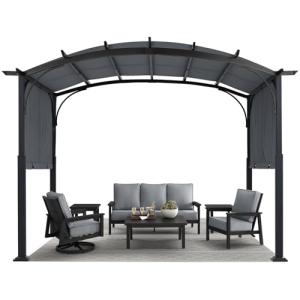
These pergolas use curved metal arches rather than flat beams, creating a more romantic, classical aesthetic. Arch pergolas are often used to create a covered walkway or garden path, with the arched framework supporting climbing roses, wisteria, or other flowering climbers. They're a beautiful choice for traditional and cottage-style gardens.
Modular Metal Pergolas
Designed to be expanded or reconfigured over time, modular systems let you start with a smaller structure and add sections as your needs or budget grows. They're popular with homeowners who want flexibility, and many modular ranges are genuinely straightforward to install without professional help.
Materials: Steel vs Aluminium vs Wrought Iron
The metal used in your pergola affects its weight, strength, appearance, price, and maintenance requirements.
Steel is the most common material for pergolas that need serious structural strength. Galvanised steel — steel coated with a protective zinc layer — resists rust effectively, and most steel pergolas are also powder-coated for additional protection and a clean, even finish. Steel is heavier than aluminium, which makes it very stable and gives it a substantial, high-quality feel. It suits contemporary and industrial-style designs particularly well.
Aluminium is lighter than steel, completely rust-proof, and extremely easy to maintain. It's the preferred material for louvred pergola systems and for situations where ease of installation is important. High-grade aluminium (typically 6000-series alloy) is strong enough for all normal residential applications and handles coastal environments better than steel. The colour range available in powder-coated aluminium is now vast — from crisp white and anthracite grey to warm bronze and black.
Wrought iron is the traditional choice for ornate, classical designs. It's extremely strong and dense, takes decorative detailing beautifully, and has a timeless aesthetic quality. The trade-off is weight — wrought iron structures are heavy — and it does require maintenance to prevent rust if the protective coating is compromised. For heritage properties and traditional garden settings, though, wrought iron pergolas have an authenticity that nothing else replicates.
Choosing the Right Size
Getting the size right is one of the most important decisions you'll make. Too small and the pergola feels cramped and the proportions will look off in your space. Too large and it can overwhelm the garden or patio around it.
A good rule of thumb for a dining pergola is to allow at least 3.6m x 3.6m (roughly 12ft x 12ft) to comfortably seat six to eight people around a table with room to move chairs. For a more intimate seating area with a sofa and armchairs, 3m x 3m is often sufficient. Lounge and entertaining spaces benefit from generous dimensions — err on the side of larger if you're unsure.
Ceiling height matters too. Standard pergola posts run between 2.1m and 2.7m, but for a truly airy, impressive feel — particularly with taller plantings around the base or integrated lighting — 2.4m to 3m is a sweet spot.
Consider the proportions of your home and garden. A pergola attached to a two-storey house will look better with taller posts than the same structure in a compact courtyard garden. When in doubt, mock up the footprint with canes and string before ordering — it makes a real difference to visualising the final result.
Colour and Finish Options
The finish you choose has a massive impact on how your pergola sits within its surroundings. Powder coating is the standard for metal pergolas, and it delivers a tough, weather-resistant surface that holds colour well without fading or chipping under normal conditions.
Anthracite grey (RAL 7016) has become the dominant choice in contemporary gardens — it's sophisticated, pairs beautifully with dark hardwood decking, and sits well against almost any planting palette. Matt black creates a more dramatic, graphic look and suits modern architectural homes. White and cream tones feel classic and airy, work well in cottage or coastal settings, and help a pergola recede into a light-coloured render or stonework backdrop. Warm bronze and champagne tones are growing in popularity for their ability to feel both contemporary and natural at once.
Many manufacturers offer RAL colour matching, so if you need your pergola to match an existing gate, railings, or window frame colour, it's usually possible to specify an exact match.
Installation: DIY or Professional?
Metal pergolas fall into roughly two categories from an installation perspective: those designed for confident DIY assembly, and those that genuinely benefit from professional installation.
Smaller freestanding aluminium pergolas with modular, pre-drilled components are often entirely manageable for two adults over a weekend. Clear instructions, pre-cut parts, and manageable component weights make these accessible without prior construction experience.
Larger structures — anything over about 4m x 4m, attached pergolas that require wall fixings, louvred systems with electrical components, or steel structures with significant weight — are usually better handled by a professional installer. The structural implications of getting it wrong (loose fixings in a wall, insufficient post footings) are serious enough that it's worth the investment. Many suppliers offer their own installation services or can recommend approved installers.
Post footings deserve particular attention. Freestanding pergolas should be anchored properly — either with post spikes driven into firm ground or, better, with concrete footings for any structure that will be permanently located or in an exposed position.
Styling Your Metal Pergola
The pergola itself is just the beginning. How you dress and plant around it transforms it from a structure into a space.
Climbing plants are the most traditional approach. Wisteria, roses, clematis, and Virginia creeper all work beautifully with metal frameworks, softening the lines and introducing seasonal colour and fragrance. Allow two to three growing seasons for a vigorous climber to really establish and cover the structure.
Outdoor lighting elevates a pergola from daytime feature to evening destination. String lights draped across the rafters create instant warmth and atmosphere. Integrated LED strip lighting within the beams or rafters gives a cleaner, more architectural look. Dedicated outdoor pendants or lanterns hung from the frame suit more traditional styles.
Shade and privacy screens — whether fixed louvres, retractable fabric side panels, or outdoor curtains — increase the usability and intimacy of the space considerably. Waterproof shade sails attached across the open roof of a traditional pergola can provide effective rain cover at a fraction of the cost of a louvred system.
Furniture choice should reflect the scale of the space. Oversized, robust outdoor furniture suits large metal pergolas well — the structures are bold and architectural enough to hold their own against substantial furnishings.
Maintenance and Care
One of the great selling points of metal pergolas is how little they ask of you in return for years of good service.
For aluminium pergolas, an annual wash with warm soapy water and a soft cloth or brush is genuinely sufficient for most installations. Check fixings periodically to ensure nothing has worked loose, and inspect the powder coat for any chips or scratches — a small tin of touch-up paint in the matching colour will protect any exposed areas from corrosion.
Steel pergolas benefit from the same wash-down routine, with a slightly sharper eye on the powder coat. Any bare metal exposed by impact or scratching should be treated promptly with a rust-inhibiting primer and touch-up paint to prevent surface rust from developing.
Wrought iron requires the most attention, but even here the demands are modest — an annual inspection and touch-up of any areas where the protective finish has worn or chipped will keep it performing and looking well for generations.
Finding the Right Metal Pergola for Your Space
The best metal pergola is the one that fits your space, your lifestyle, and your aesthetic — not necessarily the most expensive or the most feature-packed. Think about how you actually use your outdoor space, and what would make you use it more. A simple, well-proportioned freestanding pergola can transform an underused patch of garden into a proper outdoor room. A louvred aluminium system can extend your usable season by months. An arched walkway pergola can give a garden a sense of destination and journey.
Whatever you choose, a well-made metal pergola is one of the most rewarding investments you can make in your home. It adds usable square footage, genuine kerb appeal, and — perhaps most importantly — a reason to actually spend more time outside.