Built to Last Through Real Weather
The metal poles used in the Ohuhu greenhouse are processed using electrocoating technology, enabling them to be thicker, rust-proof, and structurally sound. That matters more than it might seem on a product page. A lot of portable greenhouse frames begin to corrode after a single winter outdoors, leaving you with a sagging structure that lets cold air seep in exactly when you need insulation most. Ohuhu's frame engineering takes a different approach — the tubes are designed for multi-season use, not just one good summer.
The structure is rated to withstand winds up to 45 mph, achieved through a UV-resistant high-tensile grid cover with anti-cold agents against aging, combined with double-stitched seams. The included ground pegs and anchor ropes add another layer of security, letting you fix the structure firmly to the ground when the weather turns serious. One real-world user even reported their greenhouse surviving the outer bands of Hurricane Helene when positioned against a house wall — an impressive, if extreme, testament to its durability.
Every component is CA65 certified and heavy-metal-free, and the product is backed by a one-year commitment that includes free replacements on connectors and covers. That kind of warranty language is rare in the portable greenhouse category, where most products are sold with the implicit understanding that you're on your own once the box is open.
The PE Cover: More Science Than It Looks
The outer shell of this greenhouse does the most important work of all — it traps heat, diffuses light, and protects against moisture damage — and Ohuhu has approached the material thoughtfully. The high-density reinforced PE cover creates a stable micro-climate by trapping heat and maintaining optimal humidity, making it possible to start seedlings four to six weeks earlier in spring and to harvest deeper into winter.
Polyethylene covers aren't all created equal, and the difference is most visible over time. Cheaper PE tends to yellow, crack, and lose its structural integrity within a season or two. This cover is designed with UV protection and waterproofing built into the material itself, which means it continues performing its insulating and light-diffusing role throughout its service life rather than degrading rapidly once sun exposure accumulates.
The practical result for gardeners is the ability to grow cold-sensitive plants — citrus, tropical ornamentals, tender herbs — in climates that would normally make such ambitions unrealistic. The PE cover turns a Northern garden into something far more forgiving.
12 Shelves and Room to Actually Walk Around
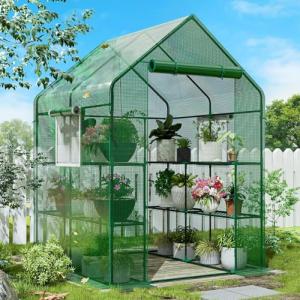
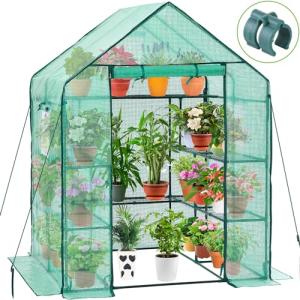
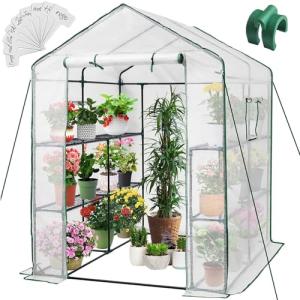
The greenhouse measures 55.5 inches long by 56.3 inches wide by 76.8 inches tall, with 12 wired shelves arranged six on each side, creating two facing walls of plant storage with an open corridor running down the middle. That center aisle is the detail that elevates this structure above typical tiered shelf covers. You can actually step inside, water individual plants, check for pests, prune, and rearrange without dismantling anything.
Each metal mesh shelf supports up to 22 pounds, providing stability for heavy pots, seed trays, and grow lights without shaking or bowing under load. The included shelf clips are a small but important addition — they lock each shelf to the frame, preventing the kind of gradual shifting that causes plants to slide or tip over time. Gardeners who've used similar shelving units without clips will immediately appreciate this detail.
The three-tier arrangement on each side opens up genuinely interesting growing strategies. Bottom shelves can hold the heaviest containers and the most cold-tolerant plants that benefit from ground-level coolness. Middle tiers work beautifully for seedlings under grow lights, where heat management is crucial. Top shelves are ideal for hanging plants, trailing vines, or simply storing tools and supplies where they're accessible but out of the way.
Ventilation Done Right
Climate control is the central challenge of any enclosed growing space, and the Ohuhu greenhouse addresses it with a system that's more flexible than most competitors offer at this price point. The design includes a zippered roll-up door and two Velcro side screen windows that allow you to regulate external airflow, keeping plants warm while providing circulation, and doubling as observation windows so you can check on plant conditions without fully entering the structure.
The fine mesh of the screen windows does double duty — it filters airflow while acting as a physical barrier against insects and small pests. Anyone who has dealt with fungus gnats, aphids, or spider mites in an enclosed growing environment knows exactly how quickly these populations can explode without that kind of prevention. The mesh doesn't eliminate the risk entirely, but it dramatically reduces the vector for initial infestation.
Opening the door and windows during warmer periods prevents overheating, while closing them retains warmth during cold snaps — a simple but effective thermal management system that gives growers meaningful control over interior conditions across the full range of seasonal temperatures.
Setup Without the Headache
The greenhouse is designed with a logical push-fit system that allows assembly without tools, guided by a detailed manual. The components are labeled with corresponding letters, and the assembly sequence follows a logical bottom-up progression — base frame first, then vertical supports, shelves, upper frame, and finally the PE cover draped over the completed structure.
The assembly process involves connecting bottom steel tubes to form the base rectangle, building upward tier by tier, installing the wired shelves with clips, completing the upper frame and peaked roof, then draping and anchoring the PE cover.
Most users report completing the assembly solo in under an hour on first attempt, with subsequent reassembly being considerably faster. The fully detachable design also means the greenhouse can be broken down for seasonal storage without losing any components, and the lightweight frame makes repositioning possible without the kind of effort that usually comes with permanent structures.
Who This Greenhouse Is Really For
The Ohuhu walk-in greenhouse occupies a genuinely useful middle ground in the market. It's too large and well-built to be categorized as a casual seasonal cover, but it doesn't require the investment, the installation, or the permanence of a full polycarbonate or glass greenhouse. That middle position makes it ideal for a specific kind of gardener — one who takes growing seriously, has a meaningful collection of plants to protect, and wants a reliable year-round solution that doesn't require a contractor.
It suits overwintering collections of succulents, cacti, tropicals, and tender perennials particularly well. It works for starting seedlings early in spring without dedicating interior living space to seed trays under grow lights. And it serves as a climate buffer for patio collections in autumn, extending the outdoor season by weeks on either end of the calendar.
Comparison Table: Ohuhu Walk-In Greenhouse vs. Common Alternatives
| Feature | Ohuhu Walk-In Greenhouse | Basic Shelf Cover Tent | Polycarbonate Panel Greenhouse | DIY Cold Frame |
|---|---|---|---|---|
| Dimensions | 57" × 57" × 76.8" | Varies (typically smaller) | Varies (often larger) | Varies (typically small) |
| Walk-in Access | ✅ Yes | ❌ No | ✅ Yes | ❌ No |
| Shelving | 12 wired shelves, 3 tiers | 3–4 shelves, no walk-in | None (open floor space) | None |
| Shelf Capacity | 22 lbs per shelf | 10–15 lbs per shelf | N/A | N/A |
| Frame Material | Electrocoated rust-proof steel | Thin powder-coated steel | Aluminum | Wood/PVC |
| Cover Material | UV-resistant PE, double-stitched | Single-layer PE or PVC | Twin-wall polycarbonate panels | Glass or plastic sheeting |
| Wind Rating | Up to 45 mph with anchors | Low (15–20 mph typical) | High (permanent installation) | Low–Medium |
| Ventilation | Zippered door + 2 screen windows | Single zipper door | Roof vents (often sold separately) | Lid lifting only |
| Pest Screening | ✅ Mesh screen windows | ❌ No | ❌ No (open vents) | ❌ No |
| Assembly | Tool-free, 45–60 mins | Tool-free, 20–30 mins | Tools required, several hours | Tools required |
| Portability | High — fully detachable | High | Low — semi-permanent | Low — fixed position |
| CA65 Certified | ✅ Yes | ❌ Rarely | ❌ Rarely | N/A |
| Warranty | 1-year with free part replacement | None or 30-day return only | 1–5 years (varies by brand) | N/A |
| Price Range | ~$80–$100 | ~$30–$60 | $300–$2,000+ | $50–$150 (materials) |
The Honest Assessment
No portable greenhouse is a permanent structure, and the Ohuhu doesn't pretend to be one. The wire shelving, while functional and clip-secured, benefits from shelf liner to prevent pots from sliding. In high-wind locations, proper anchoring with the included stakes and ropes is essential rather than optional. The Velcro closures on the screen windows work reliably but won't match the seal of a rigid panel closure.
What the Ohuhu greenhouse does deliver — and does deliver consistently, across a wide range of climates, seasons, and use cases — is genuine year-round growing capability in a portable, affordable, and well-engineered package. For gardeners who have spent too many springs watching seedlings get frost-killed on the deck, or too many autumns scrambling to bring tender plants indoors before the first freeze, it's a problem that actually gets solved.
→ Check current pricing and availability on Amazon