Built From the Ground Up: The Spruce Frame Advantage
The greenhouse frame is constructed with premium, heavy-duty spruce wood — a material that is naturally anti-corrosion and resistant to warping, ensuring exceptional structural integrity and longevity. This matters more than many first-time greenhouse buyers realize. A frame that warps under moisture pressure or corrodes over years of outdoor exposure doesn't just look bad — it compromises the airtight seal your plants depend on for consistent growing conditions.
Spruce is a conifer that has been used in outdoor construction for centuries, precisely because it handles moisture exposure with stoic indifference. It doesn't swell dramatically in summer humidity or crack with winter cold. It maintains its dimensional stability across seasons, which means the panels seat properly year after year, the door swings true, and the vents close flush.
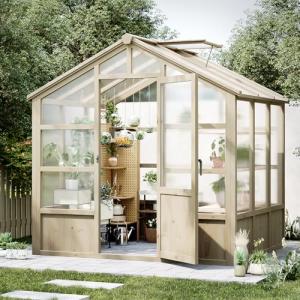
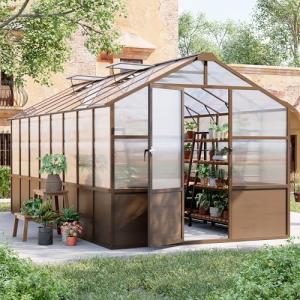
Beyond its technical performance, spruce brings something aluminum simply cannot: warmth. The natural wood finish integrates into a garden setting in a way that feels considered rather than industrial. This greenhouse doesn't look like an afterthought bolted onto the lawn — it looks like a deliberate, tasteful addition to an outdoor space. Visitors notice it. Neighbors ask about it. It adds visual and monetary value to a garden in a way that a galvanized steel frame never could.
The natural oak finish available on this model is particularly striking — honey-toned and rich, it weathers gracefully over time into that deeper, silvered tone that handsome outdoor wood is known for.
The PC Panels: Where Science Meets Sunlight
The multi-layer polycarbonate panels provide UV protection while ensuring plenty of sunlight reaches your plants, offering a safe and nurturing growing space throughout the seasons.
Polycarbonate is not glass, and for greenhouse purposes, that's unambiguously a good thing. PC panels are significantly lighter than glass, meaning the structural demands on the frame are lower and the assembly process is far more manageable. More importantly, polycarbonate has an impact resistance roughly 250 times greater than standard glass — so hailstorms, errant footballs, and falling branches are manageable inconveniences rather than catastrophes.
The panels on this greenhouse are engineered to transmit the wavelengths of light most beneficial to plant growth while filtering out harmful UV radiation. This dual function is critical: plants need light, but excessive UV damages foliage and stresses root systems. The PC paneling acts as a sophisticated filter, passing the good, blocking the harmful, and doing it all day, every day, for years without degradation.
The multi-layer construction also provides genuine insulating value. Unlike single-pane glass or basic polycarbonate sheeting, the air gap between layers traps warmth and creates a thermal buffer between interior and exterior temperatures. On a clear winter day, the interior of this greenhouse can run 15 to 20 degrees warmer than the outside air — the difference between a frozen wasteland and a productive growing environment.
72 Square Feet of Genuine Growing Space
The scale of this greenhouse deserves careful attention. At 6 feet wide by 12 feet long, this is not a hobbyist's starter kit — it's a serious growing facility. The spacious walk-in design offers ample room for plants and movement, which means you can actually work in here, not just peer in through a flap.
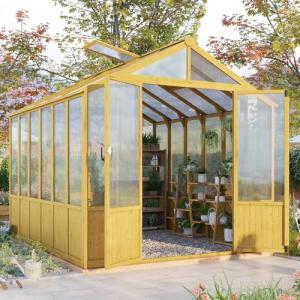
To put the 72 square feet in perspective: that's enough space for three or four raised beds running the length of the structure, a potting bench along one wall, and still enough room to move between them comfortably. You can hang baskets from the roof supports, line the perimeter with staging shelves stacked two or three tiers high, and still have the kind of floor-level visibility that makes plant tending a pleasure rather than an exercise in contortion.
For the kitchen gardener, this greenhouse supports a productive year-round salad operation: lettuce, spinach, and rocket growing through winter in ground beds; tomatoes, peppers, and cucumbers climbing the rear wall through summer; overwintering herbs occupying the shelving year-round. For the flower grower, it means dahlias starting in February, sweet peas hardening off in March, and tender perennials surviving to bloom again next year.
The walk-in designation is not a marketing embellishment — the structure is tall enough for an adult to stand upright and move with ease, which makes a meaningful difference when you're spending genuine time working inside.
Climate Control That Actually Works
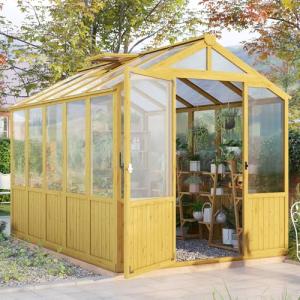
The greenhouse is equipped with adjustable roof vents and a secure lockable door, ensuring optimal growing conditions while protecting your gardening investment from unauthorized access and pests.
Ventilation is the single most underestimated factor in greenhouse growing. Beginners focus on heat retention — and it matters — but without adequate airflow, even a well-heated greenhouse becomes a trap for fungal disease, an incubator for pests, and a suffocation chamber for plants whose stomata need to breathe. The adjustable roof vents on this structure address that problem directly.
Roof vents are specifically positioned to take advantage of natural convection: hot air rises and exits at the apex while cooler, fresher air enters at lower levels. This passive ventilation requires no electricity, no fans, no timers — just the thoughtful adjustment of vent angles as conditions change. On warm spring days, vents can be opened wide to prevent overheating. On cool but sunny winter afternoons, a partial opening maintains air quality without sacrificing too much of the accumulated warmth.
The lockable door adds a layer of security that anyone who has dealt with slugs, mice, or opportunistic neighborhood cats will deeply appreciate. But it's also practically useful for temperature management: a closed, locked door on a cold night can preserve several degrees of warmth that an unsecured door cannot.
Assembly: Designed for Real People
The greenhouse comes with clear instructions and all needed hardware for a smooth, hassle-free installation. The lightweight PC panels and optimized structure make assembly much easier than traditional greenhouses, allowing both beginners and experienced gardeners to finish setup independently — saving time and effort while delivering stable, long-lasting performance.
Assembly of a structure this size is a legitimate weekend project, but it's a manageable one. The component engineering has clearly been iterated with real-world installers in mind. The PC panels are lightweight enough that one person can maneuver them without assistance, though having a second person makes the process faster and more comfortable. The wooden frame components are pre-cut and pre-drilled, eliminating the need for carpentry skills or specialist tools.
The recommended approach is to complete the base frame first, ensuring it is level before proceeding — on uneven ground, a slightly out-of-true base creates cascading alignment problems throughout the rest of the build. Once the base is square and level, the uprights and roof frame follow logically, and the panel installation is largely a matter of sequencing rather than skill.
Most users complete assembly in a day. The hardware is organized by stage rather than mixed together, which removes the frustrating guesswork of matching bolts to instruction diagrams. This kind of user-experience attention reflects a manufacturer that has actually watched people assemble their products and incorporated what they've learned.
Comparison Table: How This Greenhouse Stacks Up
| Feature | This 6x12 Spruce Greenhouse | Aluminum Frame 6x12 | Budget PVC Tunnel 6x12 | Cedar Frame 6x12 |
|---|---|---|---|---|
| Frame Material | Heavy-duty Spruce wood | Powder-coated aluminum | PVC piping | Cedar wood |
| Panel Type | Multi-layer PC panels | Polycarbonate | Polyethylene film | Polycarbonate |
| UV Protection | ✅ Yes | ✅ Yes | ⚠️ Minimal | ✅ Yes |
| Roof Vents | ✅ Adjustable | ✅ Adjustable | ❌ None | ✅ Adjustable |
| Lockable Door | ✅ Yes | ✅ Yes | ❌ No | ✅ Yes |
| Walk-in Height | ✅ Yes | ✅ Yes | ⚠️ Varies | ✅ Yes |
| Weather Resistance | High (natural anti-corrosion) | High (rust-resistant) | Low (UV degrades) | High (naturally rot-resistant) |
| Thermal Insulation | Good (multi-layer PC) | Good (multi-layer PC) | Poor (single-layer film) | Good (multi-layer PC) |
| Aesthetics | ⭐⭐⭐⭐⭐ Natural/warm | ⭐⭐⭐ Industrial | ⭐ Utilitarian | ⭐⭐⭐⭐⭐ Premium natural |
| Assembly Difficulty | Moderate | Moderate | Easy | Moderate–Hard |
| Typical Longevity | 10–15+ years | 10–15+ years | 2–4 years | 15–20+ years |
| Price Point | Mid-range | Mid–High | Low | High |
| Natural Aesthetic | ✅ Excellent | ❌ No | ❌ No | ✅ Excellent |
The table makes one thing clear: this greenhouse occupies the sweet spot between the durability and aesthetics of premium cedar options and the accessibility of aluminum-framed alternatives. Where budget tunnels fail within a few seasons, and where aluminum structures feel more industrial than intentional, the spruce-framed greenhouse delivers genuine longevity with the kind of organic warmth that belongs in a garden.
Year-Round Gardening: What It Actually Enables
It's worth being specific about what owning a greenhouse of this caliber actually changes for a gardener's practice — because the benefits are more wide-ranging than casual observers might expect.
Starting earlier. Most outdoor growing in temperate climates is constrained by last frost dates — often not until May in the northern UK or northern US states. A heated or even passively warmed greenhouse pushes that effective start date back by six to eight weeks, which is the difference between harvesting tomatoes in July or September.
Starting more. A 72-square-foot space is enough to start seedlings for an entire large garden. Trays of onion seeds, cell packs of brassicas, modules of lettuce, root trainers of sweet peas — all can be started, grown on, and hardened off without ever competing for windowsill space.
Growing the difficult things. Aubergines, sweet peppers, chillies, cucumbers, melons — crops that technically can be grown outside in warm summers but reliably perform only under glass. A permanent greenhouse removes the gamble entirely.
Overwintering. Tender perennials, half-hardy shrubs, and potted citrus trees that would otherwise need to be discarded each autumn can be brought in and kept alive through winter, returning to the garden each spring already established and mature.
Extending the season. Autumn salads and winter-hardy greens continue producing until genuinely cold weather — and in a greenhouse, "genuinely cold weather" arrives weeks later and ends weeks earlier than it does outside.
Where to Situate It: Getting the Most from Your Investment
Placement is the one variable entirely in the owner's hands, and it's worth thinking through carefully before setting concrete anchors. The ideal site for this greenhouse maximizes direct sunlight exposure — a south-facing position in the Northern Hemisphere is optimal, with minimal shade from trees, fences, or buildings, particularly in the morning hours when winter sun is low and precious.
Good drainage under and around the site prevents ground moisture from working its way up into the wooden base components. If placing on soil rather than a hard surface, laying a perimeter of paving slabs or gravel beneath the base frame will significantly extend its life.
Access to a water source is worth planning for from the outset — hauling watering cans any significant distance becomes tedious quickly. Proximity to a garden tap or the possibility of running an outdoor hose to the location makes a meaningful quality-of-life difference once the greenhouse is in regular use.
The Verdict: A Greenhouse That Earns Its Place
The 6x12 FT Spruce Frame Greenhouse is not the cheapest option in its category, and it is not trying to be. It occupies a deliberate position: substantial enough to take seriously as a growing facility, well-built enough to last a decade or more, and attractive enough to enhance rather than detract from the spaces it inhabits.
For the gardener who has been putting off the decision — who has been making do with a cold frame here and a fleece cloche there — this is the investment that consolidates all those compromises into a single, elegant solution. The adjustable ventilation, the lockable door, the spruce frame that weathers beautifully, the PC panels that work diligently through every season: these are not marketing features. They are the functional anatomy of a greenhouse that does what a greenhouse is supposed to do.
Grow more. Grow earlier. Grow better. That's the offer. And at this scale, in this construction, it's a promise this greenhouse is fully equipped to keep.
View this greenhouse on Amazon →