Why Wood Still Wins
In an era flooded with aluminum extrusions and PVC tubing, Jocisland made a deliberate choice to build with cedar — and it's a choice that pays dividends on multiple fronts.
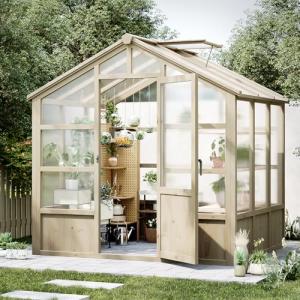
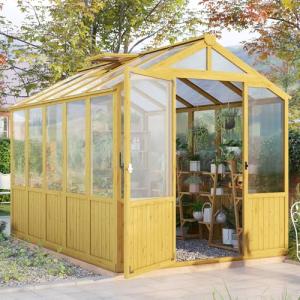
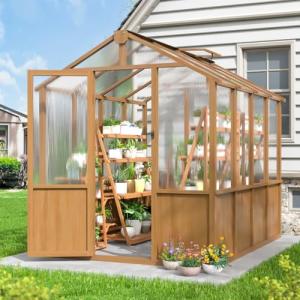
The solid feel of the cedar frame gives it a sturdy, inviting presence that plastics simply can't match. The warm, natural wood blends seamlessly into a backyard setting, giving off a timeless charm. Beyond aesthetics, cedar is one of the most practical outdoor timber choices available. It contains natural oils that resist moisture penetration, deter insects, and slow the onset of rot — all without chemical treatment. In regions with wet winters or humid summers, that natural resilience matters enormously.
The wood greenhouse is built with premium cedar and reinforced metal hardware for durability, with a wind rating that reaches 38–46 mph and a maximum load capacity of 625 lbs, ensuring stability in various weather conditions. That figure — 625 pounds — speaks to the structural integrity of the entire assembled unit. This isn't a flimsy pop-up shelter. This is a structure you anchor to your property and trust through the full cycle of seasons.
The reinforced metal hardware at the joints and connections deserves particular mention. Cedar is strong, but the transition points — where panels meet posts, where the roof meets the walls — are where lesser greenhouses tend to flex, creak, and eventually fail. The metal reinforcements here lock the frame into a rigid, cohesive unit.
Dimensions That Actually Work
Numbers on a spec sheet don't always translate into lived experience, but the Jocisland's proportions are genuinely thoughtful.
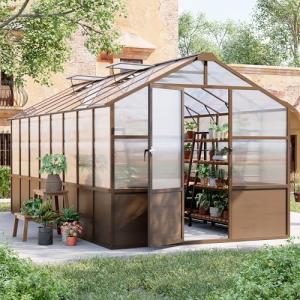
At 8 feet wide and 9.5 feet deep, the footprint gives you 76 square feet of growing floor space — enough for several full-length growing beds, a potting bench, and a clear path between them. With a 5.38 ft wall height and 7.45 ft peak height, this greenhouse provides ample space to move around, ideal for gardening, relaxation, and more. That peak height is particularly important: it allows warm air to rise away from your plants, reduces the oppressive heat buildup that plagues shorter structures on sunny days, and lets you grow vertically if you choose — trellised tomatoes, climbing beans, espaliered fruit trees along the back wall.
The 5.38-foot wall height means most adults can work along the sides without stooping. You're not hunched over your seedlings. You're standing upright at a comfortable working posture, which matters a great deal when you're spending an hour or two deadheading, watering, or transplanting.
For those converting the question from imperial to practical reality: 76 square feet is a meaningful kitchen garden in its own right, or an excellent overwinter haven for tender perennials and container plants that would otherwise need hauling indoors.
Pre-Assembled: The Feature That Actually Saves Your Weekend
One of the most underappreciated aspects of this greenhouse is what arrives pre-built.
Pre-assembled walls, doors, and windows mean you simply connect with hardware for a fast, easy greenhouse kit setup — perfect for both beginners and experienced users. The assembly process is surprisingly straightforward — pre-assembled walls, doors, and windows meant only connecting the pieces with the included hardware.
This is a fundamentally different experience from kits that arrive as a pile of raw lumber and a packet of hardware. The pre-assembly means the critical alignment work — squaring door frames, ensuring window openings are true — has already been done at the factory. You're connecting completed modules, not building from scratch.
That said, honesty compels a note: like most structures of this type, a second pair of hands makes the job significantly easier. The pre-assembled wall panels have real weight and dimension, and holding them plumb while you drive hardware is genuinely a two-person task. Plan your assembly day accordingly, and make sure your base — whether concrete, paving slabs, or treated timber — is level before you begin. An unlevel base will cause alignment issues with the door and window fittings that are difficult to correct after the fact.
The Polycarbonate Panels: Light, Heat, and Protection
The glazing on any greenhouse does more work than it gets credit for. It's not simply a transparent wall — it's a carefully engineered thermal and optical system.
The high-quality sunboard panels offer heat insulation and UV protection, maintaining a comfortable temperature while protecting plants from harmful rays. Twin-wall polycarbonate, which is what these panels are, works on a simple principle: two sheets of polycarbonate separated by vertical flutes create a dead air space that acts as insulation. The result is a panel that transmits the light plants need for photosynthesis while slowing the rate at which heat escapes on cold nights.
This matters enormously for the greenhouse's practical utility across seasons. A single-glazed glass greenhouse loses heat rapidly after sunset; a twin-wall polycarbonate structure retains meaningful warmth through the night. For gardeners using this as a season-extender — pushing tomatoes into October, starting seeds in February — that thermal retention is the difference between a marginal gain and a genuine growing advantage.
The UV protection component addresses a concern that affects both plants and the structure itself. Prolonged UV exposure degrades unprotected polycarbonate over time, yellowing the panels and reducing light transmission. Quality UV-stabilized panels resist this degradation, maintaining clarity and performance over the years.
Ventilation: The Underestimated Essential
Every experienced greenhouse grower has learned the same hard lesson: a closed greenhouse on a sunny April morning can reach temperatures lethal to plants within an hour. Ventilation is not optional — it's as essential as the glazing itself.
The greenhouse features 2 adjustable windows and a door that allow easy control of temperature and humidity, ensuring optimal airflow and healthy plant growth.
The adjustable roof vents are particularly well-positioned. Hot air rises, and roof-level vents allow that accumulated warmth to escape before it becomes damaging. The ability to dial the vent opening — from closed to fully open — lets you fine-tune the internal environment in response to the day's conditions. On a mild spring day with seedlings on the bench, a slightly cracked vent might be all you need. On a blazing July afternoon with mature tomatoes, fully open vents plus the open door creates a through-draft that keeps temperatures manageable.
The lockable door deserves its own mention here. A greenhouse door isn't just an entry point — it's a major ventilation pathway and a security feature. The lockable mechanism on this model means you can leave the door open on warm days without concern, or secure it against opportunistic wildlife at night.
Weather Resistance in Real Terms
The 38–46 mph wind rating and 625 lb load capacity are the headline figures, but it's worth translating those into real-world scenarios.
A 38–46 mph wind is classified as a "fresh to strong breeze" through to near-gale territory on the Beaufort scale. This is the wind that bends trees, sends loose garden furniture skidding across patios, and tests every structure that hasn't been properly anchored. The Jocisland's cedar-and-metal construction handles this range — but only when the greenhouse is properly anchored to its base. Anchoring isn't optional safety theater; it's the foundational requirement for realizing the structure's rated performance.
The 625 lb load capacity refers to the overall structural load — the cumulative weight of the frame, panels, any hanging plant baskets, shelving, and the pressure exerted by accumulated snow on the roof. In regions with moderate snowfall, this capacity provides genuine reassurance. In areas with heavy, wet snow events, proactive snow clearance from the roof remains good practice.
Who This Greenhouse Is Built For
The Jocisland 8×9.5×7.5 occupies a specific and well-considered market position: it's substantially more capable than the hobbyist pop-up frames sold at mass retailers, but it's genuinely accessible without professional installation or a significant DIY skill set.
It suits the serious kitchen gardener who wants season extension without a commercial-scale infrastructure investment. It suits the collector of tender perennials who needs frost-free winter storage for agapanthus, tree ferns, and citrus. It suits the allotment enthusiast who wants a propagation space that doesn't depend on a south-facing windowsill. And it suits the backyard grower who simply values having a dedicated, weather-protected space to work — somewhere that doesn't disappear into mud when it rains.
Comparison: Jocisland 8×9.5×7.5 vs. The Competition
| Feature | Jocisland 8×9.5×7.5 Cedar | Outsunny 6×4×7 Polycarbonate | Yardistry 8×9.7 Cedar | Generic Aluminum/PC Kits |
|---|---|---|---|---|
| Frame Material | Solid cedar + metal hardware | Wood frame | FSC-certified cedar | Aluminum extrusion |
| Footprint | 76 sq ft | 24 sq ft | ~78 sq ft | Varies |
| Peak Height | 7.5 ft | 7 ft | 6 ft side walls | Typically 6.5–7 ft |
| Glazing | Twin-wall polycarbonate | Polycarbonate | Double-wall polycarbonate | Single or twin-wall PC |
| Pre-Assembly | Yes — walls, doors, windows | Partial | Pre-cut, pre-drilled | Minimal |
| Ventilation | 2 roof vents + door | 1 roof vent | Auto vent + louvered base | Typically 1–2 vents |
| Lockable Door | Yes | Yes | Latch + closer | Varies |
| Wind Rating | 38–46 mph | Not rated (Level 5) | Not specified | Varies widely |
| Load Capacity | 625 lbs | Not specified | Not specified | Typically unrated |
| Aesthetic | Natural wood, traditional | Wood/utilitarian | Premium stained cedar | Industrial |
| Best For | Season extension + year-round use | Small hobbyist gardens | Premium aesthetic buyers | Budget setups |
The Jocisland 8×9.5×7.5 Ft Wooden Greenhouse is the kind of purchase that changes how you garden — not incrementally, but fundamentally. It transforms the growing season from a fixed calendar window into something you control. It gives you a dedicated workspace that isn't at the mercy of the weather. And it does it with a material — cedar — that weathers gracefully, looks at home in a garden setting, and carries a functional honesty that aluminum profiles and PVC tubes simply can't replicate.
The pre-assembled construction lowers the barrier to entry significantly. The polycarbonate glazing provides the thermal performance modern growers need. The ventilation system, when used attentively, maintains the internal conditions that keep plants thriving rather than merely surviving.
This is a greenhouse for people who take their growing seriously. It's built to last more than a season, designed to perform across a range of climates, and sized generously enough to grow into rather than out of.
→ View the Jocisland 8×9.5×7.5 Ft Wooden Greenhouse on Amazon