Built Like It Means It: The Cedar Frame
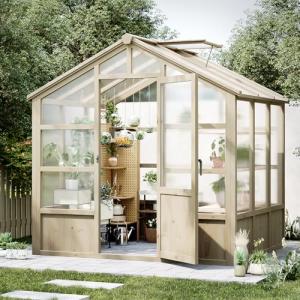
Cedar is not the cheapest framing material available, and AirWire made a deliberate choice using it here. Western red cedar and similar species have been used in outdoor construction for centuries precisely because they resist moisture, insects, and the cyclical expansion-contraction stress that eventually destroys lesser woods. Unlike pine, which will soften, warp, and rot without aggressive chemical treatment, cedar holds its structural integrity season after season with minimal intervention. A light annual application of wood oil is all that's typically needed to keep the frame looking sharp and performing well.
The frame is further reinforced with an aluminium alloy substructure — a smart engineering decision that adds rigidity at the joints without adding significant weight. You get the warmth and natural insulating properties of timber on the outside, and the dimensional stability of metal at the stress points. This hybrid approach is increasingly common in premium greenhouse design, and it works.
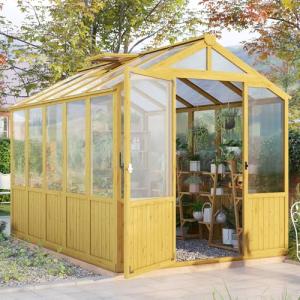
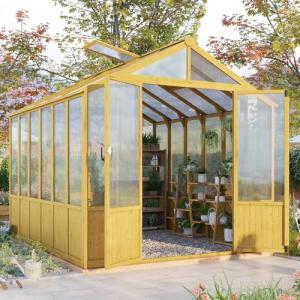
At 6 feet wide and 8 feet deep, the footprint is compact enough to fit most suburban backyards without dominating the landscape. The walk-in height gives adult gardeners full upright access — no crouching, no contorting — which matters enormously when you're spending real time inside tending plants.
The Polycarbonate Panels: Where the Science Lives
Glazing is the heart of any greenhouse. Get it wrong, and everything else is irrelevant. The AirWire uses 6mm twin-wall polycarbonate panels weighing 720 grams per square meter — specifications that sit firmly in the mid-to-premium tier of the consumer greenhouse market.
Twin-wall polycarbonate works on the same principle as double-glazed windows: two parallel sheets separated by a narrow air gap create a thermal buffer that retains heat far more effectively than single-pane glass or thin plastic film. In practical terms, this means warmer nights for your plants without the constant anxiety of a heating bill. The air gap also diffuses incoming light, reducing harsh shadows and hot spots that can stress foliage.
The panels carry a specialised UV coating that provides 99.99% UV protection — a critical feature often overlooked in cheaper alternatives. UV degradation is the primary reason bargain greenhouse panels turn brittle, yellow, and opaque within a few seasons. The coating on these panels filters the harmful wavelengths while still allowing the full-spectrum visible light that drives photosynthesis.
The innovative slide-in panel system reportedly enables installation 20% faster than standard greenhouses, whilst enhancing overall stability by 15%. The panels slot cleanly into the frame channels rather than requiring individual fasteners, which simplifies assembly and creates a tight, weather-resistant seal.
Ventilation: The Detail That Separates Good Greenhouses from Great Ones
A greenhouse without proper ventilation is essentially an oven. On a sunny spring day, interior temperatures inside an unventilated structure can spike to levels that will wilt, stress, or outright kill the plants you're trying to protect. This is one of the most common failure points of entry-level greenhouse kits — they treat ventilation as an afterthought.
The AirWire addresses this with adjustable roof vents positioned at the apex of the structure. Hot air, being lighter, naturally rises and accumulates at the ceiling. Ridge venting lets that heat escape at precisely the point where it concentrates most. The adjustability matters because ventilation needs change with the seasons: wide open in midsummer, cracked slightly in early spring, closed in winter. A fixed vent would serve none of these scenarios well.
This passive ventilation system won't replace an active fan setup for the most demanding growing applications, but for a 6×8 structure handling typical home growing — vegetables, herbs, seedlings, tender perennials — it's more than adequate. Gardeners in particularly hot climates who want finer temperature control can always add a small clip-on fan; the design accommodates it without modification.
The Lockable Door: Security and Practicality in One
The walk-in door is wide enough for practical use — bringing in flats of seedlings, maneuvering a small watering can, or simply moving around comfortably while potting up. The lockable mechanism is a thoughtful addition that serves two purposes: it keeps the door firmly closed against wind pressure (a common nuisance with cheaper greenhouse doors that pop open and slam repeatedly), and it provides basic security for tools and equipment stored inside.
For households with curious pets or children, the lock also functions as a simple barrier — keeping the dog from deciding the greenhouse is a delightful warm nap spot, or preventing small hands from redistributing your carefully labeled seedling trays.
Assembly: Realistic Expectations
All components are clearly labelled, with detailed instructions and all necessary tools included. AirWire has clearly invested in the out-of-box experience here. The slide-in panel system reduces the most time-consuming part of greenhouse assembly — the glazing — to a manageable task that a single person with reasonable DIY confidence can handle, though having a second set of hands for the frame-raising phase is always advisable.
Budget a full day for assembly. Not because the design is difficult, but because a structure like this rewards patience and care during installation. Leveling the base properly, ensuring the frame is square before tightening hardware, and taking time to seat the panels correctly will pay dividends in structural integrity and weatherproofing for years to come. Rushing the process to finish before dinner is how you end up with a slightly leaning greenhouse that lets cold air whistle through the corners.
A proper base — whether concrete pavers, a timber surround, or poured concrete — will significantly improve stability and longevity. The greenhouse itself can be anchored to most standard bases; check local conditions for wind exposure before deciding how permanently to fix it down.
Four Seasons of Use: What to Actually Grow
A 6×8 cedar greenhouse with proper polycarbonate glazing is capable of extending your growing season by six to eight weeks on either end in most temperate climates — and in milder regions, year-round growing becomes genuinely achievable.
Spring is where this structure truly earns its keep. Starting seeds indoors under grow lights is fine, but moving them to a real greenhouse lets them harden off naturally while still being protected from frost. Tomatoes, peppers, cucumbers, and squash — all heat-loving crops that suffer when direct-sown too early — can be started weeks ahead of outdoor planting time.
Summer use focuses on ventilation management and maximising the microclimate for crops that struggle in cooler outdoor conditions: aubergines, melons, basil, chillies. The diffused light from twin-wall panels is particularly beneficial here, reducing the leaf scorch that can occur under direct greenhouse glass.
Autumn becomes a second season in its own right. Crops like salad greens, spinach, chard, and Asian brassicas will continue producing well past the outdoor frost date inside the greenhouse. Many gardeners find autumn growing more relaxed than spring — the pest pressure drops, the light is softer, and the temperature swings are less extreme.
Winter use depends heavily on your climate. In USDA zones 7 and above, an unheated cedar greenhouse with 6mm polycarbonate can maintain frost-free conditions on all but the coldest nights. Adding a small frost-protection heater — the kind used in garages, running on a thermostat — turns the structure into a genuine four-season growing space. Overwintering tender perennials, citrus trees, and cold-sensitive herbs becomes straightforward.
How It Stacks Up: AirWire vs. The Competition
Choosing the right 6×8 greenhouse means weighing material quality, glazing specification, and long-term durability. Here's how the AirWire compares to its closest rivals:
| Feature | AirWire 6×8 Cedar | Aoxun 6×8 Wood | HUSFU 6×8 Cedar | Veikous 6×8 Cedar | Generic Pine Frame 6×8 |
|---|---|---|---|---|---|
| Frame Material | Solid Cedar | Solid Wood (unspecified) | Solid Cedar | Solid Cedar | Pine |
| Aluminium Reinforcement | ✅ Yes | ❌ No | ✅ Yes | ❌ No | ❌ No |
| Panel Thickness | 6mm Twin-Wall PC | 6mm PC | 6mm PC | 6mm PC | 4mm Single PC |
| UV Coating | 99.99% UV Protection | Standard UV | Standard UV | Standard UV | Basic/None |
| Panel System | Slide-in (20% faster install) | Standard fit | Standard fit | Standard fit | Screw-fixed |
| Roof Vents | Adjustable | Auto temperature-control | Adjustable | 1 Fixed Vent | Fixed |
| Lockable Door | ✅ Yes | ✅ Yes | ✅ Yes | ✅ Yes | ❌ No |
| Walk-in Height | Full adult height | Full adult height | Full adult height | 83.5" | Varies |
| Hardware Quality | Premium | Standard | Premium | Standard | Basic |
| Assembly Tools Included | ✅ Yes | ✅ Yes | ✅ Yes | ❌ No | ❌ No |
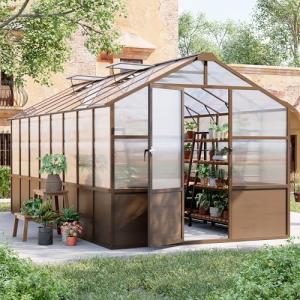
| Aesthetic Finish | Natural wood grain | Natural | Natural | Light Mocha/Black | Painted |
The AirWire's standout differentiators against this field are the aluminium alloy joint reinforcement (absent in several comparably priced competitors), the proprietary slide-in panel system, and the UV coating specification. The Aoxun's automatic temperature-control vent is a notable advantage in climates with volatile spring temperatures, but the AirWire's manual adjustable vents offer more precise control for experienced growers who prefer to manage conditions themselves.
Who This Greenhouse Is For
The AirWire 6×8 Cedar Greenhouse makes most sense for the gardener who is done experimenting and ready to commit. It's a structure that rewards the grower who will use it consistently — who will get up on frosty March mornings and check on seedlings, who will manage ventilation through a hot July week, who finds genuine satisfaction in the extending arc of a proper growing season.
It's not the cheapest option on the market. That's appropriate. The cheapest options are built to the cheapest standards, and any experienced gardener can tell you what happens to a flimsy greenhouse after two winters. The AirWire is built to be in your garden five years from now, still doing exactly what it did on day one — protecting plants, extending seasons, and giving you a quiet, warm corner of the garden that belongs entirely to growing things.
For the price point, the cedar frame with aluminium reinforcement, the 6mm UV-coated twin-wall polycarbonate, the adjustable ridge venting, and the thoughtful assembly system represent genuine value in a market full of products that promise more than they deliver. This one delivers.
The AirWire 6×8 FT Wooden Greenhouse with Cedar Frame is available on Amazon. View the full product listing here.