Built From the Ground Up: Cedar and Polycarbonate, the Right Combination
The frame of this greenhouse is crafted from solid cedar, a wood prized for its natural resistance to moisture. That matters more than it sounds. Most budget structures use untreated pine or composite wood that begins to soften and warp after one or two wet seasons. Cedar, by contrast, contains natural oils that repel moisture and resist decay — no chemical treatment required. You're looking at a frame that ages gracefully rather than deteriorating under the kind of conditions a greenhouse by definition must endure.
Compared to some metal frames, wood reduces heat transfer, contributing to more stable interior temperatures. This design also helps manage condensation, making it a fitting choice for family gardening. That's not a minor benefit. Anyone who has grown tomatoes or peppers through a late spring cold snap knows that temperature spikes and dips — not just averages — determine whether your plants thrive or stall. A cedar frame acts as a natural buffer, absorbing and releasing heat more slowly than aluminum or steel, which means fewer dramatic swings inside the structure even when the thermometer outside is being unreliable.
The glazing is where this greenhouse earns its second star. The 6mm thick polycarbonate panel features a diffusion pattern to increase light refraction, ensuring plants receive the right amount of sunlight. This isn't the thin, brittle sheeting you find on budget pop-up greenhouses that cracks in the first hard frost. Polycarbonate panels offer UV protection, high light transmission of around 70%, and impact resistance for healthy plant growth. The diffusion layer is particularly clever — rather than creating hot spots from direct beam sunlight, the panels scatter light more evenly across your growing space, reducing the chance of leaf scorch and giving every plant an equal share of the good stuff.
The Dimensions: Not Too Big, Not Too Small
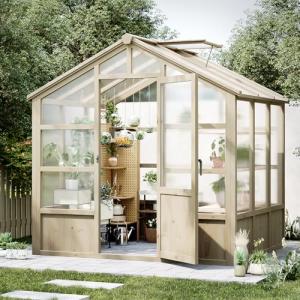
At 6 feet wide and 8 feet deep, this greenhouse occupies a footprint that fits the reality of most suburban and semi-rural backyards. The overall dimensions come in at approximately 74 inches wide by 97.6 inches deep by 83.5 inches high, with a door opening around 23.6 inches wide by 68.9 inches tall. That height — roughly seven feet at the peak — means most adults can stand fully upright, move comfortably, and work without the hunched-over misery that plagues shorter structures.
The 48 square feet of floor space is more versatile than it initially sounds. Configured thoughtfully with wall-mounted shelving on two sides and a central work path, you can accommodate dozens of seedling trays, multiple large container plants, hanging baskets above, and still have room to maneuver. This is a greenhouse you can actually work in, not just peer into from a crouched position through a small doorway.
The walk-in design is explicitly intentional here. This large walk-in wooden greenhouse has a front door for easy entry, lockable when you're away. That lockable door is a small but meaningful feature — it keeps curious wildlife, neighborhood animals, and unexpected gusts from disrupting carefully calibrated growing conditions inside.
The Roof Vent: Climate Control Without Electricity
One of the most consequential elements of any greenhouse is ventilation, and this structure handles it through a hinged roof vent that deserves more attention than it typically gets in product listings.
The adjustable roof vent balances great insulation and enough ventilation, keeping the inside cool in warm seasons and preventing excess moisture. The hinge-secured vent can be tilted to your needs with a maximum opening angle of 45 degrees. That 45-degree adjustment range is meaningful — at a narrow crack, you're managing humidity without losing heat; at full open, you're creating a chimney effect that flushes out excess warmth on a hot summer afternoon.
Adjustable ventilation windows on the roof maintain air circulation and keep the greenhouse at optimal temperature and humidity. Most experienced greenhouse growers will tell you that poor ventilation is the number one killer of plants in enclosed structures — not cold, not drought, but the combination of heat buildup, stagnant air, and excessive moisture that breeds mold, mildew, fungal rot, and fungus gnats. The roof vent addresses all of this passively, without any electricity or automated systems required, keeping the interior livable and disease-resistant across every season.
Year-Round Utility: What You Can Actually Grow
This is a structure built to earn its keep across all four seasons, not just spring and autumn.
Spring is when it earns its first dividend. You can start seeds six to eight weeks earlier than outdoor soil temperatures would permit, giving tomatoes, peppers, eggplants, and melons a head start that translates directly into earlier and heavier harvests. Seedlings that might get frosted in an unprotected bed are completely safe inside.
Summer demands ventilation management — which the roof vent handles. With the door open and vent adjusted, even July afternoons become workable for heat-tolerant crops like basil, okra, and cucumbers.
Autumn is arguably the greenhouse's finest hour. While outdoor beds go to seed and the growing season officially ends for most gardeners, the interior of this structure stays usable well into November in most climates. Leafy greens, kale, chard, parsley, and spinach can be harvested through hard frosts.
Winter transitions the greenhouse into overwintering territory — a place to keep citrus trees, dormant dahlias, tender perennials, and overwintering herbs that would die in a hard freeze but don't need much active heat to survive.
Cedar wood withstands harsh weather better than most kits. This greenhouse has been documented to survive snowstorms that would crush cheaper plastic structures, thanks to its solid cedar construction. The combination of structural integrity and insulating panel thickness means you're not making a gamble on storm performance every winter.
Aesthetic Value: The Garden Feature That Actually Looks Good
This is worth saying plainly: most greenhouses are eyesores. Cheap aluminum frames with cloudy polycarbonate panels and flapping plastic sheeting are functional, but they do nothing for the visual quality of a backyard or garden.
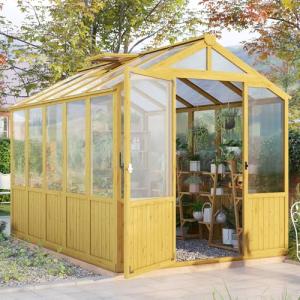
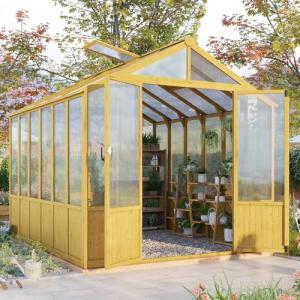
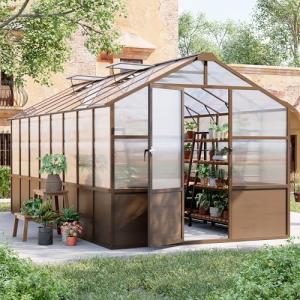
The cedar frame greenhouse is genuinely attractive. The warm, natural tones of cedar wood complement nearly every outdoor design context — English cottage gardens, contemporary minimalist backyards, vegetable patches edged with raised beds, or wooded rural properties. The natural cedar wood frame offers a spacious and secure environment for plants, and the structure provides an aesthetic appearance that is both sturdy and durable.
Over time, cedar weathers to a silver-grey patina that many gardeners find even more appealing than the original tone. If you prefer to preserve the original warm brown color, a single coat of natural wood oil or exterior stain once every couple of years is all that's required.
This is the rare garden structure that you'll want to position as a feature of your outdoor space rather than tuck into a corner out of sight.
Assembly and Installation: What to Know Before You Build
This is a kit greenhouse, which means assembly is part of the purchase. Most buyers with moderate DIY confidence and a free weekend will find the build manageable. Components arrive in multiple boxes — typically three to four packages — which may not arrive simultaneously, so plan your build window accordingly rather than starting the moment the first box arrives.
The structure benefits from a level, stable base. Concrete pavers, a compacted gravel pad, or treated wood foundation rails are all viable options. A slightly uneven base will translate into alignment problems during assembly and potential structural stress over time. Getting the foundation right is the most important pre-build step and one that rewards patience.
Panel installation typically uses sliding or clip-based systems that are intuitive once you've read the instructions through once before starting. The cedar frame components are pre-cut and labeled. Hardware quality on these structures tends to be solid — look for stainless or galvanized fittings rather than bare steel, which can rust and stain the wood.
How It Compares: Cedar Wooden Greenhouse vs. Competing Types
| Feature | Cedar Frame + Polycarbonate (This Greenhouse) | Aluminum Frame + Polycarbonate | Glass Greenhouse | Plastic Pop-Up Greenhouse |
|---|---|---|---|---|
| Frame Material | Natural cedar wood | Aluminum | Aluminum / steel | Powder-coated steel or PVC |
| Glazing | 6mm twin-wall polycarbonate | 4–6mm polycarbonate | Tempered glass | Single-layer PE film |
| Heat Retention | Excellent (wood insulates) | Moderate | Moderate | Poor |
| Aesthetic Appeal | High – natural, warm look | Moderate – utilitarian | High – classic | Low |
| Weather Resistance | Very good | Very good | Good | Poor |
| UV Protection | Yes (polycarbonate coating) | Yes | Limited | Minimal |
| Condensation Management | Good (wood absorbs moisture) | Moderate | Moderate | Poor |
| Ventilation | Roof vent (adjustable) | Roof vent (often automated) | Varies | Zipper doors only |
| Durability Lifespan | 10–20+ years with maintenance | 15–25 years | 20–30 years | 1–5 years |
| Assembly Difficulty | Moderate | Moderate | High | Easy |
| Lockable Entry | Yes | Varies | Varies | No |
| Price Range | Mid-range | Mid-range | High | Low |
| Best For | Aesthetics + year-round growing | Durability-focused growers | Permanent installations | Seasonal/temporary use |
The cedar frame greenhouse occupies a strong middle ground — it has the longevity and year-round performance that pop-up structures can't touch, the aesthetic warmth that aluminum cannot provide, and the price accessibility that full glass construction doesn't offer. For most backyard gardeners who want a permanent structure that looks intentional and works reliably, it hits the right marks.
Final Verdict: A Greenhouse That Takes Growing Seriously
The 6×8FT Cedar Frame Wooden Greenhouse is the kind of purchase you make once and don't revisit for a decade. It's a structure with clear material values — genuine cedar, proper polycarbonate glazing, a functional ventilation system, and walk-in dimensions that make daily gardening comfortable rather than cumbersome.
It suits gardeners who are done with compromises. Whether you're extending the tomato season by eight weeks, overwintering plants that would otherwise be lost, starting hundreds of seedlings for a market garden, or simply want a dedicated growing space that makes your backyard look like it was designed by someone who actually knows what they're doing — this greenhouse delivers on all of those fronts.
With quality cedar construction, ample growing space, and temperature regulation features, a cedar greenhouse is an excellent choice for extending the gardening season. The spacious design accommodates many plants and the cedar build ensures it will last for years.
The outdoor growing season is limited. A well-built greenhouse extends it substantially — and this one is built to do exactly that, year after year.