Built from the Ground Up: The Cedar Difference
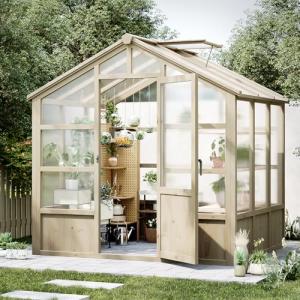
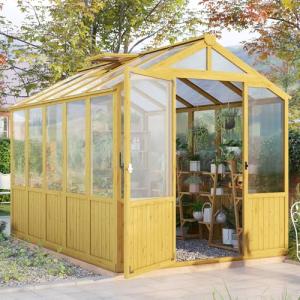
AirWire's polycarbonate greenhouses are constructed using high-quality solid cedar timber and premium hardware, reinforced with an aluminium alloy frame. That's not a throwaway detail — cedar is one of the most thoughtfully chosen materials you can use for an outdoor structure.
Unlike pine or generic softwoods, cedar contains natural oils that make it intrinsically resistant to moisture, rot, and insects. It doesn't need to be chemically treated to survive the outdoors. It weathers gracefully, holding its structural integrity through seasons of rain and temperature swings that would buckle lesser woods. For a greenhouse — a structure that by definition lives in a humid, water-adjacent environment — cedar isn't just an aesthetic choice. It's the practical one.
The aluminium alloy reinforcement adds a secondary layer of structural confidence. Where wood provides warmth and natural flex, the metal framework locks the whole structure into alignment, distributing load across the footprint and keeping everything plumb and square over years of use.
These greenhouses withstand strong winds, heavy rain and snowstorms, providing reliable year-round protection for plants in any climate. That's not marketing language — it's a direct consequence of pairing two complementary materials: one organic and resilient, one engineered for precision.
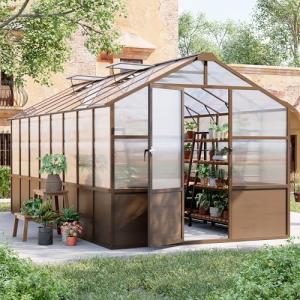
The warm brown finish of the cedar frame also does something that all-metal greenhouses simply can't: it looks like it belongs in a garden. It reads as a natural extension of the outdoor space rather than an industrial intrusion into it.
The Glass That Isn't Glass: Polycarbonate Paneling Explained
Most people assume greenhouse glazing is glass. For a backyard structure in the 21st century, polycarbonate is almost always the better answer — and the AirWire cedar greenhouse uses it well.
The panels comprise transparent and semi-transparent 6mm-thick 720g polycarbonate sheets with a specialized UV coating, providing 99.99% UV protection. The polycarbonate sheets deliver ample sunlight to your plants while blocking harmful ultraviolet rays.
What this means practically is that your plants get the light spectrum they need for photosynthesis — the visible wavelengths that drive growth — without the UV radiation that can stress or damage foliage. Plants under polycarbonate panels often grow more evenly than those under direct sun, because the panels also diffuse the light, scattering it more uniformly across the growing area rather than creating hot spots and shadows.
At 6mm thick and 720 grams per square meter, these aren't thin or flimsy panels. They're double-walled, which means they also provide meaningful thermal insulation — trapping warmth inside the greenhouse during cold nights and buffering against sharp temperature drops. For a gardener trying to extend the season in a temperate climate, that insulation value is directly translatable into weeks of additional growing time.
And unlike glass, polycarbonate won't shatter. It flexes under impact — whether from hail, a windblown branch, or an accidental elbow during assembly — and returns to its shape. For a structure you're living with long-term, that resilience matters enormously.
A Walk-In Space That Actually Functions
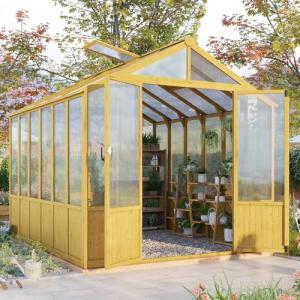
At 8 feet wide and 14 feet long, the AirWire greenhouse gives you room to move. This isn't a cramped single-row structure where you have to contort yourself to reach the back bench. With 112 square feet of floor space, you can run two planting beds or shelving runs down either long wall with a comfortable working aisle between them.
This large walk-in greenhouse features a lockable door for convenient access and security against theft. You may furnish the interior with a coffee table and other furniture to create a cozy space.
That last point is worth sitting with. A greenhouse this size isn't just a plant storage facility — it becomes a place. Gardeners who invest in proper walk-in structures often find themselves spending time inside them for reasons beyond watering: reading seed catalogs, potting up seedlings on a rainy afternoon, or simply enjoying the enclosed warmth on a cold morning with a hot drink in hand. The lockable door adds a layer of security that matters, particularly if you're growing valuable specimens or keeping expensive tools inside.
The footprint also gives you genuine flexibility in how you use the space across different seasons. In late winter, it becomes a seed-starting nursery. In spring, it transitions to a hardening-off station for tender seedlings before they go outside. By summer, heat-loving crops like cucumbers and peppers can thrive in the extra warmth it retains. In autumn, it extends the harvest of tomatoes and basil well past the first frost.
Ventilation: The Feature That Separates Good Greenhouses from Great Ones
Temperature management is where many cheaper greenhouses fail. Without adequate airflow, a greenhouse on a warm spring day can become a plant-killing heat trap within hours — an effect that's more damaging than frost for many species. AirWire's cedar greenhouse addresses this directly.
Adjustable roof vents and lockable doors ensure stable temperatures while promoting efficient air circulation. The spacious interior accommodates all plants, which can be neatly arranged within a well-ventilated environment.
Roof vents are the correct solution here. Hot air rises, so placing the vent at the apex of the structure allows heat to escape precisely where it accumulates. Opening the roof vent creates a chimney effect — cooler air draws in through the door or lower openings, rises as it warms, and exits at the top. This passive airflow system doesn't require electricity or fans, and it works reliably as long as conditions allow.
For gardeners in warmer climates or during summer months, the combination of roof vent and lockable door means you have meaningful control over the internal climate at different times of day. Crack the roof vent in the morning, open the door at midday, close everything at dusk to retain the day's warmth overnight.
Assembly: Labelled, Detailed, and Designed for Real People
One of the most common pain points with greenhouse kits is assembly — specifically the experience of opening dozens of unlabelled parts and trying to match them to instructions written in ambiguous diagrammatic shorthand. AirWire has invested real effort in solving this problem.
All components are clearly labelled, with detailed instructions and all necessary tools included. Save time and effort while ensuring a sturdy and secure outdoor greenhouse.
The innovative slide-in panel system enables installation 20% faster than standard greenhouses, whilst enhancing stability by 15%. The slide-in panel system is particularly clever — rather than requiring panels to be screwed or clamped individually, they slot directly into the frame channels, reducing the number of fastening steps considerably and eliminating a common source of alignment frustration.
That said, assembly of a structure this size is a two-person job. The cedar components are solid and have meaningful weight to them. Setting aside a full day, or a relaxed weekend morning with a helper, is the realistic expectation. The payoff is a structure that goes up once and stays up for years.
One important assembly note: the greenhouse should be anchored to a stable surface. A level concrete pad, compacted gravel base, or pressure-treated timber perimeter frame provides the right foundation. The greenhouse does not include a floor, which is actually an advantage — it means you can plant directly into the ground inside if you choose, which is ideal for crops with deep root systems.
Security and Everyday Use
The lockable door deserves more attention than it usually gets in greenhouse descriptions. Theft from gardens — including of expensive plants, tools, and equipment — is a genuine concern in many areas, and the ability to lock the door provides a real deterrent. It also keeps children and pets from accessing the space unsupervised, which matters if you're storing fertilizers, sharp tools, or delicate seedlings you'd rather not have disturbed.
The door's walk-in width is large enough to roll a wheelbarrow through, which simplifies soil delivery and debris removal considerably. These are the small functional details that accumulate into meaningful quality of life over months and years of use.
Comparison: AirWire Cedar 8×14 vs. Comparable Greenhouse Options
| Feature | AirWire Cedar 8×14 | Aluminum-Frame 8×14 | Budget Pop-Up 8×14 | Premium Glass Greenhouse |
|---|---|---|---|---|
| Frame Material | Solid Cedar + Aluminium Alloy | Aluminium only | Steel/fabric | Aluminium or Steel |
| Glazing | 6mm Twin-Wall Polycarbonate | 4–6mm Polycarbonate | Polyethylene Film | Tempered or Horticultural Glass |
| UV Protection | 99.99% | Varies (60–90%) | Minimal | Varies by glass type |
| Insulation Value | High (twin-wall panels + cedar) | Moderate | Low | Moderate–High |
| Aesthetic | Natural, garden-integrated | Industrial/Modern | Utilitarian | Classic/Traditional |
| Weather Resistance | High (wind, rain, snow) | Moderate–High | Low | High |
| Lockable Door | ✅ Yes | Sometimes | Rarely | Usually |
| Roof Ventilation | ✅ Adjustable roof vent | Sometimes | Rarely | Usually |
| Lifespan | 10–20+ years | 5–10 years | 1–3 years | 20+ years |
| Assembly Difficulty | Moderate (labelled, tools included) | Moderate | Easy | High |
| Walk-In Space | ✅ Full walk-in (8×14 ft) | ✅ Full walk-in | Limited | ✅ Full walk-in |
| Price Range | Mid–Premium | Mid | Budget | Premium–High |
The comparison illustrates what the AirWire cedar model occupies a distinctive niche. It delivers the durability and insulation of a premium structure without the cost or complexity of a glass greenhouse, and it brings aesthetic warmth that all-metal options simply can't match. For a gardener who wants something that looks intentional in their garden and performs seriously through multiple seasons, it's a genuinely compelling combination.
Who This Greenhouse Is For
The AirWire 8×14 Cedar Greenhouse earns its place for a specific type of gardener: one who has moved past casual growing and wants a dedicated, permanent space that performs year-round.
It suits vegetable growers who want to start seeds in late winter, extend tomato season into November, and overwinter tender perennials without losing them. It suits flower growers running cut-flower operations who need protected propagation space through the colder months. It suits anyone who has been frustrated by the limitations of cold frames and small cloches and is ready for something that actually changes how they garden.
The cedar frame means it integrates naturally into gardens with traditional aesthetics — cottage gardens, kitchen gardens, heritage-style backyards. It won't look out of place next to a wooden fence or a stone path the way an aluminum-and-black-plastic structure might.
It also suits people who value longevity. Cedar, properly maintained, is a material that lasts decades. The polycarbonate panels are UV-stabilized for long-term performance. This is not a purchase you'll be replacing in three years.
Bottom Line
The AirWire 8×14 FT Wooden Greenhouse with Cedar Frame is a thoughtfully engineered growing space that takes the best from two material worlds — the natural warmth and rot-resistance of cedar, and the light science of premium twin-wall polycarbonate. The roof ventilation system, lockable door, labeled assembly components, and robust construction make it a practical tool as much as a beautiful garden feature.
For the gardener who is ready to grow more, grow longer, and grow better, it represents a meaningful upgrade — one that will pay back its cost in extended harvests, overwintered plants, and early-season seedlings for many years to come.