What Is a Greenhouse, Really?
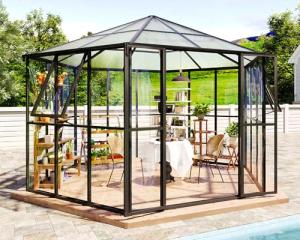
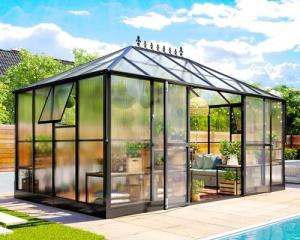
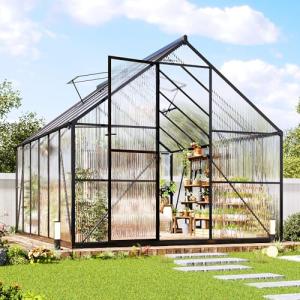
At its most basic, a greenhouse is a structure with walls and a roof made primarily from transparent or translucent material — glass, polycarbonate, or specialist film — designed to trap solar radiation and create a warmer, more controlled environment inside than exists outside.
But that dry definition doesn't do them justice.
In practice, a greenhouse is a tool for ambition. It lets you push the boundaries of what's possible in your climate. Grow Mediterranean herbs in northern latitudes. Start seeds six weeks ahead of the last frost. Overwinter tender perennials that would otherwise die back completely. Cultivate exotic fruits — figs, citrus, even bananas — that have no business surviving your winters but do anyway, thriving in the sheltered warmth you've created.
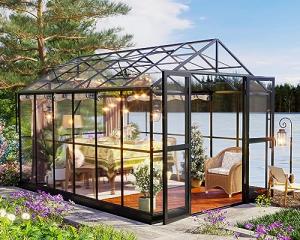
The principle has been understood for centuries. The Romans used rudimentary specularia — rooms with thin sheets of mica or selenite — to grow cucumbers for Emperor Tiberius year-round. By the 17th century, European botanical gardens were constructing elaborate orangeries to house exotic plants brought back from tropical expeditions. Modern greenhouses are the direct descendants of those same impulses: the desire to grow what geography and weather would otherwise deny us.
Types of Greenhouses
Not all greenhouses are created equal, and the right one for you depends on how much space you have, what you want to grow, and how seriously you want to take it.
Lean-To Greenhouses
A lean-to greenhouse attaches directly to an existing wall — usually the wall of your house, garage, or garden shed. The wall provides structural support and, crucially, acts as a thermal store, absorbing heat during the day and releasing it overnight. This makes lean-to designs some of the most energy-efficient options available.
They're ideal for smaller gardens where a freestanding structure simply won't fit, and the proximity to the house makes running electricity or water connections significantly easier. The main limitation is that you're relying on one wall of existing space, which constrains your options in terms of size and orientation.
Freestanding Greenhouses
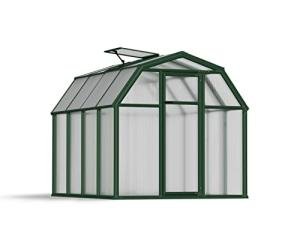
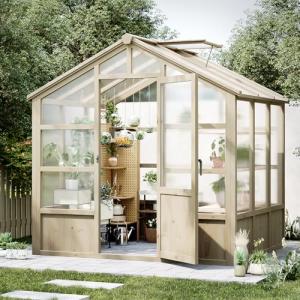
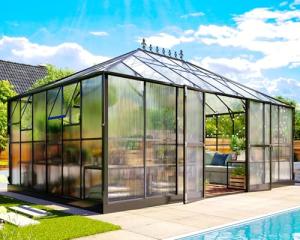
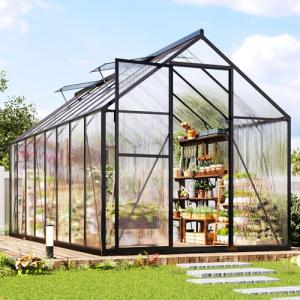
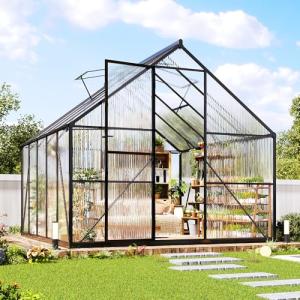
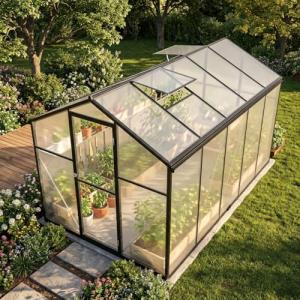
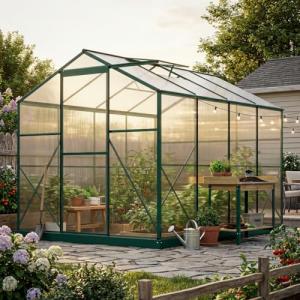
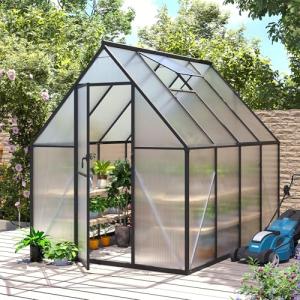
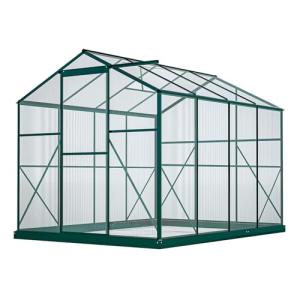
Freestanding greenhouses stand independently and can be positioned wherever your garden allows the best solar exposure — typically south or southeast-facing to maximise the amount of winter sun they capture.
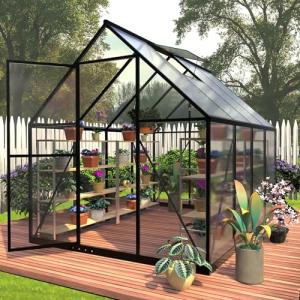
These come in a wide range of sizes, from compact 6×4ft starter models that sit neatly in the corner of a small garden, right up to commercial-scale structures running to several hundred square feet. The freedom to position them optimally makes a genuine difference to performance, particularly in winter when the sun sits low in the sky and every degree of captured warmth counts.
Polytunnels
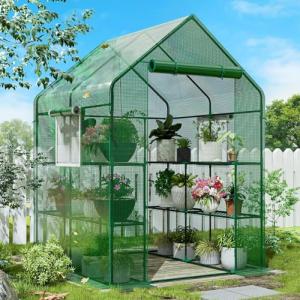
Polytunnels use a steel hoop frame covered in agricultural polythene film rather than rigid panels. They're considerably cheaper than glass or polycarbonate structures, easier to erect, and offer a remarkably large growing area for the cost. The trade-off is longevity — polythene film typically needs replacing every five to ten years — and aesthetics.
For serious food growers, particularly those with a kitchen garden or small-scale market gardening ambitions, polytunnels are hard to beat on pure value. Many professional growers use nothing else.
Cold Frames and Mini Greenhouses
At the more modest end of the spectrum, cold frames and mini greenhouses offer many of the same benefits in a much smaller footprint. Cold frames — essentially a box with a transparent lid — are perfect for hardening off seedlings, protecting overwintering salad crops, or extending the season for low-growing vegetables. Mini greenhouses with tiered shelving are ideal for balconies, patios, and small urban gardens where even a lean-to would be too ambitious.
Glazing Materials Explained
The material used to glaze a greenhouse has more influence on its performance, longevity, and cost than almost any other factor. It's worth understanding the options before you buy.
Glass
Glass is the traditional choice, and for good reason. It offers outstanding clarity, excellent light transmission, and a lifespan measured in decades rather than years. It also looks beautiful — there's no denying that a well-maintained glass greenhouse has an elegance that polycarbonate simply can't match.
The downsides are weight, fragility, and cost. Glass is significantly heavier than polycarbonate, meaning the frame needs to be correspondingly robust. A stray football or an unexpected storm can shatter a pane, and replacement costs add up. Toughened safety glass addresses the fragility concern but adds further to the price.
For gardeners investing in a permanent, high-quality structure they expect to use for decades, glass remains the premium choice.
Polycarbonate
Polycarbonate panels have become the dominant glazing material for modern greenhouses, and it's not difficult to see why. They're lightweight, impact-resistant, and considerably cheaper than glass while still offering excellent light transmission.
Twin-wall and multi-wall polycarbonate panels also provide meaningfully better insulation than single-pane glass — the air trapped between layers acts as insulation, reducing heat loss overnight and lowering heating costs. For anyone growing in a colder climate or trying to maintain higher temperatures without expensive heating systems, this is a significant practical advantage.
The limitation is longevity. Even UV-stabilised polycarbonate gradually yellows and becomes brittle over time, typically needing replacement after ten to fifteen years. Some gardeners find this an acceptable trade-off; others prefer the permanence of glass.
Horticultural Film
Used primarily in polytunnels, modern horticultural films have come a long way from simple agricultural polythene. Anti-drip coatings prevent condensation from falling on plants. Thermal additives improve heat retention overnight. Some specialist films even diffuse direct sunlight into softer, more evenly distributed light that reduces scorching and improves growing conditions for a wide range of crops.
What Can You Grow in a Greenhouse?
The honest answer is: far more than you might expect.
Vegetables
Tomatoes are the classic greenhouse crop, and they thrive in the protected warmth in a way they simply can't outside. Cucumbers, sweet peppers, aubergines, and chillies all belong to the same warm-loving family and do equally well. Even crops that can be grown outdoors — courgettes, beans, squash — produce earlier, more reliably, and more abundantly under cover.
In winter, a cool or cold greenhouse (one without supplementary heating) comes into its own for salad crops. Winter lettuces, spinach, rocket, lambs lettuce, Asian greens, and kale all tolerate frost to varying degrees and will keep producing through the coldest months when outdoor growing has completely stopped.
Fruit
Strawberries started under cover in late winter will be cropping weeks ahead of outdoor plants. Melons and watermelons, challenging to ripen reliably in many climates, become entirely achievable with greenhouse warmth. Grapes have been grown in British greenhouses since the Victorian era — the famous Black Hamburg vine at Hampton Court has been producing fruit since 1768 — and a greenhouse grape vine is still one of the most rewarding long-term investments a gardener can make.
Citrus trees, figs, and passion fruit can be overwintered in a frost-free greenhouse and moved outside during summer, effectively bridging the gap between your climate and the Mediterranean.
Flowers and Ornamentals
For flower growers, a greenhouse opens up entirely new categories of plant. Tender perennials — dahlias, pelargoniums, fuchsias, salvias — can be overwintered successfully rather than dug up and discarded. Orchids, which require stable temperatures and specific humidity levels that are difficult to achieve in a domestic house, thrive in a well-managed greenhouse. Early-season chrysanthemums, sweet peas started in autumn, and cut flowers for the house become achievable months earlier than outdoor growing would allow.
Propagation
Perhaps the most universally useful function of any greenhouse is as a propagation space. Starting seeds early — six to eight weeks before the last frost date — dramatically extends the effective growing season. Cuttings taken from tender plants in autumn can be rooted and overwintered, preserving plants that would otherwise be lost. Grafting, division, layering: all the propagation techniques that require controlled conditions become much more reliable under cover.
Heating, Ventilation, and the Essentials
A greenhouse without proper ventilation is a hot, humid trap for pests and diseases. The single most important accessory for any greenhouse — more important than shelving, irrigation, or heating — is adequate ventilation.
The rule of thumb is that your total vent area should be at least one sixth of your floor area. Roof vents are more effective than side vents because hot air rises; automatic vent openers, which use a heat-sensitive wax piston to open vents when temperatures rise above a set point, are one of the best investments you can make. They work without electricity, require no programming, and ensure your plants aren't cooked on a sunny day when you're not around to open things up manually.
Heating options range from passive — using the thermal mass of water-filled containers, which absorb heat during the day and release it overnight — through electric fan heaters and propagation mats, up to gas and paraffin heaters for larger structures. The key question is what temperature you need to maintain overnight. A frost-free greenhouse (minimum 2–3°C) requires relatively little heat; a warm greenhouse for tropical plants (minimum 18°C) requires a proper, reliable heating system and considerably more running cost.
Shade cloth or shade paint applied to the glazing during summer reduces overheating, prevents scorching of leaves and fruit, and keeps temperatures manageable during heat waves. It's easy to apply and easy to remove, and it makes a significant difference to plant health and growing success through the summer months.
Choosing the Right Greenhouse for Your Garden
The most important variable is size — and the most common mistake is buying too small. A greenhouse fills up with extraordinary speed. Benches disappear under seedlings, floor space vanishes beneath grow bags and pots, and the structure that seemed more than adequate when you bought it feels cramped within a season or two.
If budget allows, buy larger than you think you need. The ongoing costs of a slightly bigger greenhouse — marginally more heating, perhaps a little more glazing replacement over time — are modest compared to the frustration of running out of space at the moment in the growing year when you need it most.
Consider also the materials and build quality of the frame. Aluminium frames are lightweight, corrosion-resistant, and low-maintenance. Powder-coated steel frames are robust and attractive but need occasional attention to prevent rust. Timber frames — particularly western red cedar, which is naturally resistant to rot — are the most aesthetically pleasing option and provide better insulation at the glazing bars, though they do require periodic treatment to maintain condition.
Finally, think about access. A wide door makes getting wheelbarrows in and out easy. Double doors are worth considering for larger structures. Sufficient headroom to work comfortably is often overlooked in smaller, budget models.
The Case for Investing in a Good Greenhouse
A quality greenhouse is one of the most versatile, long-lived investments a gardener can make. Unlike many garden purchases, it doesn't wear out, go out of fashion, or become obsolete. It simply sits there, season after season, quietly multiplying the possibilities of what you can grow.
The best ones last a lifetime. The crops they produce, the plants they protect, the hours of peaceful, productive work they enable — these are the returns that compound year after year. Whether you're taking your first steps into growing under cover or upgrading from an ageing structure that's finally reached the end of its life, the right greenhouse will repay the investment many times over.