Why a 6x10 Greenhouse Hits the Sweet Spot
Greenhouse sizing is one of those things that seems simple until you're standing in a 4x6 box wondering where your tomato cages are supposed to go. Go too small and you're essentially working inside a closet. Go too large and you're heating a space that's half empty, burning money on utilities, and dealing with a structure that dominates your yard like a glass barn.
A 6x10-foot footprint — roughly 60 square feet of usable growing space — is widely considered the "Goldilocks zone" for hobby gardeners, small-scale market growers, and anyone who wants to extend their season without turning their property into a commercial operation. You can comfortably fit two rows of raised beds or shelving along the walls, maintain a walkway through the center, and still have enough vertical clearance to grow tall crops like peppers, cucumbers, and indeterminate tomato varieties.
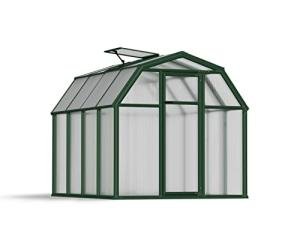
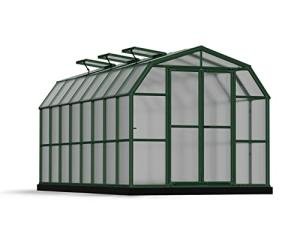
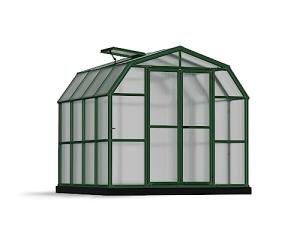
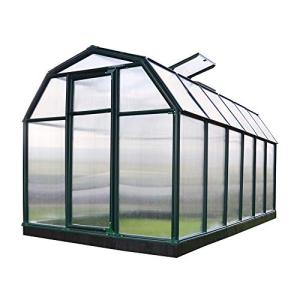
The Oventa greenhouse occupies this exact footprint, and it does so with a walk-in design that makes daily use practical rather than frustrating. You're not ducking through a tiny flap or crawling on your knees. You walk in, tend to your plants, and walk out. That sounds basic, but a surprising number of greenhouses in this price tier make that simple act oddly difficult.
Heavy-Duty Polycarbonate Panels — The Heart of the Build
The single most important component of any greenhouse is the glazing material — the stuff that actually lets light in and keeps cold out. The Oventa uses double-wall polycarbonate panels with a UV-resistant coating, and that combination matters more than most buyers realize.
Double-Wall vs. Single-Wall
Single-wall polycarbonate panels are cheaper, thinner, and provide almost no insulation. They're essentially one step above plastic sheeting. Double-wall panels, on the other hand, trap a layer of air between two sheets of polycarbonate. That air pocket acts as a thermal buffer, keeping internal temperatures more stable and reducing the amount of supplemental heating you'd need in colder months.
The Oventa's double-wall panels offer high light transmission, which means your plants are getting the full spectrum of light they need for photosynthesis while being shielded from the worst of the sun's ultraviolet radiation. UV damage is a real problem in greenhouses — it degrades plastic panels over time, causing them to yellow, become brittle, and eventually crack. The UV coating on the Oventa panels is designed to prevent that cycle, extending the useful life of the glazing by several years compared to uncoated alternatives.
Why Polycarbonate Beats Glass for Most Backyard Setups
Glass greenhouses are beautiful. They're also heavy, fragile, expensive, and a genuine safety hazard in hailstorms or high winds. Polycarbonate panels weigh a fraction of what glass does, they're virtually shatterproof, and they diffuse light more evenly across your growing area. That light diffusion actually helps plants because it reduces the harsh shadows and hot spots that direct sunlight through clear glass can create.
For a backyard greenhouse that needs to survive real weather conditions — not just look pretty on an Instagram grid — polycarbonate is the practical choice. And the Oventa's panels deliver that practicality without sacrificing too much light quality.
Aluminum Frame — Built for Longevity, Not Just Looks
A greenhouse frame does one essential job: hold everything together while the weather tries to tear it apart. The Oventa uses a rust-proof aluminum structure, and that material choice tells you something about the design philosophy behind this product.
Steel frames are stronger in absolute terms, but they rust. Wood frames are charming, but they rot and require constant maintenance. Aluminum splits the difference — it's lightweight enough for manageable assembly, strong enough for structural integrity, and naturally resistant to corrosion. You don't need to paint it, seal it, or worry about it degrading from moisture exposure.
The Oventa's frame is engineered for wind resistance and long-term stability across all four seasons. That said, like any greenhouse in this class, it performs best when anchored to a solid, level foundation. Concrete pads, compacted gravel beds, or pressure-treated timber frames all work well. If you're placing it directly on soil, use ground stakes and make sure the site drains properly — standing water underneath a greenhouse is a recipe for problems regardless of how good the frame is.
Ventilation and Climate Control — Where Cheap Greenhouses Fail
Here's a truth that catches many first-time greenhouse owners off guard: overheating kills more greenhouse plants than cold does. On a sunny afternoon in spring or early fall, the temperature inside an unventilated greenhouse can spike 30–40 degrees above the outside air temperature. That means a pleasant 75°F day can cook your plants at 110°F or higher if you don't have airflow.
The Oventa addresses this with two roof vents — a significant advantage over many competing models in its class that only include one. Roof vents work because hot air rises naturally. As the interior heats up, the hottest air pools at the peak of the greenhouse. Opening the roof vents lets that superheated air escape, drawing cooler air in through the door or lower openings. This passive ventilation cycle keeps temperatures manageable without electricity or fans.
Having two vents instead of one essentially doubles your ventilation capacity, which matters most during the hottest months and in warmer climates. It also gives you more nuanced control — you can open one vent partially on a mild day, or throw both wide open when the temperature spikes.
The Oventa also includes a lockable door, which serves double duty. It provides security for your tools and plants (yes, plant theft is a real thing), and it lets you control airflow at ground level. During transitional seasons, you might keep the door closed and the vents cracked to maintain warmth while still preventing humidity buildup.
Drainage That Actually Works
Water management is the unglamorous side of greenhouse ownership that nobody talks about until there's a problem. Rain collects on greenhouse roofs. If that water has nowhere to go in a controlled manner, it pools around the base, erodes your foundation, and creates the kind of damp conditions where mold and root rot thrive.
The Oventa comes equipped with dual gutters and four drainage ports. The gutters channel rainwater off the roof and away from the structure in an orderly fashion. The drainage ports handle any water that accumulates at the base. This is a practical, functional system that keeps the growing environment clean and dry without requiring you to engineer your own drainage solutions after the fact.
A useful bonus: those gutters can also serve as rainwater collection points. Attach a barrel or container at the gutter outlets and you've got a free irrigation source. Rainwater is actually better for most plants than treated municipal water because it doesn't contain chlorine or fluoride.
Who Is This Greenhouse For?
The Oventa 6x10 isn't trying to be everything to everyone, and that's one of its strengths. It's a purpose-built structure for a specific set of needs:
Season extenders. If you want to start seedlings earlier in spring and keep growing later into fall — or even through mild winters — this greenhouse creates the controlled microclimate that makes that possible. The polycarbonate insulation combined with passive solar heating can keep interior temperatures 10–20 degrees warmer than outside air, depending on your climate zone.
Vegetable gardeners. Tomatoes, peppers, cucumbers, lettuce, herbs — the 60-square-foot interior gives you enough room to grow a meaningful quantity of food. It's not a commercial operation, but for a household that wants to reduce its grocery bill and eat fresher produce, it's more than adequate.
Flower growers and hobbyists. Orchids, tropicals, and delicate perennials that wouldn't survive outdoors in colder regions do remarkably well in a polycarbonate greenhouse. The diffused light and stable temperatures create conditions that mimic a plant's preferred habitat.
Bilingual households. It's a small detail, but the Oventa is marketed with the description "Invernaderos para Plantas Exterior" alongside its English product name, signaling an awareness of the multilingual gardening community in the United States. Good growing advice shouldn't be locked behind a language barrier, and it's encouraging to see brands acknowledge that.
How the Oventa Stacks Up Against the Competition
The 6x10 polycarbonate greenhouse market is competitive. Several brands offer similar dimensions, materials, and price points. Here's how the Oventa compares to some of the most commonly considered alternatives:
| Feature | Oventa 6x10 | Veikous 6x10 | Outsunny 10x6 | Qeetex 6x10 |
|---|---|---|---|---|
| Panel Material | Double-wall polycarbonate, UV-coated | 4mm polycarbonate | Polycarbonate | 720g/m² polycarbonate |
| Frame Material | Rust-proof aluminum | Aluminum with braces | Aluminum | Aluminum-steel hybrid |
| Roof Vents | 2 | 1 (adjustable) | 1 (adjustable) | 1 (adjustable) |
| Door Type | Lockable | Lockable swing | Sliding | Lockable |
| Drainage System | Dual gutters + 4 ports | Standard gutter | Rain gutters | Integrated gutter |
| Wind Resistance | Designed for all seasons | Up to 30 MPH rated | Not specified | Weather-rated |
| Light Transmission | High (UV-filtered) | 88–91% | ~90% | Not specified |
| Snow Load | Not specified | 20 lbs/sq ft | Not specified | Not specified |
| Assembly | Standard kit | Riveted frame + slide-in | Standard kit | Slide-in panels (40% faster claimed) |
| Key Differentiator | Dual roof vents + 4-port drainage | Stepless vent control | Rainwater collection emphasis | Speed of assembly |
A few things stand out from this comparison. The Oventa is the only model in this group that ships with two roof vents as a standard feature. That's a meaningful advantage in warm climates or for growers who need aggressive ventilation during summer months. Its four-port drainage system is also the most comprehensive in this group, offering better water management than the single-gutter setups that most competitors provide.
The Veikous comes closest in overall feature parity and has the advantage of published wind resistance and snow load ratings, which may matter more to buyers in regions with severe weather. The Outsunny is a solid budget alternative but offers less ventilation capacity. The Qeetex leans heavily on its assembly speed claims, which is appealing if you dread greenhouse construction — though the aluminum-steel hybrid frame could introduce corrosion concerns over time if the steel components aren't properly coated.
Assembly — What to Expect on Build Day
Let's be honest: no greenhouse kit is fun to assemble. They all involve a lot of panels, a lot of screws, and at least one moment where you question your life choices. The Oventa is no exception, but it follows the standard assembly pattern for aluminum-framed polycarbonate greenhouses.
Plan for a two-person job over the course of four to six hours. You'll need a Phillips screwdriver (an electric drill speeds things up enormously), a step ladder for the roof panels, and a level to make sure your base is straight. The most critical step happens before you open a single box: prepare your foundation. A greenhouse on an unlevel surface is a greenhouse that will give you headaches forever — panels won't seal properly, the door will stick, and wind load will be distributed unevenly across the frame.
Lay out all the components before you start building, sort the hardware by type, and follow the instructions step by step. Resist the temptation to improvise. Aluminum frames are designed to distribute stress through specific connection points, and skipping steps or substituting hardware can compromise the structure's integrity.
Long-Term Maintenance and Care
One of the genuine advantages of a polycarbonate and aluminum greenhouse is that it requires almost no maintenance compared to glass or wood alternatives. Here's what your typical upkeep schedule looks like:
Monthly: Check vent mechanisms for smooth operation. Clear any debris from gutters and drainage ports. Wipe down panels if they've accumulated dirt or algae, which can reduce light transmission over time.
Seasonally: Inspect the frame for any loose bolts or connections, especially after heavy storms. Verify that the door latch and lock function properly. If you're in a region with heavy snowfall, brush accumulated snow off the roof before it gets heavy enough to stress the panels.
Annually: Give the entire structure a thorough cleaning with mild soap and water. Avoid abrasive cleaners or pressure washers — they can damage the UV coating on the polycarbonate panels, which is the one thing you absolutely don't want to strip away.
The beauty of this greenhouse is that the maintenance list is genuinely short. There's no repainting, no re-sealing, no replacing rotted wood. The aluminum and polycarbonate are doing the work so you can focus on your plants.
The Practical Case for Investing in a Greenhouse
Greenhouse kits in this category represent a meaningful investment — not just financially, but in terms of what they give back. A well-maintained polycarbonate greenhouse will last 10 to 15 years, and during that time, it fundamentally changes what's possible in your garden.
You get an extra four to eight weeks on both ends of the growing season, depending on your climate. That alone can double the harvest from warm-season crops like tomatoes and peppers. You can start seeds indoors weeks before your neighbors are even thinking about gardening, giving your plants a head start that translates directly to bigger yields and earlier harvests.
Beyond food production, a greenhouse becomes a workspace, a retreat, and a year-round connection to the rhythms of growing things. There's a reason the Oventa brand describes every backyard as a sanctuary for growth and peace. It's not marketing fluff — it's what actually happens when you step into a warm greenhouse on a cold morning and see green things thriving under your care.
Tips for Getting the Most Out of Your Oventa Greenhouse
Owning a quality greenhouse is one thing. Maximizing its potential is another. Here are some practical strategies that experienced growers use to squeeze every bit of value out of a structure like the Oventa 6x10.
Thermal mass is your best friend. Place dark-colored water barrels or stone pavers inside the greenhouse. During the day, these materials absorb heat. At night, they slowly release it, buffering temperature drops and keeping your plants warmer without any electricity. Even two or three five-gallon jugs of water, painted black and placed along the north wall, can make a measurable difference during spring frosts.
Think vertically, not just horizontally. Sixty square feet sounds generous until you start filling it with pots and trays. Install shelving along the walls, hang baskets from the frame (where structurally appropriate), and use tiered plant stands. Vertical growing effectively doubles or triples your usable plant space without expanding the footprint.
Invest in a min-max thermometer. You can't manage what you can't measure. A simple thermometer that records the daily high and low temperatures inside your greenhouse will teach you more about your microclimate in one week than a month of guessing. Once you know your temperature patterns, you can adjust vent openings, shading, and watering schedules with precision.
Shade cloth for summer survival. Even with two roof vents, midsummer sun in southern climates can overwhelm a greenhouse. A 40–50% shade cloth draped over the exterior cuts the heat load dramatically while still allowing enough light for healthy growth. Remove it in fall when every photon counts.
Companion planting works indoors too. Basil planted near tomatoes can deter aphids. Marigolds at the entrance discourage whiteflies. The enclosed environment of a greenhouse actually makes companion planting more effective because beneficial plant interactions aren't diluted by open-air conditions.
Rotate your crops seasonally. Don't grow tomatoes in the same spot every year. Soil-borne diseases build up fast in enclosed spaces. Rotate plant families through different sections of the greenhouse, or better yet, use containers with fresh growing media each season.
These techniques aren't complicated, but they separate the gardeners who get decent results from the ones who get extraordinary ones. The Oventa provides the structure; your strategy fills it with life.
In Short
The Oventa 6x10 Ft Greenhouse earns its place in a crowded market by doing the fundamentals well and adding a few genuinely useful features — namely the dual roof vents and four-port drainage system — that competitors in this size and price range often skip. The UV-coated double-wall polycarbonate panels are built for durability and plant health, the aluminum frame is practically maintenance-free, and the overall design reflects a clear understanding of what backyard growers actually need.
It's not perfect. Published wind and snow load ratings would be a welcome addition for buyers in harsh climates. And like any greenhouse kit, assembly takes time and patience. But for the gardener who wants a reliable, well-ventilated, properly drained growing space that will stand up to years of use, the Oventa 6x10 delivers real value.
Your backyard has been waiting. It might be time to let it grow.