There's a certain point in every gardener's life when the seed trays on the windowsill, the cold frames propped against the garage, and the makeshift hoop tunnels draped in plastic just don't cut it anymore. You want a real greenhouse. Not some flimsy pop-up tent that disintegrates in the first windstorm, but a genuine, walk-in, four-season structure that says: "Yes, I'm serious about this."
The Palram – Canopia Rion Grand Gardener 2 | 8 Ft. × 8 Ft. Greenhouse has been a consistent contender in that conversation for years now. It sits in a sweet spot between budget hobby kits and expensive commercial setups, offering twin-wall polycarbonate construction, a tool-free assembly system, and that distinctive barn-style roofline that looks far more refined than most greenhouse kits in its class.
But does it actually live up to the promise? Let's break it down — honestly, thoroughly, and without the marketing fluff.
Who Makes This Thing, and Why Should You Care?
Before diving into nuts and bolts, a bit of context matters. Palram Industries is an Israeli multinational that's been manufacturing polycarbonate and PVC products since the 1960s. They acquired the Rion greenhouse brand in 2013, and since then, they've overhauled the product line under the "Canopia by Palram" umbrella. That acquisition wasn't just a name change — it came with redesigned roof panels for better flexibility, upgraded window and roof frames from plastic to aluminum, and thicker polycarbonate panels across the board.
The company earned the 2020 German TestBild accreditation as a top-quality outdoor brand, evaluated across more than 5,000 brands using data from 15,000 customer surveys and 168,000 review analyses. The criteria covered quality, durability, design, value, and functionality. So this isn't some fly-by-night Amazon storefront. There's real engineering heritage behind the product.
Design Philosophy — The Barn That Grows
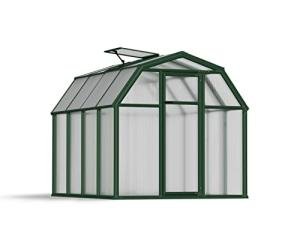
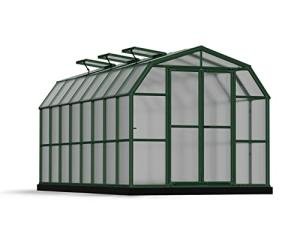
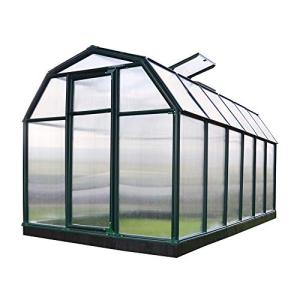
The first thing that separates the Grand Gardener 2 from a dozen lookalike greenhouse kits is its barn-style roof. Most budget and mid-range greenhouses use a simple A-frame or gable roof. The Grand Gardener 2, by contrast, features a gambrel profile — that classic barn shape where the roof has two slopes on each side, with the lower slope being steeper.
This isn't just an aesthetic choice. The barn design accomplishes two practical goals. First, it maximizes internal headroom. The peak height reaches approximately 7.3 feet, which is generous for an 8×8 footprint. Tall growers — both the human and botanical kind — have room to work and thrive. Second, the shape creates more usable vertical space along the walls, so you can stack shelving higher or grow trellised crops closer to the edges without them pressing against the roof.
The overall dimensions come in at 104 inches long by 105 inches wide by 93.5 inches at the peak, with a sidewall height of 61 inches. Total growing area is approximately 76 square feet, and the whole structure weighs in at about 225 pounds assembled. It's substantial enough to feel permanent without requiring heavy equipment to position.
The Material Story — Why Twin-Wall Polycarbonate Matters
The glazing on a greenhouse is arguably its most important feature. The Grand Gardener 2 uses two thicknesses of twin-wall polycarbonate: 4mm panels for the roof and 6mm panels for the sides.
For anyone unfamiliar with the material, twin-wall polycarbonate consists of two flat sheets connected by internal ribs, creating hollow channels between them. Those channels trap air, and trapped air is one of the best insulators available. The result is a panel that's dramatically better at retaining heat than single-pane glass or thin plastic film, while also being virtually shatterproof. You could hit these panels with a hammer and they'd flex rather than break.
The 6mm side panels on the Grand Gardener 2 are translucent rather than crystal clear. This is intentional — they diffuse incoming sunlight so that it reaches plants from multiple angles rather than creating harsh direct beams and deep shadows. The manufacturer states that the panels transmit over 80% of available light while blocking harmful UV radiation entirely. That diffused light environment is actually what commercial growers prefer, because it reduces the risk of leaf burn and promotes more even growth across the entire interior.
All panels are 100% UV-protected, which means they won't yellow, become brittle, or lose transparency over time the way cheaper polycarbonate or acrylic panels often do. This UV stability is a major factor in the product's 7-year limited warranty — the panels are engineered to maintain their optical and structural properties for the long haul.
The Frame — Heavy-Duty Resin with Aluminum Reinforcement
Here's where the Grand Gardener 2 diverges from the vast majority of hobby greenhouses on the market. Instead of an aluminum frame (which is the industry standard for kits in this price range), Palram uses a heavy-duty extruded resin frame. The roof profiles, however, are aluminum.
This hybrid approach has both advantages and trade-offs. On the positive side, the resin frame acts as a thermal break — unlike aluminum, which is highly conductive, the resin doesn't transfer cold from outside to inside. That improves overall insulation performance and helps prevent condensation on the frame members during cold weather. The resin is also 100% UV-protected and won't corrode, rust, or require painting.
The aluminum roof profiles add rigidity where it matters most — overhead, where snow load and wind uplift forces are greatest. The structure has been tested to withstand winds up to 56 mph and snow loads of up to 15 pounds per square foot. Those aren't extraordinary numbers, but they're respectable for a residential greenhouse kit and sufficient for most temperate climates.
The frame connects via Palram's proprietary Pin & Lock system — a push-fit assembly method that eliminates the need for nuts, bolts, or specialized tools. Rubber sealing strips between the frame members and panels create a weather-tight seal. There's also a reinforcement cable integrated into the structure for additional lateral stability.
Assembly — The Good, the Tricky, and the Real Talk
Palram markets the Grand Gardener 2 as a DIY-friendly greenhouse with no-tool-required assembly, and that's technically accurate. The Pin & Lock connectors do snap together, and the roof panels slide into place along channels. No drill, no wrench, no screwdriver needed for the basic structure.
That said, real-world assembly experiences are mixed, and it's worth being honest about this. The instruction manual is primarily visual — lots of diagrams, very few words. For the 8×8 model, the instructions are relatively straightforward, but users who purchase larger versions (8×12, 8×16, or 8×20) have noted that the same manual is used with quantity adjustments that aren't always obvious.
Most owners report assembly times of 8 to 15 hours for the 8×8 model, depending on experience level. Having a second person makes a significant difference, particularly when positioning roof panels and aligning the door frame. The structure becomes progressively more rigid as you assemble it — the first few sections can feel wobbly, but once everything locks together, it firms up considerably.
One common piece of advice from experienced owners: start from the back of the manual and work forward. It's an unconventional approach, but several reviewers have found it produces better results. Also worth noting — the greenhouse ships in three boxes with close to several hundred individual pieces. That sounds intimidating, but the majority are small connectors. Laying everything out and organizing by section before you start will save hours of frustration.
A concrete pad or heavy timber foundation is required. The greenhouse has no built-in floor, so it must be anchored to a level, solid surface. An optional base kit is available that adds height and extra stability, though some owners feel it's not essential if you have a well-prepared foundation.
Ventilation and Climate Control
Climate management inside a greenhouse is everything. Too hot, and your plants cook. Too humid, and fungal diseases move in. The Grand Gardener 2 addresses this with a three-part ventilation system.
First, the double doors. They're wide enough to walk through comfortably (47.5 inches wide by 76.4 inches tall at the peak), and when both are open, they create substantial airflow through the structure. Second, the included roof vent provides passive ventilation even when the doors are closed, allowing hot air to escape from the highest point. Third, Palram offers an optional automatic roof vent opener that responds to temperature changes — as the air inside warms, the vent gradually opens without any electricity or manual intervention.
For growers in warmer climates, adding a side louver window (sold separately) is worth considering. It creates cross-ventilation when paired with the roof vent, dramatically improving air circulation. Palram also offers a fan heater with a digital thermostat controller for cold-weather growing, turning the Grand Gardener 2 into a genuinely four-season structure.
What Real Owners Actually Say
After aggregating feedback across multiple retail platforms and gardening forums, a few consistent themes emerge.
On the positive side, owners repeatedly praise the build quality once assembled. The structure feels solid, handles moderate weather well, and the polycarbonate panels maintain clarity over multiple seasons. The diffused light environment is frequently highlighted as beneficial for seed starting and growing leafy greens. The barn-style design gets consistent compliments for both aesthetics and functional headroom.
On the critical side, the assembly instructions are the most common complaint. The picture-only format works well for visual learners but frustrates those who prefer written step-by-step directions. Some owners have reported that door latches don't always align perfectly on initial assembly and require minor adjustment. A few users in high-wind areas have reinforced the roof panels and vent caps with additional screws as a precaution, though this goes beyond the manufacturer's assembly instructions.
The consensus? It's a strong greenhouse for the price, but set aside a full weekend for assembly, watch a few YouTube installation videos beforehand, and recruit a helper.
How It Stacks Up — Comparison Table
Choosing a greenhouse in this size and price range means weighing the Grand Gardener 2 against several strong competitors. Here's how the key specifications compare:
| Feature | Palram Rion Grand Gardener 2 (8×8) | Palram Canopia Balance (8×8) | Palram Hybrid (6×8) | Riverstone MONT Growers Edition (8×8) |
|---|---|---|---|---|
| Price Range | ~$1,800–$2,200 | ~$1,000–$1,300 | ~$600–$900 | ~$3,500–$4,500 |
| Frame Material | Resin + aluminum roof profiles | Aluminum | Aluminum | Heavy-duty aluminum |
| Roof Panels | 4mm twin-wall polycarbonate | 4mm polycarbonate | 4mm twin-wall polycarbonate | 8mm twin-wall polycarbonate |
| Side Panels | 6mm twin-wall polycarbonate | 4mm clear polycarbonate | 4mm clear polycarbonate | 8mm twin-wall polycarbonate |
| Peak Height | 7.3 ft | ~6.8 ft | ~6.9 ft | ~7.6 ft |
| Growing Area | ~76 sq ft | ~64 sq ft | ~48 sq ft | ~64 sq ft |
| Roof Style | Barn (gambrel) | A-frame | A-frame | A-frame |
| Assembly | Pin & Lock, no tools | Sliding panels | Sliding panels | Bolt-together, tools required |
| Wind Rating | Up to 56 mph | Not specified | Not specified | Up to 100 mph |
| Snow Load | 15 lbs/sq ft | Not specified | Not specified | 24 lbs/sq ft |
| Warranty | 7 years | 5 years | 5 years | 10+ years |
| Door Type | Double hinged doors | Single sliding door | Single hinged door | Single hinged door |
| Included Ventilation | Roof vent + double doors | Roof vent | Roof vent | Automatic dual roof vents |
| Best For | Serious hobbyists wanting durability + style | Budget-conscious growers | Small gardens, beginners | Four-season, extreme-climate growing |
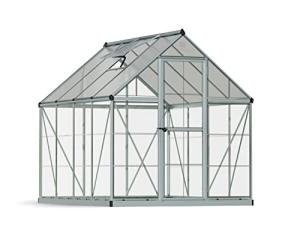
A few things stand out in this comparison. The Grand Gardener 2 occupies a genuine middle ground — it's considerably more robust than budget options like the Hybrid or Balance, with thicker side panels and superior insulation, but it costs roughly half what you'd pay for a premium MONT setup. The barn-style roof gives it the tallest effective growing volume in its price class, and the double-door design is a feature you typically don't find below the $2,000 mark.
The MONT Growers Edition is clearly the superior product on paper — thicker panels, higher wind and snow ratings, and a longer warranty. But it also costs roughly double and requires actual tools for assembly. For many backyard growers, that's overkill.
Who Is This Greenhouse Actually For?
The Grand Gardener 2 at the 8×8 size is an excellent fit for a few specific types of growers.
If you're a dedicated hobbyist who has outgrown seed trays and cold frames and wants a real growing environment without spending $4,000 or more, this greenhouse delivers. The 76-square-foot interior is enough to run a meaningful vegetable garden, maintain a collection of tender perennials, or start all your spring seedlings indoors months before the last frost.
If you live in a climate with moderate winters and want to extend your growing season by two or three months on each end, the twin-wall insulation combined with an optional heater makes this genuinely viable. The diffused light environment is especially valuable for seed starting and growing greens like lettuce, spinach, and herbs that tend to bolt under harsh direct sun.
If aesthetics matter to you — and they should, because this structure will be a permanent feature of your landscape — the barn-style profile is genuinely attractive. It looks less like a utilitarian growing box and more like an intentional garden structure.
Where it's less ideal: if you're in an area with extreme winter conditions (heavy snowfall, sustained high winds), the 15 lbs/sq ft snow load and 56 mph wind ratings may give you pause. In those environments, a heavier aluminum-frame structure with thicker panels is the safer investment.
Accessories Worth Considering
Palram has built a solid ecosystem of accessories around the Grand Gardener line, and a few are worth picking up at the time of purchase rather than adding later.
The automatic roof vent opener is arguably essential. It responds to temperature changes by gradually opening and closing the vent without electricity, which means you don't have to babysit your greenhouse on warm days. The sturdy shelf kit provides adjustable workspace that can be repositioned anywhere inside the structure. The trainer kit includes wire systems for supporting vines, climbers, and hanging baskets, making full use of the vertical space the barn roof provides.
For cold-climate growers, the fan heater with digital thermostat transforms the greenhouse into a true four-season operation. And for those who want maximum airflow control, the side louver window add-on creates a cross-ventilation path that pairs beautifully with the roof vent.
The Verdict
The Palram – Canopia Rion Grand Gardener 2 in the 8×8 configuration is not a perfect greenhouse. The assembly instructions could be better. The resin frame, while thermally superior, doesn't have the prestige feel of powder-coated aluminum. And in truly extreme weather, there are tougher structures available at higher price points.
But for what it sets out to be — a durable, well-insulated, attractive, and genuinely DIY-friendly greenhouse for committed home growers — it delivers convincingly. The twin-wall polycarbonate on both roof and sides puts it ahead of many competitors that use thinner panels on the walls. The barn-style design provides more usable space than its footprint would suggest. The tool-free Pin & Lock assembly is, once you get the hang of it, a real time-saver. And the 7-year warranty backed by a 60-year-old manufacturing company provides genuine peace of mind.
At roughly $1,800 to $2,200 (pricing fluctuates), it's a meaningful investment. But measured against the years of extended growing seasons, the protection it provides to vulnerable plants, and the sheer daily satisfaction of walking into your own greenhouse on a cold morning — it's an investment that earns its return.