What Exactly Are You Getting?
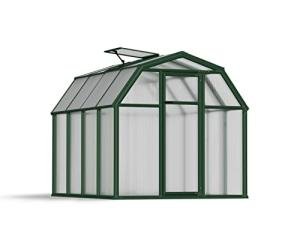
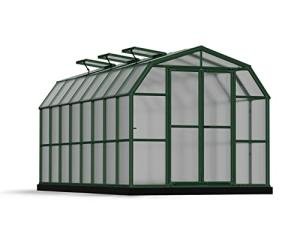
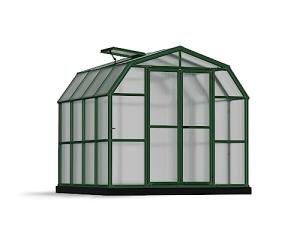
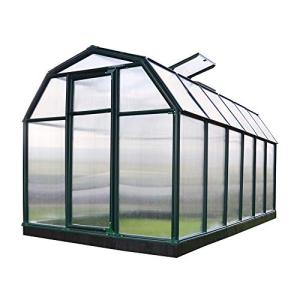
At its core, the Jocisland 8x12x7.5 FT Greenhouse is a walk-in, freestanding structure built on an aluminum frame and clad in polycarbonate panels. The footprint is 8 feet wide by 12 feet long, with a peak height of 7.5 feet — enough room to comfortably stand, work, and move around without hunching over like you're exploring a cave.
The total interior volume comes in at roughly 575 cubic feet. That's not just a number on a spec sheet; it translates to a genuinely spacious growing environment. You can fit multiple shelving units, a potting bench, hanging baskets overhead, and still have room to walk a wheelbarrow through the center aisle. Some owners have even added small seating areas, turning the greenhouse into a dual-purpose retreat — part nursery, part sun-drenched reading nook.
The structure ships with four swing doors equipped with hooks for securing them open during warm days, four ventilation windows for airflow management, and an integrated rain gutter system that channels water off the roof for collection or directed drainage. It's a thoughtful package, and the details matter more than you might think.
The Aluminum Frame — Why It Matters More Than You Think
Let's talk about the skeleton of this greenhouse, because it's where the Jocisland starts to distinguish itself from the crowd of budget competitors.
The entire frame is constructed from aluminum, which brings three critical advantages to an outdoor structure. First, aluminum doesn't rust. Steel-framed greenhouses — even galvanized ones — will eventually show corrosion at joints, scratches, and bolt holes. Aluminum is naturally resistant to oxidation, which means the frame should look and perform essentially the same in year five as it did on assembly day.
Second, aluminum is lightweight relative to its strength. This makes the assembly process considerably less miserable than wrestling with heavy steel tubing, and it also means the structure exerts less load on whatever foundation you place it on — whether that's a concrete slab, a gravel pad, or a pressure-treated lumber base.
Third, and perhaps most importantly for longevity, aluminum handles temperature fluctuations without the expansion and contraction issues that plague some other metals. In a structure that's designed to trap heat and then release it overnight, this thermal stability helps maintain tight panel connections over hundreds of seasonal cycles.
The load capacity is rated at over 1,200 pounds, which is a substantial figure for a residential greenhouse. Wind resistance is rated at 56 mph, and the snow load capacity sits at 18 pounds per square foot. Those numbers place it firmly in the category of structures that can handle real weather — not just gentle spring rain, but the kind of winter that tests your resolve as a gardener.
Polycarbonate Panels — The Science Behind the Walls
The walls and roof of the Jocisland greenhouse use polycarbonate (PC) panels, and this is a material choice worth understanding because it directly affects your plants' health and your heating bills.
Polycarbonate is a thermoplastic polymer that's become the gold standard for greenhouse glazing. It's dramatically lighter than glass, virtually shatterproof, and provides superior insulation thanks to its twin-wall construction. Each panel contains a layer of trapped air between two polycarbonate sheets, creating an insulating barrier that helps retain heat during cold nights and moderate temperatures during hot days.
The UV protection rating on the Jocisland panels is listed at 99.99%, which means harmful ultraviolet radiation is almost entirely blocked while beneficial light wavelengths pass through. This is critical: your plants need light for photosynthesis, but excessive UV can cause leaf burn, bleaching, and cellular damage. The polycarbonate panels act as a sophisticated filter, letting in the good and blocking the bad.
One important note that experienced greenhouse growers will appreciate: polycarbonate diffuses light rather than transmitting it directly like glass. Diffused light reaches plants from multiple angles rather than creating harsh shadows and hot spots. The result is more even growth across your entire growing space — plants in the corners get nearly as much usable light as plants in the center.
Ventilation — The Feature That Separates Good Greenhouses from Great Ones
Here's a truth that new greenhouse owners learn the hard way: keeping plants warm is only half the battle. The other half is preventing your greenhouse from turning into a sauna on sunny days.
The Jocisland addresses this with four ventilation windows built into the design. Proper ventilation serves multiple purposes beyond simple temperature control. It circulates fresh CO2 to your plants (which they need for photosynthesis just as much as light), it reduces humidity levels that can foster fungal diseases like powdery mildew and botrytis, and it strengthens plant stems through gentle air movement.
The four swing doors also play a role in ventilation strategy. On warm days, you can hook the doors open to create cross-ventilation that flushes hot air out and draws cooler air in. This is particularly valuable during the shoulder seasons — spring and fall — when morning temperatures might be near freezing but afternoon sun can push interior temperatures well above 90°F without adequate airflow.
The combination of roof-level ventilation windows and ground-level door openings creates what greenhouse designers call a "chimney effect." Hot air naturally rises and exits through the upper vents while cooler replacement air enters through the lower openings. It's passive climate control at its most elegant.
The Rain Gutter System — Small Detail, Big Impact
The integrated rain gutter system on the Jocisland greenhouse is the kind of feature that doesn't make the highlight reel but absolutely earns its keep over time.
Without gutters, rainwater cascading off a greenhouse roof creates several problems. It erodes soil around the foundation, it splashes mud onto the lower panels (reducing light transmission), and it creates puddles that can undermine the structure's base over time. The Jocisland's gutter system channels all that water to designated exit points where you can either direct it away from the foundation or — and this is the smart play — collect it in rain barrels for irrigation.
Rainwater is, in many ways, superior to tap water for plants. It's naturally soft, free of chlorine and fluoride, slightly acidic (which most plants prefer), and at ambient temperature rather than the shock-cold that comes out of a garden hose. A greenhouse with a 96-square-foot roof can collect a surprising volume of water over a rainy season, reducing your water bills and giving your plants a better drink in the process.
Assembly — The Honest Truth
Let's not sugarcoat this. Assembling a greenhouse of this size is a project, not a task. The manufacturer estimates that a team of three people can complete the build in approximately 12 hours, and based on user feedback, that estimate is optimistic for most DIYers.
Real-world assembly experiences vary. Some owners report completing the build over a long weekend with two people, while others describe a multi-day process. The instructions, while comprehensive, have received mixed feedback — some users found them clear enough, while others noted that the diagrams could use more detail in certain steps and that all measurements are metric, requiring conversion if you think in feet and inches.
Several practical tips have emerged from the community of Jocisland owners. Building on a perfectly level foundation is essential — even small deviations from level will compound into alignment issues as you progress. Many experienced builders recommend constructing a pressure-treated lumber base and anchoring the greenhouse frame to it with lag screws rather than using the included expansion bolts directly into soil. Some owners also suggest purchasing additional washers to place under nuts and bolt heads for a more secure connection.
The assembly process is labor-intensive but not technically complex. You don't need specialized tools or construction experience — just patience, a helper (or two), and a willingness to read instructions carefully before reaching for the drill.
Who Is This Greenhouse For?
The Jocisland 8x12 hits a specific demographic with remarkable precision. It's built for the serious hobbyist — the gardener who has moved past the experimental phase and wants a permanent, four-season growing space.
If you're starting seeds indoors each spring and transplanting them outside, this greenhouse lets you skip the middle step entirely. Start your seeds right in the greenhouse weeks before the last frost, and they'll be stronger, stockier, and better acclimated than anything grown under artificial lights on your kitchen counter.
If you're growing heat-loving crops like tomatoes, peppers, eggplant, or cucumbers, the greenhouse extends your productive season by weeks or even months on each end. In many climates, it can turn a five-month growing season into an eight- or nine-month one without supplemental heating.
If you're interested in overwintering tender perennials, protecting citrus trees, or growing tropical plants that have no business surviving in your hardiness zone, the Jocisland provides the shelter they need.
And if you simply want a dedicated space where you can pot, prune, propagate, and putter around with dirt under your fingernails regardless of what the weather is doing outside — well, this greenhouse delivers that experience with room to spare.
How Does It Stack Up? A Comparison of Popular 8x12 Greenhouses
Choosing a greenhouse is easier when you can see the options side by side. Here's how the Jocisland 8x12x7.5 FT compares to some of the most popular alternatives in its size class.
| Feature | Jocisland 8x12x7.5 | Palram Balance 8x12 | YITAHOME 8x12 | Outsunny 6x8 |
|---|---|---|---|---|
| Dimensions | 8' x 12' x 7.5' | 8' x 12' x 7.6' | 8' x 12' x 7.5' | 6' x 8' x 7' |
| Frame Material | Aluminum | Aluminum (powder-coated) | Aluminum alloy | Aluminum (powder-coated) |
| Panel Material | Polycarbonate (PC) | 4mm Twin-wall PC (roof) / 0.8mm PC (sides) | 4mm Double-wall PC | Polycarbonate |
| UV Protection | 99.99% | 99.9% | UV-protected | UV-protected |
| Growing Space | ~96 sq ft / 575 cu ft | ~96 sq ft / ~400 cu ft | ~96 sq ft | ~48 sq ft |
| Load Capacity | 1,200+ lbs | Not specified | Not specified | Not specified |
| Wind Resistance | 56 mph | 55 mph | Not specified | Not specified |
| Snow Load | 18 psf | 15 psf | Not specified | Not specified |
| Ventilation | 4 windows | 2 roof vents | 4 vent windows | 1 rooftop vent |
| Doors | 4 swing doors with hooks | Double doors | Sliding doors | Sliding door |
| Rain Gutters | Yes | Yes | No | Yes |
| Assembly Time | ~12 hours (3 people) | ~4 hours (2 people) | ~6-8 hours | ~4-6 hours |
| Warranty | Contact manufacturer | 5-year limited | Limited | 30-day return |
| Best For | Serious hobbyists wanting maximum features | Established brand reliability | Budget-friendly mid-size option | Small spaces and beginners |
A few observations from this comparison deserve attention.
The Jocisland offers noticeably higher load and weather resistance ratings than the Palram Balance, which is often considered the benchmark in this size class. The snow load difference — 18 psf versus 15 psf — matters significantly if you live in a region with heavy winter snowfall.
The four-door, four-vent configuration on the Jocisland is genuinely distinctive. Most competitors offer two doors and two vents at most. The additional openings provide dramatically more flexibility in managing airflow and access, especially during those tricky shoulder-season days when conditions change rapidly.
The Outsunny entry is included for context, but it's really a different category of product. At 6x8, it offers roughly half the floor space and is better suited to beginners or gardeners with limited yard space. It's not a direct competitor to the Jocisland.
Where the Palram holds an advantage is in brand recognition and a clearly stated five-year warranty. Palram has been in the greenhouse business for decades, and their customer support infrastructure reflects that history. The assembly time difference is also notable — Palram's SmartLock connector system is genuinely faster to work with than the traditional bolt-and-nut approach used by Jocisland.
Potential Drawbacks Worth Considering
No product review is complete without an honest look at the limitations, and the Jocisland has a few areas where it could improve.
The assembly instructions are the most frequently cited frustration. While the physical components are well-made and fit together precisely, the written and illustrated guidance doesn't always match that quality. Part labeling could be more intuitive, some assembly steps lack sufficient detail, and the all-metric measurements require conversion for American users. A significant upgrade to the instruction manual would elevate the entire product experience.
The anchoring system included with the greenhouse — expansion bolts designed for soil installation — has also drawn criticism. Most experienced greenhouse owners recommend bypassing this system entirely and building a proper lumber or concrete foundation. This adds cost and effort to the project, but it results in a dramatically more stable and long-lasting installation.
Finally, the customer service experience appears inconsistent. Some buyers report responsive and helpful interactions, while others have found the manufacturer difficult to reach when issues arise. For a product in this price range, a more robust support infrastructure would build considerable goodwill and repeat business.
Tips for Getting the Most Out of Your Jocisland Greenhouse
Once you've got it built and anchored, here are some strategies to maximize what this greenhouse can do for you.
Invest in a min/max thermometer so you can track temperature swings over 24-hour periods. This data will help you understand exactly when you need to open vents, close doors, or add supplemental heat. Many growers find that a simple recording thermometer reveals patterns they never would have noticed otherwise.
Add thermal mass to moderate temperature fluctuations. Black-painted water barrels along the north wall absorb solar energy during the day and radiate it back at night, smoothing out the dramatic temperature swings that can stress plants. Even a few five-gallon buckets of water can make a measurable difference.
Install shade cloth for the summer months. Polycarbonate panels do an excellent job of diffusing light, but in peak summer, interior temperatures can still climb beyond what most plants tolerate. A removable shade cloth rated at 30-50% gives you a simple tool to prevent heat stress without permanently reducing light transmission.
Consider adding a drip irrigation system connected to your rain gutter collection. The greenhouse's built-in gutter system is practically begging to be paired with rain barrels, and gravity-fed drip irrigation from elevated barrels is one of the most water-efficient and low-maintenance ways to keep plants hydrated.
The Bottom Line
The Jocisland 8x12x7.5 FT Greenhouse represents a compelling value proposition in the residential greenhouse market. Its aluminum-and-polycarbonate construction provides genuine durability, its 575-cubic-foot interior offers serious growing space, and its four-door, four-vent design delivers ventilation flexibility that most competitors simply can't match.
Is it perfect? No. The assembly experience would benefit from better documentation, the anchoring system needs rethinking, and customer support could be more consistently responsive. But these are solvable issues — the kind of problems you work through once during setup and then largely forget about as you settle into seasons of productive growing.
For the gardener who has outgrown starter greenhouses and wants a structure that can handle real weather, real crops, and real ambition, the Jocisland earns a confident recommendation. It's a greenhouse that punches above its weight class, and once it's standing in your backyard, you'll wonder why you waited so long to make the leap.
Check the latest price and availability of the Jocisland 8x12x7.5 FT Greenhouse on Amazon