Why Birdhouses Actually Matter
In most parts of North America and Europe, natural nesting sites for cavity-dwelling birds have become increasingly scarce. Old trees with hollows get cut down for safety reasons. Dense hedgerows get cleared. Urban sprawl removes the kinds of dead wood and natural cavities that species like bluebirds, chickadees, wrens, and swallows have relied on for thousands of years. When you put up a well-made nest box, you're genuinely helping local bird populations find safe places to raise their young.
That's not a small thing. Many of these species eat enormous quantities of insects — mosquitoes, aphids, caterpillars — making them natural pest controllers. A family of tree swallows, for instance, can consume thousands of insects per day during nesting season. So a birdhouse in your yard isn't just pleasant; it's quietly doing ecological work.
And then there's the simple, irreplaceable pleasure of it. If you've never watched a pair of birds build a nest, incubate eggs, and eventually coax fledglings out of a box on your fence post, you're missing one of the more grounding experiences available to anyone with a bit of outdoor space.
Types of Birdhouses
Not all birdhouses are created equal, and not all birds want the same thing. The category breaks down in a few important ways.
Classic Single-Unit Nest Boxes
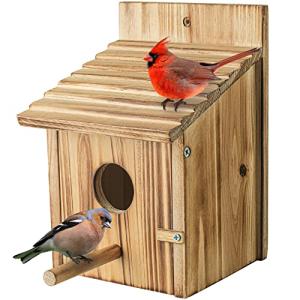
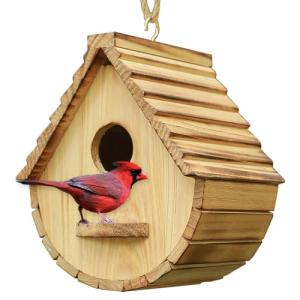
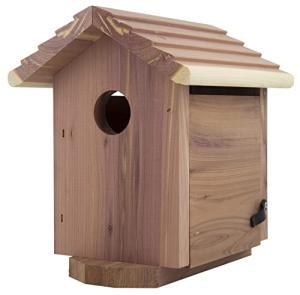
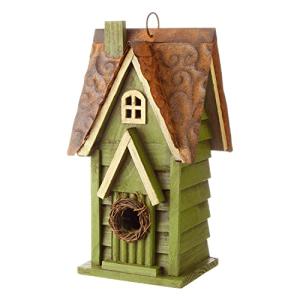
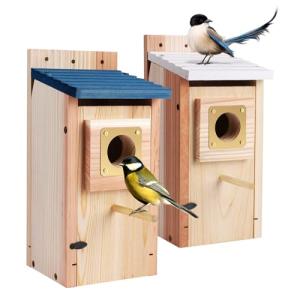
These are the iconic birdhouses most people picture: a single enclosed wooden box with a round entrance hole, a sloped roof to shed rain, and some method for mounting or hanging. They come in an enormous range of styles — from plain cedar boxes designed purely for function, to elaborately painted cottages and miniature farmhouses that double as folk-art pieces.
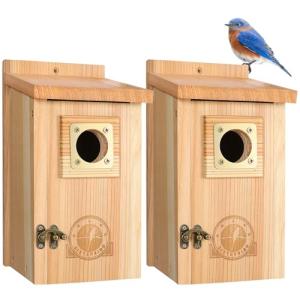
Classic nest boxes work well for small cavity nesters like wrens, chickadees, nuthatches, and titmice. The entrance hole size is the critical variable here. A hole that's just 1⅛ inches in diameter will admit wrens and nothing larger — which is useful if you want to keep out house sparrows. Bluebirds need a 1½-inch hole, tree swallows about the same. Woodpeckers need larger openings and deeper boxes. This specificity isn't arbitrary — it's precisely sized housing that tends to actually get used.
Purple Martin Houses
Purple martins are a special case. They're colonial nesters, meaning they live and breed in groups, and they've become almost entirely dependent on human-provided housing in eastern North America. Traditional purple martin housing consists of multi-unit gourds or apartment-style houses mounted on tall poles — often 15 to 20 feet high — in open areas near water.
These are a bigger investment in both money and setup, but dedicated martin landlords will tell you it's worth every bit of effort. A successful martin colony is a spectacle: dozens of sleek, chattering birds wheeling overhead at dusk.
Wren Houses
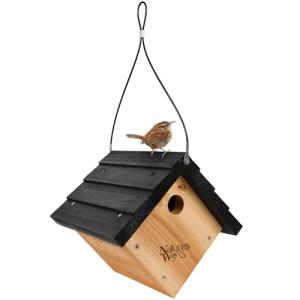
Wren houses deserve their own mention because they're among the easiest to succeed with. Wrens are bold, adaptable little birds that will nest in almost anything — including, famously, old boots and tin cans. A purpose-built wren house is typically small, with a tiny entrance hole, and can be hung almost anywhere: from a tree branch, a fence post, or even a hook near a porch. If you're new to birdhouses and want a quick win, start with a wren house.
Open-Fronted Boxes
Not all birds nest in cavities. Robins, phoebes, and barn swallows prefer ledges and partially open structures. Open-fronted nest boxes mimic a sheltered ledge rather than an enclosed cavity, and they can be remarkably successful when placed under eaves, on barn walls, or in sheltered corners of a garden structure.
Decorative and Artistic Birdhouses
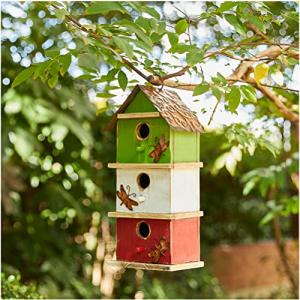
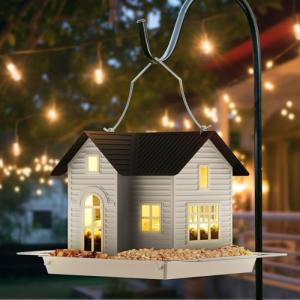
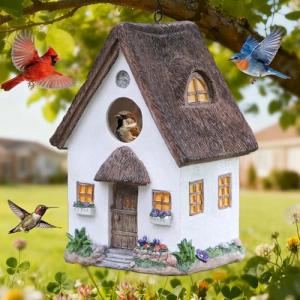
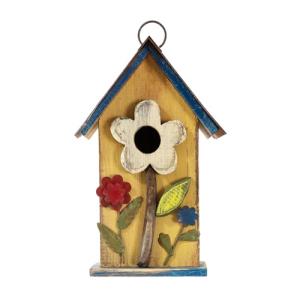
Then there are birdhouses that are designed at least as much to be looked at as to be lived in. Hand-painted wooden houses, elaborate Victorian-style structures, whimsical designs shaped like lighthouses or country churches — these exist at every price point and quality level. Some are functional; many are purely ornamental and shouldn't be used as actual nest boxes because they lack proper ventilation, drainage, or access for cleaning. If you're buying something primarily decorative, enjoy it as garden art and supplement it with a functional box elsewhere in your space.
What to Look for When Buying a Birdhouse
The market ranges from excellent to genuinely terrible, so it pays to know what separates a birdhouse that birds will actually use from one that just looks good in a product photo.
Material
Untreated cedar and pine are the gold standard. Cedar is naturally rot-resistant and holds up outdoors for years without any treatment. Avoid birdhouses made from particleboard, MDF, or cheap plywood — these fall apart quickly when exposed to moisture. Metal houses can overheat in direct sun and cook eggs or nestlings. Ceramic and concrete houses are durable but heavy and can also heat up in summer.
If you're looking at painted boxes, make sure any paint or stain is non-toxic and applied only on the exterior. The interior of a birdhouse should always be unfinished, unvarnished wood.
Ventilation and Drainage
A birdhouse without ventilation holes near the roof peak will turn into an oven in summer. Drainage holes in the floor are equally important — they prevent the nest from becoming waterlogged in rain. These are signs of a thoughtfully made product; their absence is a red flag.
Entrance Hole Size and Placement
As mentioned above, hole size determines which birds can enter. But placement matters too. The hole should be positioned toward the top of the front panel, giving nestlings a safe depth below the entrance before they can accidentally tumble out. Interior walls below the hole should be rough or have ladder-like grooves to help fledglings climb out when it's time to leave.
Cleanout Access
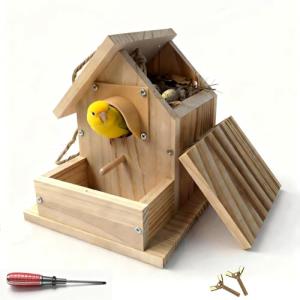
This is often overlooked by first-time buyers and it matters enormously. Nest boxes need to be cleaned out at the end of each nesting season — old nests can harbor parasites that harm subsequent broods. A good birdhouse has a side panel, front panel, or floor that opens easily. If you can't get a hand inside to clean it out, you'll end up with a parasite-ridden box that birds eventually avoid.
Mounting System
Think about where you plan to put the box and buy accordingly. Pole-mounted boxes need a pre-drilled base or mounting bracket. Hanging boxes need a sturdy hook or wire. Some boxes come with keyhole slots that make wall-mounting straightforward. The mounting system should feel solid — a box that blows down in the first storm won't get used.
Choosing the Right Location
The best birdhouse in the world won't attract birds if it's hung in the wrong spot.
Face the entrance hole away from prevailing winds — in most of North America, this means east or southeast. This keeps driving rain and cold winds out of the entrance.
Think about sun exposure. A box that gets blasted by afternoon summer sun can overheat. Morning sun is fine; shade in the afternoon is better in warm climates.
Consider the birds you want to attract. Bluebirds want open meadow habitat with low grass, not wooded areas. Chickadees and nuthatches prefer wood edges. Wrens are happy almost anywhere. Purple martins need open skies and proximity to water.
Mount boxes at the right height. Wrens are happy at five or six feet; bluebirds prefer four to six feet; woodpeckers and owls want their boxes much higher up.
Keep predators in mind. A metal predator guard on a mounting pole will stop raccoons and cats from reaching boxes mounted on poles. Avoid placing boxes on tree trunks if possible — they're too easy for predators to access.
Maintaining Your Birdhouse Year After Year
A well-made birdhouse, properly maintained, can last for decades and host dozens of successful broods over its lifetime.
Clean out each box in late autumn after nesting season has ended. Remove all old nesting material, scrub the interior with a stiff brush, and let it dry completely before closing it back up. Some people add a handful of clean wood shavings to the freshly cleaned box in early spring to give early nesters a head start.
Inspect the hardware each year. Tighten any loose screws, replace worn-out mounting systems, and touch up any exterior finish that's faded or peeling. Keep an eye on the entrance hole — over years, woodpeckers sometimes enlarge it, which can let in unwanted species.
If you want to monitor nesting activity (which is half the fun), check the box every few days during nesting season. Keep visits brief and calm. Most cavity-nesting birds will tolerate gentle monitoring without abandoning the nest.
Gift Ideas and Bundles
Birdhouses make genuinely thoughtful gifts for gardeners, nature lovers, and anyone with outdoor space. A cedar bluebird box paired with a mounting pole and a bag of mealworms is a complete, ready-to-install starter kit that most people would never think to buy for themselves. Decorative birdhouses work beautifully as housewarming gifts for people who've just moved somewhere with a garden.
Many of our products are also available in sets — a combination of nest boxes sized for different species, for example, lets you attract a broader variety of birds to a larger property.
Browse Our Birdhouse Collection
Whether you're outfitting a working farm, adding a finishing touch to a cottage garden, or getting a child interested in wildlife for the first time, you'll find something in our collection that fits. We carry functional cedar nest boxes that wildlife organizations actually recommend, artistic hand-crafted pieces that stand up to weather and look beautiful doing it, and everything in between.
Filter by mounting style, target species, material, or price to narrow things down — or just start browsing and let something catch your eye. The birds in your neighborhood will be glad you did.