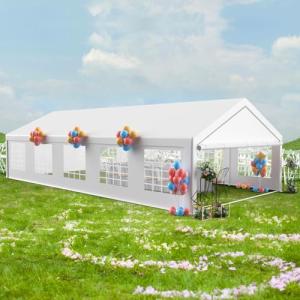
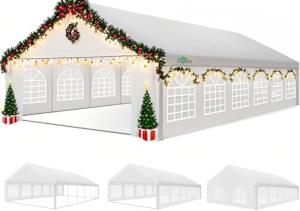
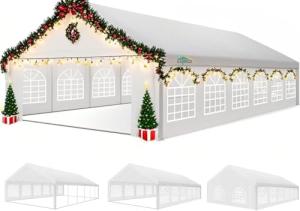
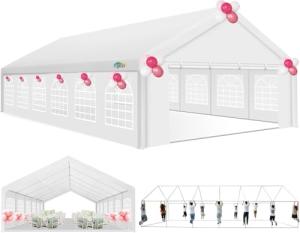
What Is a Party Tent?
At its simplest, a party tent is a large, freestanding canopy structure designed to shelter people and furniture from sun, rain, and wind during outdoor events. But that description barely scratches the surface of what's available today.
Modern party tents range from lightweight pop-up canopies you can set up in minutes to full-scale frame tents and pole tents that require installation but can seat hundreds of guests. They come in a dizzying range of sizes, materials, colours, and styles — from crisp white canvas that lends a classic wedding feel, to bold-coloured polyester perfect for a festival atmosphere, to clear-walled structures that blur the line between indoors and out.
What unites them all is purpose: they exist to make outdoor celebrations happen confidently, regardless of the weather forecast.
Types of Party Tents
Understanding the different types of party tents is the first step toward picking the right one for your event. Each style has its own strengths, and the best choice depends on your guest count, venue, budget, and the kind of event you're throwing.
Pop-Up Canopy Tents
Pop-up canopies are the workhorses of the party tent world. Also called instant canopies or gazebo tents, these collapsible structures can be erected by one or two people in under five minutes. They're ideal for smaller gatherings — garden parties, BBQs, market stalls, kids' birthday parties — where you need quick, reliable shade without a complex setup.
Most pop-up canopies range from 2×2 metres up to 6×3 metres or larger. They're typically made from a powder-coated steel or aluminium frame with a polyester canopy top. The better models include adjustable height settings, reinforced corners, and UV-protective coatings. They fold down into a carry bag, making storage and transport straightforward.
If you're looking for a tent you can pull out repeatedly for weekend gatherings without much fuss, a quality pop-up canopy is hard to beat.
Frame Tents
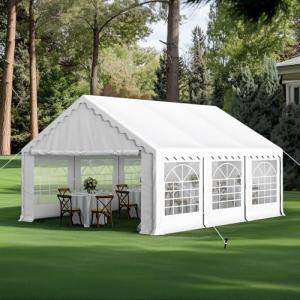
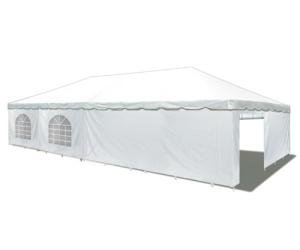
Frame tents use an internal aluminium or steel frame to support the canopy without the need for centre poles. This is a significant practical advantage — it means the entire interior space is clear and usable, with no poles to navigate around when arranging tables and chairs.
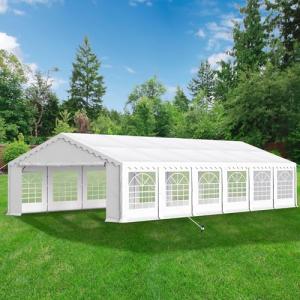
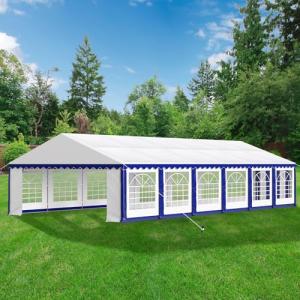
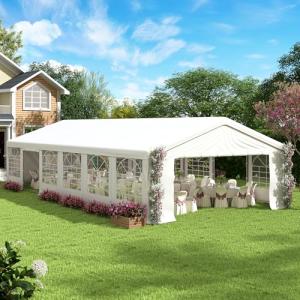
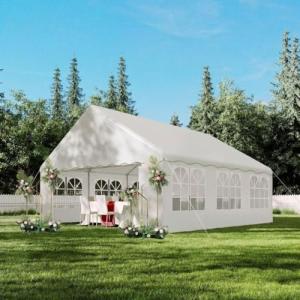
Frame tents are a popular choice for wedding receptions, corporate events, and garden parties where guests will be seated for meals. They can be anchored to hard surfaces like patios and driveways, since they don't rely on stakes in soft ground. Sizes range from modest 3×6 metre structures right up to large-scale 10×20 metre marquees and beyond.
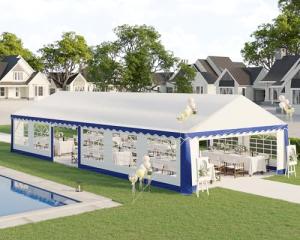
The clean, open interiors of frame tents also lend themselves beautifully to decoration — hang fairy lights from the frame, drape fabric, attach floral arrangements, and you've got an elegant event space that feels intentional and polished.
Pole Tents
Pole tents have a distinctive look — high, sweeping peaks supported by centre poles and tensioned by guy ropes staked into the ground. They're the classic marquee silhouette you'll recognise from country fairs, weddings, and summer festivals.
The dramatic peaked shape means pole tents shed rain extremely well and handle wind more efficiently than flat-topped structures. They also create a spacious, airy feel inside — the high peaks draw the eye upward and give the space a grand, celebratory quality.
The trade-off is that centre poles do occupy floor space and need to be factored into your layout. Pole tents also require soft ground for staking, so they're not ideal for paved or concrete surfaces without specialist anchoring.
Inflatable Party Tents
Inflatable tents are a newer arrival to the party tent scene, and they've built a devoted following for good reason. These structures use air-filled beams instead of rigid poles, which makes them lightweight, extremely quick to set up (many inflate fully in under a minute with an electric pump), and impressively resistant to wind when properly pegged.
They're available in a range of shapes and sizes, from small dome structures to long tunnel-style shelters. Inflatable tents are particularly popular for festivals, sporting events, and children's parties where visual impact and quick setup matter.
Clear Span and Warehouse-Style Tents
At the larger end of the market sit clear span tents — industrial-strength structures used for trade shows, large corporate events, and weddings with guest lists in the hundreds. These tents use engineered aluminium frames and are engineered to strict safety standards, capable of withstanding significant wind and snow loads.
They're modular by design, meaning they can be configured in almost any length and, in many cases, connected to buildings or other structures. If you're running a large-scale outdoor event and need a space that rivals a proper indoor venue, a clear span tent is the professional choice.
What Size Party Tent Do You Need?
Choosing the right size tent is one of the most important decisions you'll make. Go too small and guests feel cramped; go too large and the space loses atmosphere.
As a general rule of thumb, a seated dinner typically requires around 1.5 to 2 square metres per person to allow comfortable movement between tables. A standing cocktail reception can work with slightly less — around 1 to 1.2 square metres per person. If you're including a dance floor, a bar setup, a buffet station, or a stage, you'll need to add space for each of those elements on top of your guest count.
Here are some approximate starting points to help you think through your size requirements:
- Up to 20 guests (seated dinner): A 4×6 metre or 5×5 metre tent provides a comfortable fit with room to breathe.
- 20–50 guests: Look at 6×9 metre or 6×12 metre options.
- 50–100 guests: A 10×10 or 10×15 metre tent typically works well for this range, depending on your layout.
- 100+ guests: Consider modular or commercial-grade tents from 10×20 metres upward, or speak with a tent hire specialist who can advise based on your specific layout requirements.
Always err slightly larger rather than smaller. A tent that's 20% bigger than your minimum gives you room to add décor, set up a proper buffet, accommodate unexpected extra guests, and give everyone the elbow room that makes a party feel relaxed rather than squeezed.
Materials and Weather Resistance
Not all party tent fabrics are created equal, and understanding the differences helps you choose a tent that will actually perform in real-world conditions.
Polyester is the most common canopy material at the affordable end of the market. Look for tents described as 150D (denier) polyester or higher — a higher denier rating generally indicates a denser, more durable weave. Quality polyester canopies include a PU (polyurethane) coating for water resistance and UV protection. Many carry a UPF rating indicating how much ultraviolet radiation they block — a UPF of 50+ is the gold standard for sun protection.
PVC and vinyl canopies offer superior water resistance and durability compared to basic polyester. They're heavier and typically found on commercial-grade or semi-permanent structures. PVC tents can handle sustained heavy rain without issue and are significantly more robust in high winds.
Canvas is a traditional material still used in high-quality pole tents and traditional marquees. Properly treated canvas breathes better than synthetic materials, which reduces condensation buildup inside the tent. It's heavier and pricier than polyester, but a well-maintained canvas tent can last for decades.
Whatever material you're considering, look for tents with sealed seams, reinforced corners and tie-down points, and a waterproof rating given in millimetres (mm). A rating of 1,000mm or above is sufficient for light rain; for more reliable protection in British or Northern European weather, look for 2,000mm or higher.
Accessories That Make the Difference
A party tent on its own provides shade and shelter, but the right accessories transform it into a proper event venue.
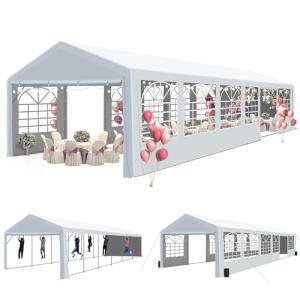
Sidewalls and panels are among the most useful additions. Mesh sidewalls allow airflow while keeping insects out — perfect for warm summer evenings. Solid sidewalls provide privacy and wind protection. Clear PVC panels maintain visibility and light while blocking rain. Many tents accept a mix of sidewall types, so you can tailor the setup to the weather and your preferences.
Flooring and ground covers make a significant difference to guest comfort. Interlocking floor tiles provide a stable, dry surface over grass or uneven ground. Carpet rolls or outdoor rugs add warmth and soften the look of the space.
Lighting is arguably the single biggest upgrade you can make to a party tent's atmosphere. String lights draped across the interior ceiling create a warm, festive glow. Pendant lanterns, LED uplights directed at the tent walls, and clip-on spotlights for buffet tables all add layers of ambience that photographs beautifully and makes guests feel welcome long after the sun goes down.
Weight bags and anchoring stakes are non-negotiable for safety. A tent that isn't properly anchored is a hazard in even moderate wind. Quality party tents include multiple anchor points; use them all, and supplement with additional weight bags on hard surfaces.
Tips for Getting the Most from Your Party Tent
A few practical notes that can save you headaches on the day:
Set up in advance. Don't leave tent assembly for the morning of your event. Set it up the day before, test all zips and closures, stake it down properly, and do a walk-through to check for any issues.
Plan for ventilation. Tents can get warm quickly when full of people. Open sidewall panels, use a portable fan, and consider the tent's orientation relative to prevailing wind to keep air moving.
Check your ground. Uneven ground makes tent setup harder and can create trip hazards inside. Spend time levelling your setup area if needed, or use a flooring system to create a flat surface.
Know your local rules. For larger tents or events with a certain number of guests, local authorities may require permits or fire safety compliance. Check before your event, not during it.
Finding the Right Party Tent
The party tent market offers options at every price point, from budget-friendly pop-ups under £100 to professional marquees costing several thousand pounds. The right choice isn't always the most expensive one — it's the one that fits your event size, frequency of use, and storage situation.
If you're planning a one-off event, hiring a tent from a local marquee company is often more cost-effective than buying. For regular entertainers, event businesses, or anyone who hosts frequently throughout the year, owning a quality tent pays for itself quickly.
Browse our full party tent range to find the size, style, and specification that fits your celebration. Every event deserves the right backdrop — and with the right tent, yours will be ready for anything the weather throws at it.