Who Actually Needs a 20x40 Party Tent?
Before getting into the details of what makes this tent worth your money, it's worth addressing the obvious question: who actually needs something this large?
More people than you'd expect. The 20' x 40' footprint — that's 800 square feet — comfortably accommodates roughly 80 to 120 guests depending on your seating arrangement. Cocktail-style events with standing room can push that number higher. Seated dinner receptions with round tables bring it closer to 80. Either way, you're looking at a serious amount of functional, weather-protected space.
The use cases are genuinely wide:
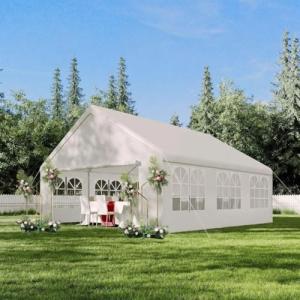
- Wedding receptions — especially backyard or farm weddings where renting a venue is either cost-prohibitive or beside the point
- Birthday milestone parties — 50th birthdays, quinceañeras, graduation celebrations
- Corporate outdoor events — client appreciation days, team cookouts, seasonal celebrations
- Farmers markets and vendor setups — a permanent or semi-permanent retail canopy
- Seasonal shelters — boat storage, equipment protection, workshop overflow
- Community and religious gatherings — church picnics, neighborhood associations, school fundraisers
The Raysfung tent handles all of these. Its combination of size, structural integrity, and adaptable design makes it a flexible asset rather than a one-event investment.
Construction and Frame: Built to Actually Hold Up
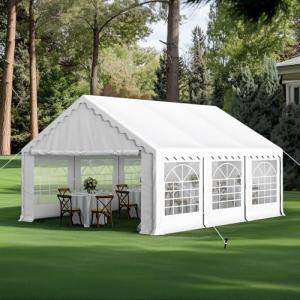
The first thing that separates a legitimate heavy-duty party tent from a dressed-up backyard canopy is the frame. The Raysfung 20x40 uses a powder-coated galvanized steel frame — and that distinction matters more than it might seem at first glance.
Galvanized steel undergoes a zinc-coating process that creates a barrier against rust and oxidation. When you add powder coating on top of that, you get a second layer of protection that also happens to look cleaner and more professional. The result is a frame that can sit outdoors, exposed to morning dew, rain, and humidity, without deteriorating into a rust-stained eyesore after a single season.
The structural philosophy behind the frame is equally thoughtful. Rather than relying solely on vertical poles and horizontal crossbars, the triangular frame structure at the top reinforces the overall stability of the tent, distributing load more evenly and resisting the kind of lateral pressure that strong gusts generate. This isn't just cosmetic engineering — triangular bracing is a fundamental principle in structural design for a reason. Triangles don't collapse under lateral force the way rectangular frames do.
The tent is also secured with what the manufacturer describes as strong grip hardware and rope anchoring. Ground stakes ensure the tent stays firmly in place, providing a safe and secure event space. For long-term installation on grass, Raysfung recommends pouring cement around the legs and fixing them with expansion screws — a detail that speaks to the tent's viability as a semi-permanent structure, not just a one-weekend setup.
The Cover: Weatherproofing That Goes Beyond the Basics
The canopy cover is where a tent either earns its keep or lets you down spectacularly — usually in the middle of an event you've spent months planning.
The Raysfung 20x40 uses a PE (polyethylene) fabric cover engineered for outdoor exposure. PE covers at this quality tier are simultaneously water-resistant, UV-blocking, and durable enough to handle repeated installation and takedown cycles without developing micro-tears or fading into an uneven grey.
The waterproofing on this tent isn't just a surface treatment that washes away after a few storms. The fabric construction itself resists moisture penetration, meaning that light rain — the kind that sneaks up on an afternoon event — won't find its way through the canopy to ruin tablecloths and centerpieces below.
UV protection deserves equal attention. Sustained sun exposure without shade does real damage to guests, particularly at midday summer events. A tent cover with meaningful UV-blocking capacity keeps the space underneath meaningfully cooler and protects people who'd otherwise be standing in direct sunlight for hours. For outdoor weddings that run from ceremony through reception — easily a six-hour stretch — this isn't a minor convenience, it's a genuine health consideration.
Ventilation and Sidewall Design: Flexibility as a Feature
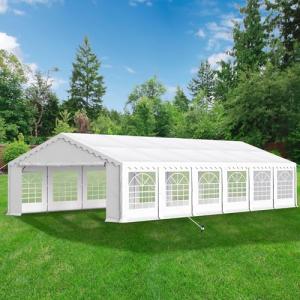
One of the more thoughtful aspects of the Raysfung tent's design is how it handles airflow. The tent comes with 2 zipper doors that can be rolled up or removed entirely to provide good ventilation and airflow on hot days, and the sidewalls are also fully removable.
This modular approach to enclosure transforms the tent's character based on conditions and preference. On a mild spring day with low humidity and a gentle breeze, you can remove all sidewalls and let the tent function as an open-air canopy — shade without enclosure. On a humid summer evening, you open the zipper doors at both ends to create a cross-breeze through the full length of the structure. When rain rolls in, the sidewalls go back up and the doors zip closed, turning 800 square feet of open coverage into a fully enclosed pavilion.
That kind of adaptability is what separates a genuinely useful piece of event infrastructure from something that only works under ideal conditions. Real outdoor events don't happen under ideal conditions. They happen in the messy middle of actual weather, and a tent that can respond to that in real time is worth a significant premium.
The sidewalls attach and detach cleanly, which matters during setup and breakdown. There's nothing more defeating at the end of a long event day than wrestling with sidewalls that won't cooperate while you're tired and the guests are trickling out.
Setup and Assembly: What to Realistically Expect
Let's be honest about something: a 20' x 40' heavy-duty tent is not a one-person job. No tent of this size and structural integrity should be. The Raysfung is packaged across multiple boxes and comes with detailed installation instructions, which is a good sign — brands that include thorough documentation tend to have thought through the assembly process more carefully.
The tent is packed in 4 boxes and comes with detailed installation instructions. For a structure of this scale, that packaging approach makes handling and transport far more manageable than a single massive crate would.
Realistically, you'll want four to six people for initial assembly — more if you're working on uneven ground or in any wind. The slip-fit tubing connections common to this frame style allow pieces to come together with reasonable speed once you have the process down. First-time setup will take longer as you familiarize yourself with the component layout. Subsequent setups, once the system is understood, move considerably faster.
A few practical tips worth knowing before you start:
Lay out all components before beginning. With a tent this size, discovering a missing stake after you've already raised the frame is genuinely disruptive.
Stake the perimeter before raising. Working from ground up gives you a stable base and prevents the frame from walking during assembly.
Check local regulations. In some municipalities, structures above a certain square footage require a temporary event permit. An 800-square-foot tent often crosses that threshold. A quick call to your local planning or zoning office before the event saves headaches later.
Don't rely solely on stakes in sandy or loose soil. Supplement with sandbags or weight bags at each leg, particularly in coastal or high-wind environments.
Versatility Beyond Parties: Year-Round Utility
The word "party tent" undersells what this structure actually does. A 20x40 galvanized steel-framed tent with a durable PE cover is fundamentally a large, portable shelter — and large portable shelters are useful in contexts well beyond birthday parties and wedding receptions.
The space is suitable for various uses, including boats shelter, party venue, commercial space for businesses, and other outdoor activities.
Car and equipment storage during winter months extends the useful life of machinery that would otherwise sit exposed to freeze-thaw cycles and moisture. A boat under a solid tent cover stays cleaner, drier, and more protected than one under a tarp.
For small business owners — florists, caterers, mobile food vendors, craft market sellers — a tent like this represents a significant professional upgrade. The clean white canopy reads as intentional and commercial rather than improvised. At farmers markets or pop-up retail events, that visual credibility translates directly into customer confidence.
For rural property owners and homesteaders, a permanent tent installation can serve as a covered workspace for everything from woodworking to equipment maintenance, providing the overhead protection of a structure without the permitting complexity or cost of permanent construction.
Comparison: Raysfung 20x40 vs. The Competition
The 20x40 party tent market has several players worth knowing. Here's how the Raysfung stacks up against key alternatives:
| Feature | Raysfung 20x40 | Quictent 20x40 | EROMMY 20x40 | SAILARY 20x40 | HOWSVN 20x40 |
|---|---|---|---|---|---|
| Frame Material | Powder-coated galvanized steel | Galvanized steel | 1.2" powder-coated steel | Galvanized steel | Galvanized steel |
| Cover Material | PE fabric | PE fabric | 180GSM PE fabric | PE fabric | PE fabric |
| Removable Sidewalls | ✅ Yes, fully removable | ✅ Yes, with windows | ✅ Yes | ✅ Yes | ✅ Yes, independently removable |
| Zipper Doors | 2 roll-up zipper doors | 2 roll-up doors | 2 doors | 2 doors | 2 zipper doors |
| Triangular Top Bracing | ✅ Yes | ✅ Yes | Not specified | Not specified | Not specified |
| Waterproof Rating | Water-resistant PE | Water-resistant | 100% waterproof | Water-resistant | Waterproof |
| UV Protection | ✅ Yes | ✅ Yes | ✅ Yes | ✅ Yes | ✅ UV50+ |
| Window Sidewalls | Standard | ✅ Church windows | Not specified | Standard | ✅ Church windows |
| Warranty/Support | Quality support, responsive | Good customer service | 60-day return window | Standard | Standard |
| Packaging | 4 boxes, detailed instructions | Multi-box | 5 carry bags included | Multi-box | Multi-box |
| Best For | Versatile events & semi-permanent use | Events with visibility needs | High-rainfall environments | Budget-conscious buyers | Weddings with open views |
A few observations from this comparison worth unpacking:
The EROMMY stands out for its 180GSM fabric density and explicit 100% waterproof claim — a meaningful edge for buyers in wetter climates. Its 1.2" steel pipe dimensions are clearly specified, giving buyers more confidence about structural heft.
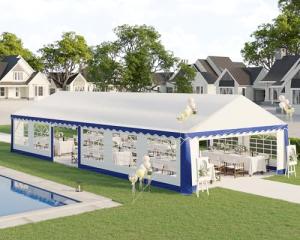
The HOWSVN and Quictent versions emphasize church-window sidewalls, which add a more decorative, elegant aesthetic well-suited to formal weddings. If visual presentation is a top priority, those window panels are worth considering.
The Raysfung earns its position through the combination of triangular bracing, responsive customer support, and its clearly articulated multi-use versatility. It's not trying to be the cheapest option or the most feature-loaded — it's a well-rounded tent that handles a wide range of real-world applications with consistent reliability.
Real-World Considerations Before You Buy
No review is complete without honest acknowledgment of the things to think through carefully before purchasing.
This tent is not a quick deploy. If you need something that goes up in 20 minutes for a spontaneous afternoon cookout, a 10x10 pop-up is your product. The Raysfung 20x40 rewards investment of time and planning. It's a structured setup that, done correctly, creates a genuinely impressive event space.
Wind is the primary adversary. The manufacturer advises not leaving the tent up for extended periods in extreme weather, strong winds, blizzards, or storms, and recommends clearing snow promptly in winter. This is standard guidance for any temporary structure of this class, but it's worth taking seriously. The triangular bracing and stake system mitigate wind risk substantially — but they don't eliminate it. In regions with frequent high-wind events, proper anchoring with sandbags supplementing ground stakes is not optional.
Storage space matters. When broken down, 800 square feet of tent components across multiple boxes takes up real space. Factor in garage or basement storage before purchasing.
You may want to invest in additional anchoring. Sandbag weight sets and heavy-duty ground anchors are relatively inexpensive add-ons that meaningfully increase stability, particularly on grass surfaces where stakes can loosen over time.
The Value Calculation: Is It Worth It?
Here's the honest math on a party tent investment at this scale.
A basic outdoor venue rental for 80-100 guests typically runs anywhere from $500 to $2,000 depending on location and duration. That's a per-event cost. A marquee or tent rental from an event company for a 20x40 structure runs $600 to $1,500 for a single weekend, not including setup and delivery fees that frequently add 30-50% to the base price.
The Raysfung 20x40 is a one-time purchase that pays for itself after one or two events — and then keeps paying forward every time you use it, lend it, or rent it to someone else. For families who host regularly, for small event businesses building inventory, or for communities that pool resources for shared infrastructure, the economics are unambiguous.
Beyond events, the secondary utility as a seasonal shelter, storage structure, or commercial canopy means the tent earns its keep even in years when no major parties are planned.
Final Verdict: Solid Infrastructure for Serious Hosts
The Raysfung 20' x 40' Party Tent is not a novelty purchase. It's a practical infrastructure investment for people who take outdoor entertaining seriously — or for anyone who needs reliable, large-scale covered shelter without the cost and permanence of constructed buildings.
The galvanized steel frame with triangular top bracing provides structural confidence. The removable sidewall system provides adaptability. The PE canopy cover provides weather protection. The two zipper doors provide ventilation on hot days and closure when conditions demand it. And the multi-box packaging with clear instructions reflects a brand that has thought through the experience of actually using the product, not just selling it.
No tent of this size is without trade-offs — assembly requires help, storage requires space, and wind remains something to be managed rather than ignored. But for the host who wants to stop worrying about the weather and start focusing on the event itself, this tent earns its place in the category.
800 square feet of covered, adaptable, structurally sound outdoor space. That's what the Raysfung 20x40 delivers.
And if you've ever hosted an outdoor event and watched guests scatter when the first drops hit the tablecloths, you already know exactly how much that's worth.
👉 Check the Raysfung 20' x 40' Party Tent on Amazon