The Story Behind the Brand
SISTERBIRD was founded by a young designer who loves birds. After finding an injured bird in the countryside, taking it home to treat, and watching it heal and return to nature, she created an outdoor bird brand dedicated to preserving birds — calling it "SISTERBIRD." The brand's high-quality products are integrated with the concept of bird preservation, built around a philosophy of love and care for the beauty and harmony of nature.
That origin story isn't just marketing copy. It shows up in the product's design decisions — where the focus is consistently on what benefits the birds, not just what looks good on a shelf.
What's in the Box
The SISTERBIRD package includes two complete birdhouses, hardware for mounting, and all components needed for assembly. The assembly-required nature of the product is, in fact, a feature rather than an inconvenience — it gives buyers the opportunity to involve children or family members in the build, turning a simple purchase into a shared outdoor project.
Each house arrives with a mounting rope, allowing for flexible installation across a wide range of outdoor environments — fence posts, tree branches, garden stakes, or pergola beams. Whether you're setting up a dedicated nest box trail along a meadow edge or simply adding a welcoming habitat to a suburban backyard, the mounting system adapts easily.
Cedar Construction: Why Wood Choice Matters
Walk into any serious birding supply shop and you'll hear the same recommendation repeated: cedar. There's a reason for that near-universal consensus, and it comes down to the wood's natural properties.
SISTERBIRD birdhouses use untreated, unpainted cedar. The bluebird nesting box has a rough surface, and the birdhouses can give birds a foothold as they enter and exit. Cedar also helps keep out weather-related damage.
That last point is significant. Untreated wood might sound like a compromise, but for bird housing, it's the correct choice. Painted or chemically treated surfaces can off-gas fumes that are harmless to humans but potentially toxic in the confined, humid interior of a nest box. Cedar's natural oils provide weather resistance without any artificial treatment — the wood expands and contracts gracefully through seasonal changes, resists warping, and handles rain and humidity without degrading quickly.
The rough-hewn interior texture is another deliberately bird-focused design choice. Smooth-walled nest boxes, however pretty, create a real hazard: fledglings that can't yet fly well need to grip the interior walls to climb toward the entrance and launch their first flight. A polished interior becomes a trap. The rough cedar surface of these SISTERBIRD houses functions almost like a built-in ladder.
The Copper Predator Guard: More Than Decoration
The most visually distinctive feature of these houses is the copper guard fitted around the entrance hole. It catches the light, adds a warm metallic accent against the natural cedar, and — most importantly — serves a genuine protective function.
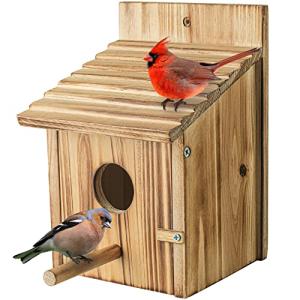
The SISTERBIRD bluebird birdhouse with a copper predator guard around the entrance hole helps protect young birds against predators. Interior grooves, like a small ladder, help young birds leave the cedar bird houses, especially swallows.
Predator pressure on nest boxes is one of the most significant causes of nesting failure in backyard bird habitats. Raccoons, squirrels, and even domestic cats will exploit any weakness around an entrance hole — gnawing at wood to enlarge an opening, or reaching inside with a paw. The copper guard solves both problems simultaneously. Its hardness resists chewing, and its precise sizing maintains the critical 1.5-inch diameter that protects against unwanted intruders while welcoming target species.
The copper plate protection, which is approximately 1/32-inch thick, not only shields against the elements but also gives an elegant touch. Over time, copper develops a patina that actually makes these houses look more natural and integrated into a garden setting — another fortunate intersection of aesthetics and function.
The 1.5-Inch Entrance Hole: Precision Engineering for Wildlife
This might seem like a minor measurement, but the 1.5-inch entrance hole is one of the most carefully considered specifications in the birdhouse world. It's not arbitrary — it's the result of decades of ornithological research into cavity-nesting bird behavior.
The properly-sized 1.5-inch entrance hole attracts desirable species such as bluebirds, wrens, tree swallows, and chickadees, while excluding predators and unwanted occupants like European starlings.
European starlings are the critical species to exclude. Aggressive, cavity-nesting, and non-native to North America, starlings out-compete native birds for nesting sites and will destroy eggs and kill nestlings to claim a box. They simply cannot fit through a 1.5-inch opening. Bluebirds, wrens, tree swallows, and chickadees can — meaning this single measurement does the work of a selective filter, making your nest box welcoming to the species you want while functioning as a barrier to the ones you don't.
For birders in the UK or Europe, the same principle applies to house sparrows and other invasive cavity nesters. The precise hole sizing is genuinely one of the most important technical features in any nest box.
Interior Design for Fledgling Safety
These birdhouses for outdoors have interior grooves, like a small ladder, that help young birds leave the cedar bird houses, especially swallows.
The inclusion of interior exit grooves speaks to the brand's genuine understanding of bird biology. Swallow and bluebird fledglings typically leave the nest before they're capable of strong, sustained flight. The act of exiting the nest box — a moment called "fledging" — is itself a vulnerable transition. A young bird that struggles to reach the entrance hole may panic, fall back, and exhaust itself repeatedly. The grooved interior converts this risky moment into a manageable climb.
It's a small design detail that has measurably positive effects on fledgling survival rates, and it's the kind of feature that reflects experience with actual bird behavior rather than a simple desire to produce an attractive product.
Easy Cleaning: A Feature That Benefits the Birds
The SISTERBIRD wooden bird houses front door opens for easy cleaning after fledglings have left. When the season is over, you can clean out the blue bird boxes and save the birdhouses for next spring.
This matters more than casual buyers often realize. A used nest box left uncleaned can harbor mites, parasites, and bacteria that will discourage new occupants or, worse, harm them. Bluebird trail monitors — the dedicated volunteers who manage networks of nest boxes across North America — clean boxes religiously after each brood. The front-opening door on the SISTERBIRD houses makes this annual maintenance a straightforward task rather than a frustrating puzzle.
Mounting Versatility
Equipped with screws and a rope, the house can be effortlessly mounted on poles, trees, walls, or fences in various outdoor settings.
Placement is genuinely important for attracting the right species. Eastern bluebirds prefer open areas — meadow edges, orchard margins, golf course peripheries — while wrens are happy in more densely vegetated yards. Tree swallows need clear flight paths over open ground. The mounting flexibility of these houses means a single purchase can serve different micro-habitats across a property.
Comparison Table: SISTERBIRD vs. Competing Nest Boxes
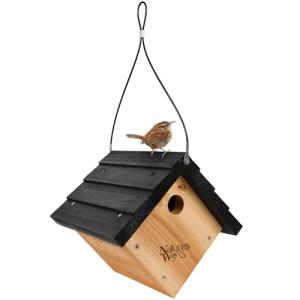
| Feature | SISTERBIRD Cedar + Copper Guard | Generic Wooden Birdhouse | Plastic/Resin Nest Box | Nature's Way CWH3 Cedar |
|---|---|---|---|---|
| Material | Untreated cedar | Varies (often pine) | Resin/plastic | Untreated cedar |
| Predator guard | Copper (1/32" thick) | None typically | None or basic | Metal plate |
| Entrance hole | Precisely 1.5" | Often imprecise | Varies | 1.5" |
| Interior exit grooves | Yes | Rarely | No | No |
| Front door access | Yes (easy clean) | Sometimes | Sometimes | Yes |
| Finish | Natural/untreated | Often painted | Painted/colored | Natural |
| Pack size | 2 houses | Usually 1 | Usually 1 | 1 house |
| Mounting options | Rope + screws | Screws only | Screws only | Screws only |
| Assembly | Required | Pre-assembled | Pre-assembled | Pre-assembled |
| Weather resistance | Cedar natural oils | Low-moderate | High but condensation issues | Cedar natural oils |
| Bird species attracted | Bluebird, Wren, Swallow, Finch, Chickadee | General/unspecified | General/unspecified | Bluebird, Wren, Swallow |
The value proposition of getting two houses at once deserves particular emphasis. Setting up two nest boxes spaced at least 100 yards apart is a widely recommended practice for attracting bluebirds, since bluebirds are territorial and won't tolerate another bluebird pair too close by — but that same spacing allows a second, different species to occupy the second box.
Who This Product Is For
The SISTERBIRD 2-Pack is genuinely well-suited to a wide range of buyers. First-time backyard birders will appreciate the complete package — two houses, hardware, and a design that's been thought through with actual bird welfare in mind. Experienced birders and nest box trail managers will recognize the species-appropriate specifications and approve of the construction quality. Families with children will find the assembly process manageable and engaging.
The product also makes an unusually thoughtful gift. Unlike decorative birdhouses that prioritize appearance over function and rarely attract actual tenants, these houses are built to be used — and a year from now, a recipient might find themselves watching a family of bluebirds from their back porch.
A Note on Expectations
Nest boxes require patience. Birds don't typically occupy a new box immediately, and the first season can sometimes pass without a tenant. Placement is crucial: open areas with nearby perches, away from high-traffic zones and direct afternoon sun in hot climates. Once the local bird population discovers the box, return occupancy in subsequent seasons becomes the norm rather than the exception.
The SISTERBIRD houses give you the best possible platform for success. What they can't provide is the patience — that part is up to you.
Final Verdict
The SISTERBIRD 2-Pack Cedar Bird Houses with Copper Guard represent a genuine commitment to bird welfare dressed in an appealing, well-built package. The classic birdhouse style optimizes the overall structure and better maintains air circulation in the bird nest — a detail that keeps temperatures regulated during summer heat, when unventilated nest boxes can become lethal to chicks.
At a time when cavity-nesting bird populations in North America are under sustained pressure from habitat loss and nest site competition, a well-designed nest box isn't a trivial purchase. It's a small but meaningful act of habitat restoration, and the SISTERBIRD houses are built to play that role effectively.
→ View the SISTERBIRD 2-Pack Cedar Bird Houses on Amazon