What Are Garden Privacy Panels?
Garden privacy panels are freestanding or fixed screening solutions designed to block sightlines, reduce noise, and define outdoor spaces. Unlike a solid fence, which commits you to a permanent boundary, privacy panels offer flexibility. You can move them, stack them, combine different styles, or use them to target a specific problem area without overhauling your entire garden layout.
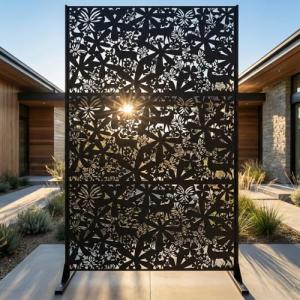
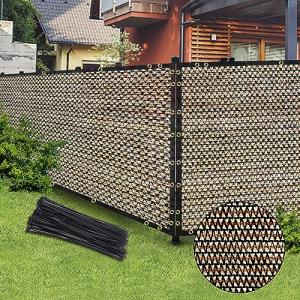
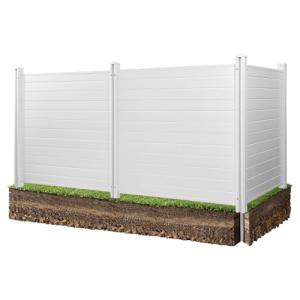
They come in a wide range of materials — from classic timber slatted designs to powder-coated steel, willow weave, composite wood, and laser-cut decorative screens. Some are designed purely for function, giving you a dense, opaque barrier. Others blur the line between garden screening and garden art, with geometric cutouts, botanical motifs, or living panels designed to support climbing plants.
Most panels slot into ground spikes, bolt onto existing structures, attach to fence posts, or stand alone in weighted bases — making installation surprisingly straightforward even for first-time gardeners.
Why Privacy Panels Outperform Traditional Fencing
A lot of people default to fencing when they want garden privacy. And fencing works, up to a point. But it comes with baggage: planning considerations, high installation costs, neighbour agreements, and a permanence that makes it hard to adapt as your garden evolves.
Privacy panels sidestep most of these headaches. Because they're modular and often freestanding, many don't require planning permission the way a full boundary fence might. They can be installed on a weekend, repositioned as your needs change, and removed entirely without leaving a trace.
They're also far more targeted. If the issue isn't your entire garden but a specific sightline — a gap in a hedge, a raised neighbour's window, the end of a terrace that faces a busy footpath — a panel addresses exactly that problem without the cost or upheaval of a full fencing project.
And from a purely aesthetic standpoint, a well-chosen privacy panel adds something to your garden. It doesn't just block a view; it creates a view, frames a space, and gives your outdoor room a sense of intention and design.
Choosing the Right Material
The material you choose for your privacy panels will affect how they look, how long they last, and how much maintenance they demand over the years. Here's an honest breakdown of the main options.
Timber and Wood Panels
Timber is the classic choice, and for good reason. It ages well when properly treated, blends naturally into garden environments, and has a warmth that manufactured materials struggle to replicate. Slatted timber panels — where horizontal or vertical boards are spaced slightly apart — give you partial privacy while allowing air and light to pass through, which makes them far less domineering in a smaller garden.
The trade-off is maintenance. Wood requires periodic treatment, staining, or painting to prevent it rotting, splitting, or greying prematurely. Untreated softwood can begin to deteriorate within a few years in wet climates. Hardwood options like oak or teak are significantly more durable but come at a higher price point.
If you love the look of timber but don't want the upkeep, pressure-treated options with factory-applied preservatives are a sensible middle ground.
Composite Panels
Composite privacy panels are made from a blend of recycled wood fibres and plastic, giving you the appearance of timber with dramatically reduced maintenance. They won't rot, they resist moisture, and they don't need annual staining or treating. Most composite panels come with long guarantees — often 10 to 25 years — which reflects how genuinely low-effort they are to own.
They're particularly popular in contemporary garden designs where clean, consistent colouring matters. Unlike real wood, composite doesn't fade unevenly or develop patches; it maintains a uniform tone throughout its lifespan.
The initial cost tends to be higher than softwood timber, but when you factor in the money and time you'd spend on maintenance over a decade, composite often works out as the more economical choice.
Metal and Steel Panels
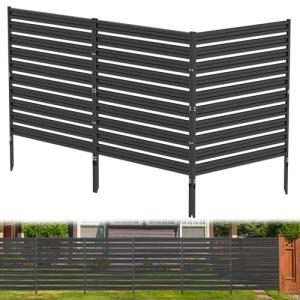
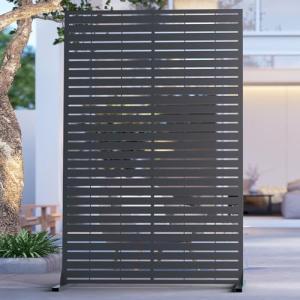
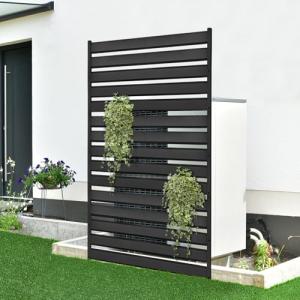
Powder-coated steel and aluminium panels bring a distinctly modern feel to outdoor spaces. They're available in a wide range of colours — anthracite grey and black are particularly popular — and their clean geometric lines suit contemporary or minimalist garden schemes beautifully.
Metal panels are exceptionally durable. They don't rot, don't warp, and hold their appearance well over time. Powder coating protects against rust and UV damage, though it's worth checking the quality of the coating on any panel you're considering, particularly if you're near the coast where salt air accelerates corrosion.
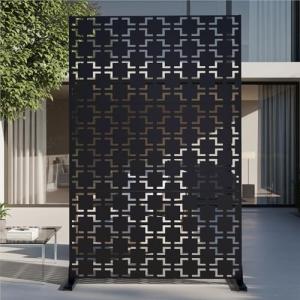
Many decorative metal screens feature intricate laser-cut designs — foliage patterns, abstract geometric forms, or architectural motifs — that create striking shadow effects as the light changes through the day. These work beautifully as feature pieces rather than purely functional screening.
Willow and Natural Weave Panels
For cottage gardens, rural settings, or anyone who wants their screening to feel organic and informal, natural willow, hazel, or bamboo weave panels are a lovely option. They blend into planted borders effortlessly, look wonderful when framed by climbing roses or clematis, and have an unpretentious, handmade quality that more engineered materials can't quite match.
The honest downside: natural weave panels have a shorter lifespan than timber, composite, or metal, typically lasting five to ten years before they begin to break down. They're also less structurally rigid, which can matter in exposed, windy sites. But for sheltered gardens where aesthetics take priority over longevity, they're hard to beat for charm.
Height, Density, and Sightlines: Getting the Practical Details Right
Before you buy, spend a few minutes standing in your garden and identifying exactly where your privacy problem lies. Most people find they have a specific sightline issue — a window at a certain height, a gap between structures, a raised deck on a neighbouring property — rather than a total lack of screening.
Choosing the Right Height
Standard privacy panels typically range from 1.2m to 2m in height. For most garden privacy needs, a 1.8m panel (roughly six feet) is the sweet spot — tall enough to screen seated and standing adults, low enough not to cast significant shadow over planted areas or feel oppressive in smaller spaces.
If the overlooking point is elevated — a first-floor window or a raised terrace — you may need taller panels or a combination of panels plus climbing plant support to create effective screening above the standard fence line.
For more decorative screening or to divide garden zones rather than block outside views, lower panels of 1.2m to 1.5m work well. They create a sense of separation and structure without the closed-off feeling of full-height screening.
Slatted vs Solid Panels
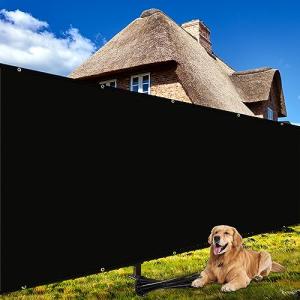
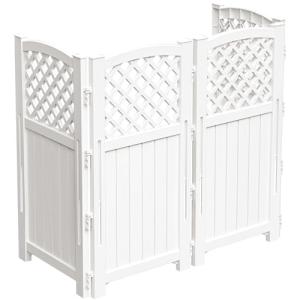
Solid panels give you maximum privacy and noise reduction but can make a garden feel smaller and more enclosed. In compact spaces, this can quickly feel oppressive.
Slatted designs — where boards are separated by a gap of 10–25mm — offer a more considered balance. They still screen effectively from most angles while allowing airflow, reducing wind resistance (which matters for structural stability), and maintaining a sense of openness. In a smaller garden, slatted panels can make the difference between screening that helps and screening that hems you in.
As a rule: the smaller the garden, the more you should lean toward slatted or semi-open panel designs.
Installation: What to Know Before You Start
Most garden privacy panels are designed for straightforward DIY installation, but there are a few things worth knowing before you begin.
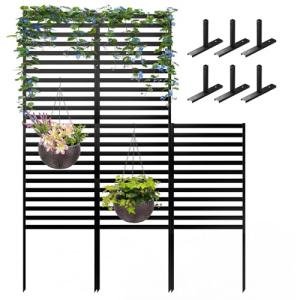
Check your ground. Freestanding panels in ground spikes work well in lawns and soil, but they're unsuitable for paving, decking, or concrete. For hard surfaces, look for panels that come with weighted base options or that can be bolted directly to a surface.
Think about wind load. A solid 2m panel catches a lot of wind. In an exposed garden, this is a structural concern — a panel that isn't properly secured can become a hazard in high winds. Most manufacturers specify maximum wind ratings; take these seriously. Slatted panels cope better in windy locations than solid ones because they let air pass through.
Post spacing matters. If you're installing a run of multiple panels, make sure your posts are correctly spaced and properly vertical before you start. Small errors in alignment multiply quickly across several panels.
Treat cut ends. If you're cutting timber panels to fit, treat the cut ends immediately with preservative to prevent moisture getting into the wood and shortening the panel's lifespan.
Privacy Panels and Planting: A Combination That Works
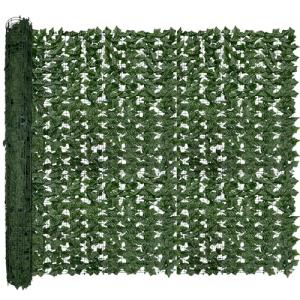
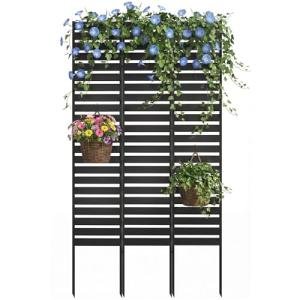
One of the most satisfying ways to use garden privacy panels is as a supporting structure for climbing plants. A metal or timber panel gives climbers like clematis, jasmine, roses, or wisteria something to anchor to, while the plants soften the hard lines of the panel and gradually integrate it into the wider garden scheme.
For a fully living screen, panels combined with fast-growing climbers can transform a bare boundary into something genuinely lush within a single growing season. Evergreen climbers like star jasmine or climbing hydrangea give you year-round coverage.
This approach works particularly well with slatted or open-grid panels, which give stems and tendrils easy purchase without needing additional wire or trellis support.
Privacy Panels as Garden Design Features
It's worth stepping back from the purely functional view for a moment. The best garden privacy panels aren't just barriers — they're design elements that shape how a space feels.
A well-positioned panel can anchor a seating area and make it feel like a room. A decorative screen with a geometric cutout pattern catches the light differently across the day and creates visual interest even in a paved courtyard with no planting. A run of slatted composite panels gives a long, narrow garden a series of visual resting points that make it feel more considered and finished.
Think of privacy panels not just as something you add to solve a problem, but as something that contributes positively to the look and feel of your outdoor space. The right panel in the right position doesn't just hide what you don't want to see — it frames what you do.
Finding the Right Panel for Your Garden
With so many styles, materials, and sizes available, the choice can feel overwhelming. But if you start from a few clear questions — What am I screening? What style suits my garden? How much maintenance am I willing to do? What's my budget? — the right options tend to narrow down quickly.
Browse the full range below to find garden privacy panels by material, height, and style. Whether you're looking for a single decorative screen or enough panels to transform an entire garden boundary, you'll find options that balance genuine quality with honest value.
Your garden should feel like yours. The right privacy panel is the first step to making it that way.