Why the 6×10 Footprint Matters More Than You Think
Greenhouse sizing is one of those decisions that haunts gardeners for years. Go too small and you're playing Tetris with plant trays by March. Go too large and you've sacrificed half your yard for a structure you can't fill.
The 6×10 footprint — roughly 60 square feet of usable growing space — hits a sweet spot that works for a surprisingly wide range of gardeners. That's enough room to set up two full-length growing benches along the side walls with a comfortable walkway down the center. It's enough space for several large tomato plants to grow vertically. It's enough room to overwinter a modest collection of potted citrus, fig trees, or tropical plants. And crucially, it's enough space to actually walk around in without feeling claustrophobic.
At six feet wide, the Takywep fits comfortably along a fence line or against the side of a house. At ten feet long, it provides genuine depth without consuming an entire backyard. For suburban lots — where space is at a premium but ambitions run high — this footprint makes a lot of practical sense.
The Build Quality That Separates It from the Pack
Let's talk about what this greenhouse is actually made of, because the materials story here is compelling.
720g/m² Polycarbonate Panels
The panels on the Takywep are rated at 720 grams per square meter, which puts them firmly in the heavy-duty category for residential greenhouses. These are double-walled (twin-wall) polycarbonate sheets, meaning each panel has two layers separated by a series of internal ribs. That hollow channel structure isn't just for show — it creates an insulating air pocket that helps retain heat during cold nights while still allowing light to pass through during the day.
Polycarbonate has several advantages over glass in a backyard setting. It's significantly lighter, which means the frame doesn't need to be overbuilt just to support the glazing weight. It's virtually shatterproof — a stray baseball, a falling branch, or a piece of hail isn't going to leave you with a pile of broken glass among your seedlings. And polycarbonate offers built-in UV filtering, which actually benefits many plants by reducing the harshness of direct midday sun while still delivering plenty of photosynthetically active radiation.
The panels on the Takywep block up to 99% of UV rays while maintaining good light transmission. That balance is critical. Your plants need light to grow, but they don't need the kind of UV bombardment that causes leaf scorch and accelerated soil drying. The twin-wall construction creates diffused light — scattering it more evenly across the interior rather than creating harsh shadows and hot spots.
Reinforced Aluminum Frame
The frame is constructed from aluminum alloy, which immediately solves two common greenhouse problems: rust and weight. Steel frames are strong, but they corrode. Wooden frames look charming, but they rot and attract insects. Aluminum resists corrosion naturally, requires zero painting or treatment, and maintains its structural integrity for decades with minimal maintenance.
The Takywep uses an enhanced aluminum frame design with reinforced connection points. This isn't a hollow tube bolted together at the corners and left to flex in the wind. The joints and cross-members are engineered to distribute load across the structure, which matters enormously when snow piles up on the roof or a strong gust hits the side panels.
The Features That Actually Matter Day-to-Day
A greenhouse can have all the right materials and still be frustrating to use if the practical details are poorly executed. The Takywep gets several daily-use features right.
Adjustable Roof Vent
Ventilation isn't optional in a greenhouse — it's essential. Without adequate airflow, a greenhouse turns into an oven on sunny days, even in winter. Temperatures can spike above 100°F within minutes when the sun hits a sealed polycarbonate structure. That kills plants faster than the cold you were trying to protect them from.
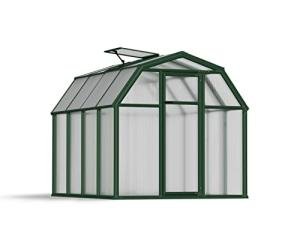
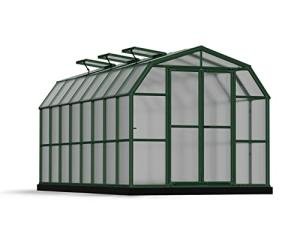
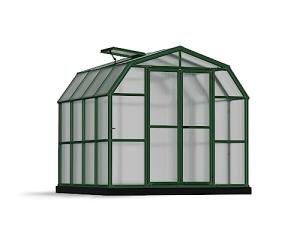
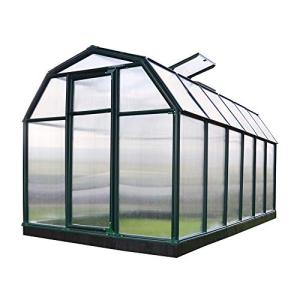
The Takywep comes equipped with an adjustable roof vent that allows you to control airflow and internal temperature. Because heat rises, a roof-mounted vent is the most effective placement for passive ventilation. Open it on warm days, close it on cold nights, and adjust it to various positions in between. It's a simple mechanical solution that works without electricity, timers, or batteries.
For gardeners who want to take climate control further, the roof vent also provides a natural exhaust point for adding a small solar-powered fan or an automatic vent opener (sold separately by various manufacturers). These accessories snap or clamp onto existing vent mechanisms and respond to temperature changes automatically — a nice upgrade for gardeners who can't be home to manually adjust things throughout the day.
Built-In Gutter System
This is one of those features that sounds mundane until you actually need it. The Takywep includes integrated rain gutters along the roofline that channel water runoff away from the foundation and the door area. Without gutters, rain cascading off a greenhouse roof creates erosion trenches along the base, pools at the entrance, and can even undermine the foundation over time.
The gutter system also opens up a practical sustainability option: rainwater collection. Attach a downspout diverter and a barrel at one or both ends, and you've got a free, chemical-free water source for your plants. In areas with water restrictions or high utility costs, this feature alone can pay for itself over a few growing seasons.
Walk-In Design with Lockable Door
The Takywep is a true walk-in greenhouse, not a crouch-and-crawl cold frame dressed up with marketing language. The peaked roof design provides adequate headroom for most adults to stand upright in the center aisle, and the door is wide enough to bring in a wheelbarrow, large pots, or bags of soil without doing an awkward sideways shuffle.
The lockable door adds security — something often overlooked in greenhouse design. If you're growing valuable plants, storing expensive tools inside, or simply want to keep curious neighborhood kids from wandering in, a lock is a practical necessity. It also helps keep the door fully latched during storms, preventing wind from catching it and ripping it off its track.
Assembly — What to Expect
Let's be honest about greenhouse assembly: none of them are truly "easy." Any structure this size, with dozens of panels and hundreds of fasteners, takes time. That said, the Takywep uses a slide-in panel system that significantly speeds up the glazing phase of construction. Rather than individually screwing or clipping each polycarbonate sheet into place, panels slide into channels in the frame, reducing installation time by a meaningful margin.
The product ships in two separate boxes due to the weight and size of the components. Plan accordingly — you'll want a second person for handling the longer frame pieces and holding panels in place. Most owners report that assembly takes anywhere from four to eight hours, depending on experience level and how carefully you read the instructions. Speaking of which: read the instructions. All of them. Before you start. Greenhouse assembly is one of those projects where skipping ahead leads to backtracking and frustration.
Tools are included in the package, which is a nice touch. You won't need to run to the hardware store mid-build for some obscure Allen wrench or specialty bit.
All-Season Performance — Does It Hold Up?
The marketing says "all-season," and the construction backs it up. The twin-wall polycarbonate provides genuine insulation — not on par with a heated building, of course, but enough to keep the interior several degrees warmer than the outside air. On a sunny winter day, the temperature differential can be dramatic, with the greenhouse interior reaching comfortable growing temperatures while the outside air hovers near freezing.
For spring and fall shoulder seasons, the greenhouse is transformative. You can start seeds four to six weeks earlier than outdoor planting dates and keep harvesting herbs, greens, and cool-weather crops well into November or even December depending on your climate zone. That extra growing time compounds over the years — experienced greenhouse gardeners routinely grow two or even three complete crop cycles in the time that outdoor-only gardeners manage one.
Summer brings the opposite challenge: keeping things cool enough. The roof vent handles moderate heat, but in extremely hot climates, you'll want to add shade cloth over the roof during peak summer months. The aluminum frame provides convenient attachment points for clips or ties to secure shade fabric, and removing it in the fall takes just minutes.
Heavy rain, wind, and snow are the real structural tests. The aluminum frame and polycarbonate panels are rated to handle serious weather. Ground nails anchor the base to the soil, preventing uplift during windstorms. The peaked roof design sheds snow naturally, preventing dangerous accumulation. And the polycarbonate panels flex slightly under impact rather than shattering — surviving hailstorms that would destroy glass.
How the Takywep 6×10FT Compares to Competing Greenhouses
The 6×10 polycarbonate greenhouse market has gotten crowded. Here's how the Takywep stacks up against several popular alternatives in the same size and price range.
| Feature | Takywep 6×10FT | Garvee 6×10FT | Kingdura 6×10FT | Generic 6×10FT (Budget) |
|---|---|---|---|---|
| Frame Material | Reinforced aluminum alloy | Reinforced aluminum | Heavy-duty aluminum | Basic aluminum |
| Panel Thickness | Twin-wall polycarbonate | Polycarbonate (PET) | 4.6mm twin-wall polycarbonate | Single-wall polycarbonate |
| Panel Weight Rating | 720 g/m² | 720 g/m² | 720 g/m² | ~400–500 g/m² |
| UV Protection | Up to 99% UV blocking | UV-resistant coating | Up to 99% UV blocking | Basic UV coating |
| Roof Vent | Adjustable (included) | Included | Adjustable (included) | Varies |
| Gutter System | Built-in, rain-collection ready | Not standard | Standard | Rarely included |
| Door Type | Lockable push door | Sliding door with lock | Lockable door | Basic sliding door |
| Wind Resistance | High (reinforced joints) | Up to 50 mph rated | Up to 50 mph rated | Moderate |
| Snow Load Capacity | Heavy-duty rated | Up to 110 lbs/sq ft | 160 lbs/sq m | Low to moderate |
| Assembly System | Slide-in panel design | PET panel quick-attach | Standard bolt-together | Standard bolt-together |
| Ground Anchoring | Ground nails included | 4 sets of ground nails | Ground anchor system | Basic stakes (if included) |
| Shipping | Two boxes | Two boxes | Two boxes | Single or two boxes |
| Best For | All-season gardeners wanting durability + drainage | Gardeners prioritizing fast assembly | Cold-climate gardeners needing max snow load | Budget-conscious beginners |
A few things jump out in this comparison. The Takywep's built-in gutter system is a legitimate differentiator — most competitors at this price point either skip it entirely or offer it as an afterthought. The slide-in panel assembly system is another advantage for anyone who values their weekend hours. And the lockable push door is a small but meaningful upgrade over basic sliding doors, which tend to develop tracking issues over time.
Where the competition pushes back is in specific engineering claims. Kingdura, for instance, publishes explicit wind and snow load ratings that give cold-climate buyers confidence. The Garvee emphasizes its PET panel technology for speed of installation. Each brand has carved out a slightly different niche within the same product category.
Who Should Buy This Greenhouse (And Who Shouldn't)
The Takywep 6×10FT greenhouse is an excellent fit for home gardeners who want to extend their growing season substantially without building a permanent structure or spending several thousand dollars. It's ideal for anyone growing vegetables, herbs, or flowers who has been frustrated by short growing seasons, unpredictable weather, or the limitations of outdoor gardening.
It's particularly well-suited for gardeners in USDA zones 4 through 8, where the shoulder seasons are long enough to exploit but the winters are cold enough that outdoor growing shuts down for months. In these climates, a well-managed unheated polycarbonate greenhouse can realistically add two to three months of productive growing time per year.
It's also a solid choice for plant collectors who need to overwinter tropical or semi-tropical specimens — citrus trees, hibiscus, plumeria, fig trees, and similar plants that can survive cool temperatures but not hard freezes. The insulating polycarbonate panels and sealed construction keep overnight lows above the damage threshold for most of these species, especially if you add a small electric heater for the coldest nights.
Who might want to look elsewhere? Gardeners in extremely hot climates (zones 9b and above) where overheating is a bigger concern than cold protection may want a larger structure with more ventilation options — multiple side windows, ridge vents, and cross-ventilation capability. A single roof vent may not provide enough cooling capacity in triple-digit heat. Similarly, commercial growers or serious hobbyists who need hundreds of square feet of growing space should consider larger models or connected multi-bay designs.
Tips for Getting the Most Out of Your Takywep Greenhouse
Once your greenhouse is assembled and anchored, a few strategic decisions will determine how much value you get from it.
First, orient the long axis east-to-west if possible. This maximizes southern sun exposure across the largest surface area, which is especially important during the low-sun-angle months of winter and early spring when every photon counts.
Second, invest in a good min-max thermometer. Understanding your greenhouse's temperature range — how hot it gets during sunny afternoons and how cold it drops overnight — tells you exactly which plants will thrive and when you need to intervene with heating or ventilation.
Third, consider adding thermal mass. A few black-painted water jugs placed along the north wall absorb heat during the day and release it slowly overnight, moderating temperature swings without any energy cost. This old-school passive solar trick works remarkably well in small greenhouse spaces.
Fourth, keep the polycarbonate panels clean. Dust, pollen, and hard water deposits gradually reduce light transmission. A gentle wash with soap and water twice a year keeps your panels performing at their best.
Finally, make use of that gutter system. Connect a rain barrel and use collected water for your greenhouse plants. Rainwater is naturally soft, slightly acidic, and free of the chlorine and fluoride found in municipal tap water — most plants prefer it.
In Short
The Takywep 6×10FT Polycarbonate Greenhouse delivers a thoughtful combination of durable materials, practical features, and smart engineering at a price point that doesn't require justifying the expense to your partner over dinner. The 720 g/m² twin-wall polycarbonate panels provide real insulation and UV protection. The reinforced aluminum frame resists corrosion and handles weather stress. The built-in gutter system and adjustable roof vent address the two biggest daily management challenges — water and heat — right out of the box.
It isn't perfect. No greenhouse at any price point is. Assembly takes time and patience. The single roof vent limits cooling capacity in very hot regions. And as with any two-box shipment, there's always a brief moment of anxiety waiting for the second package to arrive.
But for the home gardener ready to stop fighting the calendar and start growing on their own terms — spring through winter, frost to frost, and every beautiful week in between — this greenhouse earns a serious look.