There's a particular kind of hope that takes hold when you start thinking seriously about growing your own food. You scroll through seed catalogs in February. You move pots around the patio trying to find the perfect south-facing spot. You cover tomatoes with old bedsheets every time a frost warning pops up on your weather app. At some point, the workarounds stop being charming and start being exhausting — and that's the moment a greenhouse stops being a luxury and starts being a genuine solution.
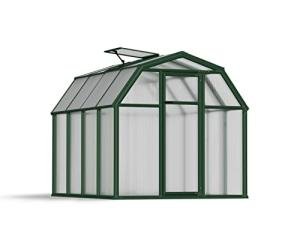
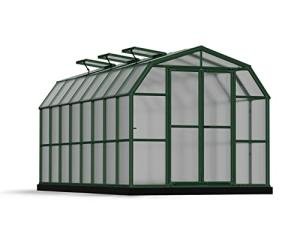
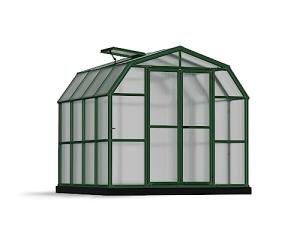
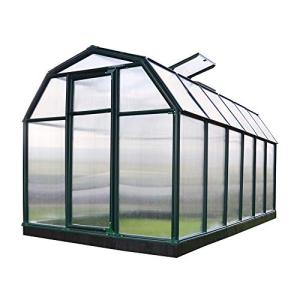
The Palram Canopia Harmony 6 x 8 ft. DIY Greenhouse Kit was built for exactly that gardener: the person who's serious enough about growing to invest in a dedicated space, but practical enough to want something they can assemble themselves on a Saturday afternoon without hiring a contractor or calling in favors. It's a greenhouse that sits in the sweet spot between beginner-friendly and genuinely capable — and in a crowded market full of flimsy pop-ups and outrageously priced custom builds, that's a harder balance to strike than it sounds.
Who Makes the Harmony — and Why It Matters
Palram is not a newcomer trying to ride the backyard gardening wave. The company has been manufacturing polycarbonate panels since 1963 and pivoted into the hobby greenhouse space decades before "grow your own" became a cultural moment. Their Canopia line represents the residential side of that expertise — purpose-built structures for home gardeners who want commercial-grade materials without commercial-grade complexity.
That history matters when you're evaluating a greenhouse. Polycarbonate panel quality varies enormously between manufacturers. A company that has been working with the material for over sixty years understands the nuances: how to treat the surface for UV resistance, how to engineer panels that won't yellow and craze after a few summers, how to build extrusion profiles that hold panels firmly without cracking them under thermal expansion. Palram's longevity in the space is not a marketing footnote — it's the reason their panels perform differently from cheap alternatives that look similar in product photos.
The Harmony series sits in the middle of Palram-Canopia's greenhouse lineup. It's more capable than entry-level pop-up structures and more accessible than their premium Glory or Balance series. For most home gardeners with a typical suburban or urban backyard, it hits the target precisely.
First Impressions: The Gray Frame and What It Signals
The gray aluminum frame on this particular Harmony variant is worth talking about, because it's more than an aesthetic choice. Gray reads as contemporary and architectural in a way that the traditional silver or green alternatives don't. It integrates well with modern composite decking, slate pathways, and dark-painted garden fencing — the kinds of backyard design choices that have become increasingly common over the last decade.
There's also a practical dimension. Darker frames absorb slightly more radiant heat during the day, which can help moderate interior temperatures in cooler climates during shoulder seasons. It's a modest effect, but for gardeners pushing their growing season into early spring or late autumn, every degree counts.
The clear polycarbonate panels are 0.8mm single-wall sheets — a specification that prioritizes maximum light transmission. These aren't the tinted or diffused panels you find on some competing models. Light comes through almost unimpeded, which is exactly what you want when you're trying to get seedlings going in March or keep herbs productive into November. The panels are 100% UV protected, meaning they block harmful ultraviolet radiation that would otherwise bleach and stress your plants — but they don't filter out the visible spectrum that drives photosynthesis.
The Dimensions: 48 Square Feet of Serious Growing Space
Six feet by eight feet. On paper, that's 48 square feet of footprint — enough for three or four modest growing benches, a central walkway, and room to actually turn around while carrying a tray of seedlings. In practice, it's the difference between a glorified cold frame and a functional growing room.
The ridge height on the Harmony reaches approximately 6 feet 10 inches at its apex, which is tall enough for most adults to stand comfortably upright throughout the interior. The eaves sit higher than many competing models in this size class, which matters more than people realize. High eaves mean more usable wall space for hanging baskets, trellising systems, and shelving — the interior volume expands in ways that the footprint alone doesn't capture.
For context: the 6x8 size is the most popular footprint in hobby greenhouse sales for good reason. It's large enough to be genuinely useful — you can realistically start hundreds of seedlings, overwinter tender perennials, grow a meaningful quantity of salad crops through winter, or maintain a year-round herb garden — but compact enough to fit into typical residential garden spaces without dominating the entire yard.
The Build: Aluminum Frame, Galvanized Steel Base, Polycarbonate Panels
The Frame
The extrusion-aluminum frame is the structural backbone of the Harmony, and it earns its billing as rust-resistant and maintenance-free. Aluminum doesn't corrode in the way steel does, which means the gray frame you install this spring will look the same in five years without any painting, sealing, or treatment on your part. That's not a trivial benefit for anyone who has watched a cheaper garden structure slowly deteriorate season by season.
The frame profiles are pre-drilled, meaning the holes for hardware are already machined at the factory. This eliminates one of the most frustrating elements of DIY construction: trying to drill precise holes through metal while simultaneously holding components in alignment. Pre-drilled profiles mean the assembly sequence is genuinely straightforward — a point that bears repeating because "easy to assemble" is a claim that many greenhouse kits make and few fully deliver on.
The Slide-and-Lock Panel System
This is where Palram's engineering experience becomes visible in ways you can actually feel during assembly. The polycarbonate panels don't require clips, clamps, or glazing tape to secure. They slide into pre-machined channels in the aluminum profiles and lock into position. Every panel profile is identical regardless of position, which means you don't need to spend time sorting or matching panels before installation begins.
The practical result is a glazing system that's wind-resistant without relying on external fasteners that can loosen or corrode over time. Panels are held from all four sides by the channel geometry itself — a fundamentally more reliable retention system than clip-based approaches.
The Galvanized Steel Base
The perimeter base deserves specific attention because it's often overlooked in greenhouse assessments. The galvanized steel base creates a rigid, rust-resistant foundation that serves three purposes simultaneously: it locks the frame into a precise rectangular geometry (preventing the racking that can cause doors to stick and panels to stress), it provides a stable interface between the structure and the ground, and it allows for secure anchoring to the surface below.
The base doesn't require a poured concrete foundation, though you can certainly use one if you prefer. It's designed to sit on a level, compacted surface — patio slabs, crushed gravel, compacted soil — and anchor points allow it to be secured against wind uplift through pegs driven into the ground or bolts into hard surfaces.
Ventilation: The Roof Vent and Why It Matters More Than You Think
Greenhouse ventilation is a topic that gets less attention than it deserves in product reviews, which is unfortunate because poor ventilation is responsible for more plant losses than almost any other factor in hobby greenhouse growing.
A sealed greenhouse in summer is not a growing environment — it's an oven. Even in spring and autumn, solar heat gain through clear polycarbonate panels can drive interior temperatures to plant-stressing levels faster than most first-time greenhouse owners anticipate. The Harmony addresses this with a manually adjustable roof vent that provides the primary ventilation path when open.
The roof position of the vent is important. Hot air rises, and a vent at the ridge allows the natural convective cycle to exhaust warm air while drawing cooler air in through the door. This passive ventilation can be surprisingly effective on mild days. For gardeners dealing with genuinely hot summers, the vent is the starting point — supplemented by opening the door and, for those who want to automate the process, an optional automatic vent opener that Palram sells as an accessory.
The hinged door features a magnetic catch that holds it open at whatever position you choose, giving you granular control over the cross-ventilation through the structure. The door is also lockable — a small but appreciated detail for anyone who keeps valuable plants or equipment inside.
The Built-In Gutter System: Water Harvesting Without Extra Hardware
Rainwater harvesting has moved from niche environmental practice to mainstream garden strategy as water costs rise and drought conditions become more common across North America. The Harmony's integrated gutter system routes rainwater that lands on the roof panels toward the structure's ends, where it can be directed into collection barrels.
This is a feature that typically costs extra on competing greenhouse kits — it requires additional hardware, planning, and installation effort. On the Harmony, it's built into the base architecture. The channels are integrated into the frame profiles, and the routing is handled by the same structural extrusions that support the panels. Nothing to add, nothing to seal, nothing that can work loose and dump water in the wrong direction.
For a 6x8 greenhouse, the roof surface area is substantial. Depending on your local rainfall, a properly set-up rainwater collection system could supply a significant portion of your greenhouse watering needs — reducing tap water consumption and providing plants with the slightly acidic, chlorine-free water they tend to prefer.
Assembly Experience: What to Actually Expect
Let's be honest about DIY greenhouse assembly, because the marketing language around it — "simple," "easy," "no special tools required" — has a way of smoothing over the reality that building a greenhouse is still a project that requires time, attention, and the ability to read instructions carefully.
The Harmony is genuinely easier to assemble than most competitors in its price range. The pre-drilled profiles, uniform panel sizing, and slide-and-lock system eliminate several points where assembly typically bogs down. The included step-by-step instructions are clear and logically sequenced.
Realistically, expect the assembly to take a full day for two people working at a comfortable pace. Having a second person isn't strictly mandatory, but it's strongly recommended for the roof and panel stages — holding components in alignment while simultaneously inserting fasteners is a two-person job that quickly becomes frustrating alone. No power tools are required, though a cordless drill with a screwdriver bit will meaningfully accelerate the process compared to working entirely by hand.
Site preparation is the step most often underestimated. The base must sit on a level surface. Not approximately level — actually level. A greenhouse frame that isn't plumb will fight you throughout assembly and result in doors that don't hang correctly and panels under stress. Spending an extra hour leveling and squaring your base before starting the frame will save multiple hours of frustration later.
Weather Resistance: What It Can Handle
The Harmony is rated to withstand wind speeds of up to 55 miles per hour and snow loads up to 15 pounds per square foot. These are honest, useful numbers — not theoretical engineering maximums but real-world conditions the structure is designed to handle when properly assembled and anchored.
The 55 mph wind rating covers a majority of residential storm conditions in most of the continental United States. It's not rated for hurricane conditions or severe straight-line winds, and any greenhouse buyer should plan accordingly if they're in a high-wind zone. Proper anchoring — using the available anchor kit and ensuring the base is secured to the ground — is essential for the wind rating to hold.
The snow load rating deserves careful attention for gardeners in northern climates. Fresh dry snow typically weighs around 5-7 pounds per cubic foot; wet, dense snow can exceed 20 pounds per cubic foot. The 15 lbs per square foot rating provides a reasonable margin for typical snowfall, but heavy accumulation events in areas like the Great Lakes region or mountain states may require manual clearing after significant storms.
Comparison Table: Palram Harmony 6x8 vs. Competing Models
| Feature | Palram Canopia Harmony 6x8 (Gray) | Palram Canopia Mythos 6x8 | Vitavia Venus 6x8 (Polycarbonate) | Generic Pop-Up Greenhouse 6x8 |
|---|---|---|---|---|
| Frame Material | Rust-resistant aluminum | Rust-resistant aluminum | Aluminum | Powder-coated steel |
| Glazing Type | 0.8mm clear polycarbonate | 4mm twin-wall polycarbonate | 4mm twin-wall polycarbonate | PE plastic film |
| Light Transmission | ~90% | ~70-80% | ~70-80% | ~60-70% |
| UV Protection | 100% | 100% | 100% | Partial |
| Base Included | Galvanized steel perimeter | Galvanized steel perimeter | Aluminum base plinth | Rope pegs only |
| Roof Vent | Manual, 1 vent | Manual, 1 vent | Manual, 1 vent | None |
| Gutter System | Built-in | Built-in | Optional extra | None |
| Door Style | Hinged, lockable, magnetic catch | Hinged, lockable | Sliding | Zipper panel |
| Panel System | Slide-and-lock, no clips needed | Slide-and-lock | Glazing clips | None (film) |
| Snow Load Rating | 15 lbs/sq ft | 15 lbs/sq ft | Not rated | Not rated |
| Wind Rating | 55 mph | 55 mph | ~50 mph | ~25 mph |
| Assembly Difficulty | Moderate (2 people, ~1 day) | Moderate (2 people, ~1 day) | Moderate | Easy (~2 hours) |
| Warranty | 5 years | 5 years | 5 years | 1 year or less |
| Lifespan (realistic) | 10-15+ years | 10-15+ years | 10-15+ years | 2-4 seasons |
| Expandable with Accessories | Yes — full Palram line | Yes — full Palram line | Yes — Vitavia line | No |
| Best For | Maximum light, mild-moderate climates | Year-round insulation, colder climates | Year-round growing, cold climates | Seasonal/temporary use |
Accessories Worth Considering
The Harmony doesn't exist in isolation — it's designed as the foundation of a growing system that can be built out over time as your needs and budget allow. Palram's accessory lineup is notably extensive and specifically engineered for compatibility with the Harmony frame.
Automatic Vent Opener (HG1005): A wax-cylinder actuator that opens the roof vent automatically when interior temperatures rise above a set threshold and closes it when temperatures drop. Eliminates the need to be home during hot days to manage temperature manually. Essential for gardeners who work away from home during peak growing hours.
Shade Cloth (HG1006): A mesh screen that clips to the interior of the greenhouse frame and reduces solar intensity during summer months. Prevents heat stress and leaf scorch on plants that need moderate rather than intense light.
Heavy Duty Shelf (HG1019): Steel shelving that attaches to the frame profiles and provides tiered growing space. A single unit supports up to 40kg — robust enough for terracotta pots and grow bags.
Drip Irrigation Kit (HG1023): A pressure-regulated drip system with lines, droppers, and a main supply connector. Manages watering consistently without daily manual intervention.
Anchor Kit: Secures the base to the ground through a combination of anchor stakes and connectors. Highly recommended for any installation in an exposed location.
Trellising Kit (HG1024): Roller hooks and clips that allow climbing crops — cucumbers, beans, small tomato varieties — to be suspended from the roof frame rather than from external supports.
Growing Possibilities: What You Can Actually Do Inside
A 6x8 greenhouse with a manually controlled vent and a lockable door represents a meaningful upgrade over outdoor-only growing in almost any climate. The practical implications break down by season:
Spring: Start seeds 6-8 weeks earlier than outdoor direct sowing would permit. Harden off seedlings progressively without exposure to late frosts. Get tomatoes, peppers, and cucumbers established well before they could survive outside.
Summer: Maintain a controlled environment for heat-sensitive crops that struggle with intense outdoor conditions. The shade cloth accessory extends the range of crops that can be grown productively through midsummer.
Autumn: Extend the productive season of summer crops — tomatoes can continue producing until temperatures that would kill an outdoor plant. Sow overwintering salad crops in September for continuous harvest.
Winter: Protect tender perennials, overwintering citrus, and Mediterranean herbs that can't survive outdoor winter conditions in most of North America. With a small supplemental heater, a frost-free environment for zone-pushing plants becomes achievable.
The Five-Year Warranty: What It Covers and What It Signals
Palram backs the Harmony with a five-year warranty — a significant commitment in a product category where one-year or even "limited lifetime" warranties often contain so many exclusions as to be functionally meaningless. The five-year coverage on the Harmony speaks to the company's confidence in the durability of the aluminum frame and polycarbonate glazing under normal use conditions.
The polycarbonate panels carry an additional specific guarantee against yellowing — a critical assurance for a material that degrades visibly when UV stabilization is inadequate. Cheap polycarbonate panels from unreputable sources become hazy and discolored within two or three seasons, reducing light transmission and creating an eyesore. Palram's UV treatment, developed over decades of panel manufacturing, maintains clarity over the warranty period and well beyond in normal conditions.
Who Should Buy the Harmony 6x8 — and Who Shouldn't
The Harmony 6x8 in gray is an excellent fit for:
- First-time greenhouse owners who want a structure that delivers a genuine growing upgrade without requiring contractor installation or engineering expertise
- Suburban gardeners with limited yard space who need a compact, aesthetically considered structure that doesn't dominate the garden
- Gardeners in USDA zones 6-9 who want to extend their season by several weeks on each end without needing heavy-duty insulation
- Seed starting enthusiasts who prioritize maximum light transmission for early-spring germination over year-round insulation
- Anyone who values long-term value over upfront price minimization — the Harmony is not the cheapest option, but it's built to last
The Harmony 6x8 is a less natural fit for:
- Gardeners in USDA zones 3-5 dealing with prolonged deep cold, who may benefit more from the twin-wall insulation of the Harmony's sibling, the Mythos, or a heated structure
- Those with very limited DIY experience who may find the assembly process daunting without some help — not a dealbreaker, but worth an honest self-assessment
- Gardeners needing significantly more space than 48 square feet — Palram's larger Harmony and Balance models scale up for those needs
The Verdict
The Palram Canopia Harmony 6 x 8 ft. Greenhouse Kit in gray frame and clear polycarbonate doesn't make extravagant promises. What it offers is something more valuable: reliable performance, thoughtful engineering, and a genuine upgrade to the growing possibilities of any residential garden.
The slide-and-lock panel system, pre-drilled profiles, galvanized steel base, and built-in guttering represent design choices made by people who have been building greenhouses long enough to understand where the friction points are and how to eliminate them. The clear polycarbonate maximizes the light that drives plant growth. The aluminum frame requires nothing from you in terms of maintenance. The five-year warranty means the company stands behind what it sells.
It will extend your season. It will protect your plants. It will give you a space to garden through conditions that would otherwise shut you down. And years from now, when it's still standing in your backyard looking much as it did on assembly day, you'll understand exactly why the Harmony has maintained its position as one of the most trusted structures in its category.
→ Check current pricing and availability on Amazon
Editorial note: This review is based on product specifications, manufacturer data, and aggregated user experience from multiple verified sources. As with any DIY structure, results will vary based on site conditions, assembly quality, and maintenance practices.