What You're Actually Getting: The Core Specs
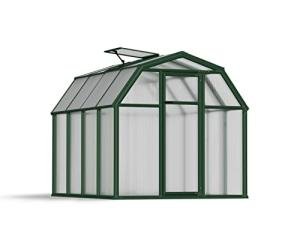
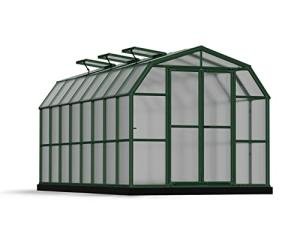
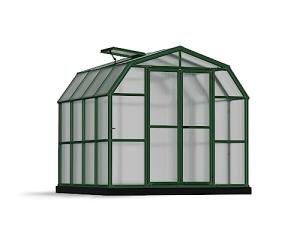
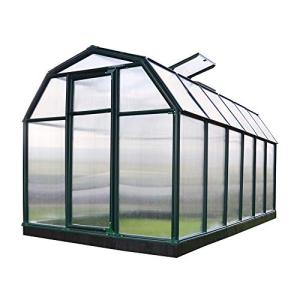
The Outsunny 8' x 6' model occupies a footprint of 8 feet long by 6 feet wide, with a peak height of approximately 7 feet — enough headroom for most adults to stand comfortably and move around without crouching. That 48-square-foot floor plan might sound modest on paper, but in practice it's enough to line both side walls with shelving, leave a central walking path, and still have meaningful growing space.
The frame is powder-coated aluminum, which matters for two reasons: it won't rust, and it stays relatively lightweight compared to steel alternatives. The panels are polycarbonate — the hollow-channel kind that lets diffused light through while providing a meaningful layer of insulation. These aren't glass-clear panels; they have a slightly frosted, corrugated appearance that scatters light evenly across plants rather than creating hot spots from direct sun exposure.
Key features included in the package:
- Twin-wall polycarbonate panels with UV-blocking coating (rated UV30u)
- Aluminum frame with powder coating for rust resistance
- Sliding door for walk-in access
- Adjustable roof vent for passive climate control
- Built-in rain gutters along the roofline
- Galvanized steel base for structural stability
- Assembly hardware included
The rain gutters are worth pausing on. They're not just decorative trim — they actively channel roof runoff into a collection point, which means you can attach a rain barrel and use natural rainwater for irrigation. For a product at this price point, that's a genuinely useful detail that not every competitor includes.
The Polycarbonate Advantage: Why This Panel Material Actually Matters
A lot of budget greenhouses use PE (polyethylene) film or simple plastic sheeting. They're cheap to manufacture and easy to ship, but they degrade fast under UV exposure, tear in high winds, and provide minimal insulation. If you've ever owned one of those pop-up fabric greenhouses, you know they're better described as "plant tents."
Polycarbonate is a different category entirely. The hollow twin-wall structure acts as a basic insulator — trapping a layer of air between the two surfaces — which keeps internal temperatures more stable than single-layer coverings. It transmits the spectrum of light plants need while the UV-blocking coating filters the wavelengths that cause leaf burn and heat stress.
The Outsunny panels, rated UV30u, are designed to diffuse rather than concentrate sunlight. This is particularly valuable during summer months when direct sunlight through clear glass can effectively cook tender plants. Diffused light reaches the lower leaves and shaded parts of plants more evenly, producing healthier, less leggy growth.
These panels are also shatterproof. Unlike glass greenhouses, where a stray branch, hailstone, or neighborhood baseball creates an immediate problem, polycarbonate absorbs impact. That alone makes it a practical choice for most residential settings.
Inside the Design: Smart Features and Practical Touches
The Sliding Door
The door design on this greenhouse gets more right than most at this price. A sliding mechanism means you don't need swing clearance in front of the entry — useful when the greenhouse is positioned close to a fence, wall, or raised bed. You can walk in carrying a tray of seedlings, a watering can, or a bag of soil without fighting with a door that swings outward into your face.
The door runs on a track system, which does require some attention to keep clean and functional. Dirt and debris in the track can cause sticking, so a quick brush-out every few weeks keeps it sliding smoothly. It's not a flaw so much as a maintenance habit.
The Roof Vent
Ventilation is arguably the most critical feature in any closed greenhouse structure. Without airflow, temperatures can spike fast on a sunny day — sometimes reaching levels that damage or kill plants. The Outsunny's adjustable roof vent is hinged at the top of the structure and can be propped open at varying angles to control how much air moves through.
This passive ventilation works well in mild to moderate heat. On extremely hot summer days, supplementing with a small clip-on fan inside the greenhouse can help move air more efficiently. The vent opening, while not huge, is sufficient for the 48-square-foot interior to maintain reasonable temperature range during most seasons.
One useful improvement owners often make is installing an automatic vent opener — a temperature-activated arm that props the vent open when the internal temperature rises above a set point and closes it as the temperature drops. These accessories are widely available for around $20-30 and pair well with this greenhouse's existing vent frame.
The Rain Gutter System
This is one of the Outsunny's most practically useful distinguishing features. Built into the roof's lower edge, the gutters channel rainwater to the corners of the structure. With a simple diverter and a rain barrel, this becomes a low-effort water harvesting system. A 32-square-foot roof in a region receiving average annual rainfall can theoretically collect hundreds of gallons over a growing season — water that would otherwise disappear into the soil or run off your property.
Even without a rain barrel setup, the gutters keep water from sheeting down the sides of the structure onto pathways, raised beds, or the base of adjacent plants.
Assembly: The Part Nobody Gets Excited About
Let's be honest about this. Assembly is the phase most owners dread, and Outsunny's instructions have received legitimate criticism from buyers who found them difficult to follow. The manual relies heavily on small diagrams, and the steps can feel ambiguous for first-time greenhouse builders.
The realistic expectation: two people, a full day, and a calm dry day to work in. Some owners with previous DIY experience report completing assembly in 4-6 hours; others without that background have reported longer timelines with frustration along the way.
The aluminum panels slot into guide channels in the frame. The system works, but requires patience — panels need to be properly aligned before securing, and rushing this phase is the primary cause of fitment issues. A few practical recommendations from experienced owners:
- Lay all parts out and group by type before starting
- Use an electric screwdriver rather than manual tools
- Have a helper present, particularly for raising and holding frame sections
- Watch installation videos on YouTube before opening the manual — third-party video walkthroughs often fill the gaps that the printed instructions leave open
The finished structure, once properly assembled and anchored, is more rigid than its lightweight components suggest. The powder-coated aluminum frame doesn't flex much, and the polycarbonate panels lock the geometry in place.
Anchoring is non-negotiable. The galvanized steel base that comes with the kit provides the mounting point, but you need to secure it to the ground — whether that's with ground anchors driven into soil, concrete footings, or a paver base. An unanchored polycarbonate greenhouse in moderate wind is a liability, and reviewers who skipped this step have uniformly regretted it.
What It's Best For (and What It's Not)
Where This Greenhouse Excels
Seed starting and propagation. The Outsunny's 48 square feet and controlled environment is well-suited to starting seeds 6-8 weeks before the last frost, letting you get a significant head start on the growing season without the risk of late cold snaps damaging young plants.
Overwintering tender perennials. Plants like fuchsias, agapanthus, geraniums, and succulents that won't survive a hard frost can be overwintered in this structure with minimal supplemental heating — a small electric propagator or heat mat is often sufficient.
Growing tropical or warm-season crops year-round. In USDA zones 7-9, this greenhouse can extend tomato, pepper, cucumber, and eggplant seasons significantly into fall and even through mild winters with minimal intervention.
Herb and salad growing through winter. Cold-tolerant herbs like parsley, cilantro, and chives, as well as winter salad greens, thrive in an unheated polycarbonate greenhouse through most of the year in temperate climates.
Where Its Limits Show
This is not a four-season greenhouse in cold climates. In USDA zones 5 and below, the single-wall polycarbonate provides limited insulation during sustained freezing temperatures. Supplemental heat is required to keep it functional through deep winter, which adds ongoing operating costs.
It's also not designed for heavy snow loads. Owners in regions with significant snowfall should plan to clear the roof after snowstorms to prevent structural stress — the lightweight aluminum frame isn't engineered for accumulation.
And while 48 square feet feels adequate for hobby growing, serious vegetable gardeners producing food at any scale will quickly find it restrictive. If feeding a household is the primary goal, stepping up to a 6'x10' or 8'x12' structure is worth the additional investment.
Comparison Table: Outsunny 8'x6' vs. Key Competitors
| Feature | Outsunny 8'x6' | Palram Canopia Hybrid 6'x8' | Juliana Compact 7.5'x7.5' | CABIHOME 6'x6' |
|---|---|---|---|---|
| Footprint | 8' x 6' (48 sq ft) | 6' x 8' (48 sq ft) | 7.5' x 7.5' (56 sq ft) | 6' x 6' (36 sq ft) |
| Frame Material | Powder-coated aluminum | Powder-coated aluminum | Aluminum | Aluminum |
| Panel Type | Single-wall polycarbonate | Twin-wall polycarbonate | 4mm twin-wall polycarbonate | Single-wall polycarbonate |
| Panel Thickness | ~4mm | 4mm roof / 6mm wall | 4mm | ~4mm |
| UV Protection | Yes (UV30u rated) | Yes (blocks 100% UV) | Yes | Yes |
| Light Transmission | ~75-80% | 90%+ (walls) | ~80% | ~75% |
| Roof Vent | 1 adjustable vent | 1 adjustable vent | 1-2 vents | 1 adjustable vent |
| Door Style | Sliding | Hinged with magnetic catch | Hinged, lockable | Sliding |
| Rain Gutters | Yes, built-in | Yes | Yes | No |
| Base Included | Galvanized steel base | Galvanized steel base | Galvanized steel | Basic frame base |
| Assembly Difficulty | Moderate (tricky instructions) | Moderate (pin-and-lock system) | Moderate-Hard | Moderate |
| Assembly Time | 4-8 hours (2 people) | 4-6 hours (2 people) | 6-10 hours (2 people) | 3-5 hours |
| Wind Resistance | Moderate (anchoring required) | Good (reinforced frame) | Good | Moderate |
| Price Range | ~$300-$450 | ~$600-$900 | ~$1,500-$2,500 | ~$250-$350 |
| Warranty | 1 year | 5 years | 5-10 years | 1 year |
| Best For | Budget hobby growing | Quality mid-range option | Premium long-term investment | Smallest spaces, tightest budgets |
The price gap between the Outsunny and the Palram Canopia Hybrid is significant and reflects real differences in panel quality, warranty length, and structural integrity. The Palram's twin-wall panels offer meaningfully better insulation and the 5-year warranty signals manufacturer confidence in the product's durability. But at roughly double the price, it represents a different budget tier entirely.
The Juliana and similar premium European greenhouse brands are in a category the Outsunny simply isn't competing with — they're engineered for decades of use, with component quality and structural ratings that justify the price for serious growers. Comparing the two is a bit like comparing a weekend hatchback to a Volvo.
For its actual price position, the Outsunny competes closely with the CABIHOME 6'x6' and several similar Chinese-manufactured aluminum-frame greenhouses that have proliferated on Amazon. The Outsunny differentiates itself with the rain gutters, the slightly larger footprint, and the sliding door — none of which the most basic competitors include.
Real-World Durability: The Honest Assessment
Polycarbonate greenhouses at this price point are not built to last decades. That's not a failing unique to Outsunny — it's a category reality. The aluminum is genuine and rust-resistant; the polycarbonate panels are adequate for their stated purpose. But the seals, the door hardware, and the overall fit-and-finish are at a budget level.
Most owners who anchor the structure properly, maintain the door track, and apply a bead of silicone along panel seams report solid performance over multiple growing seasons. Those who skip the anchoring or expect the structure to hold up in severe weather without preparation tend to have different experiences.
The polycarbonate panels will yellow slightly over the years as UV exposure accumulates, gradually reducing light transmission. This is a normal aging process and doesn't affect the structure's function significantly for 5-7 years under typical conditions. After that point, replacement panels are available if the frame remains solid.
One practical improvement that experienced owners consistently recommend: apply a thin bead of silicone caulk along the panel joints where the polycarbonate meets the aluminum frame. This prevents moisture infiltration, reduces wind rattle, and adds a meaningful amount of rigidity to the overall structure. It's a 30-minute task that pays dividends in longevity.
Who Should Buy This Greenhouse
The Outsunny 8'x6' makes strong sense for a specific kind of buyer: the home gardener who is serious enough about growing to want a permanent-feeling structure with real polycarbonate panels, but who isn't ready to spend $600 or more on a mid-range option from a brand like Palram.
It's a particularly good fit for gardeners in USDA zones 6-9, where the structure can deliver genuine four-season utility — seed starting in late winter, heat management in summer, frost protection in fall, and overwintering in mild winters — without requiring supplemental heating for most of the year.
It's also the right choice for someone who wants to test greenhouse gardening before committing to a more permanent or expensive installation. If you're not sure whether you'll actually use a greenhouse regularly, spending $350 rather than $900 to find out is reasonable risk management.
Conversely, it's probably not the right choice for gardeners in cold northern climates who need genuine four-season performance, for anyone who wants minimal assembly frustration, or for growers planning to use it intensively for more than five to seven years without being willing to maintain and patch the structure along the way.
Tips for Getting the Most Out of It
Set up on a level surface. The galvanized steel base needs a flat, level foundation. Concrete pavers are ideal — they provide drainage, a clean surface, and a simple anchoring base without requiring a poured slab.
Orient correctly. Position the greenhouse with the roof ridge running east-west and the door facing south (in the Northern Hemisphere). This maximizes solar exposure during winter when the sun is low, and lets you control airflow from the prevailing wind direction.
Add shelving. The interior has no fixed shelving, which is actually an advantage for customization. Freestanding wire shelving units that fit against the walls allow you to double or triple your growing capacity on vertical space.
Get a max-min thermometer. Knowing the actual temperature range inside the greenhouse on cold nights and hot days tells you when intervention is needed — whether that's cracking the vent, adding a heat mat, or setting up a small fan.
Consider a water butt. Connect the downspout from the rain gutter to a 50-100 gallon rain barrel nearby. Over a growing season, this quietly accumulates enough water to meaningfully supplement irrigation — particularly useful in summer dry spells.
Final Verdict
The Outsunny 8' x 6' Polycarbonate Greenhouse is genuinely useful garden infrastructure at a budget-accessible price point. It's not a forever structure, and it rewards owners who treat it with a degree of active maintenance — anchoring it properly, sealing the panel joints, clearing snow, and keeping the door track clean.
What it offers in return is real: a meaningful extension of the growing season, protection from weather extremes that would otherwise damage or kill plants, and a dedicated space where you can propagate, overwinter, and grow things that simply wouldn't survive your climate unprotected.
For a hobbyist gardener who wants a proper walk-in polycarbonate greenhouse without committing to premium pricing, this is one of the most capable options at its price. It's not the last greenhouse you'll ever buy — but it might be the one that proves to you that greenhouse gardening is worth pursuing for the long haul.
→ Check the current price and availability on Amazon here