What Exactly Are You Getting?
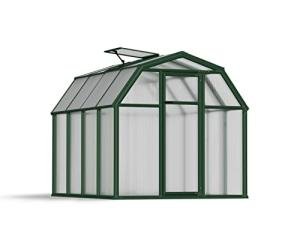
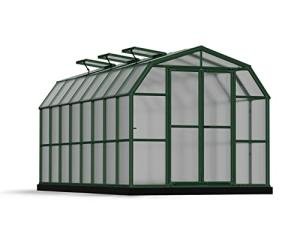
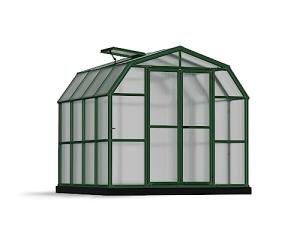
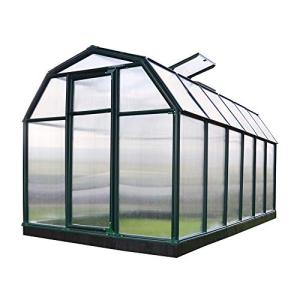
At its core, this is a 10-foot long by 6-foot wide walk-in greenhouse with an aluminum frame and 4mm twin-wall polycarbonate panels. The peak height comes in at approximately 6.4 feet, which is tall enough for most adults to stand comfortably inside without hunching. It includes a single roof vent for ventilation, integrated rain gutters along both sides, a hinged access door, and a galvanized steel base for ground-level reinforcement.
The footprint gives you roughly 60 square feet of protected growing space. That's enough room for several rows of potted plants, a modest raised bed setup, or a couple of sturdy shelving units loaded with seedling trays. It's not a commercial operation by any stretch — but for a dedicated home gardener, it's a genuinely useful amount of space.
Let's break down the individual components and what they mean for your day-to-day gardening life.
The Polycarbonate Panels — Why They Matter More Than You Think
If you've ever owned a cheap greenhouse with polyethylene sheeting, you already know the frustration. The plastic tears, clouds up within a season, and offers about as much insulation as a grocery bag. Polycarbonate is a fundamentally different material, and it's the single most important feature of this greenhouse.
The Outsunny uses 4mm twin-wall polycarbonate sheets. Twin-wall means there are two layers of polycarbonate with a hollow air channel between them. That air channel acts as a thermal buffer — it retains heat better than single-layer materials, which is exactly what you want when you're trying to extend your growing season into the cooler months. The panels allow approximately 90% light transmission while filtering out the harshest UV radiation, which protects your plants from sunscald without starving them of the energy they need for photosynthesis.
In practical terms, this means the interior stays warmer than the outside air on chilly mornings, and it stays slightly cooler than direct sun exposure on blazing afternoons. It's not climate-controlled — you're not running a lab here — but the natural temperature moderation that polycarbonate provides is substantial enough to make a real difference in how early you can start planting and how late you can keep harvesting.
The panels also don't shatter like glass. A stray baseball, a falling branch, or a chunk of hail might crack a polycarbonate panel, but it won't explode into dangerous shards. That's a safety advantage worth mentioning, especially if you have kids or pets roaming the yard.
Aluminum Frame — Lightweight but Durable
The structural skeleton of this greenhouse is powder-coated aluminum. Aluminum has three big advantages for outdoor structures: it doesn't rust, it's relatively light (making assembly less back-breaking), and it's strong enough to hold the panels securely under normal weather conditions.
The powder coating adds an extra layer of corrosion resistance, which matters in humid climates or areas with heavy rainfall. Outsunny also includes a galvanized steel base frame that sits at ground level and provides a solid anchor point for the entire structure. This base is really the foundation of the whole build, and it's one of the features that separates this model from some cheaper competitors that expect you to bolt the frame directly into a patio or build your own foundation.
That said — and this is worth being very direct about — aluminum is not steel. It's not going to stand up to severe storm winds or heavy snow loads the way a commercial-grade steel-framed greenhouse would. The manufacturer's rated wind resistance is 12 m/s (about 27 mph), and the weight capacity is roughly 8 pounds per square foot. That's fine for moderate climates, but if you live somewhere that regularly sees blizzards, ice storms, or hurricane-force gusts, you'll either need to reinforce the structure significantly or accept that it may not survive those conditions.
Ventilation — The Roof Vent That Does More Than You'd Expect
Heat management is one of the trickiest parts of greenhouse gardening. On a sunny spring day, even when the outside temperature is a mild 60°F, the interior of an enclosed greenhouse can climb past 100°F in a hurry. Plants don't thrive in that kind of heat — they cook.
The Outsunny addresses this with an adjustable roof vent positioned at the peak of the structure. It's a simple hinged panel that you can prop open to various angles, allowing hot air to escape naturally through convection. Hot air rises, hits the open vent, and exits — while cooler air gets drawn in through the door or any gaps at the base.
One vent is adequate for a 60-square-foot greenhouse, but just barely. If you live in a particularly hot climate, you may want to supplement it by propping the door open during the warmest parts of the day. Some experienced greenhouse owners also install small solar-powered fans to improve air circulation — an easy and affordable upgrade that pairs well with this structure.
The vent also plays a role in humidity control. Excess moisture inside a greenhouse can lead to mold, mildew, and fungal diseases that devastate plants faster than almost any pest. Being able to crack the vent open even slightly lets moisture escape, keeping the internal environment closer to the sweet spot that most vegetables and herbs prefer.
Rain Gutters — A Surprisingly Smart Feature
Here's a feature that a lot of buyers overlook when they're comparing spec sheets: integrated rain gutters. Both sides of the greenhouse have built-in channels that collect rainwater as it runs off the angled roof. You can attach a hose or direct the flow into a rain barrel, giving you a free and sustainable water source for your plants.
In practice, this is both environmentally smart and genuinely useful. Rainwater is slightly acidic and free of the chlorine and fluoride found in most municipal water supplies — many plants actually prefer it. Over the course of a rainy season, the amount of water you can collect from 60 square feet of roof surface is significant enough to reduce your water bill in a measurable way.
The gutters also serve a structural purpose: they channel water away from the base of the greenhouse instead of letting it pool around the foundation. Standing water at the base leads to erosion, mud, and eventually compromises the stability of any ground-anchored structure.
Assembly — Let's Be Honest About This Part
No editorial review of a greenhouse would be complete without addressing assembly, because this is where most buyer frustration lives. And the Outsunny 10' x 6' is no exception.
The good news: the aluminum frame uses a bolt-together design, and the polycarbonate panels slide into channels along the frame members. An Allen wrench is included, and the instruction manual walks you through the process with diagrams. If you've ever assembled flat-pack furniture, the basic concept will feel familiar.
The not-so-good news: this is a 4 to 8 hour project, depending on your experience level and whether you have a helper. The polycarbonate panels have protective films on both sides that must be peeled off before installation — tedious but necessary. Some of the aluminum pieces look similar enough that it's easy to grab the wrong one if you haven't organized everything carefully beforehand. And the manual, while functional, isn't going to win any awards for clarity.
The best approach is to unpack everything, sort all the parts by type and label, lay them out on a flat surface, and recruit at least one other person to help. An electric drill will speed things up considerably compared to the included Allen wrench. And when you're done, consider running a bead of silicone caulk along the panel edges — it improves insulation and makes the whole structure more weather-tight.
Who Is This Greenhouse Actually For?
This is a mid-range greenhouse designed for home gardeners who want something more permanent and capable than a pop-up tent greenhouse, but who aren't ready to invest in a full commercial setup. It's a strong fit for several specific use cases.
Seed starting and transplant hardening. Starting seeds indoors under grow lights and then moving them into the greenhouse a few weeks before the last frost date is one of the most effective ways to extend your season. The controlled environment lets seedlings acclimate gradually instead of getting shocked by outdoor conditions.
Growing heat-loving crops in cooler climates. Tomatoes, peppers, cucumbers, and eggplant all benefit enormously from the extra warmth a greenhouse provides. If your outdoor season is too short for these crops to fully ripen, a greenhouse can add the weeks you need.
Overwintering tender plants. Got a collection of potted herbs, citrus trees, or tropical plants that can't survive freezing temperatures? The greenhouse gives them a protected home through the colder months without taking up space inside your house.
Year-round hobby gardening. Some people simply love tending plants regardless of the season. A greenhouse gives you a dedicated space to garden when everyone else's beds are dormant.
Comparison Table — How the Outsunny 10' x 6' Stacks Up
Here's how this model compares to other popular greenhouse options in a similar size and price range:
| Feature | Outsunny 10' x 6' | Outsunny 6' x 6' | EAGLE PEAK 8' x 6' Pop-Up | Palram Mythos 6' x 10' |
|---|---|---|---|---|
| Dimensions | 10'L x 6'W x 6.4'H | 6'L x 6'W x 7'H | 8'L x 6'W x 6.6'H | 6'L x 10'W x 7.1'H |
| Growing Area | ~60 sq ft | ~36 sq ft | ~48 sq ft | ~60 sq ft |
| Frame Material | Powder-coated aluminum | Powder-coated aluminum | Steel | Rust-resistant aluminum |
| Panel Material | 4mm twin-wall polycarbonate | 4mm twin-wall polycarbonate | PE cover (polyethylene) | 4mm twin-wall polycarbonate |
| Roof Vent | 1 adjustable vent | 1 adjustable vent | Roll-up windows | 1 adjustable vent |
| Door Type | Hinged door | Sliding door | Roll-up zipper door | Hinged door |
| Rain Gutters | Yes | Yes | No | Yes |
| Base Frame Included | Yes (galvanized steel) | Yes (galvanized steel) | No | Yes (galvanized steel) |
| UV Protection | Yes (blocks UV, 90% light) | Yes (blocks UV, 90% light) | Partial UV filtering | Yes (blocks UV) |
| Insulation | Good (twin-wall air gap) | Good (twin-wall air gap) | Poor (single-layer PE) | Good (twin-wall air gap) |
| Wind Resistance | ~27 mph (12 m/s) | ~27 mph (12 m/s) | Low (requires anchoring) | Moderate |
| Assembly Time | 4–8 hours | 3–5 hours | Under 1 hour | 4–8 hours |
| Best For | Serious home gardeners needing space | Small gardens, beginners | Temporary / seasonal use | Year-round growing, colder climates |
| Durability | Good for moderate climates | Good for moderate climates | Low – seasonal only | Very good |
| Price Range | $$ | $ | $ | $$$ |
A few things jump out from this comparison. The EAGLE PEAK pop-up is cheaper and wildly easier to set up, but it's a completely different class of product — a temporary seasonal cover, not a permanent structure. It won't keep plants alive through winter and it certainly won't handle any serious weather. The Outsunny 6' x 6' is the same build quality in a smaller package, making it better for tight spaces but noticeably less versatile. The Palram Mythos is the closest true competitor — it's a well-regarded brand with similar materials and a slightly more robust reputation — but it typically costs a fair amount more.
The Outsunny 10' x 6' occupies a sweet spot: real polycarbonate construction, enough square footage to be genuinely useful, and a price that doesn't require a second mortgage.
What Could Be Better — An Honest Assessment
No product is perfect, and the Outsunny 10' x 6' has real limitations worth addressing before you buy.
Single vent limitation. One roof vent works, but a second vent or a sidewall vent would dramatically improve airflow. In hot climates, you'll almost certainly need to supplement ventilation on your own.
Assembly documentation. The instruction manual is functional but frustrating. Parts labeling could be better, and the diagrams don't always make the step-by-step sequence as clear as it should be. Budget extra time and patience.
Wind vulnerability. At 27 mph rated wind resistance, this greenhouse needs to be positioned thoughtfully. Placing it against a wall or fence on the windward side of your property is strongly recommended. In exposed locations, you may need to add additional anchoring beyond what the base frame provides.
Height at the eaves. While the peak height is about 6.4 feet, the side walls are lower. If you're tall, you'll be comfortable in the center aisle but may need to duck near the edges. This also limits the height of shelving units you can place along the side walls.
No automatic vent opener. Many competing greenhouses in higher price brackets include automatic vent openers that respond to temperature changes. The Outsunny requires you to manually adjust the vent, which means if you're away on a hot day, temperatures inside can spike.
Tips for Getting the Most Out of This Greenhouse
Once you've got it assembled and your plants are in, there are a few strategies that will help you maximize what this greenhouse can do.
Add thermal mass. Place a few large, dark-colored containers of water inside the greenhouse. They'll absorb heat during the day and radiate it slowly at night, helping moderate temperature swings. This is an old-school greenhouse trick that works surprisingly well.
Use the rain gutters actively. Connect a rain barrel to the gutter downspouts. Over a season, you'll collect more water than you'd expect, and your plants will prefer the rainwater over what comes out of the tap.
Install a min/max thermometer. Knowing the daily high and low temperatures inside your greenhouse gives you critical data for deciding when it's safe to move tender plants in or out.
Seal the panels. After assembly, run silicone caulk along the panel edges and at any joints where you see gaps. This dramatically improves heat retention and keeps insects from finding their way in through tiny openings.
Consider a small fan. A battery-operated or solar-powered circulation fan placed near the bottom of the greenhouse helps distribute warm air more evenly and prevents cold pockets from forming at ground level.
Is the Outsunny 10' x 6' Worth Buying?
Here's where things get straightforward. If you're a home gardener who wants a permanent, functional greenhouse without spending a fortune, the Outsunny 10' x 6' delivers solid value. The polycarbonate panels provide real insulation and UV protection, the aluminum frame is durable enough for moderate climates, and the overall design — with its rain gutters, roof vent, and walk-in dimensions — is thoughtfully put together for the price point.
It's not a professional-grade structure. It won't survive a blizzard without help. The assembly will test your patience. But once it's standing and planted, it does exactly what a home greenhouse is supposed to do: it gives you control over your growing environment, extends your season on both ends of the calendar, and protects your plants from the unpredictable mood swings of outdoor weather.
For the gardener who's been staring out the window in March, itching to get their hands in the dirt weeks before the last frost — this greenhouse is the thing that makes that possible.
Check the current price and availability of the Outsunny 10' x 6' Greenhouse on Amazon
Frequently Asked Questions
Can this greenhouse handle snow? It can handle light dustings and brief accumulations, but it's not engineered for heavy snow loads. If you live in a region with significant snowfall, you'll want to brush off the roof after storms or consider building a temporary A-frame support inside during winter months.
Does it come with shelving? No. The interior is an open space, which actually works in your favor — it means you can customize the layout exactly how you want it. Many owners add freestanding wire shelving units, potting benches, or even small raised beds inside.
Can I anchor it to concrete? Yes. The galvanized steel base frame has holes that allow you to bolt it down to a concrete pad, paver patio, or even a wooden deck. If you're placing it on bare ground, ground anchors or stakes driven through the base frame into the soil will provide stability.
Is it truly walk-in? Yes, with a caveat. The peak height of about 6.4 feet is comfortable for most people, but if you're over six feet tall, you'll notice the eave height drops near the side walls. The central aisle is where you'll have the most headroom.
How long does it last? With proper maintenance — keeping the gutters clear, occasionally tightening bolts, and resealing panels with silicone as needed — owners report getting multiple years of solid use from this greenhouse. The polycarbonate panels won't yellow or degrade the way polyethylene covers do, which is one of the key longevity advantages of this design.