What Exactly Are You Getting?
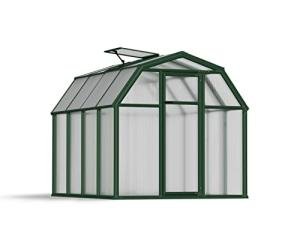
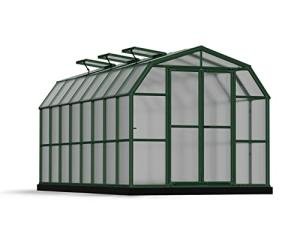
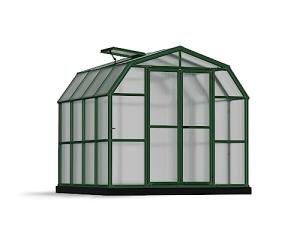
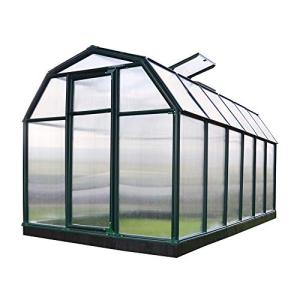
At its core, this is a walk-in greenhouse measuring 14 feet long, 9.5 feet wide, and 9 feet tall at its peak, with 6-foot-tall straight walls. That combination matters more than most people realize. A lot of greenhouse kits on the market advertise impressive peak heights but give you sloped walls that make it impossible to stand upright near the edges. With 6-foot vertical walls, the Jocisland provides usable space from edge to edge — not just in the center aisle.
The total interior volume comes in at roughly 850 cubic feet. That's enough room for multiple raised beds, shelving systems, potting stations, and even a small seating area if you're the type who likes to enjoy morning coffee surrounded by greenery.
The frame is constructed from aluminum — rust-resistant, lightweight, and strong enough to support a 1,000-pound load capacity. Four thickened corner posts anchor the structure, and the kit includes ground stakes for securing it to soil or concrete. The roof features a distinctive spear-like peak design, which serves a dual purpose: it sheds rain and snow efficiently while discouraging birds from perching and leaving unwelcome deposits on your panels.
The Clear Panel Advantage
Here's where this particular model gets interesting. Unlike many greenhouse kits that use exclusively twin-wall translucent polycarbonate throughout, the Jocisland employs a hybrid panel design. The roof uses 6mm twin-wall translucent polycarbonate — the industry standard for insulation and durability — while the side panels are clear, unbroken polycarbonate sheets that give you actual visibility into and out of the greenhouse.
Why does that matter? Twin-wall polycarbonate is excellent for diffusing light and retaining heat, but it's essentially frosted. You can't see through it clearly. For many growers, that's perfectly fine. But if you want to monitor your plants from outside, showcase your collection, or simply enjoy the aesthetic of a greenhouse that feels open and bright rather than enclosed and opaque, clear side panels make a meaningful difference.
The clear panels still provide impact resistance and UV protection, so you're not sacrificing durability for visibility. It's a thoughtful design choice that separates this model from many competitors in the same price range.
Weather Performance: Built to Take a Hit
One of the first questions any serious buyer should ask about a greenhouse kit is: what happens when the weather turns ugly? This is where a lot of budget greenhouses reveal their weaknesses. Thin frames buckle under snow. Plastic film tears in the wind. Flimsy panels pop out during storms.
The Jocisland is rated for winds up to 56 mph and carries a snow load capacity of 18 pounds per square foot. Those aren't extraordinary numbers — a commercial-grade greenhouse would exceed them significantly — but for a residential backyard setup, they're solid. They mean this structure can handle a typical Midwestern thunderstorm, a moderate snowfall, and sustained spring winds without giving you anxiety every time the forecast looks rough.
The aluminum frame's corrosion resistance is a genuine advantage over steel-frame competitors, which can rust at joints and fasteners within a couple of seasons if not carefully maintained. Aluminum won't do that. It holds up in humid greenhouse conditions where moisture is constantly in the air.
Ventilation and Drainage: The Details That Matter
Airflow is the silent killer of greenhouse success. Too little ventilation leads to excessive humidity, which invites mold, mildew, and fungal diseases that can devastate a crop overnight. The Jocisland includes two ventilation windows positioned to create cross-airflow — not a luxury feature, but a fundamental necessity that some competing models inexplicably omit.
On the drainage side, the greenhouse incorporates plastic gutter-style drainage systems designed to channel rainwater away from the foundation and, if you're resourceful, into collection barrels. Rainwater harvesting from a greenhouse roof is one of those small wins that adds up over time, and having the drainage infrastructure already built in makes that remarkably easy to set up.
The Double Door Design
The entrance features double doors with hooks — a practical detail that's easy to overlook until you're trying to wheel a loaded garden cart through a single-width doorway. Double doors give you clearance to move large pots, bags of soil, or even small equipment in and out without the awkward maneuvering that plagues smaller greenhouses.
The 6-foot door height means most adults can walk through without ducking, which sounds trivial until you've spent a season hunching through a low-clearance doorway forty times a day and feel it in your back.
Assembly: The Honest Truth
Let's not sugarcoat this. Assembling a greenhouse this size is a project. Jocisland estimates that a team of three people can complete the build in about 10 hours, and that tracks with what experienced DIYers typically report for structures in this size class. Step-by-step instructions and an installation video are included, which helps, but this is not a Saturday-afternoon-with-a-beer kind of project.
The greenhouse ships in three separate boxes, which may arrive at different times. That's worth noting so you're not panicking when only two boxes show up on day one. Wait for all three before you start.
A few practical assembly tips based on common feedback from this category of greenhouses: build on the flattest ground you can find, keep all screws loose during initial assembly so you can adjust alignment before locking everything down, and wear gloves — aluminum frame edges can be sharp. The manufacturer recommends building a 15 x 10.5 foot foundation, which gives you a slight overhang for stability and drainage clearance.
Who Is This Greenhouse Really For?
This is a greenhouse designed for the committed home gardener — someone who has outgrown small pop-up shelters and portable cold frames but doesn't need (or can't justify) a commercial-grade structure costing five figures. It's ideal for year-round growing in moderate climates, season extension in colder zones, and creating a dedicated space for starting seedlings, growing tropical plants, or cultivating vegetables that need consistent warmth.
The 850-cubic-foot interior is spacious enough that some owners repurpose it as a dual-use space — part greenhouse, part sunroom — by adding a small table and chairs alongside the grow beds. It's the kind of versatility you don't get from a cramped 6x8 kit.
How It Stacks Up: Comparison Table
Choosing a greenhouse is easier when you can see how the key specs compare side by side. Here's how the Jocisland 14x9.5x9 measures up against some popular alternatives in its category:
| Feature | Jocisland 14x9.5x9 (Clear Panels) | Palram Canopia Triomphe 12x15 | CDCASA 24x10x10 | Generic 10x12 Aluminum Kit |
|---|---|---|---|---|
| Dimensions | 14 x 9.5 x 9 ft | 12 x 15 ft | 24 x 10 x 10 ft | 10 x 12 x 8.5 ft |
| Wall Height | 6 ft | ~5.5 ft | ~6 ft | ~5 ft |
| Interior Volume | 850 cu ft | ~750 cu ft | ~1,400 cu ft | ~550 cu ft |
| Frame Material | Aluminum (rust-resistant) | Aluminum | Aluminum | Aluminum |
| Panel Type | Hybrid: 6mm twin-wall roof + clear PC sides | 6mm twin-wall throughout | 4mm twin-wall throughout | 4mm twin-wall throughout |
| UV Protection | 99.99% | Yes (UV-treated) | Yes (UV-treated) | Varies by brand |
| Wind Rating | 56 mph | ~50 mph | ~45 mph | ~35-45 mph |
| Snow Load | 18 psf | ~15 psf | ~12 psf | ~10 psf |
| Weight Capacity | 1,000 lbs | Not specified | Not specified | Not specified |
| Ventilation | 2 roof vents | 1 roof vent | 2 roof vents | 1 roof vent |
| Doors | Double doors with hooks | Single hinged door | Double sliding doors | Single hinged door |
| Drainage System | Built-in plastic gutters | Rain gutters included | Basic gutters | None included |
| Assembly Time | ~10 hours (3 people) | ~8 hours (2 people) | ~14 hours (3+ people) | ~6 hours (2 people) |
| Foundation Recommended | 15 x 10.5 ft | Flat level surface | Concrete slab | Level ground |
| Best For | Serious hobbyists wanting visibility + durability | Premium all-around growing | Maximum growing space | Budget-conscious beginners |
| Price Range | Mid-range | Higher-end | Mid-to-high range | Budget |
A few things jump out from this comparison. The hybrid panel design is genuinely uncommon at this price point — most competitors use the same twin-wall polycarbonate everywhere, which means you're growing inside what essentially looks like a frosted box. The Jocisland's clear sides are a legitimate differentiator for anyone who values natural light quality and visual connection with their garden.
The wind and snow ratings are also competitive. A 56 mph wind rating and 18 psf snow load put it at or above most residential kits in the same size class. That's not going to satisfy someone in a hurricane zone, but for the vast majority of U.S. backyards, it provides adequate weather resilience.
The Polycarbonate Question: Why Not Glass?
If you're coming from a glass greenhouse tradition — or if you've admired those beautiful Victorian-style glasshouses in gardening magazines — you might wonder why polycarbonate has become the dominant material for residential kits.
The short answer is that polycarbonate does almost everything better for the average home grower. Twin-wall polycarbonate panels offer significantly better insulation than single-pane glass, reducing heating costs by 30-50% in cold climates. Polycarbonate is virtually shatterproof — roughly 200 times more impact-resistant than glass — which means hail, stray baseballs, and falling branches aren't catastrophic events. It's also lighter, which makes assembly more manageable and puts less stress on the frame.
The one area where glass wins is optical clarity. If you want crystal-clear, undistorted views of your plants, glass delivers that. But the Jocisland's hybrid approach — using clear polycarbonate on the sides — bridges much of that gap without giving up polycarbonate's practical advantages.
Polycarbonate panels also diffuse light naturally, spreading it more evenly across the growing space and eliminating the harsh hot spots that direct-transmitting glass can create. For plant health, diffused light is generally superior, promoting more uniform growth and reducing the risk of leaf scorch.
Long-Term Considerations
A greenhouse is a multi-year investment, so it's worth thinking beyond the first season. Quality polycarbonate panels with UV protection typically last 10-15 years before showing significant degradation. Aluminum frames can last 20 years or more with minimal maintenance. The main enemies of longevity are improper installation (which causes stress fractures and panel failures) and neglected drainage (which leads to water pooling and frame corrosion at joints).
Regular cleaning with mild soap and water, occasional inspection of fasteners and seals, and clearing snow buildup promptly are about all the maintenance this type of greenhouse requires. It's not zero-maintenance, but it's far less demanding than glass, which needs careful handling, or plastic film, which typically needs full replacement every two to four years.
A Few Things to Keep in Mind
No product is perfect, and transparency matters more than cheerleading. Here are a few realistic considerations:
The 56 mph wind rating means this greenhouse should be properly anchored and ideally placed in a somewhat sheltered location if you live in a wind-prone area. An open hilltop with no windbreak isn't the ideal site.
Assembly is a genuine commitment. If you're not comfortable with multi-hour construction projects involving many small parts, consider hiring help or enlisting experienced friends. Misalignment issues — the most common assembly complaint across this entire product category — almost always stem from uneven ground or tightening screws too early.
Three separate shipping boxes mean you need patience and storage space while waiting for everything to arrive. Don't begin building until you have all components confirmed and accounted for.
Finally, while the built-in ventilation is adequate for moderate climates, growers in consistently hot regions may want to supplement with additional fans or consider adding shade cloth during peak summer months.
The Bottom Line
The Jocisland 14x9.5x9 FT Polycarbonate Greenhouse with Clear Panels occupies a very appealing middle ground in the residential greenhouse market. It's large enough to support serious growing ambitions, engineered with materials that justify confidence in its durability, and designed with practical features — hybrid panels, double doors, built-in drainage, dual vents — that demonstrate actual thought about how a greenhouse gets used day to day.
It's not a professional-grade commercial structure, and it doesn't pretend to be one. What it is, genuinely, is one of the more compelling options available for home gardeners who want a real greenhouse — not a glorified tent — without crossing into premium pricing territory.
If your growing ambitions have been limited by space, weather, or both, this is the kind of structure that changes the equation. A proper greenhouse doesn't just extend your season. It expands what's possible. And at 850 cubic feet of climate-controlled growing space, the possibilities here are substantial.
Prices and availability are subject to change. Always verify current pricing and specifications on the product listing before purchasing.