Why the Right Animal Shelter Matters More Than You Think
Most pet owners underestimate how much an animal's outdoor environment affects their physical and mental wellbeing. Dogs that spend time outside without adequate shelter are more prone to hypothermia in winter and heat exhaustion in summer. Chickens without proper coops are vulnerable to predators and respiratory issues caused by damp or poorly ventilated conditions. Rabbits, despite their fluffy appearances, are actually quite sensitive to both extreme cold and direct sun exposure.
A well-designed shelter does several things at once. It regulates temperature, shields against wind and rain, offers a sense of security, and provides a defined territory that reduces anxiety in instinct-driven animals. That last point often goes unappreciated — many animals are calmer, less destructive, and easier to manage when they have a dedicated space that belongs to them.
Beyond animal welfare, the right shelter also makes your life easier. Durable, easy-to-clean enclosures reduce maintenance time. Properly ventilated coops and kennels cut down on odor. Modular and expandable designs mean you're not buying a new structure every time your flock or pack grows.
Types of Animal Shelters: Matching the Structure to the Animal
Not all shelters are created equal, and the type you need depends heavily on the species, the climate you live in, and how the animal spends its time.
Dog Houses and Outdoor Kennels
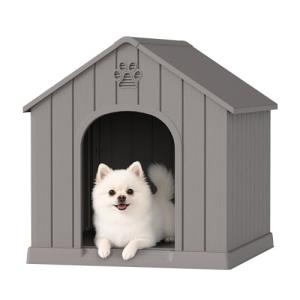
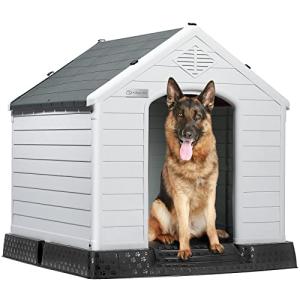
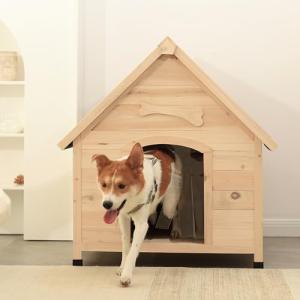
Dog houses remain one of the most popular animal shelter categories, and for good reason — they're versatile, come in dozens of styles, and can suit everything from a tiny Chihuahua to a large Great Dane. The basic dog house has evolved considerably from the classic wooden A-frame of decades past. Today's options include insulated plastic models, cedar wood construction with raised floors, and even thermally efficient panel-based designs that maintain interior temperatures without electricity.
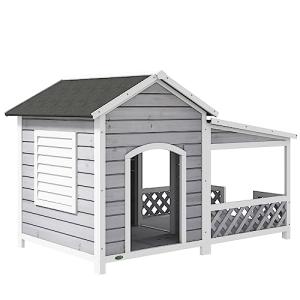
Kennels take things a step further by providing a fully enclosed run where dogs can move around freely while remaining safely contained. These are particularly useful for working dogs, dogs with high energy levels, or households where the yard isn't fully fenced. Good kennels feature secure latching mechanisms, adequate roof coverage, and floors that drain well to prevent moisture buildup.
Chicken Coops and Poultry Enclosures
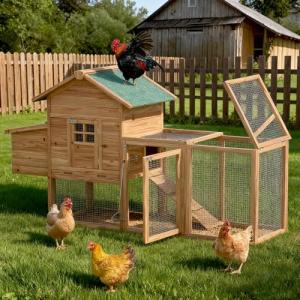
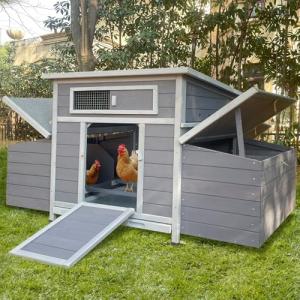
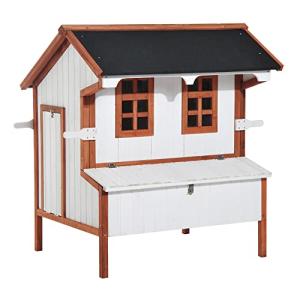
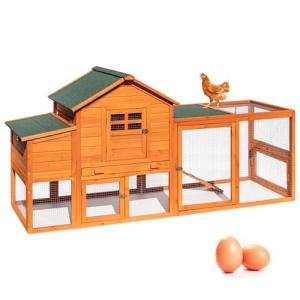
The chicken coop category has exploded in popularity alongside the backyard poultry movement, and the range of products available today is genuinely impressive. Small urban coops designed for three to five hens sit at one end of the spectrum, featuring compact footprints, built-in nesting boxes, and sliding doors for easy egg collection. At the other end, large walk-in coops and poultry houses can accommodate flocks of twenty, thirty, or more birds, often with separate roosting and laying areas, external egg access doors, and predator-proof hardware cloth rather than standard chicken wire.
Ventilation is the single most important feature in a coop. Chickens produce a lot of moisture through respiration, and without adequate airflow, that moisture leads to frostbite in winter and respiratory disease year-round. Look for coops with adjustable vents near the roofline that allow warm, moist air to escape without creating drafts at bird level.
Rabbit Hutches and Small Animal Shelters
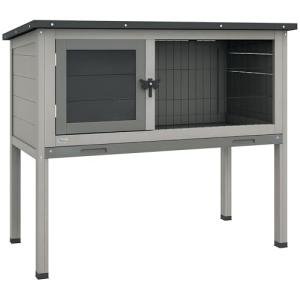
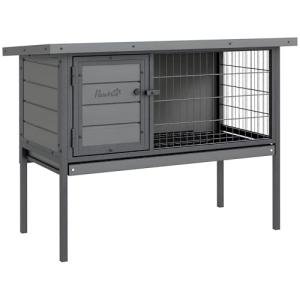
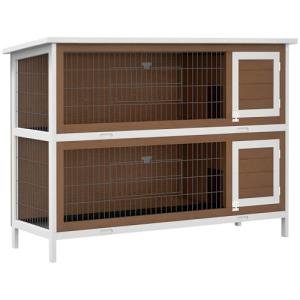
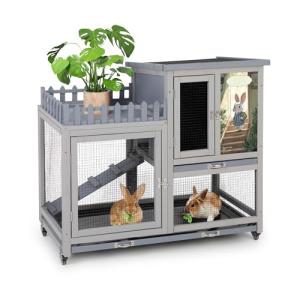
Rabbits, guinea pigs, ferrets, and similar small animals have their own category of shelters, and the needs here differ meaningfully from dogs or poultry. Rabbits need shelter that protects from drafts and direct sun but doesn't trap heat — they're actually more susceptible to heatstroke than to cold. Multi-level hutches are popular because they provide separate areas for sleeping, eating, and moving around, which keeps rabbits mentally stimulated and physically active.
Flooring deserves special attention in small animal shelters. Wire mesh flooring, while easy to clean, can cause sore hocks in rabbits over time. Better designs include solid wood sections, removable trays, or plastic-coated mesh that's gentler on feet.
Feral and Community Cat Shelters
Outdoor and feral cat shelters represent a category that's grown significantly as trap-neuter-return programs have expanded. These shelters are typically compact, insulated, and designed to be weatherproof without being large enough to trap heat. Styrofoam-lined wooden boxes, heavy-duty plastic igloo-style shelters, and custom-built insulated cabins all serve this niche well. The key requirements are a small entrance hole (around four inches) that retains heat and deters larger predators, moisture-resistant bedding materials, and placement that shields the entrance from prevailing winds.
Livestock and Farm Animal Shelters
At the larger end of the spectrum, shelters for goats, sheep, pigs, horses, and cattle are typically more utilitarian in design but no less important in function. Three-sided run-in sheds are a staple of small-scale farming — they provide protection from rain and wind while remaining open enough for animals to come and go freely. Properly sized run-ins reduce the likelihood of fighting over space, allow weaker animals to escape more dominant ones, and keep bedding drier than fully enclosed barns in many climates.
Key Features to Look for in Any Animal Shelter
Regardless of which type of shelter you're buying, several features apply broadly and are worth evaluating carefully before you commit.
Materials and Durability
Shelters are made from wood, plastic, metal, or combinations of all three. Each has trade-offs. Wood is naturally insulating, aesthetically pleasing, and structurally robust, but requires more maintenance — painting, sealing, and occasional treatment against rot and insects. Cedar and redwood are naturally resistant to decay and are worth the extra cost if the shelter will live outside year-round.
Plastic shelters are low-maintenance, easy to clean, and don't rot or splinter, but they can crack in very cold temperatures and don't insulate as naturally as wood. Look for UV-stabilized plastics that won't become brittle after years of sun exposure. Metal kennels and runs offer the best security and predator resistance, but metal can heat up dangerously in summer if not shaded, and it transfers cold in winter.
Insulation and Temperature Regulation
If your climate has genuine winters, insulation is non-negotiable for most animals. Look for shelters with insulated walls and floors rather than relying on bedding alone to do the thermal work. Raised flooring is particularly important — direct contact with frozen ground leaches heat far faster than cold air alone. Even a few inches of clearance makes a measurable difference.
In hot climates, ventilation matters more than insulation. Roofs that extend beyond the shelter walls create shading, light-colored materials reflect rather than absorb solar heat, and cross-ventilation through multiple openings keeps interior temperatures manageable without active cooling.
Security and Predator Resistance
For animals like chickens, rabbits, and small pets, predator-proofing can be a matter of life and death. Raccoons are surprisingly dexterous and can open simple latches; foxes and dogs can dig under enclosures; and raptors can attack from above. Effective shelters address all three vectors — secure latching systems (spring-loaded or padlock-compatible), hardware cloth or welded wire buried at least a foot underground or extending outward as an apron, and solid or mesh roofing that prevents aerial attack.
Ease of Cleaning
Animal shelters that are difficult to clean simply don't get cleaned as often as they should, which leads to a cascade of health problems. Before buying, think through the cleaning process: Can you access every corner? Do floors and trays slide out for hosing down? Are there removable dividers or roofs that open for full access? The best shelters anticipate this and make it genuinely easy rather than just technically possible.
Sizing: The Most Common Mistake Buyers Make
Time and again, people buy shelters that are too small. It's understandable — smaller looks more cozy, and compact products are usually cheaper. But undersized shelters cause real problems. Dogs hunched in too-small houses don't generate the body heat their space needs to warm up. Chickens crammed into an undersized coop peck at each other and develop stress-related behaviors. Rabbits in tiny hutches become lethargic and unhealthy.
The general guideline for dogs is that a shelter should be tall enough for the dog to stand without crouching, wide enough to turn around easily, and long enough to stretch out fully. For chickens, most experts recommend at least four square feet of coop space per bird for standard breeds, plus ten square feet per bird in any attached run. Rabbits need a minimum of twelve square feet of combined living space, and ideally more.
When in doubt, size up. Animals rarely suffer from having too much space, but they frequently suffer from too little.
Setting Up Your Shelter for Long-Term Success
Buying the right shelter is only half the job. Where and how you position it matters enormously. Orient entrances away from prevailing winds. Place shelters on higher ground where water drains away rather than pooling. Provide shade from afternoon sun in summer, especially for dark-colored enclosures. In cold climates, some sun exposure on south-facing surfaces helps maintain interior warmth during the day.
Bedding choices also make a big difference. Straw is one of the best insulating bedding materials for cold-weather shelters and doesn't hold moisture the way hay does. Pine shavings work well for dogs and small animals. Sand is popular in chicken coops for its ability to dry quickly and resist mite infestations. Whatever you use, replace it regularly — damp bedding is one of the leading causes of respiratory illness in animals kept outdoors.
Finding the Right Shelter for Your Situation
The animal shelter market offers something for every budget, every species, and every climate. Entry-level options provide solid basic protection and are perfectly suitable for mild climates and healthy adult animals. Mid-range products add better insulation, more durable hardware, and smarter design features. Premium shelters at the high end of the market are often architect-designed, built from premium materials, and intended to last a decade or more with minimal maintenance.
Whichever tier you're shopping in, prioritize function over aesthetics — though the good news is that many of today's animal shelters manage to deliver both. A cedar chicken coop with copper hardware accents can be a genuine garden feature. A well-crafted dog kennel can complement your landscaping rather than clashing with it.
Your animals depend on you to make choices that protect their health and comfort. A quality shelter is one of the most direct investments you can make in their wellbeing — and in your own peace of mind during storms, cold snaps, and hot summers. Take the time to match the shelter to the animal, think through sizing carefully, consider your local climate, and don't compromise on features that directly affect safety and hygiene.
The right shelter isn't just a box in the backyard. It's a home within a home — and your animals will tell you, in their own way, just how much it matters.