First Impressions: Built Like It Means It
At 58 inches long, this is not a starter coop for a pair of bantams. It's a proper home for a working flock. The dark grey finish gives it a clean, contemporary look that sits naturally against a garden fence or farm backdrop — none of that twee painted-wood aesthetic that looks charming in a catalog and awkward in a real yard.
The coop is built with high-grade wood and reinforced metal connections throughout, which you notice the moment you start handling the panels during assembly. The joints don't flex the way cheaper flat-pack timber does. The metal hardware has weight to it. These are small signals, but experienced chicken keepers know they matter when a curious fox is testing the perimeter at 2 a.m.
The asphalt roof is another standout first impression. Unlike PVC roofing, which can make loud noise during rain and startle chickens, the asphalt and solid wood plank construction makes the roof stronger, quieter, and safer in bad weather. Stressed hens lay fewer eggs. A coop that stays quiet during a downpour is a coop that earns its keep.
The Dual Nesting Box System — A Genuine Upgrade
Here's where this coop distinguishes itself from the crowded field of look-alike hutches. Most coops in this size range offer a single nesting box tacked onto one side. This one goes further.
Each side of the chicken house features a large nesting box, and the nesting box door allows eggs to be retrieved without disturbing the hens. That detail is worth pausing on. Reaching into a nesting box while a hen is still in residence is the kind of experience that produces pecked hands and wary birds. Side-access doors that let you quietly lift the lid and collect eggs from outside the structure entirely change the dynamic of morning rounds.
A specially designed lock on each nesting box prevents predators from opening them. Raccoons, in particular, are disturbingly good at undoing simple latches. The reinforced locking mechanism here adds a meaningful layer of security for what is, functionally, the most vulnerable part of the coop — a space where hens sit still and exposed.
For a flock of four to six birds, two independently accessible nesting boxes means less competition and fewer broken eggs. Hens are creatures of habit; they'll often queue for a preferred box rather than use one they haven't established as "theirs." More boxes reduce that queuing tension and the egg damage that comes with it.
The No-Slip Ramp — Small Detail, Real Difference
A ramp is easy to overlook when evaluating a coop. It's also the thing your birds use multiple times every single day. A poorly designed ramp — too steep, too smooth, too narrow — becomes a daily source of stress and injury for your flock.
This coop includes timber ridges above the ramp that protect poultry from slipping back, paired with non-slip feet pads on the base of the coop itself. The ridges (essentially grip rungs cut into the ramp surface) give birds reliable purchase even when the wood is damp from morning dew or rain. For heavier breeds like Orpingtons or Australorps, this isn't a luxury — it's a genuine safety feature.
The ramp design also serves the raised housing area well. Elevating the sleeping quarters off the ground is standard good practice: it keeps the interior drier, reduces ground-level predator access, and gives birds instinctive peace of mind. Chickens evolved sleeping in trees. They feel safer off the ground, and a proper ramp makes that elevated refuge genuinely accessible.
The Pull-Out Cleaning Tray — Because Maintenance Is Real Life
Every chicken keeper eventually confronts the reality that coops get dirty, fast. A flock of six birds produces a meaningful amount of waste daily, and a coop that's difficult to clean is a coop that doesn't get cleaned often enough — with direct consequences for flock health, egg quality, and coop longevity.
The large metal pull-out tray built into the chicken house simplifies manure removal, making daily cleanup straightforward so the wooden coop stays fresh and healthy. Metal trays matter here: plastic warps, absorbs odor, and degrades under repeated scraping. A metal tray slides clean with a hose and brush, and it doesn't retain the ammonia smell that accumulates in lesser materials.
The logic is simple — the easier the cleaning mechanism, the more consistently it gets used. And consistent cleaning is one of the single most impactful things you can do for your birds' respiratory health and your overall enjoyment of keeping them.
Ventilation That Actually Works
This is another area where mid-range coops frequently cut corners, and where this design holds its own.
The chicken house features a front ventilation window that opens and closes freely, along with dual-sided ventilation holes to maintain fresh airflow. Proper ventilation serves two functions that are sometimes in tension: in summer, you want maximum airflow to prevent heat stress. In winter, you want enough air movement to prevent moisture buildup and respiratory illness, but without cold drafts hitting roosting birds directly.
The combination of an operable front window and fixed dual-sided vents threads that needle reasonably well for a coop in this class. You can dial the airflow up or down seasonally without leaving birds exposed to direct wind chill at the roost level.
Multi-Animal Versatility
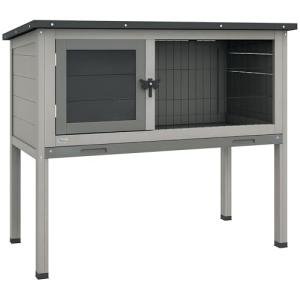
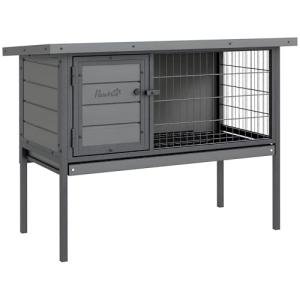
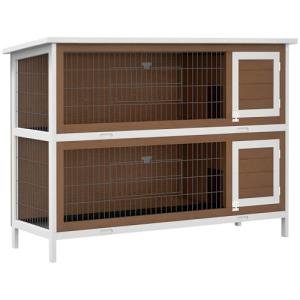
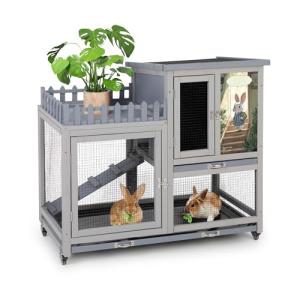
Not every backyard keeper is running a pure chicken operation. This coop's structural dimensions and wire mesh configuration make it legitimately functional for rabbits and ducks as well — this outside wooden poultry hutch can also be used for ducks and rabbits, making it suitable for backyard or side yard placement.
For small hobby farms or homesteads that rotate animals seasonally, or for families where the coop might house rabbits while the flock is being expanded, this multi-species compatibility has real practical value. The dimensions suit medium-to-large rabbit breeds comfortably, and the elevated sleeping area provides the kind of secure, dry shelter that both species benefit from.
All-Weather Protection — What the Asphalt Roof Actually Means
Weather is the enemy of wooden outdoor structures. Rain, freeze-thaw cycles, UV degradation — a coop that doesn't actively manage moisture will begin to rot within a few years, and often sooner. The choice of roofing material matters more than most buyers realize at the point of purchase.
The full asphalt roof shields poultry from rain and snow, and non-slip feet pads prevent shifting while protecting deck and lawn surfaces. Asphalt roofing is the same material used on residential homes for exactly this reason: it's proven, durable, and genuinely waterproof rather than just water-resistant. The difference between a coop interior that stays dry and one that slowly accumulates moisture from roof seepage is the difference between a coop that lasts a decade and one that starts to fail after two winters.
Assembly — What to Expect
This is a flat-pack build, and it does require assembly. The majority of buyer feedback across this and comparable models consistently points to one practical tip: use an electric screwdriver or drill with a screwdriver bit. The assembly is manageable for one adult but genuinely easier with two people for panel alignment. Pre-drilled holes and clearly marked parts make the process straightforward; most buyers report completing assembly in under two hours.
The reinforced metal connections that contribute to structural rigidity also mean you're not relying on wood screws alone at stress points — a meaningful durability advantage that becomes apparent once the coop is loaded with birds and their daily movement patterns.
Comparison — How It Stacks Up Against the Competition
| Feature | HUANTUTOPET 58" Dark Grey | Typical 58" Budget Coop | PawHut 47" Standard | Ketive Elevated 2-Tier |
|---|---|---|---|---|
| Length | 58 inches | 54–58 inches | 47 inches | ~32 inches |
| Flock Capacity | 4–6 chickens | 2–4 chickens | 2–3 chickens | 2–4 chickens |
| Nesting Boxes | 2 sides (dual access) | 1 single box | 1 box | 3-compartment single |
| Roof Material | Asphalt (waterproof) | PVC or wood only | Plastic wave | Asphalt |
| Pull-Out Tray | Metal (full-width) | Plastic or none | Plastic | Slide-out plastic |
| Ramp Design | Non-slip ridged ramp | Flat ramp | Fold-down door ramp | Ramp included |
| Predator Locks | Locking nesting boxes + doors | Basic latch | Lockable doors | Lockable nesting box |
| Multi-Species Use | Chickens, ducks, rabbits | Chickens only | Chickens, ducks | Chickens, ducks |
| Ventilation | Front window + dual side vents | Single vent | Side window | Mesh windows |
| Base Protection | Non-slip feet pads | Basic feet | Rubber feet | Elevated L-frame base |
Who This Coop Is For
This is a coop for the serious backyard keeper — someone who keeps a real flock, expects daily egg production, and wants a structure that holds up year-round without constant maintenance interventions. The dual nesting boxes make it practical for six birds in a way that single-box coops simply aren't. The metal cleaning tray and asphalt roof reflect priorities that matter more after a year of ownership than at the moment of purchase.
It's also a coop that's honest about what it is. It won't replace a custom-built timber coop for keepers who want something truly permanent. But for the vast majority of backyard chicken owners — people who want a well-made, good-looking, functional home for their flock without building one themselves — this hits the brief with conviction.
The dark grey finish ages well, blends with most outdoor settings, and doesn't demand the seasonal re-painting that natural wood finishes often require over time.
Final Verdict
There's no shortage of wooden chicken coops in the 50–60 inch range, and most of them look similar in product photographs. The HUANTUTOPET 58" Dark Grey earns its place in a competitive market through a collection of practical decisions: the dual nesting boxes with external access, the ridged no-slip ramp, the metal pull-out tray, the asphalt roof, and the reinforced locking hardware throughout.
None of these features are revolutionary. Together, they add up to a coop that reflects genuine understanding of what backyard chicken keeping actually involves — the daily routines, the seasonal weather, the ongoing relationship between a keeper and their flock. That's rarer than it should be at this price point, and it's what makes this coop worth your attention.
→ Check current price and availability on Amazon
Specifications: 58" L — Capacity: 4–6 chickens — Roof: Asphalt — Color: Dark Grey — Multi-species compatible: Yes (chickens, ducks, rabbits) — Nesting boxes: 2 (dual side access) — Cleaning: Metal pull-out tray — Assembly required: Yes