Who Is Handy Home Products, and Why Does It Matter?
Before diving into the shed itself, it's worth understanding the brand behind it. Handy Home has been in the business since 1975, when it pioneered the ready-to-assemble wooden storage and recreational building kit category for enthusiastic home builders. That's over four decades of iteration, customer feedback, and design refinement baked into every product they ship.
The brand prides itself on state-of-the-art kits that are pre-cut for convenience, made from premium pine wood, and are both affordable and easy to use. That's a meaningful differentiator in a market crowded with flat-packed resin sheds and flimsy metal structures that start showing their age after a single harsh winter.
When you're investing in outdoor storage infrastructure, brand longevity and parts availability matter. Handy Home has been making these kits long enough to know what goes wrong and design around it.
First Impressions: The Designer Aesthetic
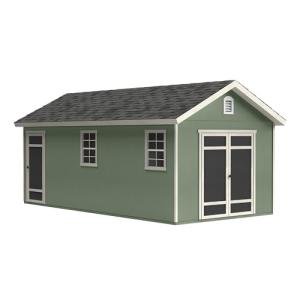
The name "Designer" isn't marketing fluff. This shed was built with curb appeal in mind, and that shows up immediately in the roofline. The dormer — that small, protruding roof structure typically associated with cottage-style homes — lifts this shed out of the ordinary. It breaks up the standard gable silhouette and gives the structure a finished, architectural quality that most storage sheds completely lack.
Most backyard sheds look exactly like what they are: afterthoughts. They crouch in corners, weathered and apologetic. The Designer 12x10, by contrast, holds its own against the house behind it. The dormer signals intention. It says this structure was considered, not merely constructed.
Three operational windows with screens provide ventilation and natural light within the shed, and the door and window placements can be customized during assembly. That flexibility matters more than most buyers realize at the point of purchase. Site orientation, shade patterns, neighboring fences — all of these factors influence where you actually want your windows and doors once you're standing on the ground looking at your specific yard. The ability to adjust placement during the build is a genuine advantage.
Dimensions and Footprint: What 12x10 Actually Gets You
At 120 square feet, this shed sits in a practical sweet spot. It's large enough to serve as a true multi-purpose outbuilding — storing a riding mower, a workbench, and a wall full of organized tools simultaneously — without dominating a modest backyard.
The footprint is 12 feet along the front and 10 feet deep, which is an important distinction from sheds listed as "10x12." The wider front means the double doors face out across the full 12-foot span, giving you that sweeping, garage-style access that makes maneuvering large equipment considerably less frustrating.
The 64-inch wide double doors make it easy to store everything from lawn mowers to ATVs, while the side service door offers quick access to frequently used tools and equipment. That combination — wide double doors for big items plus a dedicated service door for daily use — is thoughtful design. You don't want to swing open both main doors every time you need to grab a shovel.
The floor is designed to hold up to 4,800 lbs. That's not a spec to gloss over. Heavy equipment, bulk fertilizer, stacked lumber, concrete blocks — this floor won't buckle under real working loads.
Construction Quality: The Wood Frame Advantage
The 2x4 framing, set at 24-inch on-center studs, is engineered to stand up to demanding wind speeds of 115 mph and snow loads of 23 psf. Those aren't just marketing numbers. They represent the difference between a shed that survives a coastal storm season and one that needs rebuilding every few years.
For context: many budget sheds use 2x3 framing or even lighter materials. The step up to 2x4 construction with proper on-center spacing brings this shed structurally in line with residential outbuildings, not garden-variety storage boxes.
The primed and treated wood siding protects against dents, decay, and termites. Wood siding gets an unfair reputation for being high-maintenance, but treated and primed panels arrive ready to accept paint without extensive prep work. The treatment isn't just cosmetic — it addresses the primary failure modes of untreated wood: moisture intrusion, insect damage, and rot.
The floor system includes 2x4 inch framing with floor framing and OSB wood floor decking, giving the entire structure a unified wood construction. Unlike sheds that pair wood walls with plastic floors or metal subframes, everything here speaks the same structural language.
The Dormer: More Than Just Good Looks
The dormer deserves its own section, because it's the detail that distinguishes this shed from the rest of Handy Home's lineup and from most competitors at this price point.
Architecturally, a dormer serves multiple purposes. It extends the roofline outward and upward, creating additional headroom near the peak without raising the full roof height. It interrupts what would otherwise be a plain triangular gable with something more visually interesting. And when paired with windows — as this one is — it brings light into the upper interior space from an angle that standard sidewall windows can't achieve.
For a storage shed, that upper light matters more than you'd expect. Stored items near the back of the shed, stacked toward the rafters, become easier to identify and access when natural light comes from above rather than only from the sides. It's a practical benefit dressed in architectural clothing.
The dormer also signals something to anyone looking at your property: this structure has been designed. It communicates the same level of attention to detail that you'd expect from a home improvement done properly rather than cheaply.
Assembly: What You're Actually Getting Into
Let's be direct about this: building a 120-square-foot wooden structure from a kit is a meaningful commitment of time and effort. Assembly requires at least 2 adults, and the expected assembly time is 4-8 hours with an intermediate skill level and power tools.
That 4-8 hour estimate deserves a realistic interpretation. Experienced builders with a full set of power tools and a well-organized workspace land closer to the 4-hour end. People assembling their first structure outdoors, reading instructions as they go, managing an uneven ground surface, and working with a single helper will more likely find themselves in the 6-8 hour zone — possibly spreading the project across two days.
All wood comes pre-cut and ready to assemble. This is the kit format that Handy Home has refined since 1975. Pre-cut components eliminate the most daunting aspect of shed building for most DIYers: the need to measure, mark, and cut lumber accurately. Every component arrives labeled and sized, which significantly reduces the margin for error during assembly.
The doors arrive pre-hung — another meaningful timesaver. Door hanging is one of the more finicky aspects of any building project, requiring careful shimming, leveling, and adjustment to achieve proper swing and seal. Having that work done at the factory removes a common source of assembly frustration.
What's not included: paint, roofing shingles, and tools. Paint and shingles are not included — a point that catches some buyers off guard. Budget for both before you order. Quality exterior paint and a bundle or two of architectural shingles represent a real additional cost, but they're also the finishing work that determines how the shed looks and performs for the next decade.
It is recommended to check with your local building department and HOA for specific requirements, as additional materials may be required to meet local codes including H-clips, tie-downs, rafter ties, and hurricane straps. This is unglamorous but genuinely important advice. Many jurisdictions require permits for structures over a certain square footage, and HOA rules on shed placement, appearance, and dimensions vary enormously.
The Floor Kit: Why It Matters
The inclusion of a complete floor kit with this shed is worth calling out explicitly, because not all sheds at this size include one, and the difference between a shed with a proper floor and one without is substantial.
The complete floor system includes floor framing and OSB wood floor decking, providing a solid foundation with a load capacity of 4,800 lbs. OSB (oriented strand board) decking is the same material used in residential construction — it's dimensionally stable, moisture-resistant when properly sealed, and capable of supporting serious weight loads distributed across its surface.
A shed without a floor sits directly on concrete pavers, gravel, or bare ground. That works functionally, but it introduces long-term moisture problems as ground humidity migrates upward into stored items and the shed's structural members. A raised wood floor creates an air gap that manages moisture far more effectively, extends the life of everything stored inside, and creates a surface that's far more comfortable to stand and work on.
For anyone planning to use this shed as a workshop, hobby space, or anything beyond simple equipment parking, the floor kit transforms the usability of the space.
Security Features
The shed includes a locking T-handle for security on the double doors. The T-handle design is more secure than simple padlock hasps common on budget sheds — it integrates the locking mechanism into the door hardware rather than adding it as an afterthought. For the service door, the same attention to hardware quality applies.
The doors feature 6-foot full-length hinges to prevent sagging and keep doors aligned for optimal performance. This is a detail that separates well-engineered shed kits from cheaper alternatives. Door sagging is one of the most common long-term problems with shed doors — full-length hinges distribute the door's weight across the entire frame height rather than concentrating stress at two small hinge points.
Maintenance: The Real Long-Term Story
Wood sheds require more ongoing attention than metal or resin alternatives. That's the honest trade-off for everything else wood offers. Applying exterior-grade paint to all wooden surfaces after assembly provides an additional layer of protection against weather elements and allows you to match the shed to your home's style.
A quality exterior paint job, properly applied to the primed surfaces, should last 5-7 years before needing attention in most climates. After that, a cleaning, light sanding, and fresh coat of paint keeps the structure looking and performing like new. The treatment built into the siding handles the structural protection; the paint handles the weatherproofing and appearance.
The Handy Home Products Designer 12x10 Wooden Storage Shed comes with a 10-Year Warranty covering manufacturing defects and structural integrity under normal use and proper maintenance. That's a meaningful commitment from the manufacturer and a strong signal of confidence in the product's long-term performance.
How It Compares: The Competition at a Glance
| Feature | Handy Home Designer 12x10 | Handy Home Windemere 10x12 | Little Cottage Co. 10x12 Value Workshop | Rubbermaid Large Vertical Resin Shed |
|---|---|---|---|---|
| Material | Premium pine wood | Treated engineered wood | Wood | Resin/plastic |
| Dimensions | 12 x 10 ft (120 sq ft) | 10 x 12 ft (120 sq ft) | 10 x 12 ft | ~5 x 6 ft |
| Framing | 2x4, 24" on-center | 2x4 | 2x4 | N/A |
| Floor Included | Yes (OSB + framing) | Yes | Optional | No |
| Windows | 3 operable with screens | Transom (non-operable) | Operable | None |
| Dormer | Yes | Yes | No | No |
| Double Doors | 64" wide | 56" wide | 60" wide | Single door |
| Wind Rating | 115 mph | Not specified | Not specified | Not specified |
| Snow Load | 23 psf | 30 psf | Not specified | Not specified |
| Floor Load Capacity | 4,800 lbs | Not specified | Not specified | ~1,500 lbs |
| Warranty | 10 years | Not specified | 15 years | 10 years |
| Assembly Time | 4–8 hours | 4–8 hours | 4–8 hours | 1–2 hours |
| DIY Skill Level | Intermediate | Intermediate | Intermediate | Basic |
| Paint/Shingles Included | No | No | No | N/A |
| Made in USA | Yes | Yes | Yes | No |
The comparison makes the Designer's value proposition clear. Against the Windemere — Handy Home's own premium tier — the Designer trades some snow load capacity and the Windemere's organization package (shelf, work surface, loft) for operable windows and a slightly wider door opening. Which trade-off is right depends on your climate and use case.
Against the resin alternative, there's simply no comparison in structural capacity, aesthetic quality, or longevity. Resin sheds are faster to build and require zero painting, but they flex, fade, and crack over time in ways that a well-maintained wood structure doesn't.
Who This Shed Is For
The Designer 12x10 is the right choice for a specific kind of buyer. You're someone who wants outdoor storage that looks like it belongs on your property rather than something that arrived as a kit and never quite lost that temporary feeling. You're willing to invest a weekend in proper assembly and a few hours in painting because you understand that the effort compounds over years of performance and appearance. You have real storage needs — equipment, tools, a workbench — that demand 120 square feet of properly structured space, not a closet-sized resin bin.
You probably also live somewhere with real weather. The 115 mph wind rating and robust floor construction aren't features that matter in mild climates, but if you're dealing with mid-Atlantic nor'easters, Gulf Coast storm seasons, or Upper Midwest winters that pile snow on every horizontal surface, those numbers represent genuine peace of mind.
The intermediate skill requirement is real but not daunting. If you've assembled flat-pack furniture confidently, installed a fence gate, or done any basic home repair work, you have the foundational skills for this project. The pre-cut components remove the hardest part of the work.
The Value Calculation
Sheds at this size and quality level represent a significant purchase, and it's worth thinking through the value in context. A contractor-built wood shed of equivalent size typically costs two to three times what a quality kit like this runs, and the end result isn't necessarily better constructed. You're paying for the labor, not superior materials.
Metal shed kits at similar square footage come in cheaper but trade durability, aesthetics, and thermal performance. Metal sheds heat up dramatically in summer sun and provide essentially no insulation value. They're also louder in rain and hail, and they corrode over time in high-humidity or coastal environments.
Resin sheds offer the lowest maintenance burden, but the square footage price is comparable, the aesthetic is distinctly utilitarian, and the structural capacity is nowhere close to what a 2x4 wood frame delivers.
Against all those alternatives, the Designer 12x10 makes a straightforward case: pay a reasonable premium for wood construction, spend a weekend building it properly, maintain it with paint every several years, and have a structure that still looks good and performs well a decade from now.
Final Verdict
The Handy Home Products Designer 12x10 Wooden Storage Shed is a well-conceived product from a brand that knows its category. The dormer and operable windows elevate it beyond the utilitarian, the 2x4 framing and 4,800-pound floor capacity give it genuine structural credibility, and the pre-cut, pre-hung component design makes the assembly project manageable for any capable DIYer.
It requires commitment — in assembly time, in the additional cost of paint and shingles, and in the ongoing maintenance that wood construction demands. But those are the costs of doing it right. The result is a backyard structure that earns its place on your property rather than apologizing for it.
For buyers who want their outdoor storage to reflect the same care they've put into the rest of their property, the Designer 12x10 delivers exactly what the name promises.
→ Check current pricing and availability on Amazon
Paint, roofing shingles, and tools are not included with this kit. Always verify local building codes and HOA regulations before installation.