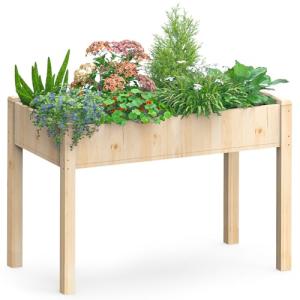
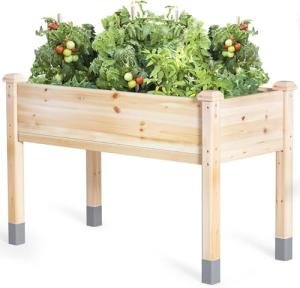
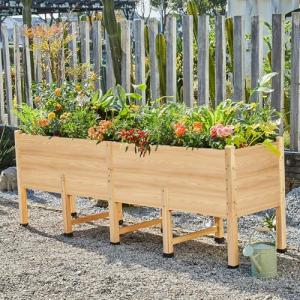
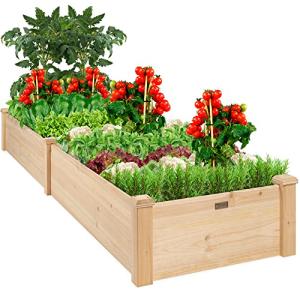
What Are Wooden Raised Beds?
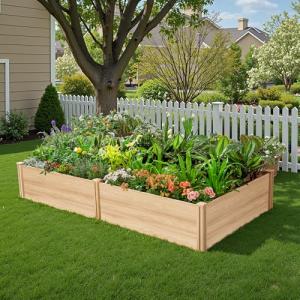
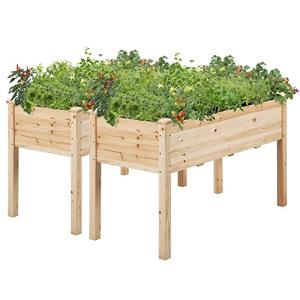
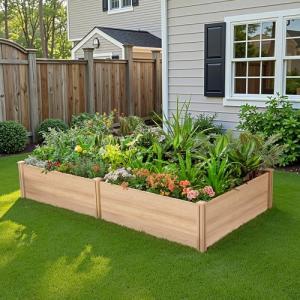
A wooden raised bed is essentially a open-bottomed frame, constructed from timber, that sits on top of your existing ground and is filled with your chosen growing medium. The structure elevates your growing area — anywhere from six inches to several feet above ground level — and gives you a clearly defined, manageable planting space.
Unlike plastic or metal alternatives, wood brings a natural warmth to any outdoor space. It blends into gardens, allotments, patios, and courtyards without looking clinical or industrial. Wood is also a practical choice: it provides good insulation for plant roots, doesn't heat up excessively in summer, and can be worked with, modified, and repaired using ordinary tools.
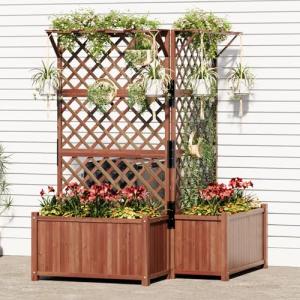
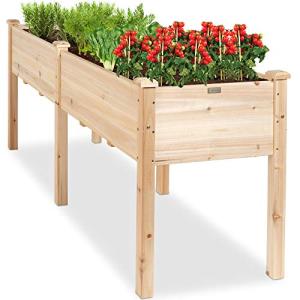
Wooden raised beds come in a wide range of sizes, heights, and styles, from compact corner units designed for patios to long, deep beds suited to serious kitchen gardening. The right choice depends on your space, your goals, and how much time you want to spend maintaining them.
Why Choose Wood Over Other Materials?
When it comes to raised bed materials, wood sits in a sweet spot between aesthetics, practicality, and cost. Let's be honest — metal looks sleek, but it can get scorching hot in summer and may not suit every garden style. Plastic beds are cheap upfront but often feel flimsy and start to look tired after a few seasons in UV light. Concrete and brick are permanent and expensive to install.
Wood, by contrast, offers something the others don't: it feels right in a garden. It has texture, warmth, and a natural character that ages gracefully. It looks just as at home in a contemporary minimalist plot as it does in a rustic cottage garden.
From a growing perspective, wood is a natural insulator. It buffers temperature fluctuations in the soil, which means roots stay warmer in early spring and don't overheat in summer. That matters because consistent soil temperature is one of the overlooked secrets of healthy, productive plants.
Good-quality timber — especially hardwoods like oak or naturally rot-resistant species like larch and sweet chestnut — can last anywhere from 10 to 25 years with minimal upkeep. Even softwood beds treated with a non-toxic preservative will give you many productive growing seasons for a fraction of what you'd pay for permanent hard landscaping.
The Real Benefits of Gardening in a Raised Bed
If you've never gardened in a raised bed before, the difference compared to digging directly into the ground can feel revelatory. Here's what most growers notice first.
Better soil, straight away. You choose exactly what goes into your raised bed. No clay, no compaction, no stones. A good mix of topsoil, compost, and organic matter gives your plants a flying start from day one. Over time, as you add compost and the soil biology develops, the growing conditions only improve.
Drainage that actually works. Waterlogged soil is one of the most common causes of plant failure in British and European gardens. A raised bed drains freely — roots stay oxygenated, and you avoid the rot and disease that standing water encourages.
Fewer weeds, less effort. Raise your growing area above the surrounding ground and you immediately break the cycle of weed seeds blowing in from the lawn or pathways. You'll still get some weed growth, but it's dramatically reduced compared to in-ground beds, and what does appear is easy to pull from the loose, open soil.
Easier on your back. This one matters more than people realise until they've experienced it. A deeper raised bed means less bending. If you build a bed with sides tall enough to perch on, you can tend your garden in genuine comfort. For older gardeners, those with mobility issues, or anyone with a bad back, a taller wooden raised bed isn't a luxury — it's a game changer.
Warmer, earlier. Raised beds warm up faster in spring than the open ground, which means you can start sowing earlier in the season. For vegetable growers in particular, those extra few weeks can mean the difference between harvesting courgettes in June or July.
A defined, manageable space. There's a psychological advantage to raised beds that doesn't get talked about enough. When your growing area has clear edges and a finite size, the garden feels manageable. You're not staring at an overwhelming expanse of beds — you're tending a specific, contained space, which makes planning, planting, and maintenance far more straightforward.
What Can You Grow in a Wooden Raised Bed?
The short answer is: almost anything.
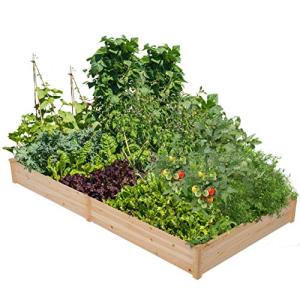
Vegetables thrive in raised beds. Salad leaves, tomatoes, courgettes, cucumbers, kale, chard, beetroot, carrots, beans, peas — all of these perform exceptionally well in the rich, well-drained soil of a raised bed. Root vegetables in particular benefit from deep, stone-free growing conditions that allow them to develop without obstruction.
Herbs are another natural choice. A compact raised bed positioned near the kitchen door is one of the most practical things a cook can install in their garden. Basil, parsley, chives, mint (ideally in its own section — it spreads aggressively), thyme, rosemary, and sage all grow happily in raised beds and benefit from the good drainage.
Cut flowers have become increasingly popular in raised beds, and with good reason. Growing dahlias, sweet peas, zinnias, cornflowers, and other cutting garden favourites in a dedicated raised bed keeps them tidy, productive, and easy to harvest. Many growers dedicate one bed entirely to flowers for the vase — a small investment that pays off in armfuls of blooms from June through to October.
Soft fruit — strawberries, raspberries, gooseberries, and currants — also does well in raised beds, especially in gardens with poor native soil. A raised bed gives these plants the drainage they need and makes it easier to protect them with netting when the fruit starts to ripen.
Even ornamental planting works beautifully in wooden raised beds. Using them to create structured, elevated displays of grasses, perennials, or seasonal bedding adds height and drama to a flat garden.
Choosing the Right Wooden Raised Bed
Not all wooden raised beds are the same, and it's worth thinking through a few key factors before buying.
Timber type. This is probably the most important decision. Softwoods like pine are affordable but rot relatively quickly unless treated. Look for beds made from pressure-treated or naturally durable timbers. Hardwoods such as oak and robinia are significantly more durable and develop a beautiful silvery patina as they age. Larch and Douglas fir sit in the middle ground — naturally resinous, reasonably durable, and attractively grained.
Avoid treated timber that uses preservatives containing heavy metals or chemicals that might leach into food-growing soil. Most reputable suppliers now use water-based, non-toxic treatments, but it's always worth checking if you're growing edibles.
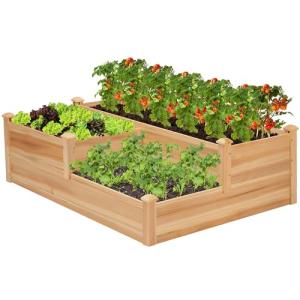
Depth. The deeper the bed, the better the growing conditions — but also the more soil you'll need to fill it. A standard depth of around 20–25cm is adequate for most annual vegetables and flowers. If you want to grow deeper root crops like parsnips or carrots, or if you'd like to sit on the edge while you garden, a depth of 40–60cm makes a real difference. Extra-deep beds (sometimes called tall raised beds or standing height beds) with depths of 70cm or more are excellent for gardeners who want to avoid bending entirely.
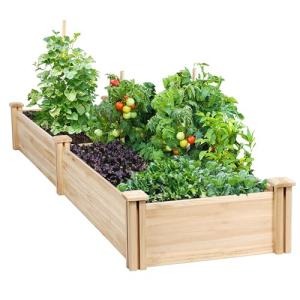
Size. A classic recommendation is to keep raised beds no wider than about 120cm, so you can comfortably reach the centre from either side without stepping in. Length is largely a matter of available space and preference. Longer beds can be divided into sections, making crop rotation and planning easier to manage.
Style and finish. Wooden raised beds come in everything from simple, utilitarian planks to beautifully crafted jointed frames with rounded edges and natural oil finishes. If your raised bed is going to be a feature of the garden — visible from the house, or part of a designed outdoor space — it's worth investing in something with a little more character. Look for sturdy corner joints, solid fixings, and timber that has been smoothed and finished to a standard that will look good as well as function well.
Setting Up Your Raised Bed
One of the great advantages of wooden raised beds is that they require almost no groundwork to install. You don't need to dig, excavate, or level. Place your bed on reasonably flat ground, and you're largely ready to go.
If you're placing a bed on grass or lawn, there's no need to remove the turf first. Simply lay a layer of cardboard beneath the bed — it will suppress the grass, eventually decompose, and add organic matter to the soil. Over several months, the grass beneath will die off and contribute to the growing medium from below.
If you're placing a bed on concrete, paving, or other hard surfaces, you'll want to make sure there's adequate depth for root development, and it's worth considering adding some drainage material at the base to prevent waterlogging. In these situations, a deeper bed (at least 40cm) will give your plants the best chance.
Fill your bed in layers if possible. Start with a layer of woody material — prunings, old logs, twigs — at the base. This is the principle behind hugelkultur beds and helps retain moisture while decomposing slowly over years. Follow with a layer of rough compost or green waste, then a generous upper layer of quality topsoil blended with well-rotted compost. The exact ratio is flexible, but a rough rule of thumb is around 50% good topsoil and 50% compost for general growing.
Caring for Your Wooden Raised Bed
Wood is a natural material and will respond to the elements over time. With a little basic maintenance, a quality wooden raised bed will reward you with decades of service.
Annual treatment with a suitable wood oil or water-based preservative will slow weathering and extend the life of the timber. This is easiest to do in autumn or early spring when beds are empty or partially clear. Pay particular attention to end grain — the cut ends of planks are where moisture enters most readily.
Check fixings periodically. The freeze-thaw cycle, combined with the weight of soil and the swelling and shrinking of wet and dry wood, can work screws and bolts loose over time. A quick check each spring takes minutes and will prevent structural issues later.
Inside the bed, replenish organic matter each season. The soil level in a raised bed will drop year on year as organic matter breaks down. Topping up with a generous layer of compost each spring restores fertility and soil structure, keeping your growing conditions in excellent shape.
A Long-Term Investment in How You Garden
A wooden raised bed isn't just a product — it's a commitment to a different way of gardening. Once you've experienced the ease of working in beautifully structured soil, the reduced weeding, the longer growing season, and the simple pleasure of a well-ordered growing space, it's very hard to go back.
Whether you start with a single compact bed on a patio or design an entire kitchen garden from scratch, wooden raised beds offer one of the most satisfying returns on investment in gardening. They make the growing easier, the harvests more reliable, and the whole garden more beautiful.
Grow more. Stress less. Start with the right bed.