What Is a Garden Trellis, Really?
At its simplest, a garden trellis is any structure that gives climbing or vining plants something to grab onto. But that definition barely scratches the surface. Trellises come in dozens of forms — flat panels, fan shapes, obelisks, tunnels, arched freestanding structures, wall-mounted frames — and they serve purposes well beyond just plant support.
A well-chosen trellis can act as a privacy screen, turning a bare fence line into a living green wall. It can divide a garden into distinct rooms. It can camouflage an ugly shed, soften a hard brick wall, or create a focal point where there wasn't one before. The best trellises do all of this while quietly doing their main job: keeping plants upright, well-ventilated, and easy to manage.
Types of Garden Trellises
Flat Panel Trellises
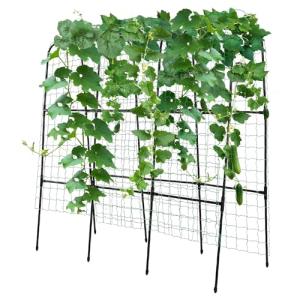
The flat panel is the most familiar trellis style — a rectangular grid of wood, metal, or vinyl that mounts flush against a wall or fence. These are the workhorses of the category. They're versatile enough to support roses, clematis, beans, peas, and most light to medium climbers, and they're easy to install almost anywhere.
Flat panels come in a range of grid sizes. Smaller openings (around 2–3 inches) suit plants with thin tendrils like sweet peas and passion flowers. Larger openings (4–6 inches) work better for heavier climbers that need to weave their stems through rather than wrap a tendril.
When mounting a flat panel trellis against a wall, leave at least an inch of space between the trellis and the surface behind it. Air circulation matters — without it, you're creating the perfect damp, still environment for fungal problems.
Fan Trellises
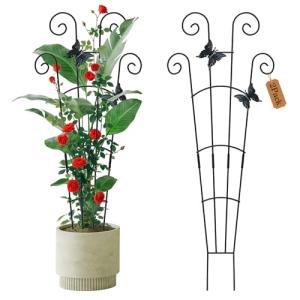
Fan trellises spread wide at the top and narrow to a single point at the base, making them a natural choice for training a single plant — a climbing rose, a trained fruit tree, or a clematis — into an elegant shape. They look especially good in borders where you want height without blocking too much light.
Because the design directs growth outward and upward from a central stem, fan trellises are particularly effective for espalier work and for plants that need gentle guidance rather than a full support system.
Obelisk and Tower Trellises
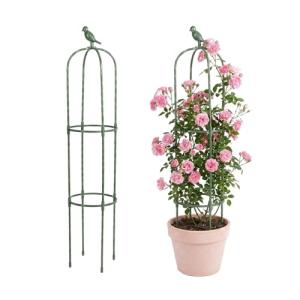
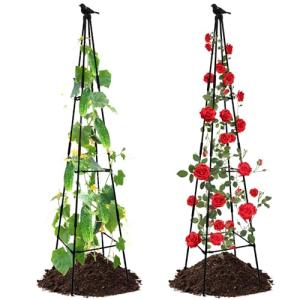
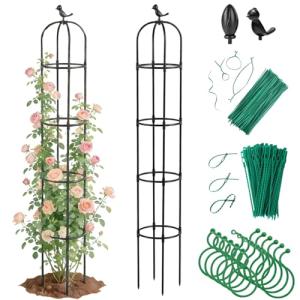
These freestanding three- or four-sided structures are some of the most versatile pieces in the garden. An obelisk trellis sits directly in a bed or container, giving climbing plants something to spiral around. They add strong vertical interest to flat planting schemes and work beautifully with annual climbers like black-eyed Susan vine, morning glory, and climbing nasturtiums.
Obelisks double as sculptural garden features even when plants aren't actively growing — a well-made metal or wooden obelisk looks good all year round, which is more than you can say for a bamboo cane and some garden twine.
Arch and Tunnel Trellises
An arch trellis is more of an event. Walk under a rose-covered arch on a summer morning and you'll understand why these structures have been garden favorites for centuries. Arches frame pathways and entrances, create thresholds between garden areas, and support plants on both sides simultaneously.
Tunnel trellises extend the arch concept across a longer distance — imagine walking down a corridor of intertwining climbers overhead. They take more commitment (and more space) but the payoff is extraordinary, particularly when planted with roses, wisteria, or fruiting vines.
Wall-Mounted and Expandable Trellises
Expandable trellises — the accordion-style panels that collapse flat for storage and stretch out when needed — are handy for smaller gardens and container setups. They can be fixed to walls or used freestanding with a stake, and their adjustable size makes them adaptable as plants grow.
Trellis Materials: Pros, Cons, and What Lasts
Wood
Wooden trellises have warmth and character that's hard to replicate. Cedar and redwood are the standouts: naturally rot-resistant, light enough to handle easily, and stable enough not to warp badly through wet and dry seasons. Pressure-treated pine is cheaper and will last a long time, though it's heavier and less visually refined.
The catch with wood is maintenance. Left unpainted and unsealed, even good timber will eventually deteriorate. A lick of exterior paint or timber oil every couple of years makes a significant difference to lifespan. Joints are the first place moisture gets in, so pay attention to how a wooden trellis is constructed — mortise-and-tenon joints hold up better than staples or basic nails.
Metal
Powder-coated steel and wrought iron trellises are the longevity champions. A well-made metal trellis, properly coated, will outlast almost anything in the garden. The coatings matter a great deal: a thin, cheap coating will chip and rust within a few seasons, while a quality powder coat stays intact for decades.
Metal trellises can handle heavy climbers — mature wisteria, climbing hydrangea, rambling roses — in a way that thinner wood panels simply can't. They're also the most consistent choice for structural applications like arches and pergola frames.
The downside is weight and cost. Heavy-gauge metal trellises need proper anchoring, and the good ones aren't cheap. But if you're looking for something you'll never have to replace, metal is worth the investment.
Bamboo
Bamboo trellises have an organic, natural aesthetic that suits cottage gardens and tropical-inspired planting schemes. They're lightweight, surprisingly strong, and biodegradable, which makes them appealing if sustainability is a priority.
The limitation is longevity — even treated bamboo will eventually split, fade, and break down faster than metal or quality wood. For annual plants or temporary arrangements, bamboo is excellent. For permanent structures supporting heavy perennial climbers, it's less suited.
Vinyl and Resin
Vinyl trellises require almost no maintenance — they don't rot, they don't need painting, and they clean up easily. In terms of sheer practicality, that's a real advantage. The design options have improved significantly in recent years, with more realistic textures and a wider color range than the old white lattice panels that once dominated the market.
Where vinyl falls short is in structural strength and aesthetics. It can crack in severe cold, fade in intense sun, and flex in ways that solid wood and metal don't. For light climbers in sheltered positions, it works well enough. For anything heavier or more exposed, you'll find the limitations.
Choosing the Right Trellis for Your Plants
Different plants have different needs, and matching the trellis to the plant makes a real difference.
Roses need strong, sturdy support — particularly rambling roses, which can reach extraordinary weights when mature. Wall-mounted wood or metal panels work well, as do arches and pergola-style structures. Allow plenty of room; trying to confine a vigorous rose to an undersized trellis is a battle you'll lose.
Clematis works with almost any trellis that has openings small enough to thread its leaf-stalk tendrils through. Fine mesh or close-spaced lattice is ideal. Large-flowered clematis varieties are lighter and easier to manage; species clematis like C. montana can become genuinely massive and need substantial support.
Annual vegetables — beans, peas, cucumbers, squash — need something that's easy to set up and take down each season. Expandable trellises, bamboo teepees, and simple wire frames all work well. Peas prefer narrow supports they can wrap tendrils around; beans will climb almost anything.
Perennial climbers like wisteria, climbing hydrangea, and trumpet vine are long-term residents that become genuinely heavy over time. These need the most substantial support: thick timber or metal with secure wall fixings or deep ground anchors. Don't underestimate what a 20-year-old wisteria weighs.
Installation Tips That Make a Difference
Even the best trellis fails if it's installed poorly. A few principles to keep in mind:
Anchor depth matters. Freestanding trellises that go into the ground need posts buried deep enough not to rock in wind. A general rule is one-third of the total post height underground — so a 6-foot trellis needs 2 feet in the ground.
Use the right fixings. Wall-mounted trellises should be fixed with screws, not nails, and into something solid — masonry anchors into brick or screws into structural timber, not just into plaster or cladding. Heavyweight climbers generate surprising lateral pull in high winds.
Leave room for the plant. Mount wall trellises on spacers so there's a gap between trellis and wall. This lets air circulate, which reduces disease pressure and makes it easier to tie in stems.
Think about removal. If your wall needs periodic painting or re-rendering, consider mounting the trellis on hinged brackets so it can swing away from the surface while still attached to the plant. Planning for this at installation saves a lot of hassle later.
Trellis Aesthetics: Making It Part of the Design
A trellis doesn't have to disappear into the background. Some of the most striking garden features are trellises used deliberately as design elements — painted in bold colors, used to frame a view, or chosen specifically to complement the architectural style of the house.
Dark colors (black, charcoal, deep green) tend to recede visually, letting the plants stand forward. They also work particularly well against light-colored walls. Natural wood tones bridge between the built structure and the planting. Bright white or cream can feel crisp and formal, suiting more structured garden styles.
The scale of the trellis should match the scale of the space. A small fan trellis gets lost on a large blank wall. A massive pergola-scale arch overwhelms a tiny courtyard. Getting the proportions right is what separates a trellis that looks intentional from one that looks like it was simply stuck somewhere.
Maintaining Your Trellis Season to Season
Most trellises need less attention than the plants growing on them, but a small amount of annual care keeps them looking good and extends their life significantly.
In late autumn, once plants are dormant, take the opportunity to inspect the trellis structure. Check fixings for rust or loosening, look at wood joints for signs of rot, and replace anything that's weakening before the next season's growth adds weight to it again. A quick sand and re-coat of oil or paint on wooden sections takes less than an hour and adds years to the trellis's life.
For metal structures, touch up any chips in the powder coating promptly — exposed metal corrodes quickly once moisture gets in. A small tin of matching touch-up paint handles this easily.
A garden trellis is one of those purchases that pays dividends for years, sometimes decades. The right one becomes invisible in the best way — so well suited to its position and so well planted that it simply looks like the garden has always been that way.
Take the time to think about what you're growing, where it's going, and what you want the finished effect to look like. Consider the material honestly — not just aesthetics but longevity and maintenance. And don't underestimate the scale and weight of mature climbers. Buy a little more trellis than you think you need, and it'll reward you every growing season.