Explore our full range of gazebos — from compact pop-ups to premium hardtop models — and find the one that turns your outdoor space into somewhere you actually want to be.
Explore our full range of gazebos — from compact pop-ups to premium hardtop models — and find the one that turns your outdoor space into somewhere you actually want to be.
4.62 out of 5 stars
131 reviews$269.99 $209.99
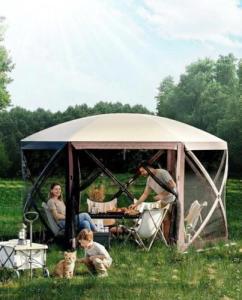
4.72 out of 5 stars
16 reviews$125.99
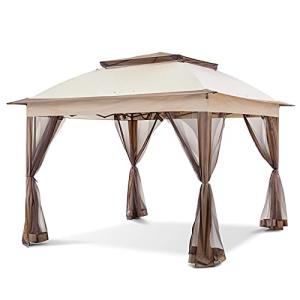
4.67 out of 5 stars
155 reviews$219.99 $159.99
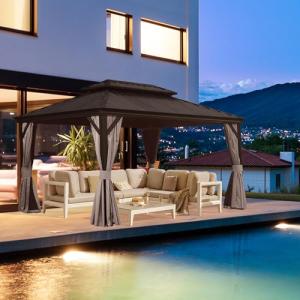
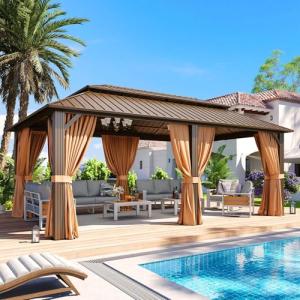
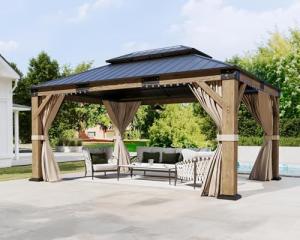
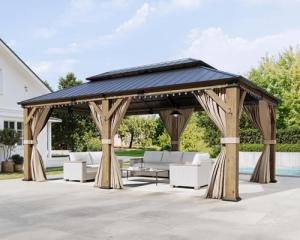
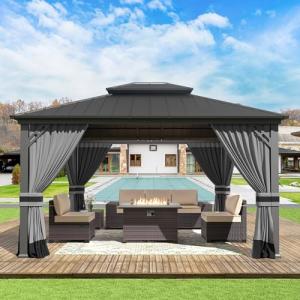
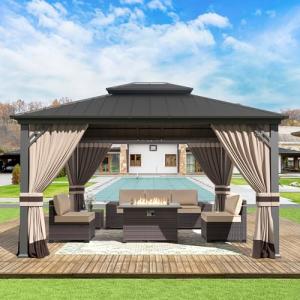
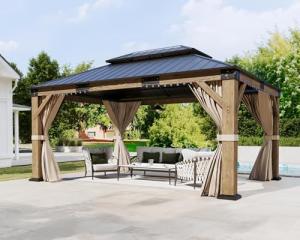
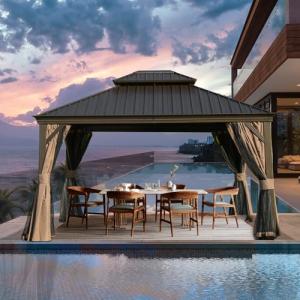
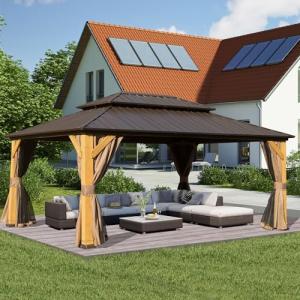
A gazebo is a freestanding, roofed outdoor structure, typically open on the sides or fitted with curtains, screens, or removable panels. Unlike a pergola (which has an open lattice roof) or a simple pop-up canopy (which is purely temporary), a gazebo sits in a sweet spot: structured enough to feel like a real outdoor room, flexible enough to suit a huge range of settings and budgets.
They've been around for centuries. The word itself likely comes from the playful Latin-sounding phrase "I shall gaze" — which tells you everything about what they were originally built for. Georgian and Victorian gardens were full of them, perched at the end of gravel paths or overlooking ornamental ponds, designed as places to pause, look out, and simply be. Today, that spirit hasn't changed. The materials have evolved, the designs have multiplied, and the price points span everything from accessible to aspirational — but the core purpose is the same.
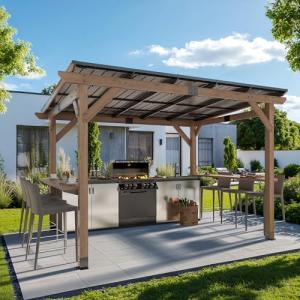
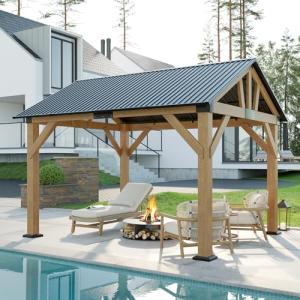
Hardtop gazebos are the premium end of the market, and for good reason. Built with solid roofing — typically powder-coated steel, aluminium panels, or cedar shingles — they offer genuine all-season protection. Rain drums off them satisfyingly. They hold up in wind. UV exposure doesn't degrade them the way it does softer canopy materials.
These are the right choice if you want a structure that earns its place in the garden permanently. Many hardtop models come with side panels, mosquito netting, and even integrated guttering. Set one up over a proper patio set and you've essentially added an outdoor room to your home.
The trade-off is weight and assembly complexity. Hardtop gazebos are heavier, take longer to put up, and generally require two or more people. But once they're in place, they're in place — season after season with minimal fuss.
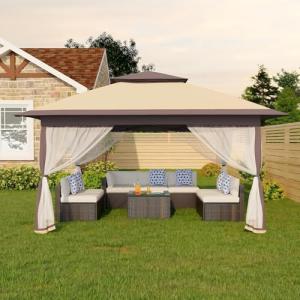
Soft-top gazebos use a fabric or polyester canopy stretched over a metal or steel frame. They're lighter, more affordable, easier to assemble, and often available in a wider range of colours and shapes. The canopy can typically be removed and washed, replaced if damaged, or swapped out for a different colour entirely.
The limitation is longevity. Even high-quality canopy fabric will eventually fade and degrade under prolonged UV exposure and repeated soaking. Most last two to five seasons with reasonable care — longer if you store the canopy over winter rather than leaving it out year-round.
For occasional use, seasonal gardens, or anyone who wants flexibility without a large upfront investment, soft-top gazebos are an excellent starting point.
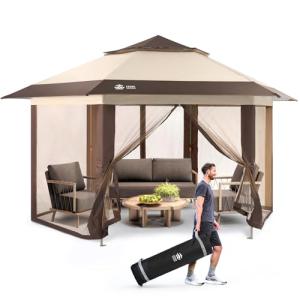
Pop-up gazebos are the workhorses of outdoor events. Weddings, markets, festivals, barbecues, camping trips — if you need shade quickly and a permanent structure isn't an option, this is the answer. Folding scissor-frame designs mean they can go from bag to fully erected in minutes, and most fold down just as fast.
They're not designed to handle heavy weather. High winds and driving rain will test their limits, and they're not meant to be left out unattended. But for what they do — portable, quick, convenient shade — they do it exceptionally well.
At the upper end of the spectrum sit permanent wooden or heavy-duty metal gazebos designed to be anchored into the ground and left there indefinitely. Often octagonal or hexagonal in shape, with peaked roofs and decorative trim, these are architectural statements as much as functional structures.
Cedar, pressure-treated pine, and teak are popular timber choices. Wrought iron and heavy-gauge steel are the metal options. These structures typically require planning consideration in some regions if they exceed a certain footprint, so it's worth checking local guidelines before committing.
Size matters more than most people expect when it comes to gazebos. Measure your space before you browse — it's an easy step that prevents a lot of frustration.
A 2m × 2m or 2.5m × 2.5m gazebo suits a modest patio or deck. It'll comfortably shade two to four people around a small table. Good for a quiet corner, but not designed for entertaining groups.
A 3m × 3m is the most popular size for domestic use. It fits a standard garden table and chairs with room to move around, handles six to eight people comfortably, and works in most average-sized gardens without dominating the space.
3m × 4.5m, 3m × 6m, and larger rectangles are designed for entertaining or commercial use. They cover larger seating areas, can accommodate side walls or modular extensions, and are typically the formats used for markets and events.
One practical tip: always account for the footprint of the legs, not just the canopy. A 3m × 3m canopy might have a leg footprint of 2.8m × 2.8m internally, but the overall ground area taken up — including any guy ropes or anchoring — will be larger.
Powder-coated steel is the standard for most mid-range to high-end gazebos. It's strong, resistant to rust when the coating is intact, and holds its shape under load. Look for wall thickness measurements (thicker is better for wind resistance) and check whether the coating is a single layer or double-coated for extra protection.
Aluminium is lighter than steel and naturally rust-resistant, which makes it a good choice for coastal gardens or anyone who plans to move the structure regularly. It's slightly less rigid than heavy-gauge steel, but modern aluminium alloys are impressively strong. Anodised aluminium finishes add another layer of corrosion resistance.
Wood has an aesthetic warmth that metal simply can't replicate. Pressure-treated softwood is the budget-conscious option — it resists rot and insects, holds paint or stain well, and can last 15–20 years with basic maintenance. Hardwoods like teak or iroko are more expensive but require less ongoing treatment and develop a beautiful silvery patina if left untreated.
Annual treatment with preservative oil or stain keeps timber gazebos looking sharp and extends their life significantly.
For soft-top models, the canopy quality makes or breaks the structure. Key things to look for:
GSM (grams per square metre): Higher GSM means a denser, more durable fabric. Budget canopies often sit around 120–150 GSM. Mid-range options are typically 160–180 GSM. Premium canopies hit 200 GSM and above.
UV protection: Look for a UPF rating. UPF 50+ blocks over 98% of UV rays — important both for protecting the people underneath and for the longevity of the fabric itself.
Water resistance: Most canopies are water-resistant rather than fully waterproof. A good PU (polyurethane) coating sheds light rain effectively. For heavy or prolonged rain, a hardtop remains the better option.
Ventilation panels: A double-vented roof allows hot air to escape upward, preventing the heat trap effect that single-roof canopies create on warm days. This one feature makes a noticeable difference to how comfortable the space feels.
Integrated guttering: Available on higher-end hardtops, this channels rainwater away cleanly instead of sheeting off the edges. Particularly useful if the gazebo is close to seating or pathways.
Side panels and screens: Most soft-top and many hardtop models offer optional side walls — solid panels for privacy and wind protection, or mesh screens that keep insects out while maintaining airflow. Being able to close three sides and leave one open gives you real flexibility.
Mosquito netting: A practical addition in summer. Look for netting that can be rolled up and tied back when not needed.
Anchor points: Any gazebo that's going to live outdoors needs to be properly anchored. Ground stakes, weight bags (for hard surfaces), and screw-in anchor kits are all available. Don't skip this — an unanchored gazebo in a gust of wind is a liability.
Integrated lighting: Some premium models include roof channels designed to hold fairy lights, LED strips, or lanterns. It's a small touch that makes the space genuinely usable after dark.
Assembly difficulty varies enormously by model. Pop-ups are self-explanatory. Mid-range soft-tops typically take two people between 30 minutes and two hours. Hardtops and permanent structures require more time, more hands, and sometimes specialist tools.
Before assembly, check the ground. A level surface prevents racking (where the frame twists slightly out of square) and makes the structure more stable. Concrete, paving slabs, and compacted gravel are all ideal bases. Soft ground requires deeper or wider anchoring.
Read the manual first — really. Gazebo assembly instructions are better than their reputation, and most assembly problems come from skipping steps rather than unclear instructions.
A little care goes a long way.
Canopy cleaning: Brush off debris regularly. Wash the canopy with a mild soap solution and soft brush once or twice a season. Avoid pressure washers — they can damage coatings and weaken stitching.
Winter storage: If possible, store soft canopies indoors over winter. Clean and dry completely before storing — mould grows fast in damp folds of fabric. Most canopies fold down to a compact size.
Frame maintenance: Wipe steel and aluminium frames with a damp cloth and check for chips in the coating annually. Touch up any scratches to prevent rust taking hold. Oil any hinges or joints.
Timber treatment: Treat wooden frames every one to two years with a quality preservative or exterior oil. Sand lightly first if the surface has roughened. Pay special attention to end grain and joints where water can penetrate.
There's no single best gazebo — only the best one for your situation. A small, urban courtyard calls for something different than a sprawling rural garden. A space used primarily for summer lunches needs different features than one designed to host evening gatherings in autumn.
Think about how often you'll use it, through how many seasons, and how permanent you want it to feel. Think about who'll be underneath it — whether you need a high-capacity structure or just a cosy spot for two. Think about the look of your garden and whether you want the gazebo to blend in quietly or stand as a centrepiece.
Browse with those answers in mind, and you'll find the decision gets easier quickly. The right gazebo doesn't just improve your garden — it changes how you use it, how much time you spend outside, and how your home feels when the weather finally turns in your favour.