Why a Garden Fountain Changes Everything
Most garden features are passive. A flower bed is beautiful, but it doesn't do anything in the moment you're standing next to it. A fountain is different. It moves. It sounds. It catches light in ways that shift by the hour. On a hot afternoon, the gentle splashing creates a psychological coolness that no amount of shade planting can quite replicate. On a still evening, it fills the quiet with something that isn't silence — something softer, more generous.
Beyond the sensory experience, fountains serve some very practical purposes. The sound of water is genuinely effective at masking background noise, which makes them invaluable for urban gardens, courtyard spaces, or anywhere you're trying to create a sense of private retreat despite being surrounded by neighbors, traffic, or the general hum of everyday life. A modest wall fountain positioned near a seating area can make an entire outdoor room feel more secluded and serene.
Fountains also attract wildlife. Birds are drawn to moving water for drinking and bathing, and if you have a larger basin-style fountain, you may find it becomes a regular stop on the local circuit. That kind of incidental wildlife activity adds an entirely new layer of life to a garden space.
The Main Types of Garden Fountains
Understanding the different categories of garden fountains helps you find the style that works best for your space, your budget, and the look you're going for. There's a lot more variety here than many people realize.
Freestanding Fountains
These are the classic, self-contained units that you can place anywhere with a power source. They range from compact tabletop models that sit on a bistro table or wall ledge, all the way up to substantial multi-tiered statement pieces that anchor a formal garden layout. Freestanding fountains are the most flexible option — no installation required beyond plugging in a pump — and they're easy to reposition seasonally or when you redesign your space.
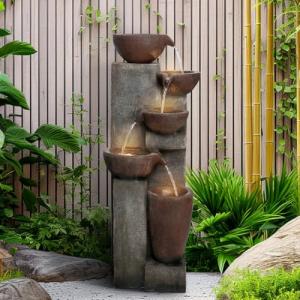
Tiered fountains in particular have a timeless quality. The stepped bowl design, with water cascading from one level to the next, creates both visual height and a genuinely satisfying sound. They work in formal gardens, cottage-style planting schemes, and even in more contemporary spaces if you choose a clean-lined version in cast stone or resin.
Wall Fountains
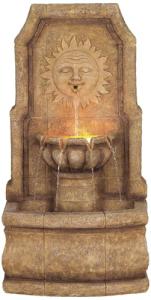
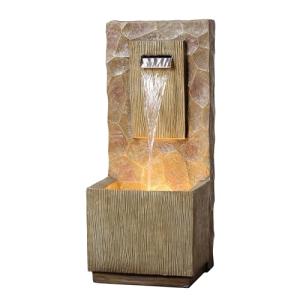
Wall fountains are ideal when floor space is at a premium. They mount flat against a fence, garden wall, or exterior house wall and typically feature a decorative face or mask from which water flows into a basin below. The basin recirculates the water, so the whole system is self-contained once installed.
What makes wall fountains particularly compelling is their ability to transform a plain surface into a genuine focal point. A bare rendered wall or a stretch of wooden fencing becomes something with character. They're also excellent for covered outdoor dining areas, entrance porticos, or any walled courtyard where a freestanding piece would intrude on the usable space.
Pond and Pondless Waterfall Fountains
If you want to go a step further and integrate water into the actual landscape, a pond fountain or pondless waterfall creates something closer to a natural water feature than a traditional ornamental piece. Water bubbles up through a millstone, flows over a series of slate ledges, or wells up gently from between river rocks — all while recirculating through a hidden reservoir beneath the surface.
These designs are particularly popular in naturalistic gardens because they don't look manufactured. They look like they belong. And because there's no open standing water (in the pondless versions), they're a safer option for households with young children while still delivering all the soothing movement and sound you're after.
Solar-Powered Fountains
For anyone who wants to avoid running cables across the garden, solar-powered fountains offer a genuinely practical alternative. Modern solar fountain pumps are significantly more capable than earlier generations — many will continue running for short periods on cloudy days thanks to integrated battery storage, and the better models maintain a strong, consistent flow in good sunlight.
Solar fountains are particularly useful for more remote parts of the garden, wildlife ponds, and vegetable garden spaces where you want the sensory benefit of moving water without the infrastructure commitment.
Choosing the Right Size for Your Space
Scale matters enormously with garden fountains, and getting it wrong is one of the most common mistakes people make. A fountain that's too small for its setting looks apologetic. One that's too large crowds everything around it and dominates in a way that feels heavy rather than harmonious.
As a rough guide, a compact tabletop or pedestal fountain works well on a balcony, in a small courtyard, or as part of a larger mixed planting scheme where you want water as one element among many. Medium-sized freestanding fountains — typically between 60cm and 120cm tall — suit most standard garden patios and work as a secondary focal point alongside other planting or hardscape features.
For larger gardens, formal garden designs, or anywhere you want the fountain to be the unambiguous centrepiece of a defined space, go bigger. A tall tiered fountain or a wide basin model creates genuine visual impact, especially when placed on a central axis or at the end of a sight line from a seating area or doorway.
Materials and Finishes Explained
The material your fountain is made from affects not just the look, but the weight, durability, and maintenance requirements.
Cast stone is one of the most popular materials for traditional-style fountains. It has the weight and texture of real stone, weathers beautifully over time, and develops a natural patina that makes it look as though it's been in the garden for decades. Cast stone is frost-resistant when properly sealed, though it's worth checking specifications carefully if you're in a region with severe winters.
Resin and fibreglass composites have come a long way. Today's high-quality resin fountains convincingly mimic stone, slate, bronze, and aged metal finishes, at a fraction of the weight and cost. They're easy to move, resistant to frost, and surprisingly durable in outdoor conditions. For anyone who wants the look of a substantial stone piece without the difficulty of lifting and positioning it, resin is a sensible and visually effective choice.
Natural stone — granite, limestone, sandstone, or slate — is the premium option. Each piece is genuinely unique, and the weathering process over years makes it more beautiful rather than less. Natural stone fountains require more careful placement (you'll likely need help given the weight) and occasional sealing, but they reward the investment with a presence that no composite material quite matches.
Ceramic and glazed pottery fountains bring a Mediterranean or artisan quality that suits informal and cottage-style gardens particularly well. A large glazed urn with water bubbling from the top and flowing back into a hidden reservoir is simple, elegant, and endlessly calming.
Stainless steel and corten steel speak to more contemporary garden aesthetics. Stainless has a clean, reflective quality that plays beautifully with light. Corten develops a rich orange-brown patina over time that contrasts strikingly against green planting or gravel.
Placement Tips That Make a Real Difference
Where you put a fountain matters as much as which one you choose. A few principles worth keeping in mind:
Consider the sound radius. A fountain's sound should reach your primary seating area comfortably. If it's too far away, you lose the ambient benefit. Too close and it can feel intrusive rather than soothing.
Think about sightlines. The best fountain placements can be seen from inside the house, not just when you're out in the garden. A fountain visible from the kitchen window or a sitting room door delivers daily pleasure, not just occasional enjoyment.
Avoid heavy shade. Most fountains need some sunlight to look their best — water in deep shade tends to develop algae faster and loses the light-catching quality that makes moving water so attractive. If your only viable spot is shaded, plan for slightly more frequent cleaning.
Level ground matters. Even a slight tilt affects water distribution and can cause uneven flow or spillage on one side of the basin. Take the time to get the base properly level before committing to a final position.
Maintaining Your Garden Fountain
One of the questions people ask most often is how much work a garden fountain involves to keep running well. The honest answer is: not much, if you stay on top of it.
The pump is the heart of the system and should be checked every few weeks during the season. Clear debris from the filter regularly — leaves, algae, and small particles accumulate quickly and reduce flow efficiency. Top up the water level as needed, especially during hot spells when evaporation rates are higher. Every few months, a thorough clean of the basin and pump with a diluted vinegar solution keeps algae in check without harming any visiting wildlife.
In winter, in colder climates, it's generally best to either bring smaller fountains inside or drain them thoroughly and cover them to prevent frost damage to the basin or pump mechanism. Many modern pumps are rated for year-round outdoor use, but standing water in a basin that freezes and expands can crack even robust materials over time.
Finding the Right Fountain for Your Garden
The best garden fountain is the one that makes you feel something the moment you step outside. It might be the quiet trickle of a Japanese-influenced stone water bowl surrounded by moss and fern. It might be a grand tiered centrepiece that draws every eye in a formal rose garden. It might be a simple glazed pot bubbling gently beside a vegetable plot.
There's no single right answer, and that's part of what makes choosing a fountain enjoyable rather than stressful. You're not solving a problem — you're adding something that will become one of the most consistently pleasurable parts of your outdoor life.
Browse our full range of garden fountains below, filtered by size, material, style, and power source. Whether you're working with a small balcony or a sprawling garden, there's a fountain here that belongs in your space.