Why a Garden Bridge Changes Everything
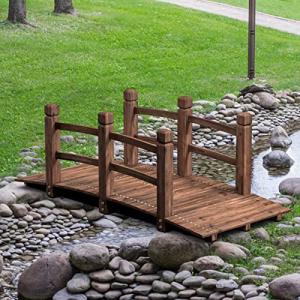
Most garden features add to a space. A garden bridge adds through it — it creates movement, it suggests a journey, it implies that something worth seeing lies on the other side. Even in a small garden with no water feature whatsoever, a bridge placed over a dry streambed of smooth river stones or a shallow planted channel gives the eye a reason to travel across the garden rather than land and stop.
From a design perspective, bridges introduce vertical interest at ground level, which is a harder effect to achieve than it sounds. They draw visitors physically and visually along a path, creating what landscape designers call a "borrowed experience" — the sense that your garden is larger, more layered, and more considered than it might otherwise feel.
On a purely practical level, a bridge also solves real problems. If you have a garden pond, a bridge lets you walk across without going the long way around. If you've built a raised planting bed or a bog garden, a bridge lets you access both sides easily. Functionality and beauty, working together.
Styles of Garden Bridges
Classic Arched Bridges
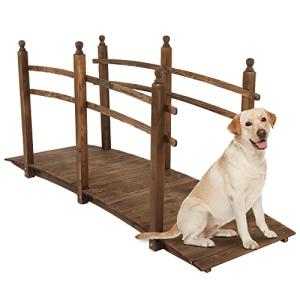
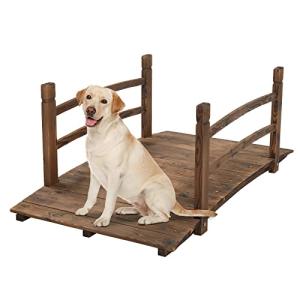
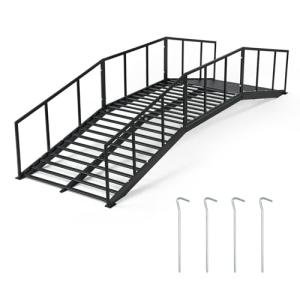
The arched garden bridge is probably the image that comes to mind first — a graceful curve rising over water, often painted white or left in natural cedar tones. This style has roots in both European romantic garden design and East Asian landscape tradition, and it works in both contexts because the arch is simply a beautiful shape.
Arched bridges suit ponds, streams, and ornamental water features best. The curve height matters: a high arch creates drama and reflection in the water below, while a low, shallow arch feels more relaxed and accessible. For water features with fish, a higher arch also gives you a better vantage point to watch what's happening below.
Flat Deck Bridges
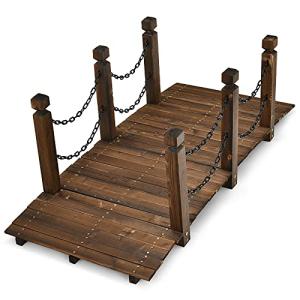
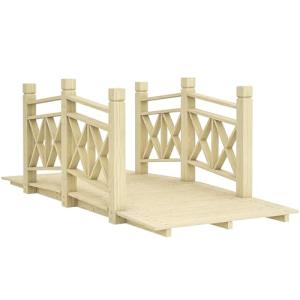
Not every garden calls for curves. Flat deck bridges — essentially a level platform on supports, often with railings — are clean, contemporary, and versatile. They suit modern or minimalist garden designs, as well as spaces where the bridge needs to be highly functional rather than purely ornamental.
Flat bridges are also the more practical choice for gardens where the bridge will see heavy regular use — crossing to a vegetable patch, a workshop, or a garden room. They're easier to walk across with wheelbarrows, garden carts, and other equipment, and they tend to be structurally simpler to install and maintain.
Moon Bridges
The moon bridge is a dramatic, steep-arched design originally from Chinese garden tradition, where the arch is tall enough that the bridge and its reflection form a complete circle in the water below. These are statement pieces — genuinely architectural in character, and not for every garden.
If you have a large, formal pond with still, reflective water and the surrounding space to show off a tall arch, a moon bridge can be extraordinary. It's worth noting that the steep angle makes them less practical for regular crossing — they're better treated as a landscape sculpture that happens to be walkable.
Rustic and Naturalistic Bridges
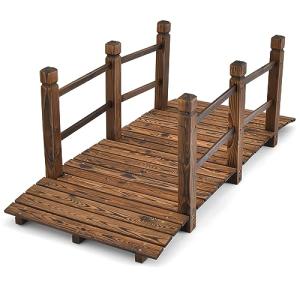
For woodland gardens, cottage landscapes, and naturalistic designs, a rustic bridge built from rough-hewn timber, log rounds, or reclaimed wood can look as though it grew there naturally. These styles suit wildflower meadow borders, stream-side plantings, and any garden that's deliberately loose and informal in character.
The beauty of a rustic bridge lies in its imperfection — the slight irregularity of the wood, the way moss begins to colonize the surface over time, the way it seems to belong rather than to have been placed.
Materials — What They Look Like, How They Last
Cedar and Redwood
Natural cedar and redwood are the gold standard for wooden garden bridges. Both woods contain oils that resist rot, repel insects, and hold up to years of outdoor exposure with relatively minimal maintenance. Left untreated, cedar weathers to a beautiful silver-grey. Stained or sealed, it holds warm honey and amber tones that look wonderful in most garden settings.
Cedar bridges are lightweight relative to their strength, which makes installation more manageable than heavier hardwoods. They take paint and stain evenly, so if you want a crisp white painted bridge or a deep charcoal finish, cedar is a very cooperative material to work with.
Pressure-Treated Pine
For budget-conscious buyers who still want a solid wooden bridge, pressure-treated pine is the most common choice. It's heavier than cedar, slightly less beautiful in its natural state, and requires a little more maintenance over time — but a well-built pressure-treated pine bridge will last decades with proper care.
If you're planning to paint your bridge, pressure-treated pine is an excellent choice, since the finish will cover the base material anyway.
Teak and Hardwoods
Teak is the luxury option for garden bridges. It's extremely dense, naturally water-resistant, and ages to a distinguished silver-grey patina that many gardeners find even more beautiful than the original golden-brown tone. A teak bridge, well-made, is genuinely a once-in-a-generation purchase — the kind of garden feature you'll be passing on rather than replacing.
Other hardwoods like ipe (Brazilian walnut) and black locust offer similar durability and a somewhat lower price point, while still delivering superior longevity to softwoods.
Metal and Steel
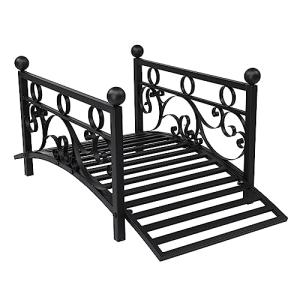
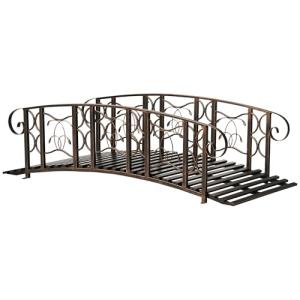
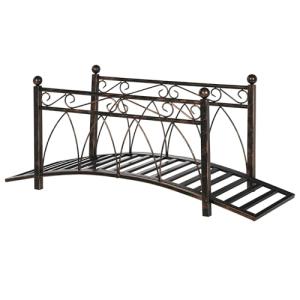
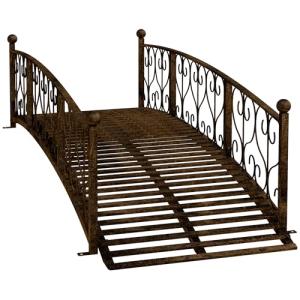
Steel and iron bridges bring an entirely different aesthetic — more architectural, more industrial, more contemporary. Powder-coated steel in black or dark bronze can look stunning in a modern garden setting, and the material is virtually indestructible under normal garden conditions.
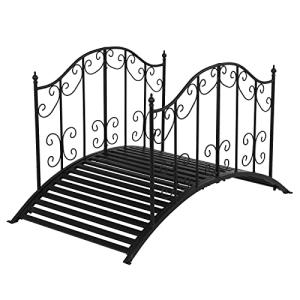
Cast iron ornamental bridges are more traditional in character, often featuring decorative railings with botanical motifs that pair beautifully with formal garden layouts.
Composite Decking Materials
Composite bridges — built with decking boards made from wood fiber and recycled plastics — are the low-maintenance choice for gardeners who want the look of wood without the upkeep. Composite decking doesn't rot, doesn't splinter, doesn't require staining or sealing, and holds its color reliably over years of outdoor exposure. The trade-off is a somewhat less natural appearance, though higher-end composite products have improved significantly and can be genuinely convincing.
Sizing Your Garden Bridge
Getting the size right matters more than most people expect. A bridge that's too small for its setting looks like an afterthought. A bridge that's too large can overwhelm a modest pond or narrow pathway.
For decorative use over small water features or dry streambeds, a bridge in the 5–8 foot length range is typically appropriate. Width matters here too — a bridge that's too narrow feels precarious; aim for at least 24–30 inches of walkable deck width for comfortable single-file crossing.
For functional crossings over garden ponds, consider the full span needed plus a comfortable overhang on each bank — typically 12–18 inches per side. If the bridge will be used frequently, a wider deck (36 inches or more) makes it much more pleasant.
For large water features, streams, or ambitious landscape projects, bridges of 10–14 feet and beyond are available, and some manufacturers offer custom sizing for unusually wide crossings.
Load capacity is also worth considering. Most decorative garden bridges are rated for several hundred pounds — sufficient for normal foot traffic and light garden equipment. If you plan to cross with ride-on equipment or heavy loads, look specifically for bridges rated to handle that weight.
Placement and Landscaping Around Your Bridge
A bridge placed well looks inevitable, like it could never have been anywhere else. Getting there requires a little thought about sightlines, approach, and context.
Consider the approach from both directions. The bridge should feel like a destination when viewed from a distance, and the path leading to it should feel natural and purposeful. Meandering paths work well — a bridge at the end of a straight, short approach can feel abrupt.
Frame it with planting. Some of the most beautiful garden bridge installations are ones where the bridge feels embraced by its surroundings — Japanese maples arching overhead, ornamental grasses softening the banks, water irises and rushes spilling into the water below. A bridge without any surrounding planting can feel stranded.
Think about reflections. If your bridge sits over still water, the reflection becomes part of the composition. Position yourself where you'll most often view the bridge and consider what the water will mirror back — ideally the arch of the bridge itself, the surrounding plantings, and open sky.
Light it. A garden bridge with subtle uplighting or solar path lights along the railings becomes a completely different feature after dark — genuinely beautiful in a way that rewards the small additional investment.
Maintenance and Care
The maintenance required depends almost entirely on the material. Cedar and redwood bridges benefit from an annual application of a penetrating oil or sealant to keep the wood looking its best and extend its lifespan. Painted bridges need repainting periodically — usually every three to five years depending on conditions and paint quality.
Composite bridges need almost nothing beyond an occasional wash. Metal bridges should be inspected annually for any signs of surface rust or coating damage, which is best addressed promptly before it progresses.
For all wooden bridges, keep the deck clear of leaf litter and debris, which holds moisture against the wood and accelerates deterioration. Good air circulation underneath the bridge also helps significantly — avoid building up soil against the structural timbers.
Choosing the Right Bridge for Your Garden
The best garden bridge is the one that looks like it was always meant to be there. That usually means matching the style and material of the bridge to the overall character of the garden — a formal arched cedar bridge for a structured classical layout, a rustic log bridge for a woodland garden, a sleek steel span for a contemporary minimalist design.
Think about how the bridge will age alongside your garden. A wooden bridge softened by weathering and surrounded by mature plantings in ten years' time can be extraordinary. Start with something that has the bones to get there.
And finally — don't rush the placement. Set the bridge in position, walk across it a few times, look at it from the living room window, photograph it in different lights. The best garden features are the ones you never stop noticing, in the best possible way.