Why Bird Feeders Are Worth Every Penny
Let's start with the honest answer: bird feeders benefit you just as much as the birds.
Study after study has shown that spending time watching wildlife — even passively, through a window — reduces stress, lowers blood pressure, and improves mood. It's one of the simplest forms of nature connection available to people who live in cities or suburbs and can't always get outdoors. A feeder gives you a front-row seat to the natural world without leaving your home.
For children, bird feeders are one of the best low-tech educational tools around. Kids learn patience, observation, and species identification. They start noticing patterns — which birds show up in winter versus summer, which species are bold and which are shy, which ones bully the others off the perch. It's hands-on natural science happening right outside the window.
And yes, the birds benefit too. Especially in winter, when natural food sources are thin on the ground, a well-stocked feeder can genuinely make a difference for local bird populations. During breeding season, supplemental food helps parent birds spend less energy foraging and more energy raising healthy chicks.
Types of Bird Feeders: Finding the Right Fit
Not all bird feeders are created equal. The style you choose will determine which birds visit, how much maintenance you're doing, and how the feeder fits into your outdoor space. Here's a rundown of the main types.
Tube Feeders
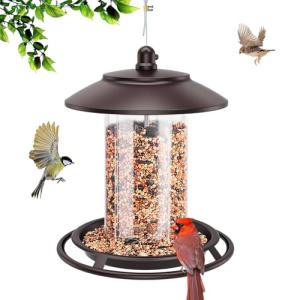
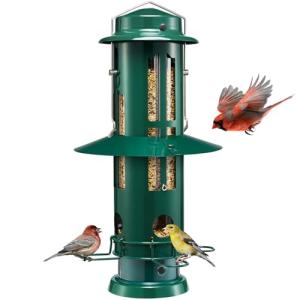
Tube feeders are long cylindrical containers, usually made from clear plastic or metal mesh, with multiple feeding ports around the sides. They're one of the most versatile options available and work beautifully with sunflower seeds, nyjer (also called thistle), and mixed seed blends.
The narrow ports on nyjer tube feeders are specifically designed for small-beaked birds like siskins, goldfinches, and redpolls — birds that absolutely love thistle seed and will flock to a nyjer feeder in impressive numbers. Wider-ported tube feeders attract a broader range of species including tits, nuthatches, and house sparrows.
One big advantage of tube feeders: they hold a decent volume of seed, so you're not refilling every single day. They're also relatively squirrel-resistant if you hang them on a thin wire away from jumping-off points.
Platform and Tray Feeders
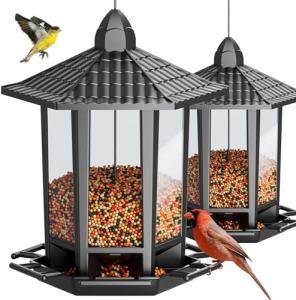
Platform feeders are open trays, either freestanding or hanging, that give birds a flat surface to land and feed on. They're the most welcoming style of feeder because almost every bird species is comfortable eating from an open surface — robins, thrushes, blackbirds, doves, and even ground-feeding birds like dunnocks will all use a platform feeder readily.
The trade-off is that open trays are more exposed to weather and contamination. Seed gets wet, droppings accumulate, and you'll need to clean them more frequently than enclosed feeders. Look for platform feeders with mesh or slatted bases that allow water to drain through — it makes a big difference.
Tray feeders also work well under or around other feeders to catch spilled seed, reducing waste and keeping the ground tidy.
Suet and Fat Ball Feeders
Suet feeders are wire cages or mesh baskets designed to hold blocks of rendered fat, typically mixed with seeds, berries, or insects. They're one of the best ways to attract woodpeckers, treecreepers, long-tailed tits, and starlings — birds that need high-energy food, especially during cold weather.
Fat ball feeders work on the same principle but are designed for the pre-formed balls of suet and seed you'll find widely sold in garden centres and supermarkets. If you want to attract a wider range of insect-eating birds, suet is one of the most effective foods you can offer.
In summer, avoid leaving suet out in very hot weather — it can turn rancid quickly and become harmful to birds. Stick to suet in autumn and winter when birds need the extra calories most.
Peanut Feeders
Peanut feeders are wire mesh tubes specifically sized so that birds have to peck pieces of nut through the mesh rather than extracting whole peanuts. This is important: whole peanuts can be a choking hazard for baby birds, so the mesh design keeps things safe.
Blue tits, great tits, coal tits, nuthatches, and great spotted woodpeckers are all enthusiastic peanut feeder visitors. If you want to watch acrobatic birds hanging upside down and performing impressive gymnastics to get their food, a peanut feeder is your best option.
Always use unsalted, aflatoxin-screened peanuts sold specifically for birds. Human-grade peanuts can contain salt or coatings that are harmful to wildlife.
Hummingbird Feeders
If you're in North America, hummingbird feeders deserve their own category entirely. These nectar feeders are designed with red accents and small feeding ports that attract ruby-throated hummingbirds, Anna's hummingbirds, and other species depending on your region.
The nectar solution is simple — just sugar dissolved in water — but getting the ratio right matters. Too sweet and it can cause health problems; too dilute and the birds won't bother. Most experts recommend a 4:1 ratio of water to white sugar. Never use honey, artificial sweeteners, or red food dye, all of which can harm hummingbirds.
Hummingbird feeders need cleaning every two to three days in warm weather to prevent mould growth in the nectar. It's a commitment, but watching a hummingbird hover, wings beating 50 times a second, is worth every bit of the effort.
Window Feeders
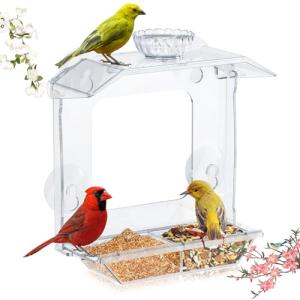
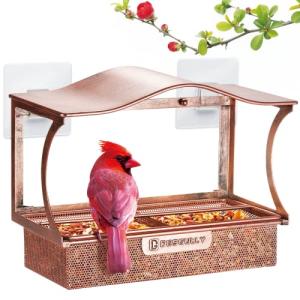
Window feeders attach directly to glass using suction cups, bringing birds literally within arm's reach. They're a fantastic option for people without gardens — apartment dwellers, people who are housebound, or anyone who simply wants to watch birds at extremely close range.
The proximity can be startling at first — you'll see the detail of feathers, the intelligent eyes, the precise movement of a beak picking up individual seeds. Window feeders typically hold smaller amounts of food and need more frequent refilling, but the viewing experience is genuinely unmatched.
Choosing the Best Location for Your Bird Feeder
Where you place your feeder matters almost as much as which feeder you choose. The goal is to find a spot that feels safe and accessible to birds while still giving you a good view from indoors.
Birds feel safer feeding when there's cover nearby — a hedge, shrub, or tree where they can retreat quickly if a predator appears. But the feeder itself shouldn't be tucked so deeply into vegetation that cats can use it as cover for ambushes. Aim for a spot roughly two metres from a hedge or shrub, giving birds time to see approaching threats.
If you're mounting a feeder on a pole, use a baffle — a cone or dome-shaped barrier that prevents squirrels from climbing up. Squirrel-proof feeders are also widely available, with spring-loaded mechanisms that close the ports under the weight of a squirrel while remaining open for lighter birds.
For window feeders, positioning them either very close to the glass (less than a foot away) or well away from it (more than three feet) reduces the risk of birds flying into the window. At very close range, birds don't have enough momentum to injure themselves; at greater distances, they approach more cautiously.
What to Feed and When
The seed or food you put out will directly determine which species visit. A few key choices:
Sunflower seeds — black oil sunflower seeds are arguably the single most useful bird food you can offer. They're high in fat and protein, easy for many species to crack open, and attractive to a wide range of birds including finches, tits, sparrows, and cardinals.
Nyjer/thistle seed — small and oil-rich, nyjer is irresistible to finches, particularly goldfinches and siskins. It requires a specialist feeder with fine ports to prevent it spilling out.
Mixed seed blends — convenience comes at a cost here. Cheap mixed seed often contains millet and wheat that most birds don't particularly want, leading to wastage. Better quality mixes focus on the seeds birds actually eat: sunflower hearts, sunflower seeds, and nyjer.
Mealworms — dried or live mealworms are excellent for robins, blackbirds, and song thrushes. Live mealworms are more attractive but dried ones are perfectly nutritious and far easier to store and handle.
Fruit — apples, pears, and berries placed on a platform feeder will bring in blackbirds, fieldfares, redwings, and waxwings in winter. Halved apples left on the ground work brilliantly when the lawn is frozen and natural food is locked away under ice.
Keeping Your Feeder Clean — And Why It Really Matters
This part isn't glamorous, but it's genuinely important. Dirty feeders can spread diseases between birds — salmonella, trichomoniasis, and aspergillosis are all real risks that flourish in wet, contaminated seed and bird droppings.
Clean your feeders every one to two weeks using hot soapy water and a bottle brush, then rinse thoroughly and allow to dry completely before refilling. Disinfecting with a mild solution of one part bleach to nine parts water once a month provides extra protection.
Move feeders around your garden periodically to prevent droppings and seed husks accumulating heavily in one spot, which can spread disease to ground-feeding birds below.
Fresh food matters too. Check seed regularly for clumping or mould — if it smells musty or looks damp, throw it out and clean the feeder before refilling.
Making Your Garden a Year-Round Sanctuary
The best bird feeding setups aren't just a single feeder hung from a tree — they're a considered combination of food types, water sources, and shelter that support birds across every season.
Add a bird bath near your feeders. Fresh, clean water for drinking and bathing is every bit as important as food, particularly in summer when natural water sources dry up and in hard winters when everything freezes. A simple birdbath doesn't need to be elaborate — birds aren't fussy — but it needs regular cleaning and topping up.
Plant native shrubs and trees alongside your feeders: berry-bearing plants like holly, hawthorn, and rowan provide natural food in autumn, while dense hedges give nesting opportunities and shelter. Think of your garden as an ecosystem rather than just a feeding station.
Over time, with the right combination of feeders, food, water, and planting, you'll build up a remarkable picture of local bird life — the species that live in your area year-round, the seasonal visitors that appear in winter or summer, the juveniles learning to feed alongside their parents in late summer. It's a slow, genuinely rewarding project, and it starts with something as simple as hanging a feeder outside your window.